

When we started Planet Detroit in 2019, the bet was simple: Michigan’s environment and the people living with its consequences deserved a newsroom that was paying attention. This year, that bet paid off in ways we find hard to summarize in a single email or post, so we wrote it all down.
Our 2026 Annual Report is now live. It’s the most complete picture we’ve ever published of what this newsroom does, who it serves, and where it’s headed. I want to walk you through a few of the things I’m proudest of.
The stories that moved the needle
This was a year when our reporting changed outcomes.
We were the only news outlet to cover the federal air pollution trial on Zug Island through to its final day, when a judge ordered DTE Energy and three subsidiaries to pay $100 million for Clean Air Act violations. Isabelle Tavares’s reporting, supported by the Pulitzer Center and Internews’ Earth Journalism Network, traced a century of contamination in 48217, Michigan’s most polluted zip code.
Brian Allnutt‘s data center accountability coverage traveled the country, moving on the AP wire to The Washington Post, the Los Angeles Times, and the Toronto Star. The Federal Reserve Bank of Detroit reached out to him for his expertise, and members of Congress and the state legislature have cited our utility rate-hike reporting publicly.
And when Brian surfaced a state finding that Wyandotte had quietly stopped fluoridating its drinking water a decade earlier, the city corrected a public-facing page that had said otherwise for ten years. It did so the same day we published.
Reporting that doesn’t end at the last paragraph
The stories matter. So does what readers do with them.
Every accountability story we publish now carries a Civic Action Toolbox, a sidebar that connects you to the specific public meetings, comment deadlines, and decision-makers behind each issue. More than 60 articles now carry one, and in the first quarter of 2026 alone, readers completed 200+ civic actions through them: showing up to hearings, submitting comment, contacting their representatives, and organizing their neighbors.
The journalism field has taken notice. This year, Ashley Woods Branch and I were named Reynolds Journalism Institute Emerging Technology Fellows, a recognition that comes with a $100,000 stipend to build the next version of the toolbox and make it available to other newsrooms. Brian was named the Michigan Press Association’s 2025 Journalist of the Year, the field’s top state honor. Judges cited the “undeniable impact” of his work. Ethan Bakuli earned three national fellowships in a single year. Isabelle Tavares work was underwritten by the Pulitzer Center, Earth Journalism Network, and Report for America.
A pipeline of new voices
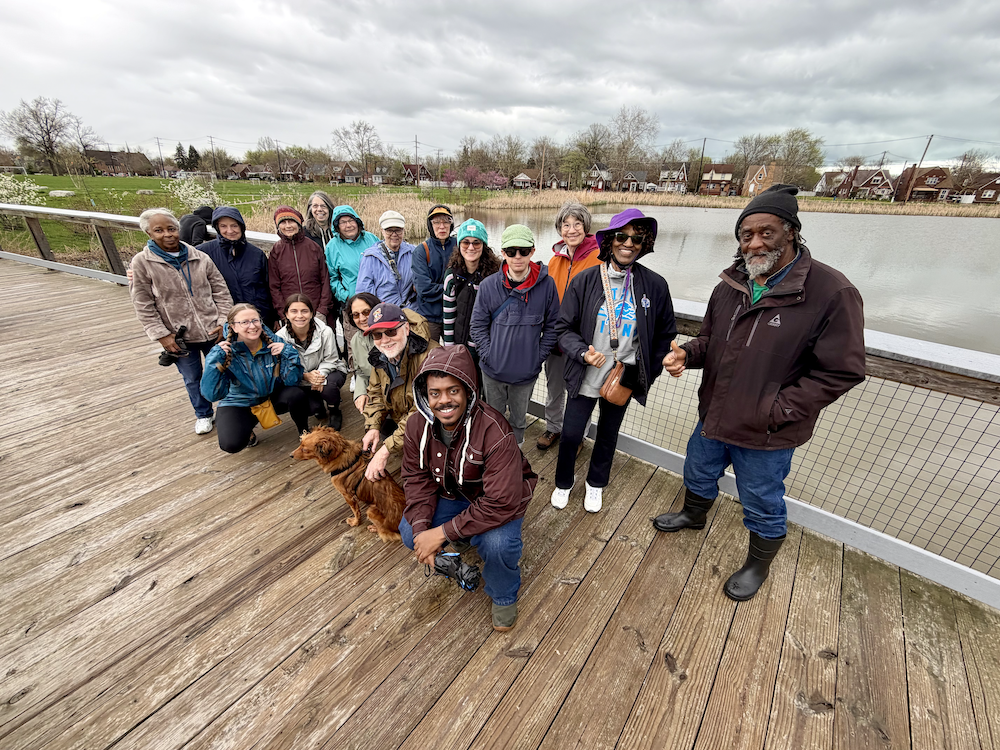
Our Neighborhood Reporting Lab, underwritten by the Kresge Foundation, welcomed 20 new members this year who have already published 20+ stories, bringing the total to more than 60 residents trained over three years. They are students, organizers, photographers, and educators bringing lived experience to the beats that affect them most.
The numbers behind the year
- 385,878 readers across planetdetroit.org in 2025, on a trajectory toward roughly 510,000 this year
- 15,000 newsletter subscribers, with a 42% open rate among active readers
- 7 staff, up from four a year ago
- 50 Planet Champions and Impact Partners distributing and co-hosting our work across Southeast Michigan
More than three-quarters of that audience comes to us through earned and direct channels rather than paid acquisition. People find this work because they trust it.
Building something that lasts
For the first time, we have real infrastructure for the long haul. Ashley, our Chief Revenue and Partnerships Officer, is leading a three-year plan to grow total revenue from about $525,000 in 2025 to $752,000 by 2028 while reducing our dependence on foundation grants. The report lays out exactly how: through memberships, our Seed Circle major-donor program, regional partnerships, and the Planet Detroit Families vertical.
And we’re not slowing down. The year ahead includes our 2026 Environmental Voting Guide for the November election, Civic Action Toolbox 2.0, our inaugural Solutions Summit, and the continued growth of Planet Detroit Families.
Read it for yourself
None of this happens without the people who fund, read, and share this work. So please take a few minutes and see the whole year in one place.
Read the full 2026 Annual Report →
If it convinces you that Michigan’s environment should have a newsroom watching over it, there’s no better day than today to help keep it that way. Our spring campaign closes at the end of the month, and a gift of any size, one-time or monthly, keeps someone watching.
Become a supporter and member →
Thank you for reading, and for caring about what happens next.
Nina Ignaczak Founder and Executive Director, Planet Detroit