

Overview:
- Two-thirds of surveyed Southeast Michigan flood victims found mold in their homes.
- A Detroit-based allergist says she's seen patients whose asthma has gone from being very mild to requiring daily inhaler use after a flood.
- Detroit's aging housing stock and limited repair funding leave residents vulnerable to repeated flooding and mold.
Ethan Bakuli reported this story while participating in USC Annenberg’s Center for Climate Journalism and Communication and Center for Health Journalism 2025 Health and Climate Change Reporting Fellowship as well as a Solutions Journalism Network accelerator program for coverage of the health impacts of seasonal climate issues in Metro Detroit.
Moisture readings. Thermal camera scans. Swab testing. Air samples.
🗳️ Civic Action Toolbox
Why it matters
Mold from basement flooding is causing asthma attacks and respiratory problems for Detroit residents who can’t afford the thousands of dollars often required to professionally remove it.
Who's making public decisions
The city of Detroit controls how $441 million in federal HUD disaster recovery funds can be spent, including whether to fund basement mold remediation. U.S. Congress will decide on Rep. Rashida Tlaib’s Fix Our Flooded Basements bill.
Upcoming Meetings
Civic Actions: What You Can Do
Organizations to Follow
What to watch for next
Are you taking action? Let us know.
Civic resources compiled by Planet Detroit
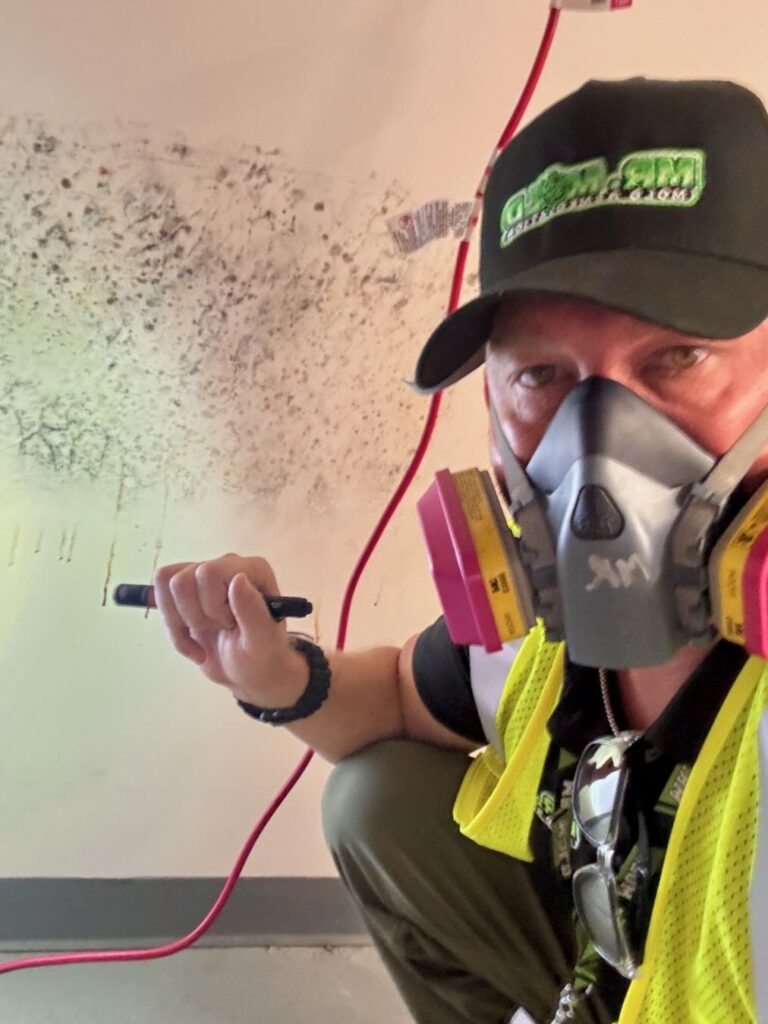
Those are among the actions David Schlum takes when he enters attics and basements he suspects have mold.
“I just want to find out how the mold got there, where it’s coming from, stuff like that,” said Schlum. He’s the founder of EnviroHealth Diagnostics, an indoor air quality consulting firm, and Mr. Mold, a family-run business that offers mold inspection and remediation services across Michigan and Florida.
Using those tests and equipment, Schlum said, ensures he can provide an accurate assessment of the scope and scale of the mold growth beyond what the eye can see. He often sees a failure to properly dry out and clean a basement.
“When the floods happen, they’re just not drying it out in a proper amount of time,” said Schlum.
“So you would need commercial dehumidifiers. You would need to extract the water, remove the carpet, and then you would want to dry it completely within three days, because typically after about 48 to 72 hours, mold can start.”
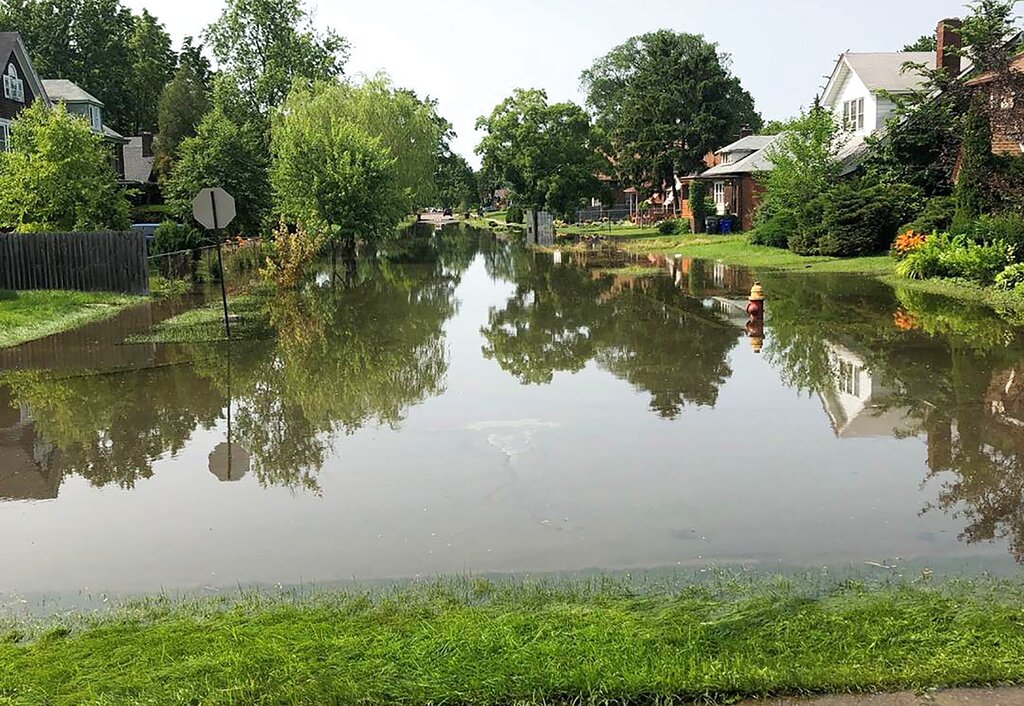
Frequent heavy rainfall in Southeast Michigan over the last decade has raised awareness of indoor mold among homeowners and renters. As water recedes after a flood, mold can develop within as little as 48 hours.
Mold can appear in spaces that frequently invite dampness or humidity, such as bathrooms, kitchens, and attics. It can cause congestion, sore throat, coughing, or wheezing, and can exacerbate asthma symptoms, according to the Centers for Disease Control and Prevention.
Gary Ringer is CEO of Eco-Environmental Solutions, a nonprofit that conducts air quality monitoring, home assessments, and remediation services in Detroit.
Any water leakage can contribute to the growth of mold, Ringer told Planet Detroit. In addition to residents whose homes have mold due to flooding, he sees water intrusion from improperly sloped gutters and foundations.
“Once you start to have that accumulation of water, it’s going to consistently find that point of least resistance, and a lot of times that’s going in toward your basement,” said Ringer.
Mold remediation is the tricky part, he said.
The containment, removal, and cleaning of mold can vary depending on the severity and cost.
Bleach and detergent are common household mold removal methods, according to the CDC.
Schlum said that mold in drywall needs to be contained with plastic and filtered with an air scrubber before a contractor can cut the drywall, treat it with an antimicrobial, and fix the source of the water intrusion.
Work on that scale can be expensive for homeowners.
“You have to be realistic with this stuff, otherwise, every job is going to be $30,000 or $80,000,” said Schlum.
“If someone only has a couple grand, and then you go into the basement and there’s mold growing everywhere, and the flood happened a month or so ago, you’re going to do things a lot differently.”
In that scenario, contractors do their best to remove and kill mold, and conduct an air quality test when they’re done to make sure it’s gone, he said.
In an online survey conducted by Planet Detroit with Southeast Michigan residents, two-thirds of respondents said they found mold in their home after a flood. Of that group, nearly half said they either cleaned it themselves or a family member or neighbor assisted.
‘It has affected my health’
When stormwater began to rise inside of E’True Bryant’s house during the June 2021 flood, her primary concern was her basement.
“I had a living room set down there – televisions, computers, all kinds of stuff,” said Bryant.
Since Bryant moved to the house on Detroit’s east side two decades prior, her basement occupied a special place for her family.
In the middle of a thunderstorm, it was a shelter for her and her grandkids. While neighbors were shooting fireworks outside on New Year’s, her basement was a site of celebration. In the summertime, the cooler air meant it was the place they could congregate without raising her electricity bill with air conditioning.
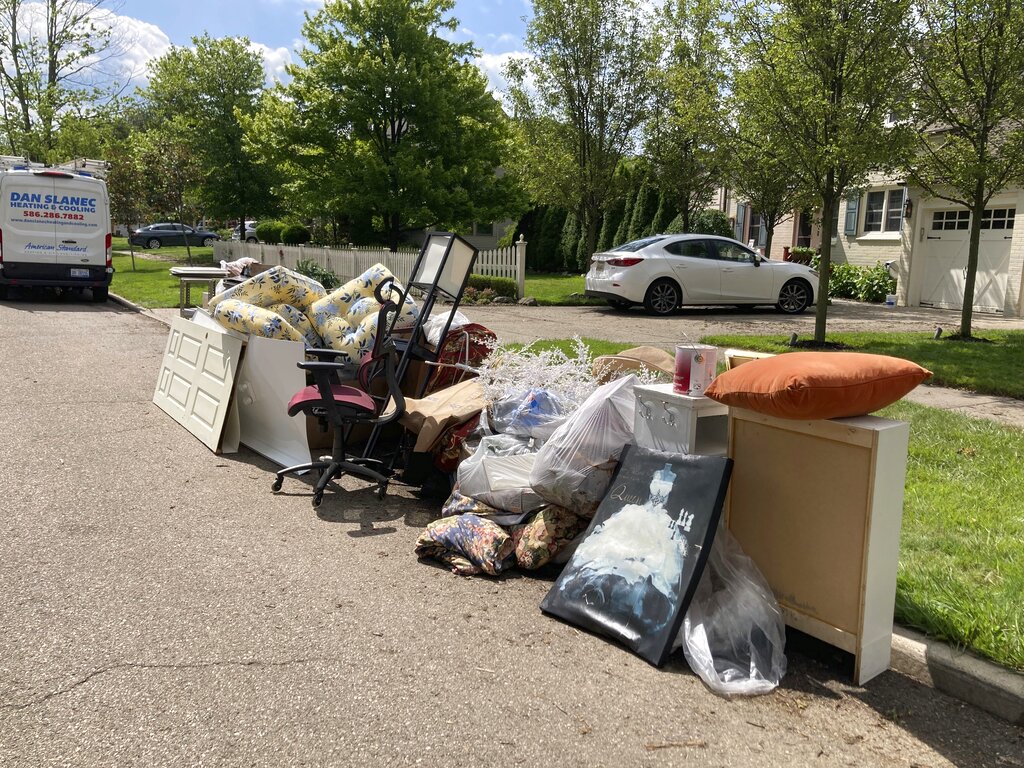
The June 2021 flood took that away from her, she said. Bryant had to trash most of the clothing and furniture stored downstairs as mold began to appear.
“We lived down there, practically, in the basement,” said Bryant. “Now I don’t want to go down there.”
For the last five years, Bryant has removed mold primarily on her own. She recently connected with After the Storm, a faith-based disaster case management organization, for assistance with remediating her basement.
“I know it (mold) has affected my health, because when I go down there I want to put on a darn mask,” said Bryant. “The bleach may work, but heck, who wants to smell a lot of bleach?”
The CDC advises homeowners to wear personal protection equipment such as N95 masks, goggles, and protective gloves and boots when cleaning mold after a flood.
If you live in a place with mold, the federal agency recommends spending less time in your home, sealing off the mold, and removing clothes that may have been in contact with mold. This reduces the risk of worsened respiratory problems for people with asthma, COPD, or who are immune-compromised.
Garen Wolff, a Detroit-based allergy specialist, said she’s examined “patients who have asthma that has gone from very mild, meaning they barely use an inhaler, needing a rescue inhaler like an Albuterol, to requiring an inhaler on a daily basis” after a flood.
“The mold spores will trigger inflammation in the lungs over time because flooding lasts a while and it usually takes people a while to get that under control, if they can,” said Wolff.
Left untreated, mold can contribute to long-term lung damage and inflammation of nasal passages, she said.
Detroit’s aging houses, population compound flooding problem
Last August, Donnelda Thompson spent over $11,000 on waterproofing her home after its foundation shifted from repeated flooding.
The improvements were a long time coming after hours spent scrubbing and mopping her basement after every rain storm, she said.
“I just bit the dust and took the money out of my 401(k),” said Thompson.
“I just got sick of it and I said, ‘this is ridiculous.’ It’s gonna make me sick after a while having breathing problems and stuff like that. But I had to get that done because my son is on dialysis, and I can’t have that in my house.”
Nearly all single-family housing across Detroit was built before 1980, according to a 2024 study of the city’s housing stock. With limited federal and local funding for home repair, many residents are contending with existing maintenance issues on top of recent climate emergencies.
After the June 2021 storm, Bryant used her Federal Emergency Management Administration money to replace some of her damaged appliances. She would have preferred if the money could have also covered mold or water damage remediation, she said.
In 2021, of the 66,000 Detroit homeowners and renters who applied for FEMA’s individual disaster assistance, just over half of applicants received it, according to city documents. FEMA-verified losses totaled more than $91 million.
On average, renters received $818, while homeowners received just over $3,500.
“They could have kept the money and sent the contractors out and let them finish the job,” Bryant said. “I wouldn’t still have mold down in the basement. You could have done all of that. Then you didn’t have to give me a dime.”
Schlum said most mold remediation companies provide free inspections and take jobs directly from insurance companies or FEMA after a flood.
Most homeowners impacted by recent federally declared disasters do not have flood insurance, according to FEMA disaster assessment reports.
Ringer said assistance for folks living with mold and other indoor hazards should be a bigger priority for the city and region.
Nearly one-fifth of Detroit residents are over the age of 65, and of that number, a recent study showed, nearly half spend at least 30% of their income on housing costs.
Any surprise costs — such as emergency home repairs, rising utility bills, and grocery prices — can heighten the risk of financial instability. Disaster recovery expenses fall on residents who are already experiencing economic hardships, according to the city.
“We have a large senior population in the city of Detroit, and our organization is looking to figure out how we can be an inexpensive support to a lot of our cash-strapped households,” said Ringer.
“So many households in our vulnerable community get swept to the wayside because we don’t realize that our home can be contributing to our health.”
Who pays for mold remediation?
Efforts like the city’s Basement Backup Protection Program combat basement water damage by installing sump pumps, backwater valves, and disconnecting downspouts in some of Detroit’s most flood-prone neighborhoods.
Mold remediation often falls outside of the coverage area for many home repair and weatherization programs, said Evelyn Zwiebach, senior director of programs at Enterprise Community Partners, which oversees the Detroit Home Repair Fund.
“They might be like a facade improvement program, or focus only on exterior or just the roof, or maybe it focuses on HVAC, electrical, plumbing,” Zwiebach said of home repair programs.
The philanthropy-backed Detroit Home Repair Fund assists low-income homeowners with addressing critical needs such as plumbing issues, leaky roofs, and broken furnaces or boilers.
The Detroit home repair program found mold in 45% of assessed households, Zwiebach said.
The program remediated mold in nearly 180 homes, spending roughly $3,200 per household. The program addressed other water intrusion problems, such as leaky roofs, basement sewage, and downspout, foundation, and gutter problems.
“If there are residents with asthma or other respiratory conditions, other health vulnerabilities, mold remediation is going to rise to the very top as one of the critical health and safety hazards that we really need to make sure to address,” said Zwiebach.
In 2023, in the months after a federally declared disaster in August, Detroit City Council members discussed creating a fund for mold remediation for people who cannot qualify for existing city home repair programs.
Last summer, U.S. Rep. Rashida Tlaib, a Detroit Democrat, introduced the “Fix Our Flooded Basements” bill to expand FEMA assistance eligibility and coverage for full basement damage and mold mitigation. The bill was referred to two House committees and one subcommittee, and no action has been taken since then.
Since 2021, the city of Detroit has been awarded $441 million from the U.S. Department of Housing and Urban Development to address unmet needs resulting from both the June 2021 and August 2023 storms.
HUD guidelines allow for spending disaster recovery funds on mold remediation. In its action plan for the federal housing agency, the city reported that it would fund basement mold remediation for residents in the Private Sewer Repair Program on a “case-by-case basis.”
‘Mold is just the symptom of the problem’
Environmental health consultants who spoke with Planet Detroit said lack of regulation and certification around mold removal can result in underqualified contractors.
“Some contractors will not have experience with it, and they’ll think that slapping a new coat of paint on it will take care of it, or going in and just scrubbing everything hard with bleach will just remediate the problem,” said Ashley Zuverink, a program manager with Green & Healthy Homes Initiative, which works with the Detroit Home Repair Fund.
“Mold is just the symptom of the problem, and it’s always going back to whatever the root cause of how that moisture build up is happening in the home.”
Indoor mold growth is unregulated in Michigan or at the federal level.
The Michigan Department of Health and Human Services does not recommend testing for mold, but advises people to remove “the water source to prevent additional mold growth and cleaning/replacing mold impacted spaces,” according to department spokesperson Laina Stebbins.
MDHHS additionally does not provide certification for companies or contractors that conduct mold remediation and inspections.
In coastal areas prone to hurricanes and flooding such as Texas, Louisiana, and Florida, existing state laws require contractors to be certified to remove and inspect mold.
Among local organizations inspecting or consulting on mold, there’s no consensus on testing, largely due to its cost.
Zuverink said homeowners can use the eye and smell test to confirm mold, and put the money toward remediating mold and addressing the root of the water intrusion.
Ringer said he samples mold for free, sending it to certified labs and sharing the results for his clients, especially those living with preexisting conditions.
“Where that helps is it allows you to know the strain of mold, and then also from the aspect of their health, if you already have COPD, if you already have some certain issues, you can use that as something to hopefully spur some other actions,” he said.
“We can keep talking about these issues, or we can do something different than what we’ve been doing.”
Editor’s note: This story has been updated to clarify Evelyn Zwiebach’s title: senior director of programs at Enterprise Community Partners.
REPORTING ON FLOODING
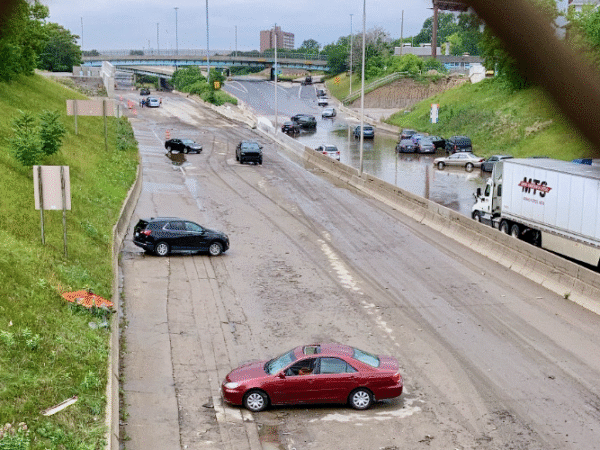
Repeat flooding is creating public health crisis in Detroit: ‘Long-term trauma’
Ethan Bakuli reported this story while participating in USC Annenberg’s Center for Climate Journalism and Communication and Center for Health Journalism 2025 Health and Climate Change Reporting Fellowship as well as a Solutions Journalism Network accelerator program for coverage of the health impacts of seasonal climate issues in Metro Detroit. In the waning days of…

GUIDE: How Detroiters can prepare for flooding
A guide to help Detroit homeowners and renters protect their homes from flooding, including emergency alerts, damage claims, and safety tips.
Detroit launches $1 million sea wall repair program for flood-weary Jefferson Chalmers
City Councilmember Latisha Johnson advocated for the $1-million state grant to target sea wall repairs as a step toward moving the neighborhood out of the Federal Emergency Management Agency’s flood hazard designation.
