

Overview:
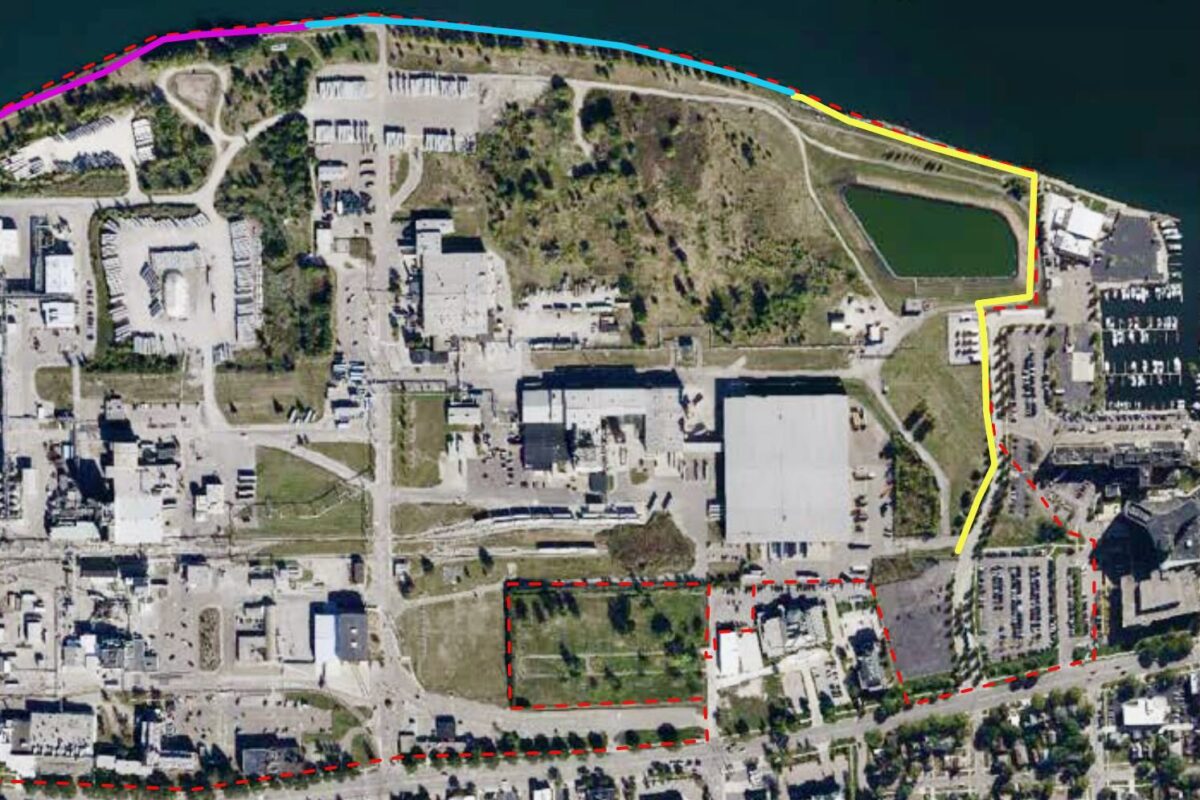
- EPA approves BASF's cleanup plan for its Wyandotte site, where groundwater contaminated with PFAS, mercury, arsenic, and other toxic chemicals flows into the Detroit River.
- The plan includes a perimeter barrier, groundwater extraction system, and on-site treatment facility, with construction potentially beginning in early 2027.
- The contamination seeps into the river roughly 1,700 feet from Wyandotte's municipal drinking water intake. State officials determined in 2022 it was unlikely to cause immediate public health impacts.
The Environmental Protection Agency announced the approval Monday of a plan to address groundwater contamination from BASF‘s Wyandotte site, where toxic chemicals have flowed into the Detroit River for decades.
🗳️ Civic Action Toolbox
Why it matters
Toxic chemicals from BASF’s North Works site flow into the Detroit River 1,700 feet from Wyandotte’s drinking water intake. The first consent agreement aimed at addressing pollution from the site was reached in 1980.
Who's making public decisions
The Environmental Protection Agency and Michigan’s Department of Environment, Great Lakes, and Energy oversee BASF’s cleanup plan.
Civic Actions: What You Can Do
Organizations to Follow
What to watch for next
Are you taking action? Let us know.
Civic resources compiled by Planet Detroit
Construction could begin on BASF’s plan for addressing pollution from the site in early 2027, according to a May EPA presentation.
The plan for the BASF site includes a perimeter barrier to limit the flow of groundwater into the river, a groundwater collection and extraction system, and an on-site treatment facility for collected groundwater.
Documents previously shared with Planet Detroit showed that up to 60 gallons of contaminated groundwater per minute have been flowing from the site into the Detroit River, carrying toxic PFAS chemicals, mercury, arsenic, naphthalene, benzene, and other chemicals.
Some of this water has had a pH as high as 13.22. Substances with a pH of 12.5 or above are classified as hazardous waste by the EPA.
This groundwater seeps into the river roughly 1,700 feet from Wyandotte’s municipal drinking water intake.
A 2022 Michigan Department of Environment, Great Lakes, and Energy (EGLE) review determined the location of the drinking water intake and quantity of river water mixing with BASF’s pollution meant it was unlikely to “cause a public health impact that requires immediate attention.”
BASF entered into consent agreements with the state and the EPA in 1980 and 1994, respectively, that required the company to stop the flow of contamination into the river.
BASF could stop contamination from entering the river in a few months by installing additional wells, trenches, pumps, and packaged water treatment systems to handle specific contaminants in groundwater extracted at the site, Brian O’Mara, a geological engineer and environmental remediation consultant, told Planet Detroit in 2025.
The EPA, BASF, and the Michigan Department of Environment, Great Lakes, and Energy collaborated on the cleanup plan.
The 230-acre BASF North Works facility manufactures chemicals and other products and has been the site of industrial operations since the 1800s. BASF took ownership of the site in 1969 after acquiring Wyandotte Chemicals.
MORE PLANET DETROIT REPORTING

Wyandotte water system problems pose ‘immediate health risk’: State regulator
State survey raises concerns about Wyandotte’s ability to protect water customers from BASF pollution and other contaminants, water expert says.

BASF Detroit River pollution: Environmental regulators discuss remedy for contaminated groundwater
Environmental advocates are calling for urgent action as regulators outline plans to curb pollution from BASF’s Wyandotte facility, which discharges 60 gallons of contaminated groundwater into the Detroit River every minute.
Michigan regulators request BASF’s plan to halt Detroit River pollution: Letter
Michigan regulators give BASF 60 days to produce a plan to stop contaminated groundwater from its Wyandotte chemical plant from polluting the Detroit River.