
Planet Detroit’s Parks & Trails Series is supported by the Ralph C. Wilson, Jr. Foundation, which invests in parks, trails and waterfronts across Southeast Michigan and Western New York so people of all ages can get outside and stay active.
This story is part of Planet Detroit’s Parks & Trails series, sponsored by the Ralph C. Wilson, Jr. Foundation.
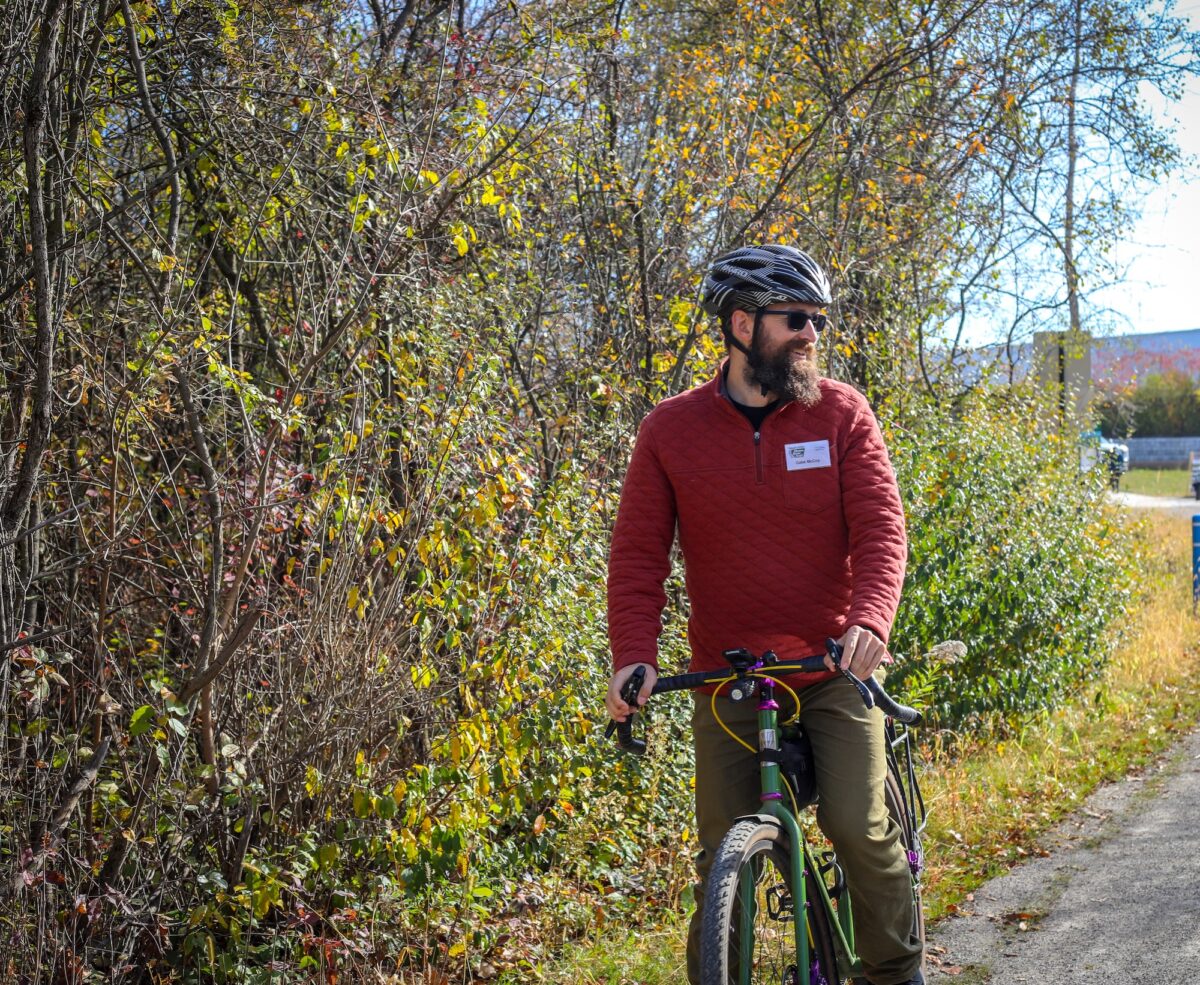
Gabe McCoy’s commute starts with a rack bolted to his bike frame and a pair of bags clipped onto it. A smaller bag on the frame holds a chain lock, so he can stop for errands or dinner on the way home. When it gets cold, he slides his hands into pogies, oversized mitts that wrap around the handlebars. Since the time change, he rides home in the dark.
McCoy, a product manager at Gates Corp., lives and works in Rochester Hills, and he picked his home with one thing in mind.
“I strategically chose where to live to also be close to the Clinton River Trail,” he said. “And I use the trail to commute to work.”
McCoy grew up riding around his neighborhood in northwest Iowa and kept riding through college. He started commuting by bike during three years in Denver, where he found protected lanes and paths almost everywhere he needed to go. When his company moved him to Michigan, he had to work harder at it. His first place was in Howell, and he still managed to bike to the office twice, stringing together trails across two counties.
Then he moved closer.
“It makes a huge difference, starting and finishing my day with a little bit of exercise and being out in nature versus in my car,” McCoy said. “It really improves my life.”
Bike commuters are a small crowd on the trail. Josh Eichenhorn, president of the all-volunteer Friends of the Clinton River Trail, calls them “a mighty minority.” McCoy, who runs the group’s social media, is one of the most dedicated. Eichenhorn said he rarely sees him in a car unless it’s a very bad winter day.
McCoy sees others out there, too: a coworker who rides by choice as his main way to get around, and people in work clothes with bags on their bikes, plainly headed somewhere. His partner sometimes rides to work on an e-bike.
Most people come for a run, a walk with the kids or a long weekend ride. And plenty of them come. Trail counters in Rochester Hills logged an average of 3,150 people a week between Avon Road and Diversion Street in September 2024.
That’s why it mattered so much when a piece of the trail in Rochester disappeared.
A million gallons
On July 16, 2024, after weeks of heavy rain, the old railroad embankment that carries the trail half a mile west of Dequindre Road gave way.
For decades, the embankment had acted like a dam, and the wetland on its north side had been slowly rising. The Detroit area got about 3.78 inches of rain in the three weeks before the failure, nearly half of it in the final week. When the embankment broke, an estimated 1 million gallons of water poured through and carried the soil with it toward the Clinton River. The surge showed up on a river gauge downstream.
It left a hole about 120 feet long, 30 feet wide and 12 feet deep. A major fiber optic cable snapped, which is how AT&T became one of the first to know. Rochester Hills sent up a drone that same day to photograph the damage.
“Water always wins,” said Kristen Wiltfang, who manages trails, transportation and environment work for Oakland County.
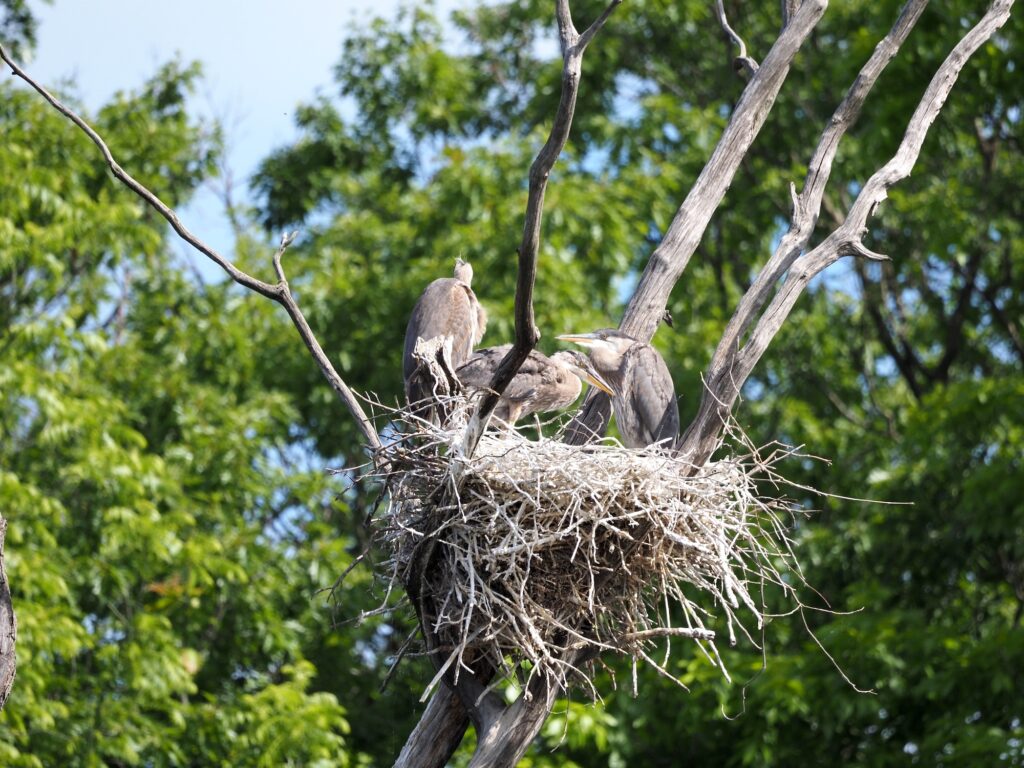
JJ Tighe of the Ralph C. Wilson, Jr. Foundation went out with Wiltfang and city staff within a day or so. He climbed down into the gap to get a look. He guessed it was 8 to 10 feet deep, and he could see the nests of a great blue heron rookery nearby.
Nobody saw it coming. “Complete surprise,” Tighe said. “It wasn’t even something that crossed my mind.”
The trail is personal for Tighe. His family walked it every week during the pandemic. Years earlier, when his sons played hockey at Suburban Ice, he and his wife would drop the boys off for warmups and walk the stretch of trail right where the washout happened.
A second problem was already building closer to downtown. Just east of the Diversion Street Trailhead, the Clinton River had been eating away at the riverbank for years, and the retaining wall and the trail on top of it were starting to fall in.
Everybody at the table
Tighe said it was clear right away that no single partner could handle the repair alone. Wiltfang got to work pulling people together.
“Without someone like Kristen Wiltfang, who’s a dot connector, it doesn’t happen,” Tighe said. “Her work doesn’t always get the spotlight with one of these projects.”
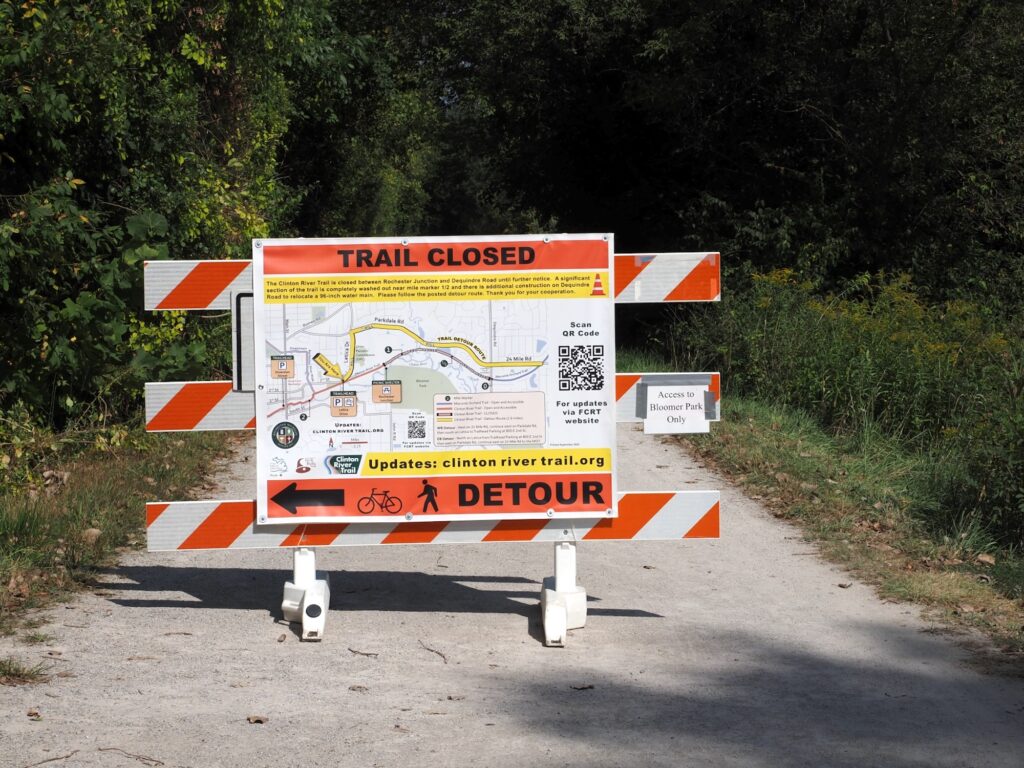
The day after the washout, the Friends group and the city designed a detour. The Friends printed detour maps and posted them at the closures. Oakland County helped with signs and banners, coordinated with Macomb County, notified the Michigan Department of Natural Resources and the Michigan Trails and Greenways Alliance, and checked with the Oakland Bird Alliance about protecting the herons during construction.
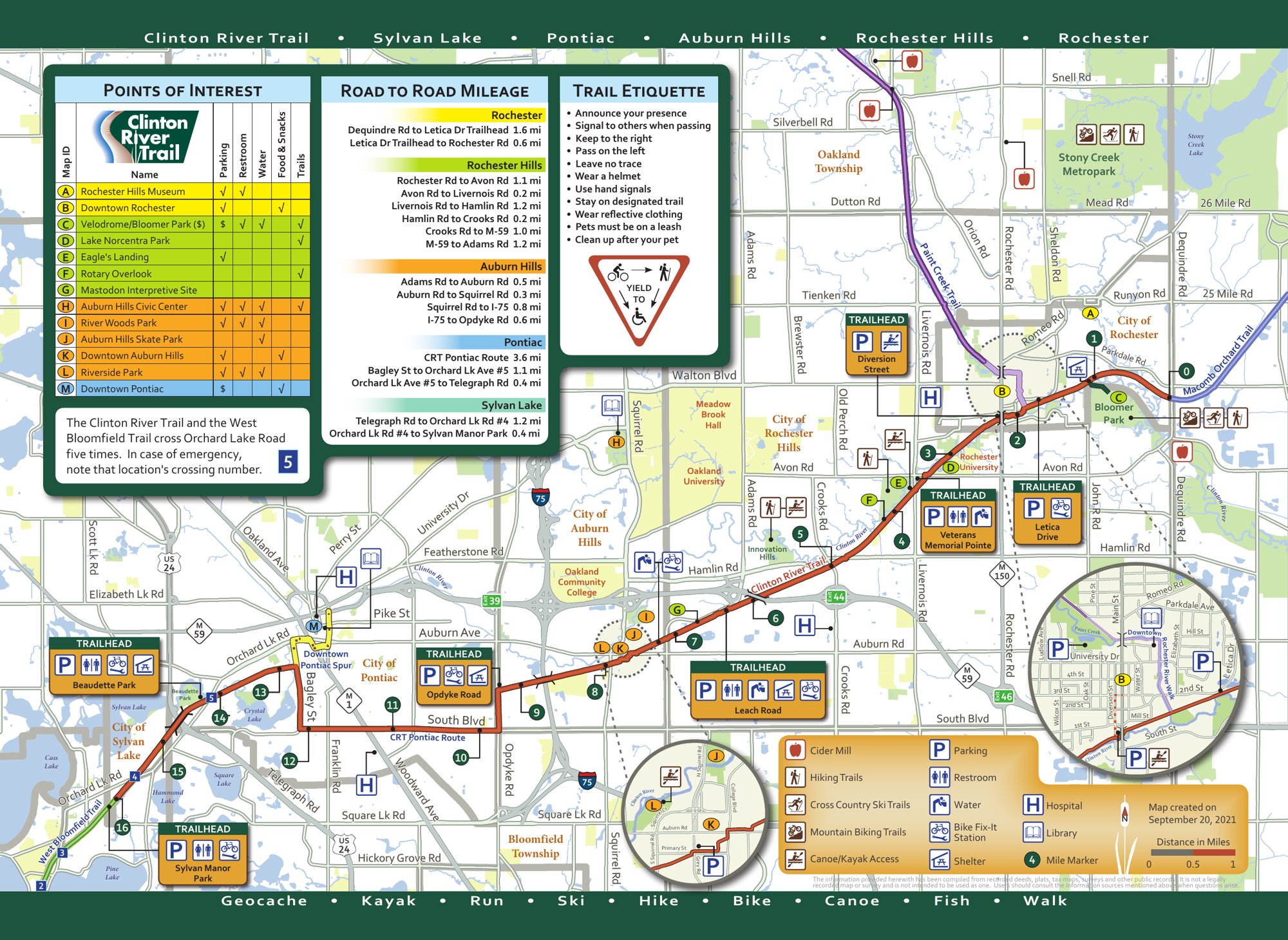
That outreach mattered beyond Rochester. The washout sits where two cross-state routes overlap: Michigan’s Iron Belle Trail biking route and Route 1 of the Great Lake-to-Lake Trail, which runs from South Haven to Port Huron. Riders come from out of town to do those routes.
Eichenhorn knows those routes firsthand. In 2020, he and his son rode across the state on the Great Lake-to-Lake route. They trained on the Clinton River Trail, and on the trip they stayed at the Royal Park Hotel in Rochester, where the staff valeted their bikes.
The ride got him hooked. When he retired a few years ago and went looking for a project, he joined the Friends group.
“That’s what sparked my passion for the trail,” he said.
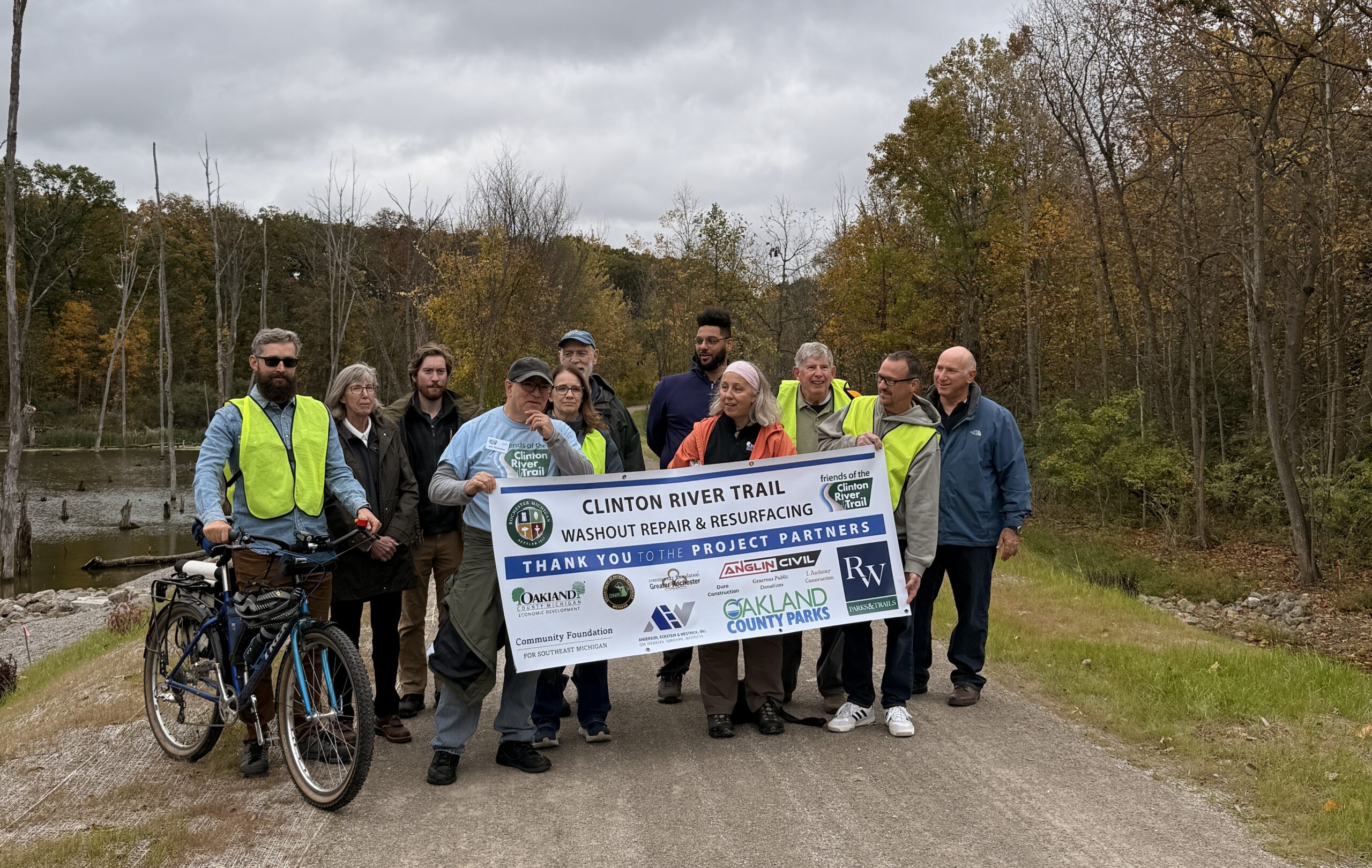
The city’s engineering firm, AEW, studied the hydrology, soils and wetland rules and laid out repair options. The engineer’s estimate for both sites came to $3.7 million.
The money came together from six sources:
- City of Rochester bond: $1.2 million
- Ralph C. Wilson, Jr. Foundation: $1.2 million
- Oakland County Parks: $700,000
- Ralph C. Wilson Trails Maintenance Fund at the Community Foundation for Southeast Michigan: $521,000
- Public donations through the Friends of the Clinton River Trail and the Community Foundation of Greater Rochester: $52,000
- DNR Recreation Improvement Fund: $50,000
A fund built for days like this
The $521,000 grant came from a source most trail users have never heard of.
From the start of its trail work, Tighe said, the foundation set aside 20% of its trail investments in endowments for long-term upkeep. It was a deliberate choice to fund something donors rarely pay for.
The Wilson Foundation, which helped build trails across the region, set up a $10 million endowment at the Community Foundation for Southeast Michigan to pay for big repairs: a washout like this one, a bridge that needs replacing, a trail that needs repaving after a decade. A committee that includes friends groups, funders and state transportation and natural resources officials reviews the requests. Communities have to match every dollar.
Tighe said trail groups told the foundation early on that money for big emergency repairs almost never exists. The goal, he said, is “to make sure that these community assets are like they are the day you cut the ribbon, twenty years down the road.”
The Wilson Foundation is in spend-down mode, and is set to close in 2035. The endowment is designed to keep going after that.
Rochester covered a big share of the cost with its bond. “They just couldn’t do it all,” Tighe said.
Trail users chipped in
The Friends group heard from people throughout the closure. Emails asked what was going on and when it would reopen. About 40 to 50 people came to a community update meeting.
“If you want to know the importance of a trail, just close it,” Eichenhorn said.
Donations through the group’s fund usually trickle in at $100 or $200 at a time. During the closure, they jumped. The total reached about $52,000, mostly from small donors, and the Friends are giving it to the city to help cover costs. Eichenhorn said that kind of response helped show the city and bigger funders how much people cared.
“Nothing speaks louder than emails and money,” he said.
What’s different now
The repair came in well under the estimate, at around $2 million, with final numbers still being tallied. The savings went back into the trail.
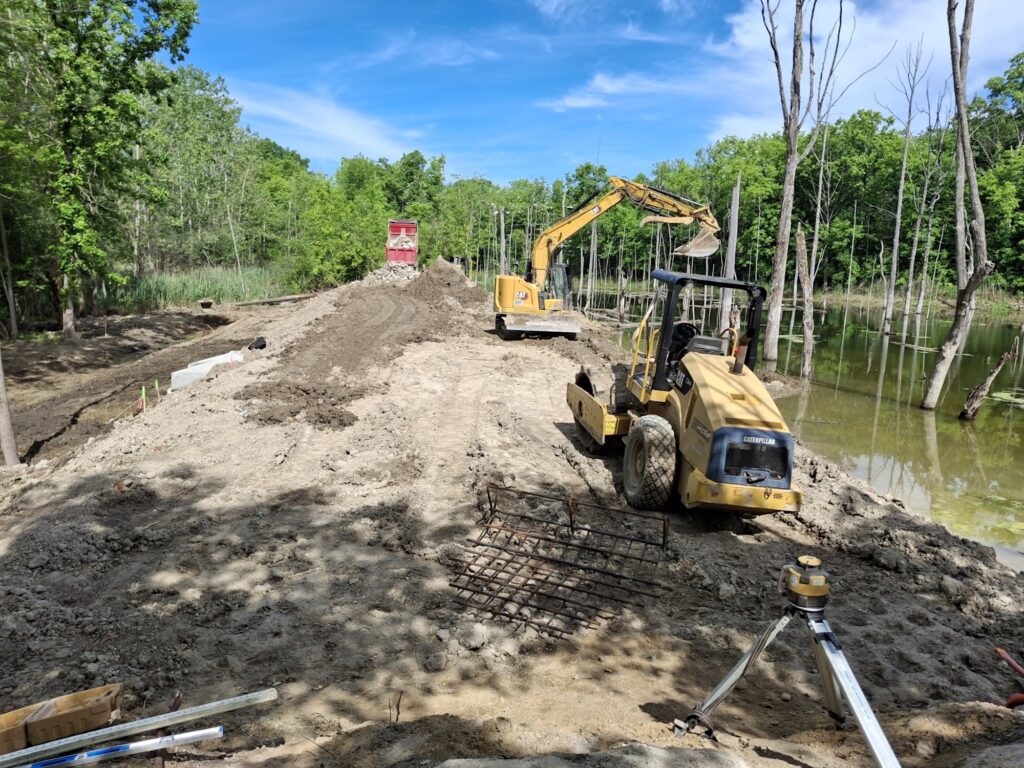
At the big washout, crews built a cofferdam, pumped the site dry and rebuilt 320 feet of earth embankment. They added a new culvert under the trail so water can move between the wetland and the other side instead of building up behind the embankment. Native plants went in on the slopes.
The city got blue clay for the job from the Great Lakes Water Authority’s 96-inch water main project on Dequindre Road. The city stockpiled it at its fire training facility and reused it, saving money on both projects.
At Diversion Street, the trail was moved back from the river, with a new retaining wall and a boulder wall to hold the bank.
With the leftover money, the city resurfaced the whole trail in Rochester with 2.3 miles of crushed aggregate and replaced a failed culvert near Dequindre. It also poured about 1,000 feet of concrete at Dequindre, where the trail tended to stay soggy after rain.
Eichenhorn said the changes are mostly ones you’d only notice if you went looking. The trail kept its crushed-stone surface because that’s what people wanted.
“We wanted the trail to look like the trail,” he said.
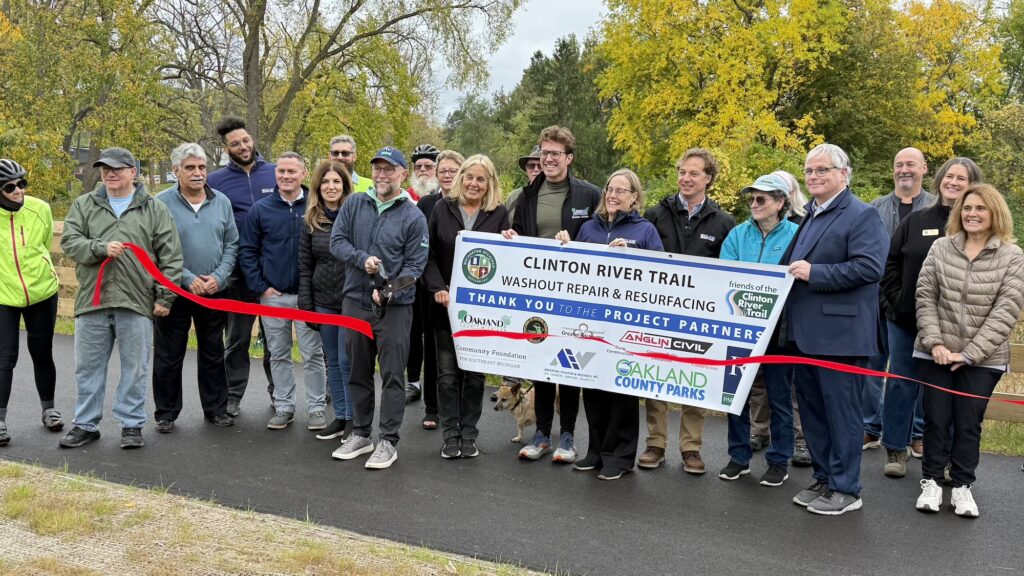
The trail reopened with a ribbon-cutting Oct. 16.
Tighe hopes people take an extra minute near the washout site to look for the herons. “I don’t think many people knew that asset was there,” he said.
Wiltfang is thrilled that the project is finally complete for the trail users.
“Two years is a long time to have this regional trail closed,” she said. “The project team has learned many valuable lessons along the way and hope to be able to spot vulnerable areas before they become catastrophic failures.”
Eichenhorn’s advice for anyone who wants to help with local trail efforts is simple. “My first suggestion is to go out and enjoy it,” he said.
See it for yourself
Wiltfang will lead a free Planet Detroit walk on the rebuilt trail on Saturday, Nov. 21, from 10 to 11:30 a.m. Meet at the Clinton River Trail at Dequindre Road. Park in the southeast corner of the Suburban Ice lot, 52999 Dequindre Rd., Rochester. Register here.
The Friends of the Clinton River Trail meet at 7 p.m. on the last Tuesday of each month, except December, at the Auburn Hills Community Center. Everyone is welcome.