

Overview:
- EES Coke Battery submits an air quality permit application to state regulators, as required by U.S. District Judge Gershwin Drain, and Michigan regulators accept it for review.
- The application does not propose installing desulfurization technology, which an EPA engineer testified would cut sulfur dioxide pollution by 95% from the River Rouge facility.
- A federal appeals court will hear oral arguments Dec. 17. EES Coke says the permit application could be withdrawn or changed depending on the outcome of its appeal.
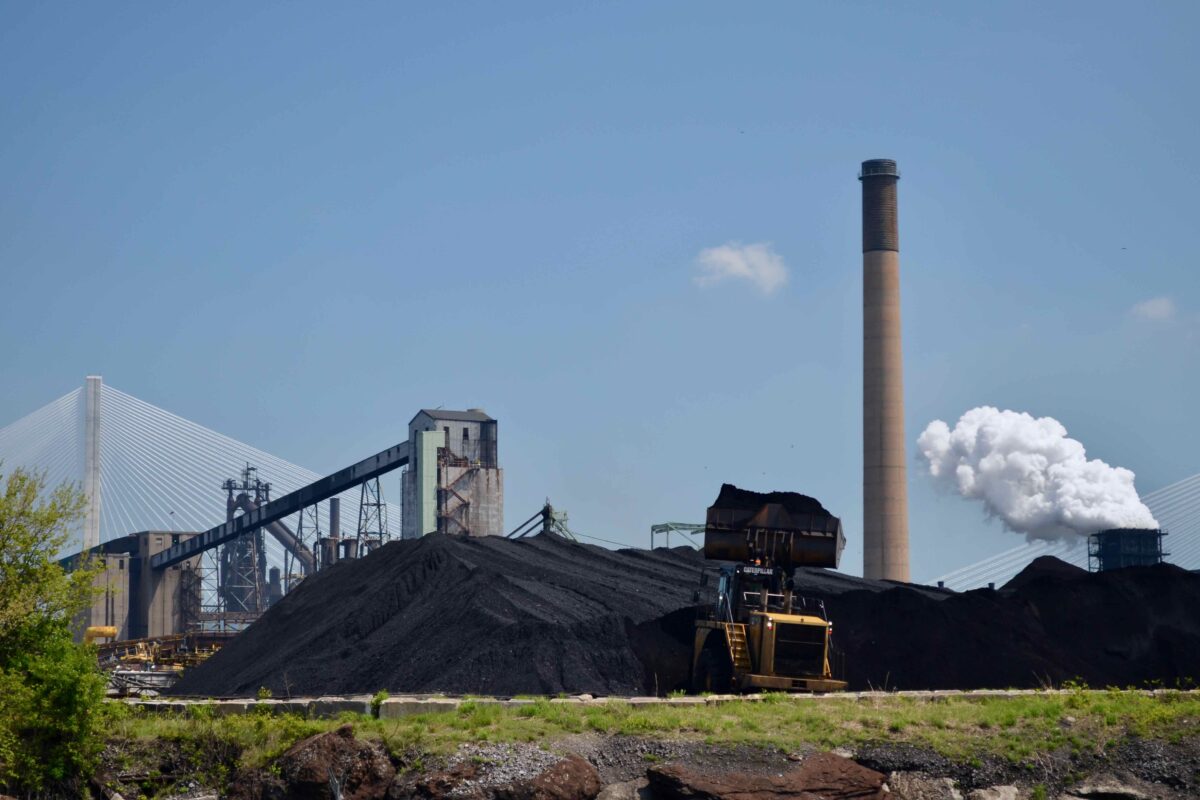
A court-ordered air quality permit application by DTE Energy’s Zug Island facility is under review by Michigan regulators.
U.S. District Judge Gershwin Drain fined DTE and three of its subsidiaries, including EES Coke Battery, $100 million for violating the Clean Air Act by significantly increasing sulfur dioxide emissions without installing required pollution controls.
Drain’s February ruling said the Zug Island facility must come into compliance with the Clean Air Act by submitting New Source Review permit applications within 250 days.
The air quality permit application does not propose the installation of desulfurization technology, which would cut the coke battery’s sulfur dioxide pollution by 95%, according to an Environmental Protection Agency engineer’s trial testimony.
EES Coke Battery submitted the application Oct. 30. The Michigan Department of Environment, Great Lakes, and Energy accepted the application for review, agency spokesperson Josef Stephens said Friday.
State air quality staff will evaluate the EES Coke Battery application. If it meets air quality rules and regulations, the state will draft a permit and open it for public comment, Stephens said.
Zug Island and the Clean Air Act
EES Coke Battery’s 2014 Michigan air quality permit is at the heart of the EPA’s Clean Air Act lawsuit against the company.
The company applied for and received a 2014 permit from Michigan environmental regulators that removed the facility’s coke oven gas combustion limit.
Drain said in an Aug. 25, 2025 pretrial ruling that EES Coke Battery violated the Clean Air Act by making a major modification to its operations, instead of a minor modification as its 2014 permit allowed.
The permit application submitted Oct. 30 evaluates potential emissions control technologies for EES Coke Battery, but does not call for the installation of desulfurization technology.
“EES Coke is not proposing construction, installation, reconstruction, or modification of any equipment that emits an air contaminant in this application,” according to the document prepared by RTP Environmental Associates.
The Clean Air Act requires specific technology and emission rates for major new or modified pollution sources in clean areas, and in nonattainment areas, according to the EPA. The agency requires best available control technology in clean areas, and the lowest achievable emission rate in nonattainment areas.
Specific requirements under the Clean Air Act, such as installing the best available control technology or lowest achievable emissions rate, will be up to state regulators, Drain said in February.
DTE appeal of $100 million Zug Island pollution fine underway
DTE and EES Coke appealed Drain’s February ruling to the U.S. Court of Appeals for the Sixth Circuit. A three-judge panel is set to hear oral arguments in the case Dec. 17.
The air quality permit application to Michigan regulators could be withdrawn or modified based on the outcome of the appeal, according to EES Coke Battery.
In July, the judge denied DTE’s motion to pause the environmental permit applications required in his order against the utility while the appeal is underway.
EES Coke Battery produces coke, a raw material in the steelmaking process. Coke is made by heating coal in an oxygen-free environment.
EES Coke Battery is one of the largest sulfur dioxide polluters in Michigan, an EPA environmental engineer testified during a September 2025 bench trial before Drain.
Without pollution controls, the facility will continue to emit about 3,000 tons of sulfur dioxide annually, the engineer said.
MORE ZUG ISLAND COVERAGE
DTE to sell non-utility business to fund grid upgrades, data center growth
DTE Energy will sell its non-utility Vantage business, expected to raise $3 billion, to help pay for a $44 billion investment plan for grid reliability, renewables, and data center demand. Critics, including Michigan Attorney General Dana Nessel, continue to raise concerns about ratepayer impacts.

DTE Energy attacks $100 million fine for Zug Island pollution on appeal, says order for community funds ‘crossed a line’
DTE is appealing a February federal court ruling that found Southeast Michigan’s electric service provider responsible for Clean Air Act violations by EES Coke Battery and entered a $100-million judgment against DTE.


Federal judge to DTE: No delays for Clean Air Act compliance on Zug Island
DTE is appealing a $100-million judgment over sulfur dioxide pollution from its Zug Island subsidiary.