

Overview:
- Gary Gray's Emerald Isles CDC has converted four vacant lots in Morningside into productive gardens with perennials, vegetables, and a cherry orchard
- Detroit has roughly 18 square miles of vacant land, nearly half owned by the Land Bank, with no clear plan for properties unlikely to see new housing
- Community engagement and volunteer recruitment remain major challenges for maintaining neighborhood green spaces across the city
Planet Detroit’s neighborhood reporters are local residents who cover health, environment and climate issues in their neighborhoods. The Lab is made possible with the generous support of the Kresge Foundation.
What happens to a city when the population exodus leaves miles of empty space?
For Gary Gray, founder and president of Emerald Isles Community Development Corporation, a dream (and lots of sweat equity) makes good things happen.
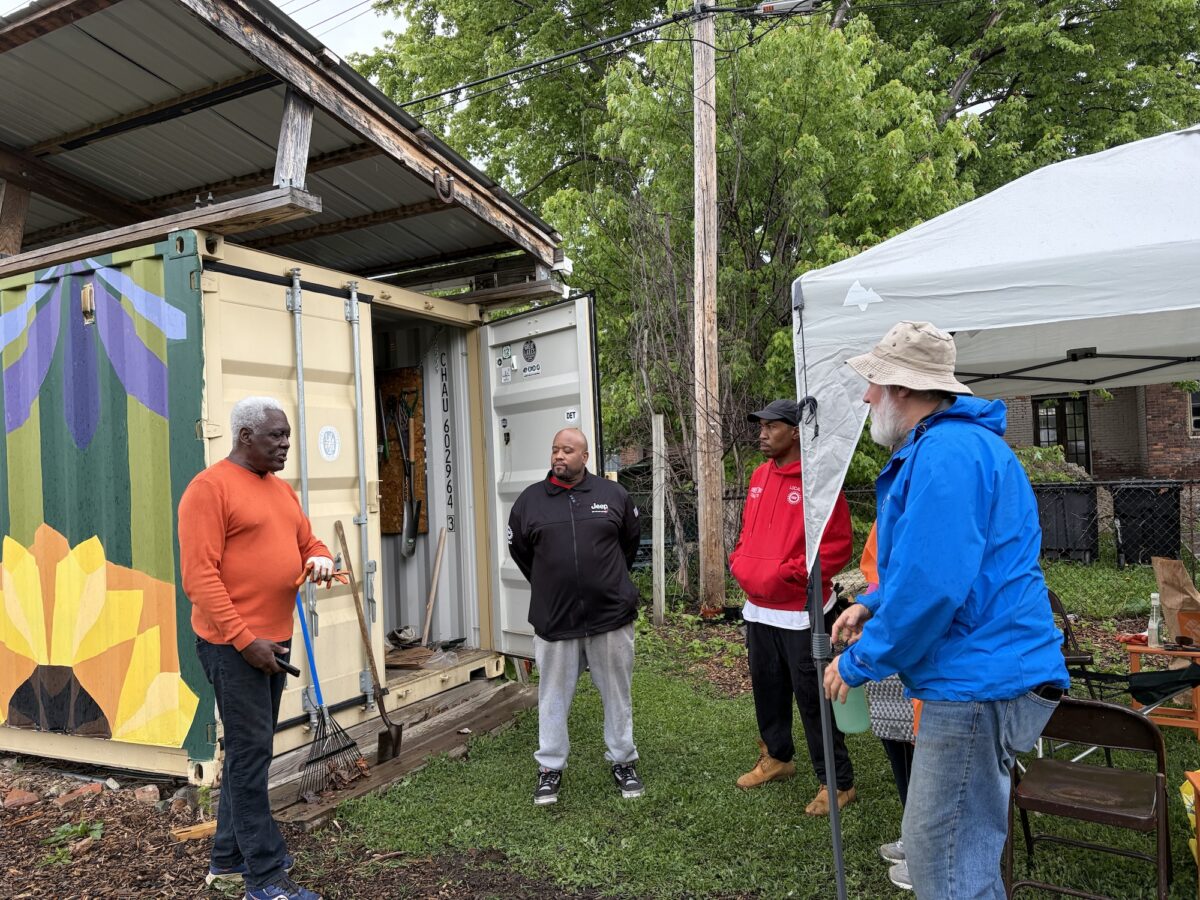
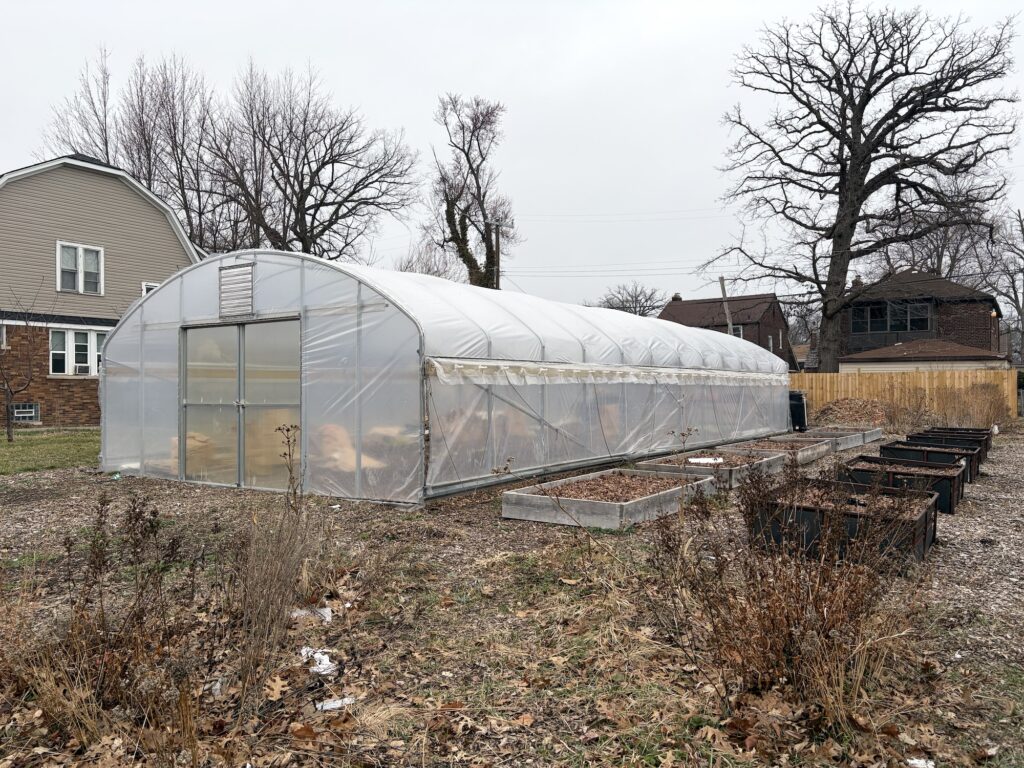
Nestled in Detroit’s far east Morningside community, in the midst of the neighborhood are four big lots — home to a well-established perennial garden, a hoop house, vegetable garden beds, and a small cherry tree orchard.
This is the home of a grassroots nonprofit organization committed to building community by transforming neglected spaces into beautiful, productive places everyone can enjoy.
“You know, with a few hundred dollars, some flowers, and a can of paint, you can turn blight into beauty,” Gray said while he was out raking and cleaning up winter debris to welcome in spring.
What to do with vacant land
Decades of demolitions of abandoned, blighted homes have left Detroit with one of the highest levels of vacant land in the country. Many of the empty lots are in parts of the city where home values are lower, and there is no financial incentive to build new homes.
Nearly half of Detroit’s 122,000 vacant lots — roughly 18 square miles — are owned primarily by the Detroit Land Bank Authority. Community members like Gray are repurposing and stewarding them for purposes other than housing. But a citywide master plan will help.
The DLBA’s Side lot and Neighborhood lot programs make more land than ever before available to Detroit residents.
Gray’s stewardship of his vacant lots, transforming them into attractive and useful green spaces, is a good example of land reuse. But it isn’t easy.
“There were four beautiful brick homes here at one time, and there may never be homes built here again,” Gray said. “It costs so much to build houses these days … it may never happen.”
While the likelihood of new housing developments popping up all over the city may seem remote, a coordinated and regulated network of open-space development could greatly enhance the quality of life for city residents, Gray said.
Gray points out that the city of Detroit issues blight tickets to owners of blighted, unmaintained properties. The city’s Nuisance Abatement Program (NAP) may even initiate legal action.
But Gray would like to see an integrated master plan and support for nonprofits like his that actively steward vacant land.
Hopes for the future
Gray wants to share his passion for gardening and horticulture with his neighbors. He wants Detroiters to enjoy and engage in the outdoors.
His hopes and dreams for the Emerald Isles are ambitious. He developed a master plan for this project on Haverhill Street with the assistance of the University of Detroit Mercy School of Architecture and Community Development and a group of community members.
The plan includes additional components: renderings of a two-story cottage for residential and office use, a wash-and-pack facility, landscaped paths, gazebos, and fencing. Sustainability features like rain gardens and bioretention systems are also planned to help manage stormwater and reduce flooding in the area. The project has a long-term phased approach and will rely on the involvement of community residents and multiple partner organizations.
Community engagement is difficult, and Gray is not a young man. He pointed up and down Haverhill Street, noting which homes are now owner-occupied. There are not many. Most are now rentals. He said it’s tough to get people out regularly to pitch in and help maintain the garden, especially if they are not financially invested in the neighborhood.
“I have always enjoyed gardening – I even studied some horticulture – but I am learning more about the therapeutic value of just being outside, he said. “We are taking pretty meager resources and turning what was once four blighted lots into a beautiful place that we can all enjoy – in fact, people can come on out and help me!”
Several dedicated volunteers help out in the garden, but the numbers are small.
‘A lot of work’
Dorothy Johnson, longtime resident and homeowner, said that while she believes she and Gray have similar intentions and ideologies, she finds it a challenge to stay engaged.
“I have to say…. I’m tired,” she said. “I find it difficult to get people engaged anymore. We were raised in a community, but people today don’t pitch in like they did in the past. I have grown weary of trying to get people to participate in the upkeep of the neighborhood.”
Branden Recker, a licensed builder, former Detroit site manager for Habitat for Humanity, and owner of RecBuilt, has brought a crew of volunteers out to Haverhill for the last three years.
They built benches at the site, delivered and spread compost, and helped clean up the gardens and get them ready for the spring season.
“Gary is very dedicated to this project and works hard to steward this space. But, it is a lot of work,” he said.
Recker supported several other urban gardens in his role with Habitat for Humanity. He said that maintenance of neighborhood-level green space is a challenge.
“Unfortunately, many of the ‘gardens’ are not well-maintained and become unsightly,” Recker said. “We need a contingency plan, regulation, and some oversight. A well-maintained garden or green space benefits the neighborhood. Spaces with no maintenance are eyesores. ”
But others living in the community view the empty space as an asset. Nick Hall, a young homeowner on Audubon Road, discovered the garden a few years ago while out riding his bike. He struck up a conversation with Gray and has been involved ever since.
Hall says, “It is a nice thing to have in the neighborhood. The garden brings calmness and beauty. It definitely brings people together.” Hall is optimistic about the area and believes the opportunity to reinvent vacant land is a draw to the Morningside community.
Adding green space and natural habitat to the urban landscape may be the best next step in Detroit’s unique evolution.
MORE FROM THE NEIGHBORHOOD REPORTING LAB

Shaquille Quamae Hall’s vision for Detroit youth: ‘Many hands make light work’
Detroit photographer and Planet Detroit Neighborhood Reporting Lab participant Shaquille Quamae Hall details his journey from mentee to mentor.

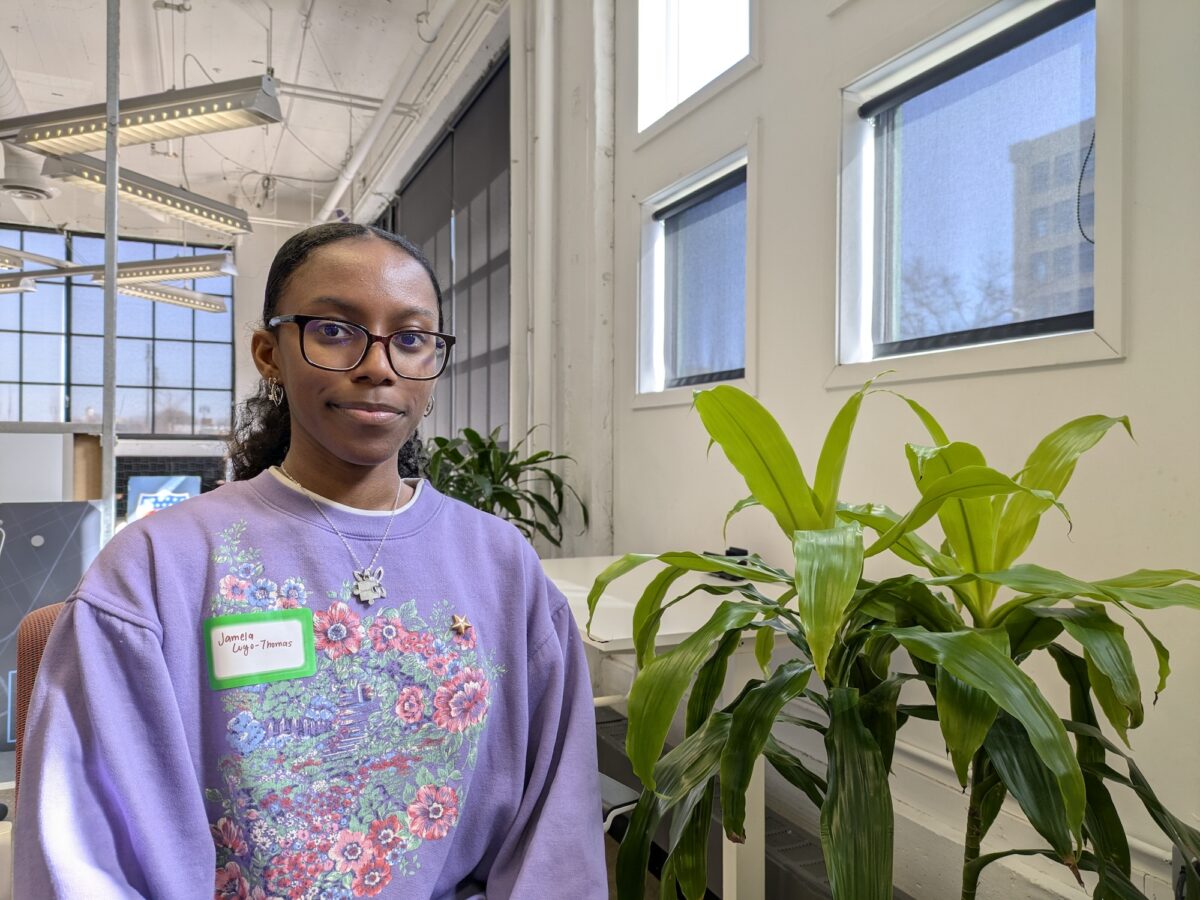
Highland Park resident and filmmaker Jamela Lugo-Thomas inspired by city’s water crisis
The College of Creative Studies grad combines lived experience with film to shine a light on issues of clean water access as part of Planet Detroit’s Neighborhood Reporting Lab.

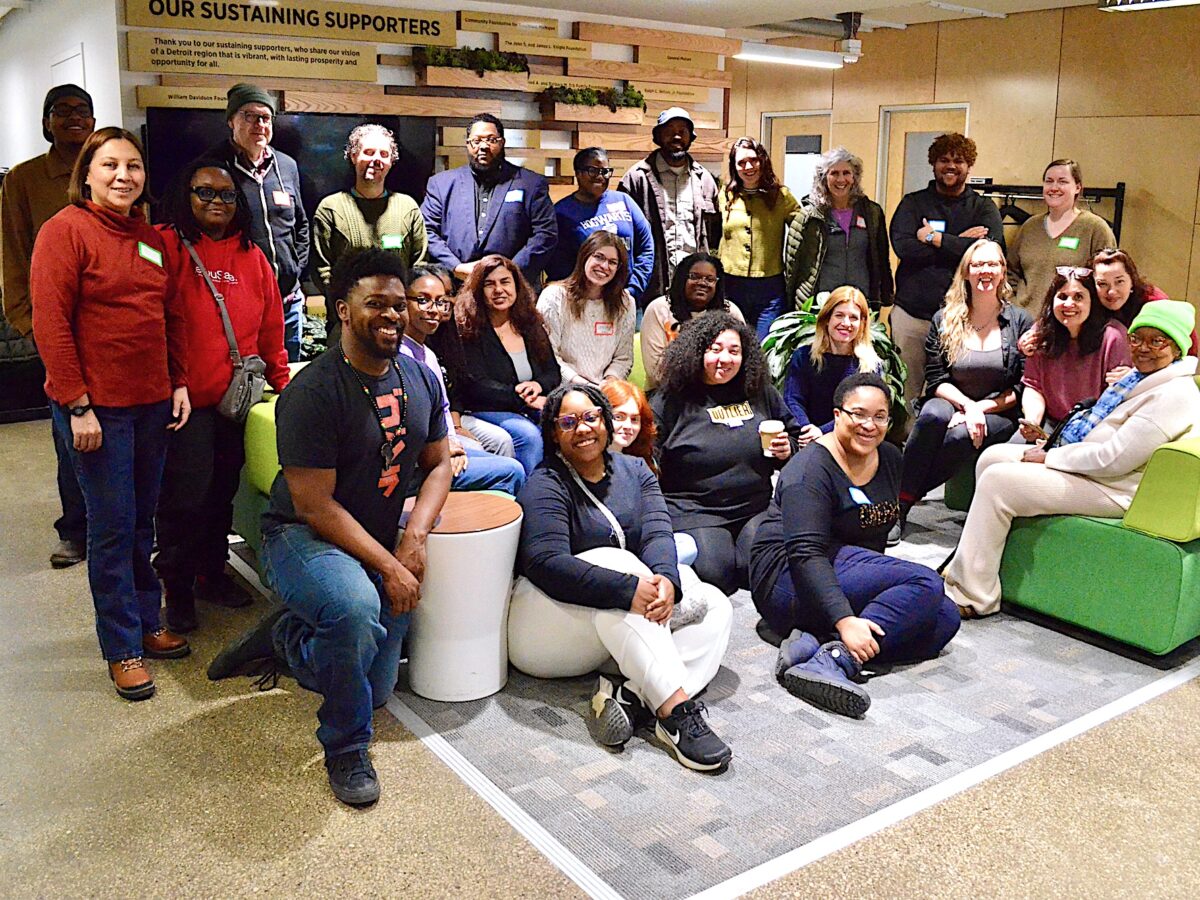
Detroit residents become reporters in Planet Detroit’s 2026 journalism program
Nineteen Detroit-area residents kicked off Planet Detroit’s third annual Neighborhood Reporting Lab, a six-week program that trains community members to tell environmental stories about their neighborhoods.