

Overview:
- Ralph C. Wilson Park combines world-class design by Michael Van Valkenburgh with community input and ecological restoration featuring 900+ native trees
- The park's water garden draws from the Detroit River, filters it through native plants, and offers the only public toe-dipping access along the shoreline
- The park represents Metroparks' first presence in Detroit, addressing a longstanding equity gap where city residents paid taxes but had no local access
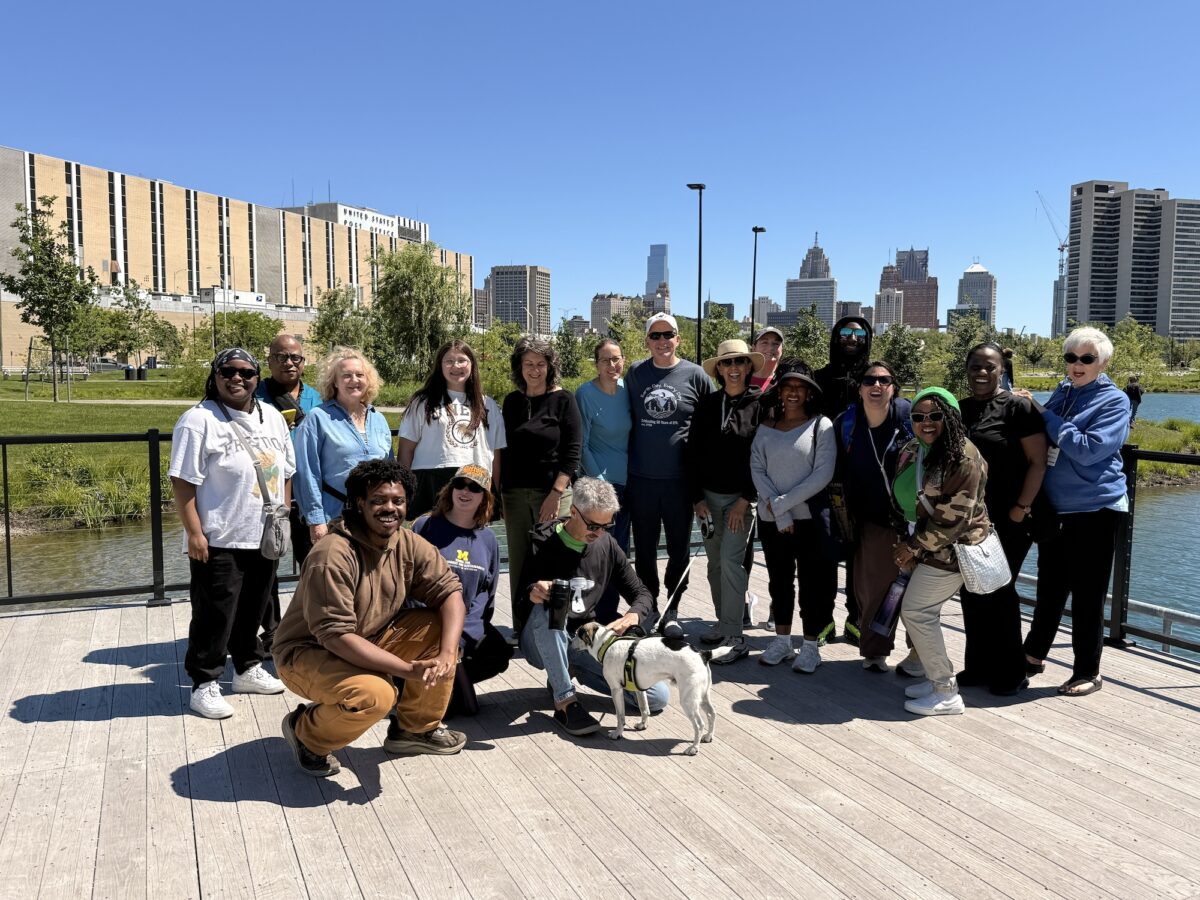
Ralph C. Wilson Centennial Park offers more than a new place to gather along the riverfront. On a recent Planet Detroit community walk, the park stood out as a case study in how design, ecology, and public access can come together in one space. From the way the landscape was planned to the environmental systems built into it, the park reflects a broader vision for what public space in Detroit can be.
The Ralph C. Wilson Foundation funded the majority of the park. Other support came from the Kresge Foundation, which funded murals in the park, as well as additional partners recognized throughout the site. The funding story is part of the park story: this is a highly resourced public space, built through a mix of philanthropy, regional investment, and public-private partnership.
We were led by Planet Detroit Outdoors Reporter Ian Solomon and tour guide Deborah Thompson from the Detroit Riverfront Conservancy.
Here are five things that stuck with us:
1. The park was shaped by both world-class design and real community input
The Ralph C. Wilson park was designed by landscape architect Michael Van Valkenburgh, whose other projects include Maggie Daley Park, Brooklyn Bridge Park, and the Obama Center landscape in Chicago. The design was shaped by a genuine community engagement process, including trips where residents visited other parks to gather ideas and bring them back to Detroit. A group of residents traveled to different parks across the country as part of that process.
2. Native plants and habitat restoration are baked into every layer of the park
Ecological restoration is a structural part of the park’s design. All 900-plus trees in the park are native species, with an additional 15–20% over-planted to account for expected mortality. Even the 40 mature trees removed during construction weren’t wasted: some were repurposed into benches, others were placed in the river with roots up to create habitat structures. Wildlife is already responding. Muskrats, river otters, painted turtles, and herons have all been spotted returning to the area.
3. The water garden is also doing environmental work
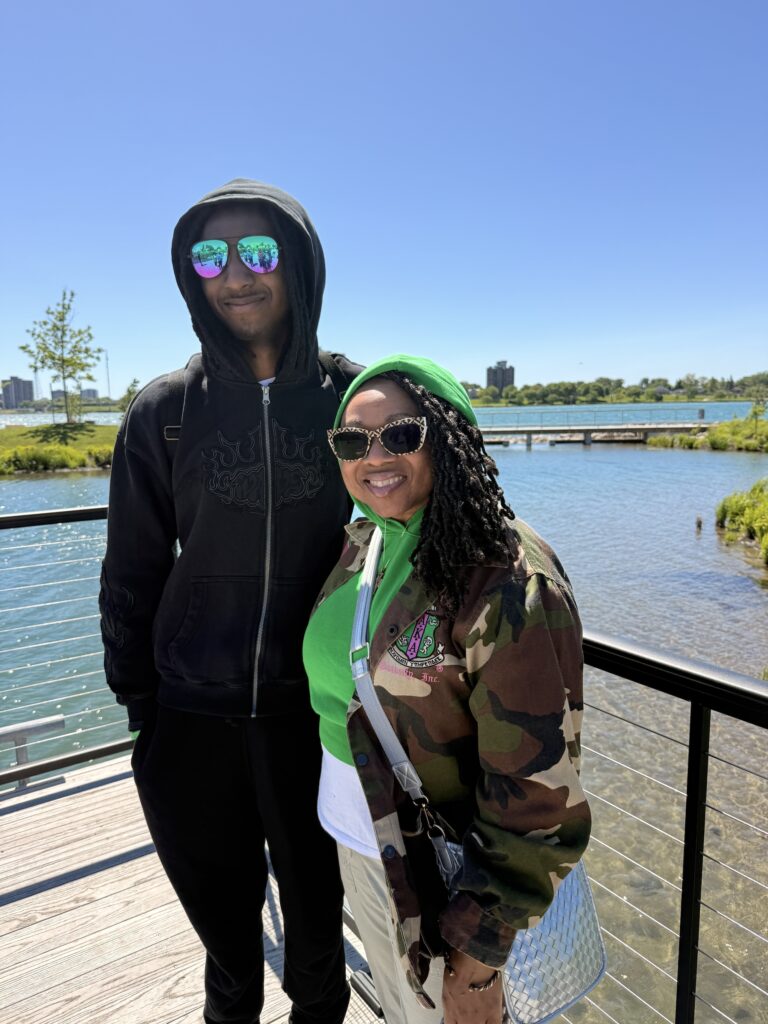
One of the park’s most striking features is its water garden, which draws water directly from the Detroit River, filters it through native plants, and returns it, functioning as both a stormwater filtration system and a habitat for native aquatic species. The weir reaches eight feet at its deepest point.
Visitors are invited to dip their toes into the Detroit River here — the only place along the entire shoreline where such access is possible.
Thompson also flagged something counterintuitive about the river itself: the Detroit River has been getting bluer and clearer in recent years, which is very pretty and might look like good news, but is actually tied to invasive quagga mussels that over-filter the water and disrupt the fish ecosystem.
4. This park addresses a long-standing equity gap in regional park access
One of the more pointed takeaways from the walk was the role of Metroparks in Detroit. Detroiters have long paid into the regional Metroparks system through taxes, even though the system has no presence in the city.
Thompson described the water garden as Metroparks’ first stake in Detroit — a notable shift in a system that had long excluded the city in practice, even as it drew on its residents’ tax dollars. She noted that this is the only free access to a Metropark facility, all others require a vehicle sticker for entry.
5. The park’s surveillance infrastructure is extensive
The park has a significant camera presence throughout. During the walk, one participant noted that it may be among the most surveilled public spaces in the state. Something to note.
Planet Detroit organizes monthly community walks to connect our readers and offer opportunities to learn about environmental and climate solutions in communities across Metro Detroit. Our next tour is at East Canfield Art Park on June 20th, with a focus on art installations, including a real-time air quality sculpture.