

This content was commissioned and paid for by Reynolds Water Conditioning Co. The news and editorial staff of Planet Detroit had no role in the creation or production of this story.
What’s actually coming out of your faucet? In metro Detroit, there are real reasons to ask — and more ways to find out than most people realize, starting with a free test at your own kitchen sink.

What’s in the water?
Shawn McElmurry, professor and chair of Civil and Environmental Engineering at Wayne State University, spends a lot of time thinking about what’s in Detroit’s water. He has also served on the City of Flint Water System Advisory Council since 2021. McElmurry studies the changes, both biological and chemical, that happen to water in the time between leaving one of Detroit’s water treatment plants and coming out of a faucet somewhere in metro Detroit.
This journey, through metro Detroit’s water distribution system and into individual homes, can include cracked pipes that let in bacteria, viruses, and pathogens, and areas of stagnant piping, where sitting water can cause lead and other elements to dissolve.
A sophisticated system is in place to counter these dangers, according to McElmurry, including continuous high water pressure (to keep contaminants from entering the pipes) and a helping of chlorine to keep the stuff that does get in at bay. Still, high temperatures, water main breaks and more make equilibrium a moving target.
“This is a really tough balance, and in the summer it’s even harder,” he said.
It’s a challenge Planet Detroit has covered extensively. Michigan is working to remove an estimated 580,000 lead and galvanized service lines statewide — only about 11% were replaced between 2021 and 2024. And a Planet Detroit analysis of state and federal sampling data found detectable PFAS in 59 areas across southeast Michigan, including municipal water supplies, schools, and childcare providers.
The point isn’t to scare you. It’s that you can actually find out what’s coming out of your own tap and take steps to get cleaner, better water for you and your family.
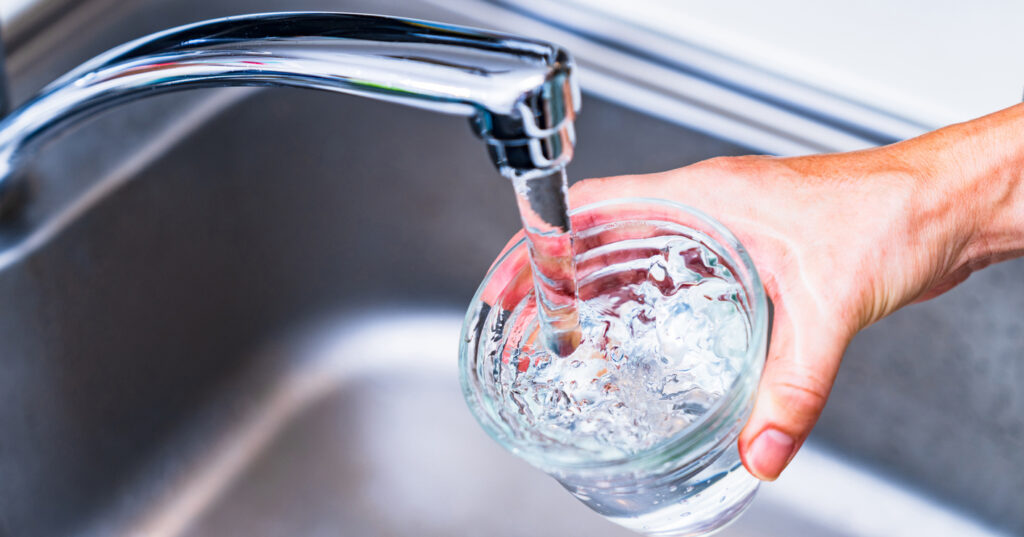
Getting your water tested
The easiest place to start is also free — and it comes to you. Reynolds Water Conditioning, Michigan’s oldest water treatment company, sends a technician right to your kitchen sink: no test kit to order, no samples to ship, no waiting on a lab. The free in-home test checks for dissolved solids, hardness, iron, sulfur and chlorine.
“People come to us, a lot of times, with health concerns,” said Amy Pilarski, president of Reynolds Water Conditioning. “They say things like, ‘I went to my doctor and she said I should be drinking reverse osmosis filtered water.’ We work with quite a few doctors, and get referrals from them on a regular basis.”
There are other routes, too. Your own water utility may test your tap for free. “Water utilities have to collect so many water samples within their distribution system, and it’s hard for them to identify locations and get people to participate,” McElmurry said. “So, I would call your water utility and say, ‘I want my water tested for lead.'” And the state will test your water directly: EGLE’s Drinking Water Laboratory in Lansing analyzes residential samples for a fee — including for lead and some PFAS — with test kits available at 517-335-8184 or through Michigan.gov/TestMyDrinkingWater.
For those who want to go beyond any standard test, Reynolds offers lab tests for a fee that can detect more than 100 contaminants, including lead. Based on the results of the free TDS test, lab tests, or both, Reynolds builds filters and treatment systems in-house that are customized to each home.
Well water vs. city water
Michigan has more than one million private residential wells that serve 2.6 million people statewide — nearly 30% of state residents, according to the Michigan Department of Health and Human Services (MDHHS).
Unlike municipal water sources, which are regularly tested, private wells require the individual homeowner to ensure their water is safe to drink.
An additional challenge to well water, Pilarski said, is the fact that it’s always changing. “If you use a private well, different things are going to come out of it at different times, because you’re pulling water out of the ground,” she said. “Even heavy rains can make different things appear.”
Howard Schwartz of White Lake Township has experienced the challenges of well water for more than 40 years, at his rental properties in Keego Harbor and West Bloomfield, and at his farm in White Lake Township.
“Whenever there’s been a problem [with the water], it’s often things you can’t quite put your finger on,” he said. “The water might be too hard, or there’s salt in it. It’s a blind item to everyone but the people who look for these things for a living.”
Schwartz has been a Reynolds Water customer since 1983, and credits them with finding and solving a variety of issues across his properties, from filtering out iron, improving water for his greenhouse plants, and softening hard water.
He said it’s important for everybody to periodically get their water tested. “It goes on our skin, we water our garden with it and we eat those plants,” he said. “Testing is important to do at some sort of frequency.”
I tried it myself
As part of the process for writing this guide, Reynolds Water visited my home to run a total dissolved solids (TDS) test on my water – a service they offer for free. Lou, one of their longtime technicians, dropped by on a sunny morning with a case of equipment, and amid the previous night’s dinner dishes (he politely didn’t comment) took a sample of water from my tap, running a series of tests right there in my kitchen.
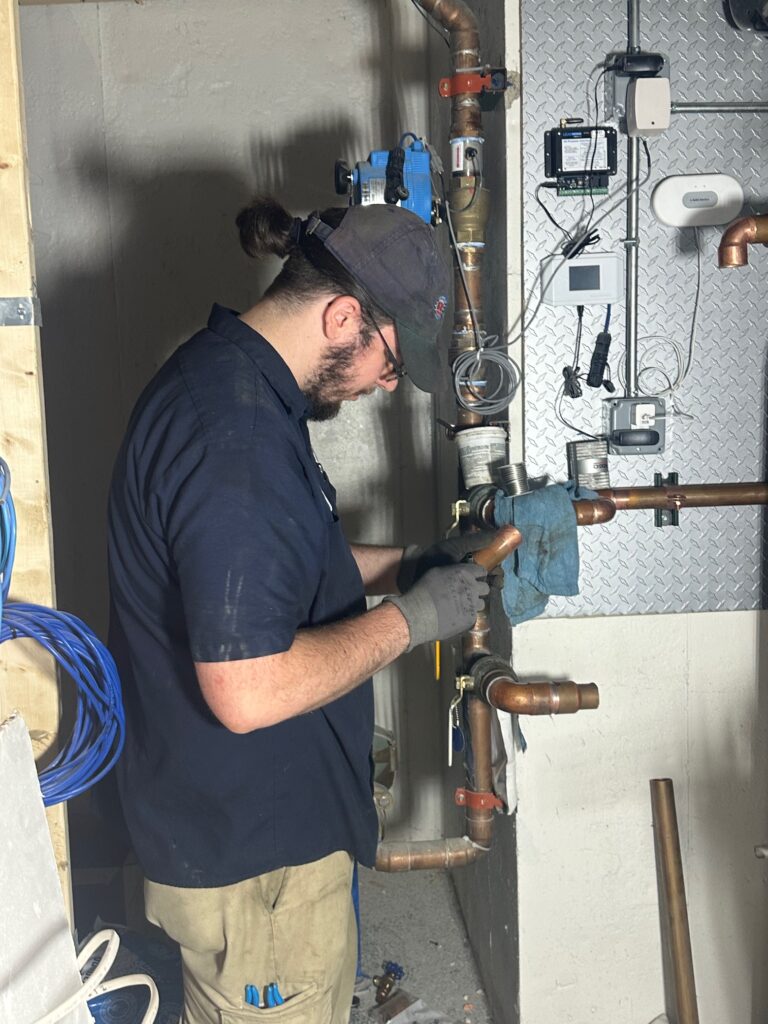
While we waited for the results, we went down to the basement to take a look at where water enters my house. He examined the setup of my home’s water tank, and provided suggestions for how a filtration system would work in my home’s particular layout.
Back upstairs, we got the results. My agua was a little high in chlorine (not uncommon for city water) but nothing else concerning to note.
The test didn’t cover everything. For example, to test my water for lead, the sample would need to be sent to a lab for a fee. It was great, however, to start to have an idea what was in my water, and it took less than an hour.
Every household should take steps to understand what water issues they have, Pilarski said, but it’s also important to not let fear get the best of them.
“There is so much that can be done to address water issues big and small, and it all starts with learning what’s going on in your own home.”
“We’ve helped so many people find water solutions that keep their families comfortable, happy and healthy,” Pilarski continued. “It all just starts with taking that first step.”
More from Planet Detroit’s water reporting:
- Drinking Water: From Lead to PFAS and Beyond
- Michigan Lead Service Line Tracker — see your water system’s replacement progress
- Planet Detroit analysis: ‘Forever chemicals’ found in water systems of 59 municipalities
- Living with PFAS in Metro Detroit