

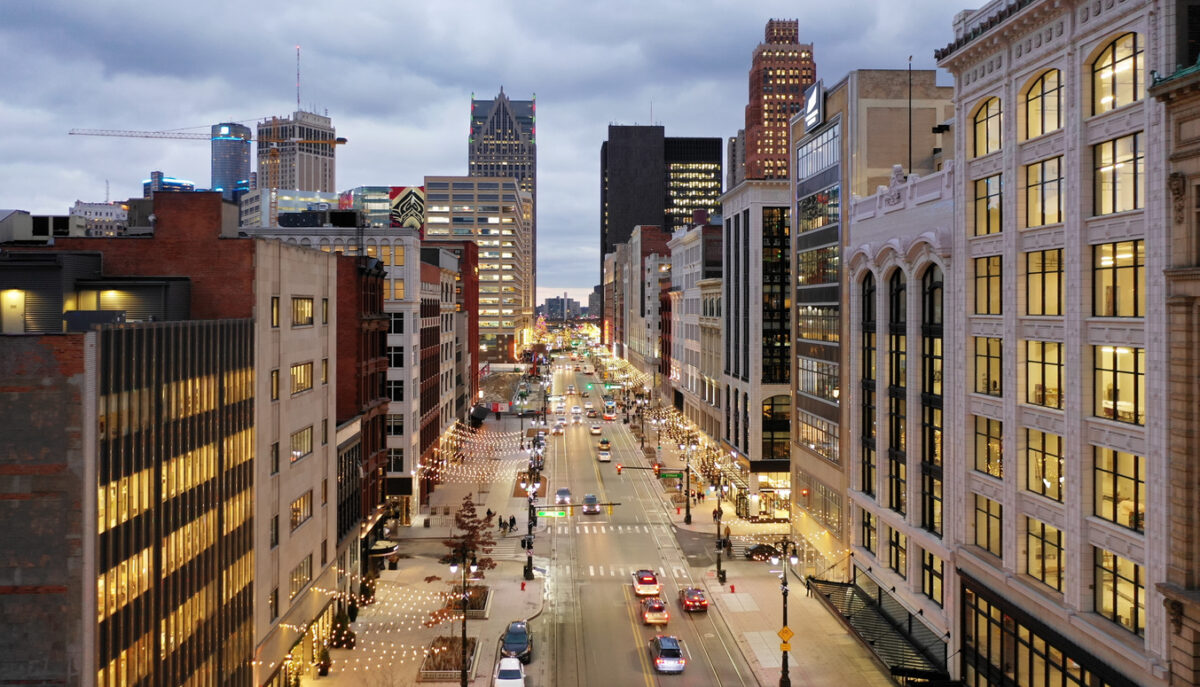
Overview:
- Michigan experienced hazardous air quality from Canadian wildfire smoke while extreme heat strained the power grid, creating overlapping public health risks
- Detroit's building energy benchmarking ordinances and upcoming decarbonization plans are first steps, but Michigan lacks broader building performance standards
- Energy-efficient building upgrades can reduce fossil fuel dependence, lower utility costs, improve indoor air quality, and protect residents from climate extremes
I have lived my entire life in Southeast Michigan, and until the summer of 2023, wildfire smoke was not something we regularly experienced here. Today, Michigan is experiencing one of the worst air quality days in its history.
Air quality across the state has been classified as Hazardous due to elevated levels of fine particulate matter from wildfire smoke originating from fires in Canada. While we are all experiencing the impacts, many of us are still learning what this means for our health and what steps we should take to protect ourselves.
The first night of the smoke, I said to my husband, “I’m so thankful we have power and air conditioning.” Just minutes later, at 11:04 p.m., our power went out. It was restored at 5:02 a.m. When I called DTE to ask about the cause, I learned that a tree had come into contact with a nearby power line.
I’m grateful our power is back on as we shelter indoors from the extreme heat and hazardous wildfire smoke, especially as extreme temperatures continue to put strain on DTE’s grid and leave some residents without power.
Staying cool and keeping smoke out — at the same time
Many people don’t have access to air conditioning, and I can’t help but wonder how they are coping. How do you stay cool during dangerous heat while also keeping your windows closed to prevent smoke from entering your home? As climate change contributes to more frequent and intense wildfires and severe weather events, these overlapping challenges are becoming an increasingly urgent public health concern.
These experiences are deeply connected to my work. I co-chair the Energy Waste Reduction Committee of the Detroit City Council’s Green Task Force, where we work to advance policies and public awareness around energy efficiency. The committee collaborates with residential, commercial, and industrial stakeholders to reduce energy waste and expand equitable access to energy efficiency programs and resources for all Detroiters.
Since its formation in 2019, the committee has worked to demonstrate that energy efficiency is about much more than saving energy—it improves affordability by lowering utility costs, reduces carbon emissions and air pollution, enhances indoor air quality, and supports occupant health and well-being.
Those same principles are central to the mission of the nonprofit organization I lead, Detroit 2030 District. We work to reduce carbon emissions from buildings and transportation in Detroit—the two largest sources of greenhouse gas emissions driving climate change.
Shelter only works if the building can protect you
Today, most buildings and homes are heated and cooled with fossil fuels, and many are not energy-efficient. As a result, they consume more energy than necessary to maintain comfortable indoor temperatures, leading to higher utility costs, increased air pollution, and greater greenhouse gas emissions.
As I hear about meetings being canceled today and colleagues being sent home because their buildings are not functioning properly or lack adequate ventilation, I find myself asking what solutions we should be pursuing.
Public health officials are advising people to stay indoors, yet many homes and buildings face indoor air quality challenges due to inadequate ventilation, moisture issues, aging systems, or deferred maintenance. Staying indoors is only protective if the buildings themselves provide healthy, resilient spaces.
Several years ago, I worked with colleagues through the Energy Waste Reduction Committee to advocate for Detroit’s adoption of a building energy benchmarking ordinance. Today, benchmarking policies are in place in Detroit, Ann Arbor, and many cities across the country.
These ordinances do not require building owners to make efficiency improvements, but they do require annual reporting of energy and water consumption. This information generates a performance score and allows owners to compare their buildings with similar properties, helping identify opportunities for improvement.
Benchmarking serves as a critical first step toward building decarbonization, but it is only the first step, and both the City of Detroit and Wayne County are now developing comprehensive building decarbonization plans, alongside implementation of the State of Michigan’s MI Healthy Climate Plan.
The standards Michigan still lacks
However, Michigan still lacks broader building performance standards that require buildings to reduce energy and water use over time. Establishing these standards would encourage investments in more efficient buildings while delivering multiple benefits: lower utility costs, healthier indoor environments, reduced air pollution, and fewer greenhouse gas emissions that contribute to climate change. In the meantime, new construction and major renovations are required to comply with Michigan’s new commercial energy code, adopted in April 2025.
As we experience increasingly compounding climate impacts—from extreme heat and cold to flooding, severe storms, wildfire smoke, and more frequent power outages—we must prioritize investments to upgrade our homes and buildings.
The more resilient our buildings are, the better they can protect us from these growing threats. Through energy efficiency and building electrification, we can reduce our dependence on fossil fuels, improve indoor air quality, lower energy costs, and transition to cleaner energy sources for heating and cooling.
The smoke outside our windows is a reminder that climate change is no longer a distant threat—it is affecting our health, our homes, and our daily lives here in Michigan. While we cannot control where the next wildfire will burn or when the next heat wave will arrive, we can control how well our homes, schools, workplaces, and public buildings are prepared.
By investing in resilient, energy-efficient buildings and supporting policies that improve building performance, we can protect public health, lower energy costs, reduce pollution, and strengthen our communities for generations to come.
I encourage everyone to get more involved in this conversation and to learn about the energy programs available through their utility or local government, advocate for stronger building policies, and ask how the places where we live, work, learn, and gather can become healthier and more resilient. The choices we make today will determine how well our communities withstand the climate challenges of tomorrow.
RELATED
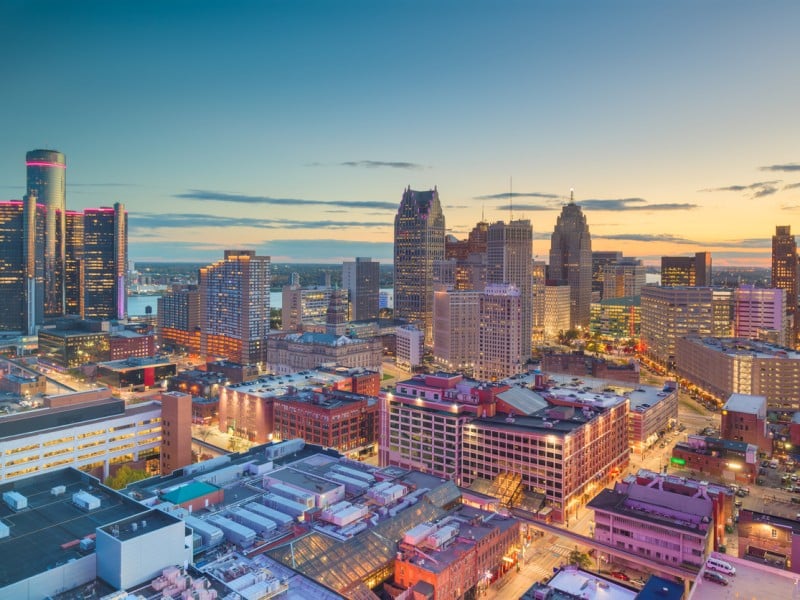
Detroit unveils new climate strategy, adopts energy and water benchmarking policy
Detroit joins a handful of cities with ordinances requiring large building owners to track and report their energy and water usage.
Keep reading

Your guide to a career in green building in Detroit
A PLANET DETROIT GREEN JOBS GUIDE | The bright outlook for green construction careers is driven by interest in sustainability and climate change mitigation.
Keep reading
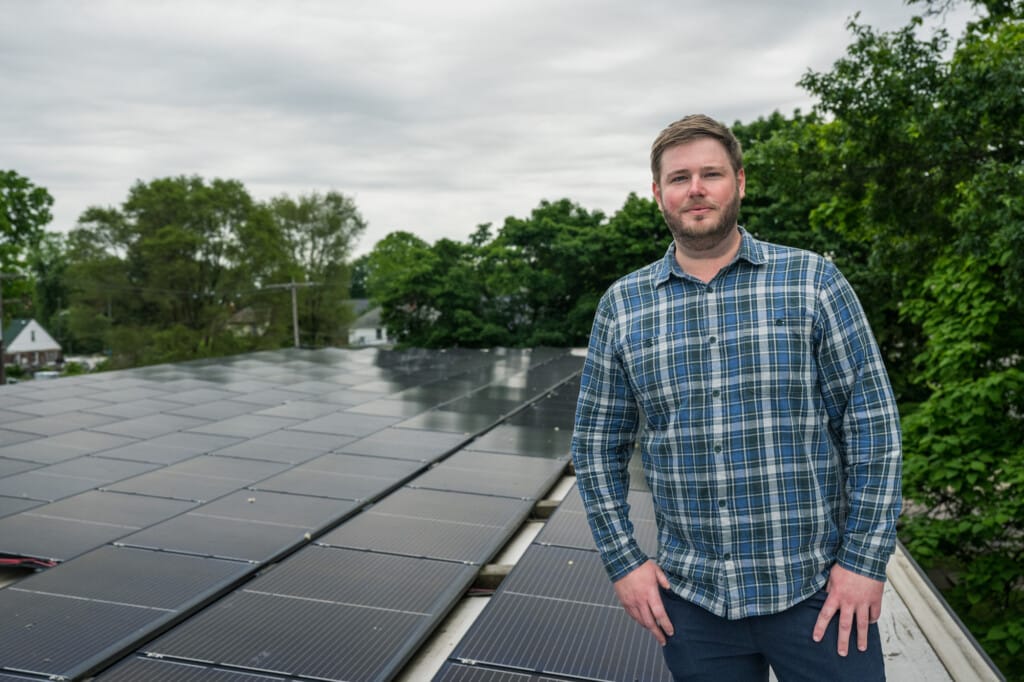
Detroit’s commercial buildings carry massive potential for energy efficiency. What’s holding it up?
Detroit climate solutions nonprofit EcoWorks is charting a path toward a carbon-free building future. And the Detroit 2030 District recognized the commercial building sector’s “biggest losers” in energy efficiency. But more work needs to be done. This article is co-published by the Energy News Network and Planet Detroit with support from the Race and Justice Reporting Initiative…
Keep reading