

Overview:
- The Detroit Recharged project will upgrade the Detroit Intermodal Freight Terminal with hybrid electric cranes and expand capacity from 107,000 to 250,000 containers annually.
- The city plans to redirect truck traffic north to I-94 and install a concrete island on Livernois to reduce cut-through traffic on residential streets.
- Few residents attended a July open house, and a block club president says past beautification promises were not kept.
A Southwest Detroit freight terminal that residents describe as a problematic “dust bowl” is taking community input on the design of a $112-million upgrade project.
🗳️ Civic Action Toolbox
Why it matters
The Detroit Recharged project promises to reduce air pollution and truck traffic cutting through Southwest Detroit neighborhoods, but a city official says expanded capacity at the freight terminal may bring more trucks to an area already burdened by industrial pollution.
Who's making public decisions
The Federal Railroad Administration must approve the project before construction can begin in 2027. The project partners are the Michigan Department of Transportation, the city of Detroit, Norfolk Southern Railway, and Southwest Detroit Environmental Vision.
Civic Actions: What You Can Do
Organizations to Follow
What to watch for next
Watch for the virtual public meeting planned before the end of summer and the Federal Railroad Administration decision that will determine whether construction begins in 2027.
Are you taking action? Let us know.
Civic resources compiled by Planet Detroit
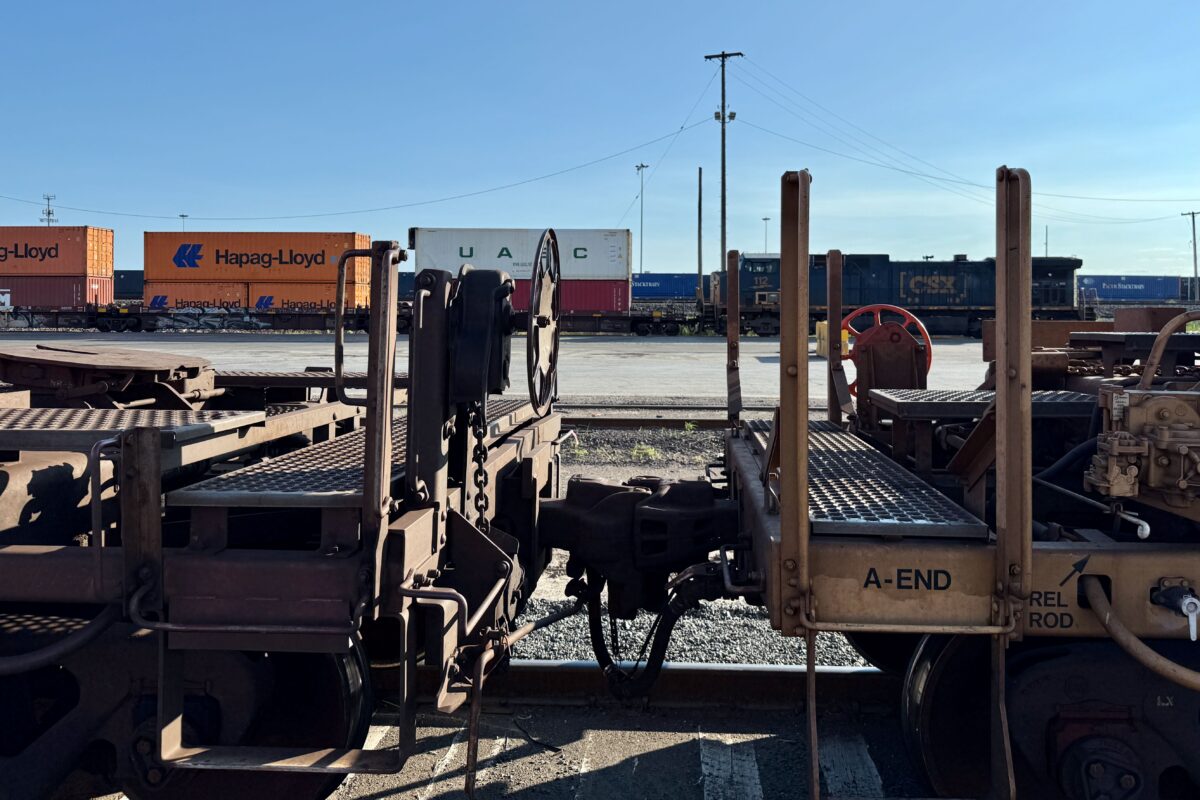
The Detroit Recharged project aims to decarbonize and expand a portion of the Detroit Intermodal Freight Terminal, which facilitates the transfer of everything from consumer goods to auto parts between rail and road transportation.
The project promises cleaner air, reduced truck traffic, and improved quality of life around the terminal at Livernois Avenue and Federal Street.
At the same time, the expansion of the terminal’s container capacity has the potential to increase truck traffic, a city official said at a July open house. The city plans to divert truck traffic from nearby residential streets.
The project will demonstrate that a “clean industrial space” and local workforce development are possible, said Raquel Garcia, executive director of Southwest Detroit Environmental Vision (SDEV).
“It’s not perfect, but it’s a good start,” she said.
The nonprofit is conducting community outreach, workforce development, and small business enterprise engagement with a grant from Norfolk Southern Railway, which operates the east side of the freight yard.
How truck traffic factors into freight terminal project
The U.S. Department of Transportation’s Federal Railroad Administration provided a $67-million grant for the project that’s matched by $45 million from the city, state, and Norfolk Southern.
The project will increase the freight terminal’s capacity from 107,000 to 250,000 containers annually with the use of hybrid electric cranes that replace diesel-powered equipment.
The project is a partnership between the Michigan Department of Transportation (MDOT), the city, Norfolk Southern, and SDEV.
Construction is expected to start in 2027, pending approvals from the Federal Railroad Administration, said Sam Krassenstein, chief of infrastructure for the Detroit Department of Public Works.
As the container capacity on the Norfolk Southern property increases, it’s possible that truck traffic will increase, he said.
Truck traffic from the freight terminal will be redirected north to I-94, reducing cut-throughs in residential areas of Southwest Detroit, Krassenstein said.
The freight terminal project reconfigures a pain point for residents living near the Livernois Avenue and Federal Street entrance who are accustomed to heavy trucks using their streets as a shortcut, he said.
Once a concrete island is installed on the south end of Livernois, trucks entering and exiting Norfolk Southern will no longer be able to travel south to I-75, he said.
“We turn off a big part of the faucet for trucks that could choose to not follow the rules and cut through that neighborhood.”
The entrance will feature an automated gate to speed up truck processing and avoid a long line of trucks backed up on Livernois, which can block vehicle and bike traffic, he said.
Justin Watson, Norfolk Southern’s manager of infrastructure, capacity, and efficiency, said the automated gate will speed up truck processing from 90 seconds to 45 seconds each.
In October 2025, the city enacted truck route restrictions that prohibit trucks on residential streets and certain roads like Livernois Avenue between Vernor Highway and I-75, Dragoon, Clark, Scotten, and West Grand Boulevard.
Augusta Gudeman, the city’s freight specialist, said truck traffic on streets where restrictions were added dropped by 60% to 80%.
Two new commercial vehicle police units will focus full-time on Southwest Detroit truck enforcement, she said.
Few residents show for project open house
Detroit Recharged partners crowded a July 23 open house at Latino Press, but the residents who will be impacted by the infrastructure project were largely absent.
“It seems to be well thought out, but I don’t see other residents here,” said Hilda Rangel, who attended as a representative of the Springdale Woodmere Block Club.
Ann Byrne, the block club’s president, said some community members feel a sense of déjà vu, as the city asked them to vote on beautification plans for the facility 30 years ago.
Instead, residents got a “cheap green screen,” a “dust bowl,” and constant potholes, sewer backups, and flooding, she said in a phone interview.
Byrne wants to see the project partners keep their promise on landscaping, with more than a tarp-like covering around the facility, she said.
Lighting should not blind traffic or disrupt neighbors, and preserve migratory pathways for insects, she said.
At the open house, engineers, arborists, and transportation managers stood next to boards depicting lighting and tree options, drainage and paving plans, and traffic flow improvements.
Votes on lighting and landscaping design options were tallied with small colorful dots.
The physical footprint of the facility will stay the same, but the facility’s capacity will be increased by stacking containers higher instead of wider, said Herbert Smith, regional vice president at Norfolk Southern.
A rail-mounted gantry crane will stack five international containers on top of each other, instead of the current two-high configuration, he said.
Norfolk Southern and CSX Corp. jointly operate the freight yard. Norfolk Southern owns 67.5 acres on the east side of the train tracks, while CSX owns about 50 acres on the west side.
More public meetings planned
The project is in the early design phase, and the open house was held to solicit community feedback, Smith said.
Feedback from the event will influence the final design of the facility, as well as work SDEV does on job placement, workforce development, and upskilling, he said.
A virtual public meeting will be held before the end of summer, with additional public meetings planned as the design progresses, Smith said.
A Norfolk Southern spokesperson told Planet Detroit in 2024 that the rail company pledged $1 million as part of a grant to SDEV to help with community outreach, workforce development, and small business enterprise engagement.
Garcia, SDEV’s executive director, said last month’s open house represents the first community engagement the group has been able to undertake since receiving the grant in 2024.
Once the city approved the event flyer July 5, SDEV started canvassing 1,900 homes in the neighborhood surrounding the facility the next day, Garcia said. The work was paused on days with record-breaking poor air quality and extreme heat, she said.
“If I could go back in time and have a person on the ground the minute we learned about the grant, I would,” Garcia said.
SDEV plans to hire a part-time employee to help understand the workforce needs of the community, Garcia said. The engagement will take place at the end of 2026 and into 2027, she said.
The work will be done door-to-door, as some fenceline communities directly impacted by the facility’s pollution opt out of meetings like the open house, she said.
“Maybe they have two jobs, maybe they’re Spanish speakers, or they don’t know what these meetings are like,” she said.
Given the federal government’s ongoing immigration enforcement, Garcia said some residents may not be comfortable attending formal meetings.
“They’re not concerned about rail. They’re concerned about a raid.”
MORE SOUTHWEST DETROIT COVERAGE
Marathon Petroleum wins air quality permit approval for Detroit refinery expansion
Michigan regulators approve air quality permits for Marathon Petroleum’s Southwest Detroit refinery expansion with added conditions.

Federal judge to DTE: No delays for Clean Air Act compliance on Zug Island
DTE is appealing a $100-million judgment over sulfur dioxide pollution from its Zug Island subsidiary.


Detroit cracks down on Southwest truck traffic with new restrictions: Activist ‘beyond thrilled’
The truck restrictions could be expanded beyond Southwest Detroit, where “the issue is most severe,” says city’s infrastructure chief.