

Overview:
- Democrat Jocelyn Benson beats Republican John James in Michigan governor's race.
- Benson, currently the secretary of state, will replace term-limited Gov. Gretchen Whitmer, also a Democrat.
- She will inherit a state with some significant challenges, including struggling schools, sluggish population and economic growth.
This story was originally published by Bridge Michigan, a nonprofit and nonpartisan news organization. To get regular coverage from Bridge Michigan, sign up for a free Bridge Michigan newsletter here.
by Simon D. Schuster, Bridge Michigan
November 4, 2026
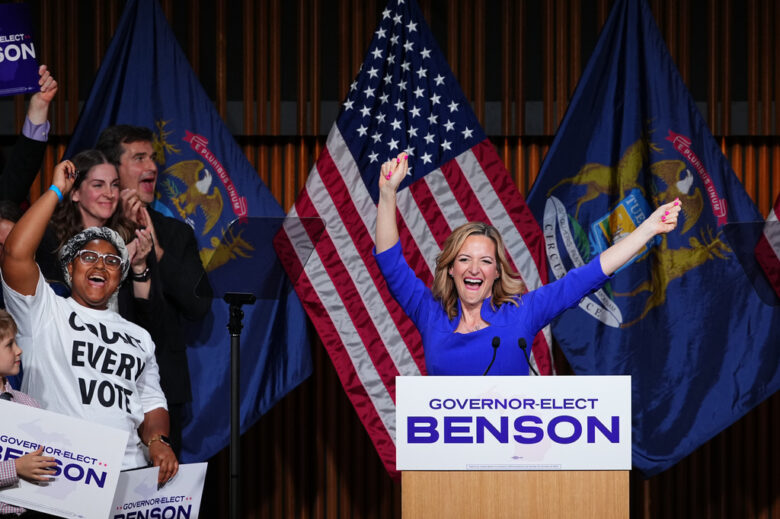
LANSING — Jocelyn Benson is poised to become Michigan’s 50th governor after soundly defeating Republican John James amid a surge of support for Democrats throughout Michigan.
The Associated Press called the race for Benson at 1:45 a.m. Roughly 20 percent of Michigan’s votes were still to be counted, but Benson was leading by nearly 10 percentage points.
Benson, who currently serves as secretary of state, declared victory at a Democratic watch party in Detroit and predicted she would enter the governor’s office with Democratic majorities in both chambers of the state Legislature, though not all legislative races had been called.
“In this election, from the western reaches of the Upper Peninsula to downtown Detroit, voters sent a clear message: they want leaders who will fight for them, fight to lower costs, fight to grow our economy, fight the corruption that too often protects the powerful and hurts the people,” Benson said in her victory speech.
“We showed the nation that in our democracy, the power of the people will always rule the day.”
Benson will replace term-limited Gov. Gretchen Whitmer in January. She bucked history to become the first candidate to succeed a governor from the same political party since Michigan implemented term limits in 1992.
“That means we can expand on the historic progress we’ve made over the last eight years,” Whitmer said in a statement, citing senior tax cuts, free school meals and other policies she’s implemented as governor.
But Benson will inherit significant challenges, too, including struggling schools, stagnant population growth and an economy outpaced by neighboring states.
Benson, who tapped state Senate Majority Leader Winnie Brinks as her running mate, called their election a “win for our young girls who tonight can look up and for the first time in our state’s history. see two women leading this state as governor and lieutenant governor.”
She and Brinks will “work together every day to ensure that young girls and women always have access to the health care they need and the rights and freedoms they deserve,” Benson added.
James, who would have become Michigan’s first Black governor, could not overcome national trends and the unpopularity of President Donald Trump, who had endorsed him.
He spoke to supporters shortly before midnight at Detroit’s Book Cadillac hotel, saying Republicans were still “optimistic” but acknowledging that “we don’t know what tonight’s going to bring.” Neither candidate mentioned the other in their speeches to supporters.
Both candidates pitched a vision of how they’d like to reshape Lansing, from a new funding model for schools to tax cuts and an overhaul of the state’s regulatory apparatus.
Benson built her campaign around healthcare and affordability, leaning on her record as secretary as evidence she can make government more efficient and responsive to taxpayers.
“The heart of our campaign … is costs down, wages up, and fighting for the people of Michigan and ending corruption,” Benson told supporters during a campaign-closing bus tour. “As governor, I will work for you — not the highest bidder, not Donald Trump — you and the people of this state.”
The defeat was the third statewide loss for James, who twice lost U.S. Senate races before winning election to Congress in 2022. He ran for governor instead of seeking reelection in his Macomb County district.
James had cast his candidacy as an opportunity for change in Lansing, arguing eight years of Democratic leadership is to blame for Michigan’s trajectory.
“Don’t let anybody tell you that affordability alone is what you should strive for, but prosperity is what you should strive for. Right now, we have people dumbing it down, saying that we should just accept just getting by,” James said in an October speech to supporters.
“We’re not going to accept getting by because the American dream is our birthright, and greatness is in our DNA. We just need leadership who believes in you as much as I do.”
The gubernatorial candidates have had to campaign in the shadow of a behemoth nationally watched US Senate race that’s seen vastly more spending and complicated their efforts to reach voters.
Benson’s counterpart in the Senate race, Abdul El-Sayed, ran a substantially more progressive campaign, while Trump — who faces nearly 60% disapproval in Michigan — repeatedly inserted himself into state politics and told Michiganders to vote “like I’m on the ballot.”
The president’s presence made James’ tightrope all the more tenuous. He rallied with Trump and courted his support while trying to turn voters’ attention back to Michigan-specific issues.
“We’re losing our kids, and y’all are focusing on some dude in Washington, D.C. that’s going to be done in two years? We are smarter than that,” James told reporters after the second gubernatorial debate.
Bridge Michigan chronicled both candidates’ proposals to address pressing policy questions on education, healthcare, the environment, economy and democracy.
What voters said
Traverse City voter Elaine Hatch told Bridge Michigan she voted for Benson on Tuesday because “she is a female, for one,” but also because “I think she has done a great job as Secretary of State.”
Hatch, a 61-year-old logistics manager for an import/expert company, called herself a lifelong Democrat who was especially motivated to vote this year to protest Trump.
In Monroe County’s Lambertville, Timothy and Consuelo Cousino described themselves as former Trump voters who this year backed Benson and all other Democrats on the ballot.
“I thought maybe he could help (the country) financially,” said Consuelo Cousino, 45, a stay-at-home mom of five children.
But that didn’t happen, they said. Prices have surged. Worse, “there’s so much hate in the country right now,” said Timothy Cousino, 43, a city worker and member of the 180th National Guard in Toledo.
Trump may not have been on the ballot, but he drove their votes solidly blue this year, Timothy Cousino said: “I went blue down the line; that’s how irritated I am.”
But Mike Haines of Warren, a 57-year-old business owner, said he voted for James after backing Democrats in some past elections.
“John James is more upfront, straight-shooting,” Haines said. “I have an appreciation for his approach, from all the way back to COVID situations as compared to how Benson and the administration was dealing with it.”
Jesus Villa, a 34-year-old architect who lived in Traverse City and voted in his first general election as a U.S. citizen on Tuesday, said he split his ticket to vote for James and Democratic U.S. Senate candidate Abdul El-Sayed.
“My thinking is that the government has to be managed or controlled as a business,” Villa said, explaining his support for James, who helped run his family business in Detroit after serving in the US Army.
An almost unprecedented election
The contest to succeed Whitmer began with a shock: a month after the 2024 presidential election, Detroit Mayor Mike Duggan announced he would leave the Democratic Party to run for governor as an independent, betting voters would back a problem-solving pragmatist who eschewed partisan labels.
Duggan raised millions and rose quickly in polls, seemingly setting the stage for a competitive three-way gubernatorial race unprecedented in modern Michigan politics.
But by May 2026, the national political climate had shifted, as anger toward the Trump administration translated into increased support for Democratic candidates. As his fundraising began to falter, and without the institutional support of a major party, Duggan determined his path to victory had closed and withdrew from the race.
“I never ran to be a spoiler,” Duggan said in his announcement. “I was trying to change politics.” Republicans and Democrats alike scrambled to pick up his supporters in the ensuing weeks.
The road to November
James won a contested primary but faced significant attacks in the process.
The GOP field at one point swelled to eight candidates, though by the time of the August primary had contracted to a two-man contest between James and businessman Perry Johnson, a self-funded candidate who put more than $30 million of his personal fortune into his campaign.
Johnson used a flurry of advertising to promise he’d slash Michigan taxes, but James won Trump’s endorsement and went on to win the primary by about 15 percentage points.
Benson, meanwhile, enjoyed a more cordial primary against Genesee County Sheriff Chris Swanson, whom she easily bested by more than 66 points.
Benson took and maintained a fundraising advantage in the general election race. At one point in early October, it seems James had been left to “twist in the wind,” as one GOP strategist put it, after the Republican Governors Association pulled its ad reservations, leaving Benson with a roughly 12-to-1 spending advantage in the final month of the race.
That abruptly changed in the last two weeks, however, after the Michigan Republican Party began spending millions to support James and other statewide candidates, thanks to big donations from DeVos family members, Elon Musk and outside super PACs.
The late support seemingly ran afoul of Michigan campaign finance law, which caps coordinated spending between the party and candidates, prompting a complaint from the Michigan Democratic Party that has not been resolved. James argued the spending was legal because a recent US Supreme Court decision had nullified similar spending limits in federal races.
Ad tracking firm AdImpact reported nearly $41 million has been spent on broadcast ads in the gubernatorial general election, with 56% of that designed to benefit Benson. Counting primary spending by Johnson, total spending in the race neared $74 million.
This article first appeared on Bridge Michigan and is republished here under a Creative Commons Attribution-NoDerivatives 4.0 International License.
MORE POLITICS NEWS
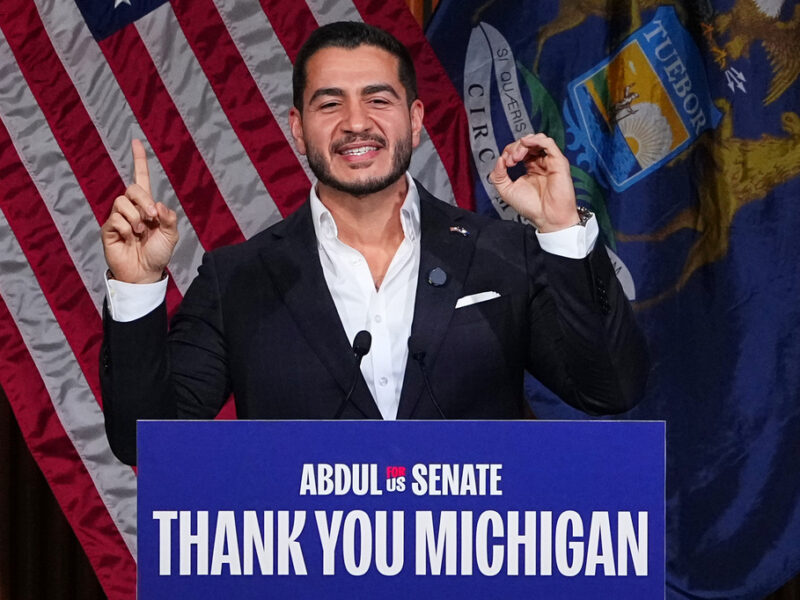
Michigan voters send El-Sayed to Senate after bitter, expensive campaign
The progressive Democrat and former public health official beat Republican Mike Rogers in a race for the seat left open by Sen. Gary Peters.

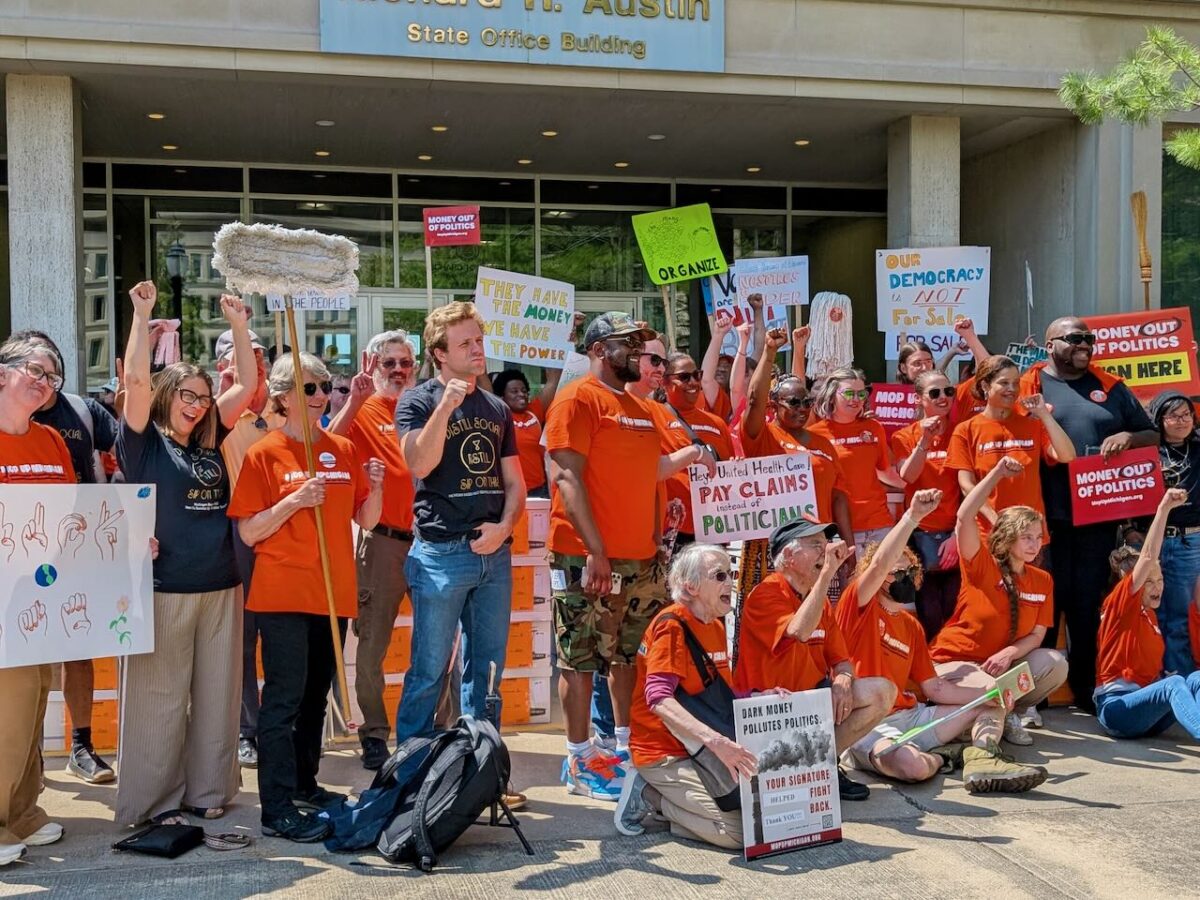
Michigan voters ban DTE money from state politics: ‘David beat Goliath’
Michigan voters pass Proposal 2, which bans campaign spending from regulated electric and gas utilities and major government contractors. Voters also rejected Proposal 1, a measure to call a constitutional convention.

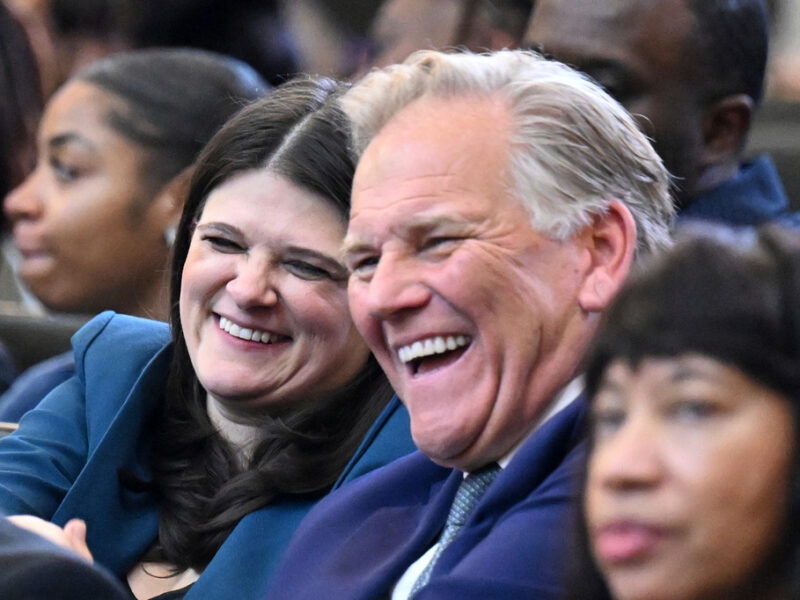
Why Haley Stevens endorsed Mike Rogers: Inside the Michigan Democratic rift over El-Sayed’s Senate campaign
Days before Election Day, the congresswoman who lost the Democratic primary to Abdul El-Sayed backed his Republican opponent after being uninvited from a joint event.