

Overview:
- Art from the Sustain-A-City exhibition is now on display on billboards in the city.
- "It's this idea of guerrilla marketing, this idea of using billboards in a creative way," says participating artist Douglas Jones.
- Saturday's opening came as part of the Detroit Month of Design. Detroit is the nation's sole UNESCO City of Design.

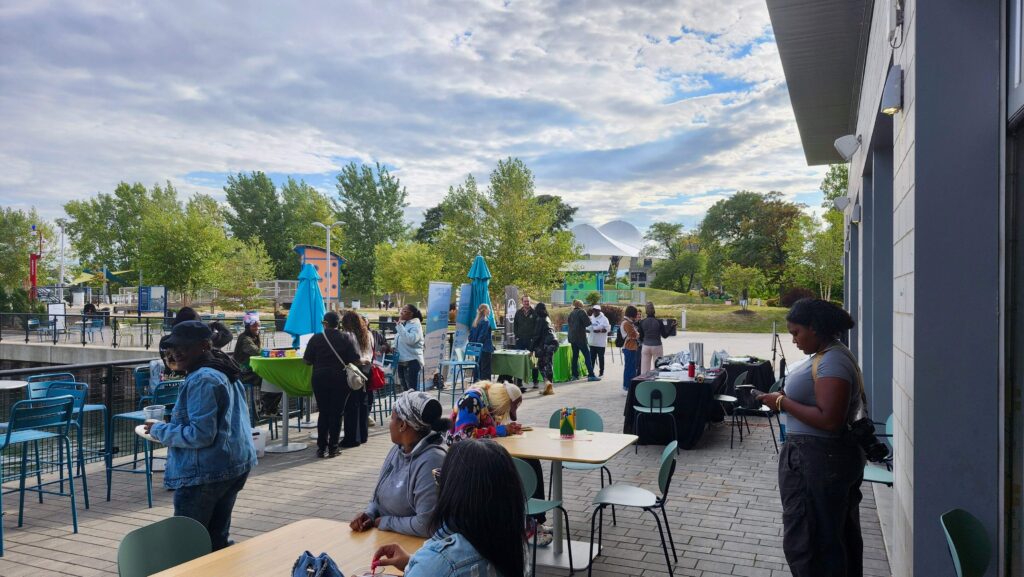
A crisp fall breeze swept across the Detroit riverfront Saturday, but the crowd at Robert C. Valade Park kept things warm.
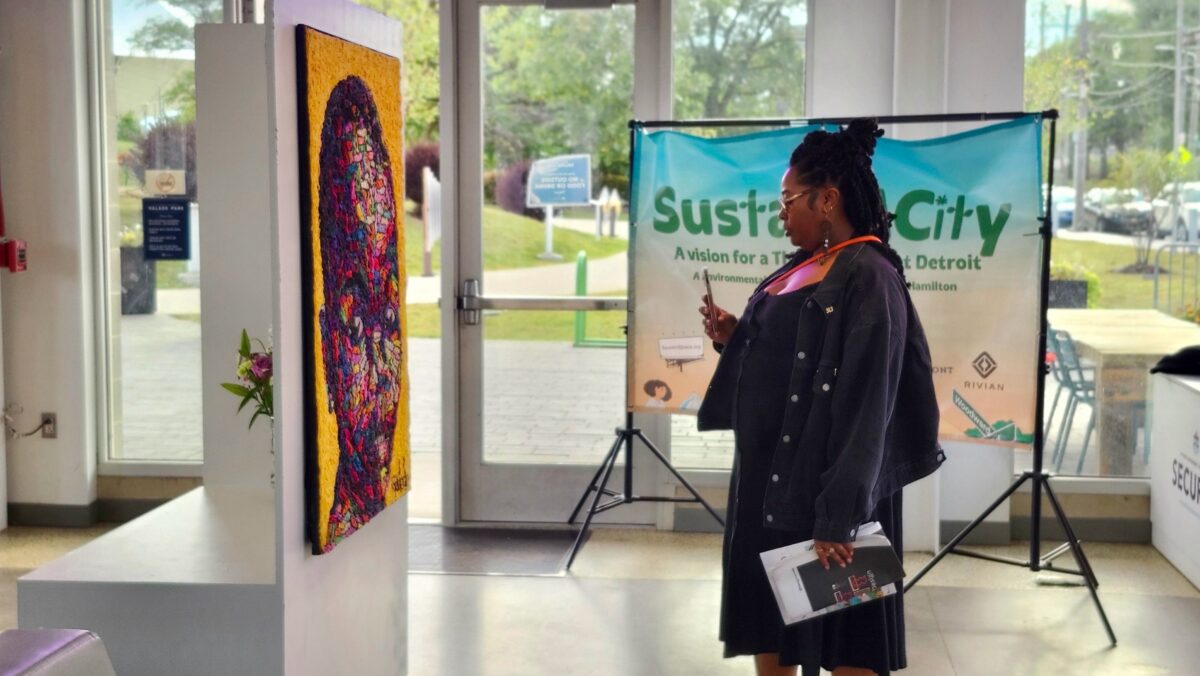
A DJs music pulsed as visitors gathered at the Café at Valade and the Shed Bar to celebrate the opening of “Sustain-A-City: A Vision for a Thriving, Resilient Detroit,” an environmental art exhibition hosted as part of the Detroit Month of Design.
The annual citywide festival is curated and produced by Design Core Detroit, a nonprofit that aims to support design-driven businesses and promote Detroit’s creative economy. This year’s focus is sustainability.
The exhibit’s curator is Asia Hamilton, founder and director of Norwest Gallery. Hamilton is the climate resilience program manager for the city’s Office of Sustainability.
Her dual roles provide her with the opportunity to highlight artists who incorporate environmental messaging into their work as well as use sustainable practices. The goal: to spark conversation around keeping our air and community spaces clean.
“We are a resilient people. Period,” Hamilton said.
“But we’re so resilient that we’re pushing through, and we don’t even notice that we’re being affected by poor air quality or a flooding city. I wanted to bring attention to those things, but also fix those things to have a better future.”
Sustain-A-City art on large-scale display in Detroit
Detroit is the nation’s sole UNESCO City of Design, a designation granted by the United Nations for excellence and impact in design.
As part of the UNESCO Creative Cities Network, these cities exemplify thriving design industries, a culture of innovation, and a commitment to leveraging design for sustainable development and economic growth.
Hamilton said she sees this designation as a testament to the efforts of both Design Core Detroit and the work the city puts toward sustainability on all levels. She also sees it as a call to continue pushing this work forward.
Inside, work from 16 Detroit area artists lined the shed Saturday, with each interpreting their view of sustainability.
Work from the show is on display now on a larger scale in the city.
Nine works are on display on a digital billboard at 14th Street and Michigan Avenue through Sept. 14, while a piece by artist Megan Rizzo, also known as Daisy, will appear on a static billboard at Schoolcraft and Grandmont through Oct. 5.
Participating artist Douglas Jones said he was drawn to contribute to the show because of this accessible approach to art display.
“It’s this idea of guerrilla marketing, this idea of using billboards in a creative way,” he said.
“You don’t have to enter a white cube to see this incredible artwork. You don’t even have to come to a park like the Sustain-A-City event. You’ll be able to see this just by being a consumer, and I would love to see more of that.”
Curator Hamilton said Detroit has always been a major player on the global stage. The city has an opportunity to change its narrative or stigma, and to not just be the “coolest,” but to be the “mamas in the game” and champion sustainability, she told Planet Detroit.
Hamilton’s optimism mirrors a broader hope among Detroiters: that the city’s creative and resilient spirit can drive meaningful change.
That vision is shared by young Detroiters like 25-year-old Kamryn Gardner, who imagines a future where sustainability goes beyond green initiatives to include equity, empowerment, and community strength.
“A fully sustainable Detroit, I would say, is one that is free of systematic racism and one that uplifts Detroit’s residents’ voices and really tries to show the rest of the country how resilient a community can be, whether it’s emotionally, physically, economically, and environmentally,” she said.
“I think Detroit is a sustainable city as a whole, and always will be beautiful,” Gardner said.
MORE PLANET DETROIT REPORTING

Judge denies Saline Township resident’s move to intervene in data center settlement
Washtenaw County judge finds resident Kathryn Haushalter’s motion to intervene in settlement came too late and would only apply to an open case.


Trump EPA loosens coal emissions standards
Limits on mercury and other toxic emissions were first put in place by the Obama administration, which cut mercury pollution by roughly 90%. The Biden administration tightened them further.


Winter blues got you down? The solution might just be at your local Detroit park.
Detroit’s harsh winters bring more than just cold; they cast a shadow over residents’ mental health. With up to 40% of Michiganders experiencing Seasonal Affective Disorder, local groups like the Detroit Riverfront Conservancy and Friends of Rouge Park are stepping up.

