


Overview:
- In Detroit, low-income residents grapple with the high costs of car ownership and repairs, compounded by the nation's steepest auto insurance rates and a patchy public transit system.
- These barriers can impede access to healthcare and essential services, affecting their well-being and opportunities.
- The city's transit infrastructure, once robust, now struggles with service gaps, leaving many destinations out of reach. For those like Symone Wilkes, a single mother, the financial burden of private medical transport adds to the challenge, as affordability remains a critical concern for fixed-income households.

This story was produced as a project for the USC Annenberg Center for Health Journalism’s National Fellowship, with support from the National Fellowship Fund and the Dennis A. Hunt Fund for Health Journalism.
Danielle Walker had a high-risk pregnancy but didn’t have a car or anyone who could drive her to prenatal appointments. Because of her vulnerable health condition, riding a bus wasn’t possible either.
Then Rides to Care became a lifeline, easing Walker’s stress during her pregnancy and as her body continued to heal after giving birth. With the program’s support, Walker said she got to her appointments. She is now caring for her baby, Lilliana, a healthy and lively nine-month-old.
“It’s very reliable. I trust them,” Walker said of the program.
Rides to Care offers Detroit’s pregnant women, new mothers, and caregivers of infants under 1 year old free, round-trip rides to prenatal postpartum or pediatric appointments.
Participation in Rides to Care, which started in November 2024, has grown considerably. City officials announced during a press conference at Detroit Public Safety Headquarters last week that the program had completed more than 20,000 rides to date. In July, officials said the program had completed more than 10,000 rides.
“Our goal was simple, and that was to remove transportation barriers so that our moms can have healthy pregnancies and healthy babies, and today, the results speak for themselves,” Denise Fair Razo, the city’s chief public health officer, told reporters during the press event.
“In Detroit, too many women were missing their appointments, not because they couldn’t go, but because they simply couldn’t get there.”
Why prenatal and postpartum appointments matter
Prenatal and postpartum care for mothers and babies is vital and potentially life-saving.
Generally, a healthy pregnancy lasts about 40 weeks. Pregnant women should see a doctor or nurse-midwife once every four weeks until week 32, then every two weeks until week 36, and then every week until delivery, according to UCLA Health.
During these visits, doctors can detect and treat serious health problems that could arise early, like preeclampsia during pregnancy, or medical complications after delivery, from heavy bleeding and infections to postpartum depression. Care in the first year of life, when rapid brain growth and development happen, is also crucial to a baby’s health and can have lasting effects into adulthood.
With Rides to Care, pregnant women, mothers, and caregivers can travel to healthcare destinations within Detroit and up to five miles outside of the city.
Last year, the Detroit City Council approved Rides to Care’s $650,000 contract with Uber Health, which provides transportation services. The contract is set to expire in October 2027. The program is also an expansion of similar work offered by SisterFriends Detroit, another city initiative that supports the health of women and babies.
To book a trip, a rider must call the program’s call center, then provide their name, contact information, pick-up address, and the doctor’s address. Rides can be scheduled up to 1 hour before an appointment or up to 1 week in advance and are available during regular clinic hours.
The program has served about 1,200 Detroiters, Fair Razo said, and on average, participants have requested rides at least eight times during their pregnancies.
While the program’s figures represent a positive step forward, officials acknowledge more growth is necessary, as the city grapples with a staggering rate of preterm births.
“We’ve reached less than 20% of the moms in the city. We need to get to 30 to 40,000 rides a year,” Mayor Mike Duggan said.
A snapshot of Detroit infant health
In Detroit, 16.6% of babies were born preterm in 2024, the highest rate among major U.S. cities, according to an annual report card from the March of Dimes released last month. The city rate has worsened compared to the previous year.
Across Michigan, the preterm birth rate was 10.7%, an increase from 2023. Preterm birth and low birth weight were the second leading causes of infant deaths in the state between 2021 and 2023, after birth defects.
Preterm births occur when babies are born alive before 37 weeks of pregnancy. Health conditions that could induce preterm births include infections, diabetes, or high blood pressure, although more research is needed to determine the causes precisely. Babies born too early can also develop long-term neurological disorders, mental health conditions and behavior problems.
The issue also exposes stark racial health disparities. Between 2022 and 2024, the preterm birth rate among the state’s Black babies was 15.6%, according to the March of Dimes, and the rate was highest among Pacific Islander babies at 17.1% and the lowest among Asian babies at 9.3%. The rates were 9.4% and 10% for white and Hispanic babies, respectively.
Michigan’s infant mortality rate has decreased overall, yet deaths among babies born to Black moms were 13% per 1,000 live births between 2021 and 2023, twice the state rate.
Overall, Michigan earned a D+ from the March of Dimes for preterm birth in 2025, and ranked 32nd among all states, D.C. and Puerto Rico.
So far, Michigan has implemented some policies that could boost the health of babies and moms.
The state’s Medicaid program now reimburses birth doulas, who provide physical, spiritual and emotional support to birthing people. Michigan also requires clinicians to screen Medicaid recipients for postpartum depression, considered one of the most common childbirth complications.
And the “Momnibus” legislative package, which aims to improve Michigan’s maternal and infant health outcomes, passed the state Senate in April and has been sent to the state House.
Decline in missed appointments
City leaders said staff ambassadors and social media campaigns galvanized awareness of Rides to Care to more than 200 obstetrics practitioners, who specialize in pregnancy, childbirth and reproductive health, across Detroit.
Some of these healthcare providers have reported decreases in the number of patients missing appointments, crediting enrollment in Rides to Care for eliminating transportation barriers.
“Last November, our no-show rate for babies under one year of age was about 40%,” said Lynn Smitherman, a pediatrician at Wayne Pediatrics, where staff monitor infant health and development. Wayne Pediatrics is one of the program’s partners.
“This November, we were down to 14%,” Smitherman said.
The State of Michigan, Fair Razo said, is interested in rolling out a program similar to Rides to Care. She said the model could be replicated elsewhere.
In the meantime, the city’s health department will continue to track Rides to Care’s potential influence on Detroit’s maternal and infant health outcomes.
“It takes some time to see a positive result,” Fair Razo said. “We’ll need at least two years of data before we conduct an official public health evaluation to see whether this program is truly making a difference in the data.”
Right now, the mothers’ testimonies, Fair Razo said, provide immediate proof that the program works.
Getting care when mothers need it the most
Four months into her pregnancy, Margarie Isbell lost her mother to pneumonia. The tragic loss led to some soul-searching.
“It was emotional, because I had to, like, become myself,” Isbell said. “And I’m like, ‘How am I going to do this?’”
Isbell had faced pregnancy struggles before, noting she once had a miscarriage in a bathroom. “I felt very depressed at that point,” she said. When Isbell became pregnant again, the young woman wanted to make sure the child she carried would be born healthy.
She needed to go to prenatal care, but didn’t have a car. Then a community health worker told her about Rides to Care, which Isbell used to visit the hospital. Later in her pregnancy, she contracted pneumonia and “started wheezing for the first time ever.”
Falling ill with pneumonia, the same infection that took her mother’s life, scared Isbell, until she began to receive care. During her recovery, she had a moment of clarity.
“After going to my appointment, it made me feel like a sense of security, because I was able to get down to the nitty gritty, figure out what was wrong, and get the proper medication that I needed,” Isbell said.
Isbell still uses Rides to Care for pediatric appointments and appreciates that those trips run smoothly without stress or worry. “I’m grateful to have this program,” Isbell said.
And now her baby, Heaven, is six months old.
To book a trip with Rides to Care, call 313-876-0000. Call center hours are Monday to Friday, 8 a.m. to 6 p.m. and Saturday, 8 a.m. to 2 p.m.
More in our ‘Stuck and sick in the Motor City’ series

GUIDE: Resources to help Detroit residents travel to medical care
In Detroit, lack of transportation leaves patients vulnerable, but new initiatives aim to bridge the gap. St. Patrick Senior Center, Rides to Care, and DDOT Now offer crucial rides to medical appointments, while MyRide2, The Senior Alliance, and United Way’s Ride United provide essential support for the elderly and disabled.

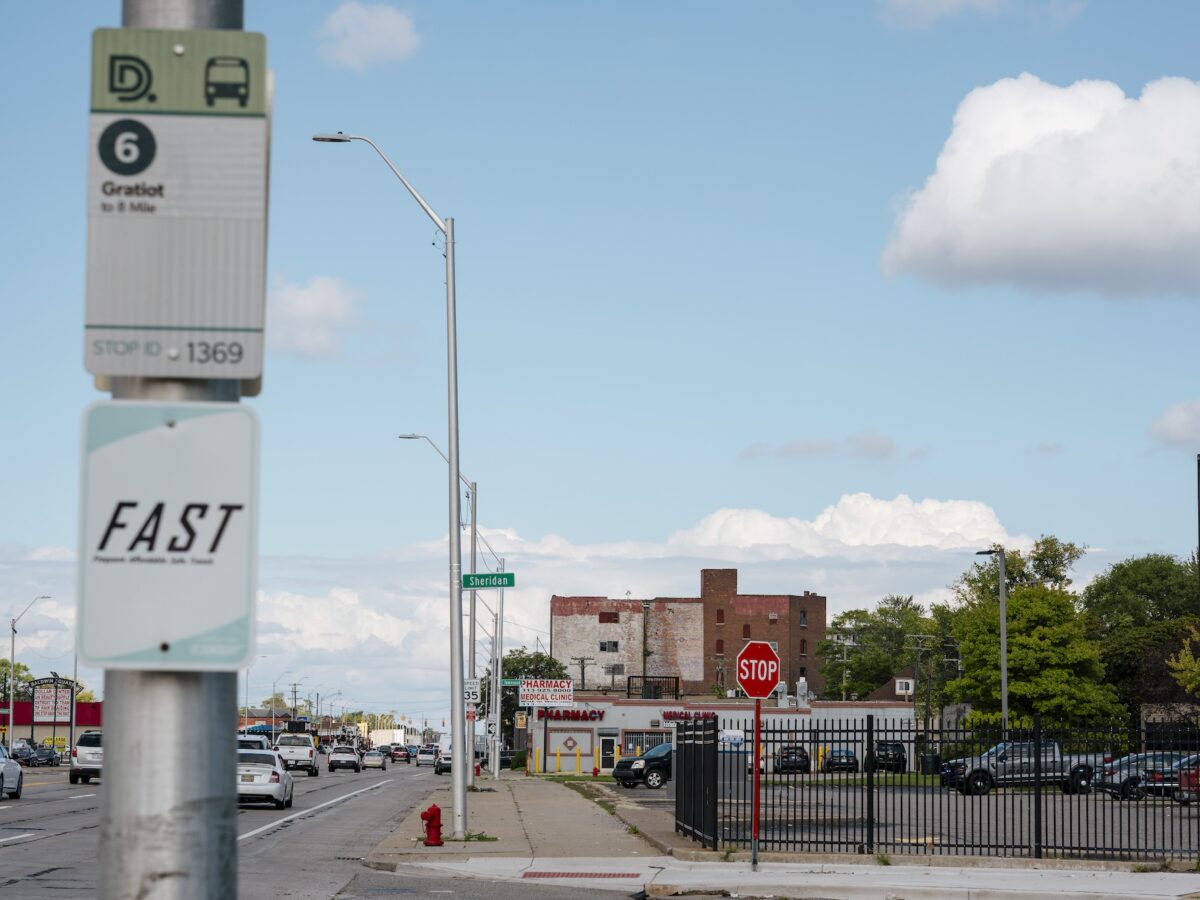
Broken cars and fragmented public transit detour Detroit patients’ care plans
Without access to a car, transportation alternatives can be unaffordable or inconvenient.

‘We see a lot of helplessness’: At a Detroit clinic, transportation barriers put chronic disease, injured patients at risk
Transportation barriers prevent many Detroiters from accessing vital care at John Mailey’s clinic, where weight and blood pressure management are offered. This issue contributes to higher hospitalization rates and a $150 billion annual cost to the U.S. healthcare system.