

Overview:
- Multiple bills introduced in the Michigan Legislature are aimed at a proliferation of data center proposals.
- Rep. Reggie Miller, who introduced a bill to bar public officials from signing nondisclosure agreements when discussing data centers, says NDAs have led to an erosion of trust between elected officials and their constituents.
- Read Planet Detroit's tips for civic engagement on the data center issue.

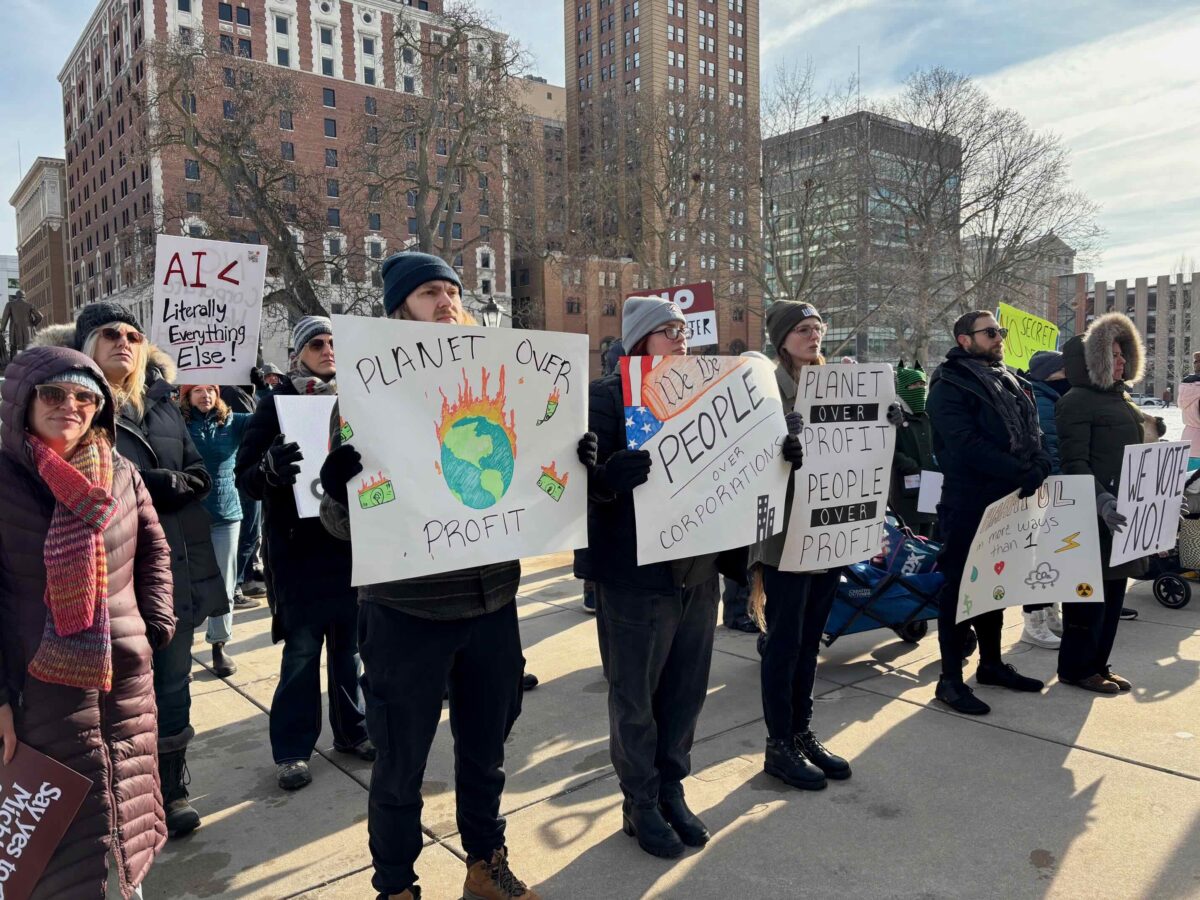
Michigan lawmakers are introducing a flurry of data center legislation as protesters warn of the potential consequences for drinking water, energy reliability, and affordability — and, some allege, a pattern of secretive dealmaking for the facilities.
The bills arrived as the Michigan Public Service Commission green-lighted DTE Energy contracts for the $7 billion Oracle and OpenAI data center in Saline Township a few months after the project was made public, denying ratepayer and environmental advocates a chance to weigh in on the project in a contested regulatory process.
“What we see in Lansing with this legislative push is a reaction to these big tech tycoons and their political machines,” said Washtenaw County Commissioner Yousef Rabhi, who previously served as Michigan House Democratic floor leader.
Washtenaw County is a hotspot for data center development in Michigan, with projects pending in Saline Township, Ypsilanti Township, and several other communities.
Among the legislation introduced in the last two weeks: bills to repeal Michigan’s recently passed tax breaks for large data centers, legislation to prevent local officials from signing nondisclosure agreements for data center projects, a package to establish transparency standards for data centers and place guardrails on their water use, and a bill to block a $100 million state grant for the University of Michigan and Los Alamos National Laboratory’s Ypsilanti Township data center.
It’s unclear if the bills will advance in light of the influence utilities have in the state legislature and Gov. Gretchen Whitmer’s support for data centers.
The Michiganders for Money Out of Politics, or MMOP, ballot initiative is “probably the necessary precondition for getting data center legislation,” Sean McBrearty, state director for the nonprofit Clean Water Action, told Planet Detroit.
This ballot measure would prevent DTE, Consumers Energy, and other large companies doing business with the state from contributing to political campaigns. Organizers are working to collect the 356,958 signatures needed to place the question on the November 2026 ballot.
DTE spokesperson Jill Wilmot said the utility’s political contributions “are supported by the DTE voluntary employee PAC or DTE shareholders – not from customer revenue.”
McBrearty said DTE and Consumers are pushing for data centers because the facilities could allow them to build new gas plants. An “off ramp” provision in Michigan’s 2023 renewable energy law allows fossil fuel generation to stay online if there’s not enough capacity to meet demand.

Investor-owned utilities could be incentivized to build large projects like gas plants because companies earn their return on equity on infrastructure investments. This means shareholders receive the company’s roughly 10% rate of return on a portion of the cost of these projects, which is paid by customers.
Neither DTE nor Consumers responded to a request for comment on how data centers could impact Michigan’s climate goals.
Legislators look to rescind data center tax breaks, bar NDAs
Legislation to repeal data center tax breaks would help reduce the number of data center proposals the state is fielding, said Washtenaw County’s Rabhi.
The sales and use tax abatement offers a major benefit for data center operators because it covers equipment, which represents a large portion of their investment, he said. Although Michigan’s cool climate and plentiful water could still attract data centers to the state, he said repealing the tax incentives would help stem the onslaught of proposals.
“This is really cutting across the political lines of our country right now and we’re seeing Republicans and Democrats, socialists and libertarians all agree that this is bad,” he said, adding that the tax repeal could potentially pass in the state House, which has a GOP majority.
The tax break repeal was introduced by Rep. Dylan Wegela (D-Garden City) and co-sponsored by a bipartisan group of 11 legislators. The Michigan Advance reports that Michigan House Speaker Matt Hall (R-Richland Township) expressed openness toward repealing the tax breaks at a press conference last week.
Hall’s office did not respond to a request for comment.
Clean Water Action’s McBrearty said it will “take a tremendous amount of grassroots pressure to be able to push back against the kind of money pressure being exerted by DTE” and pass the tax break repeal.
Consumers spokesperson Matt Johnson said in a statement that expanding business in the state brings jobs and tax dollars for schools, roads, and public safety.
“Repealing (the tax breaks) will put Michigan further behind other states and hinder our ability to support Michigan’s economy and long-term growth,” Johnson said.
Rabhi also praised Rep. Reggie Miller (D-Van Buren Township)’s bill to bar public officials from signing nondisclosure agreements when discussing data centers. The use of NDAs has elicited concern in Howell and Van Buren townships, although officials said little or no data center information was withheld from the public because of the agreements.
In a Facebook video, Miller said data center projects follow a pattern where officials sign NDAs and are sold on the project before the public is notified. Developers then try to push through the project on a short timeline, Miller said.
“This has led to an erosion of trust, trust between elected officials and the residents they represent,” she said.
Ballot initiative, local action are top priorities, advocate says
Rep. Jimmie Wilson Jr. (D-Ypsilanti) introduced legislation with bipartisan support earlier this month to rescind the $100 million state grant for the University of Michigan and Los Alamos National Laboratory’s proposed data center, and said the university has not been fully transparent about the project and refused to collaborate with Ypsilanti Township officials.
Ypsilanti Township officials are looking to move the facility from a site on the south bank of the Huron River to a location at the American Center for Mobility. They have said the university misled state officials about the size of the project when applying for the grant.
U of M spokesperson Kay Jarvis previously told Planet Detroit that “U-M has been undertaking, in good faith, a second thorough review of the ACM location,” and looking at other possible sites in southeast Michigan.
Residents and U of M employees and students have argued the project will harm the environment, negatively impact low-income communities, and help advance harmful nuclear weapon and artificial intelligence technologies.
As a public university, U of M is not subject to the same local zoning approval process as other data center developers.
A package of legislation introduced in the Michigan Senate looks to protect residents from increased utility costs from data centers with bills that would prevent facilities from using more than 2 million gallons of water a day for evaporative cooling; require the MPSC to publish annual reports on the total water and energy use from data centers; and prohibit passing water infrastructure costs on to other customers.
McBrearty said passing the Michiganders for Money Out of Politics ballot initiative is the most important thing residents can do to rein in data centers.
“If we got MMOP passed, the difference that people would see is that lawmakers will have the ability to be much more responsive to the needs of their actual constituents because we won’t have companies like DTE and consumers buying the system,” he said.
McBrearty said he expects utilities to spend significant amounts of money opposing the effort, but stressed its broad statewide appeal.
A November poll by Public Policy Polling found 81% of Michiganders somewhat or strongly support the MMOP ballot initiative.
It could take months to pass legislation, and the MMOP ballot initiative won’t appear on a ballot until November 2026 at the earliest. For now, McBrearty said local government is the place where residents can exert the most influence over data centers.
For example, a developer in Howell Township paused its project after significant public outcry, and the township instituted a six-month moratorium on data center development, allowing it time to develop regulations for the facilities.
“Local governments are generally a lot less susceptible to pressure from major utilities,” McBrearty said. “I think continuing the local organizing push across the state and challenging these projects at every opportunity is a very good strategy for slowing down the development of these mega data centers.”
🗳️ What’s next? Tips for civic action
Why it matters
⚡ Data center opponents say they could impact ratepayers’ utility bills, which DTE and Consumers deny. Data center supporters say the projects will create jobs and bring tax dollars to local communities.
Data center power demands could make it more difficult for the state to meet its climate goals, depending on what generation sources are used.
Who’s making civic decisions
🏛️ The Michigan Legislature could opt to advance legislation that rolls back the state’s tax incentives for data centers, prevents local officials from signing nondisclosure agreements for data center projects, and establishes other guardrails for the facilities.
The Michiganders for Money Out of Politics, or MMOP, ballot initiative would bar investor-owned utilities and other large companies doing business with the state from making political donations.
How to take civic action now
- 🌱 Follow Mop Up Michigan for updates on the ballot question petition drive.
Contact your state legislator or state senator.
- 📣 Ask if they support legislation to rescind Michigan’s data center tax breaks, a bill the bar officials from signing NDAs when discussing data center developments, or other legislation to establish guardrails for the facilities.
What to watch for next
🗓️ Any action by the Michigan Legislature on data centers.
Civic impact
🌍 Following and engaging with Michigan’s utility regulator is one way residents can influence the impact data centers have in the state.
⭐Please let us know what action you took or if you have any additional questions. Please send a quick email to connect@planetdetroit.org.
MORE ON DATA CENTERS
Data center is threat to Saline River, residents say in wetlands hearing
Pollution from closed-loop cooling systems, wetland destruction are among the issues aired at EGLE hearing on Oracle, OpenAI data center’s wetland permit.


Live recap: Data centers and local power in Michigan
In Michigan, rural communities are grappling with the impact of major tech companies proposing large-scale data centers, raising critical questions about energy consumption, water use, and who truly benefits from tax incentives.


DTE Energy’s Saline data center contracts win quick state approval, despite uproar
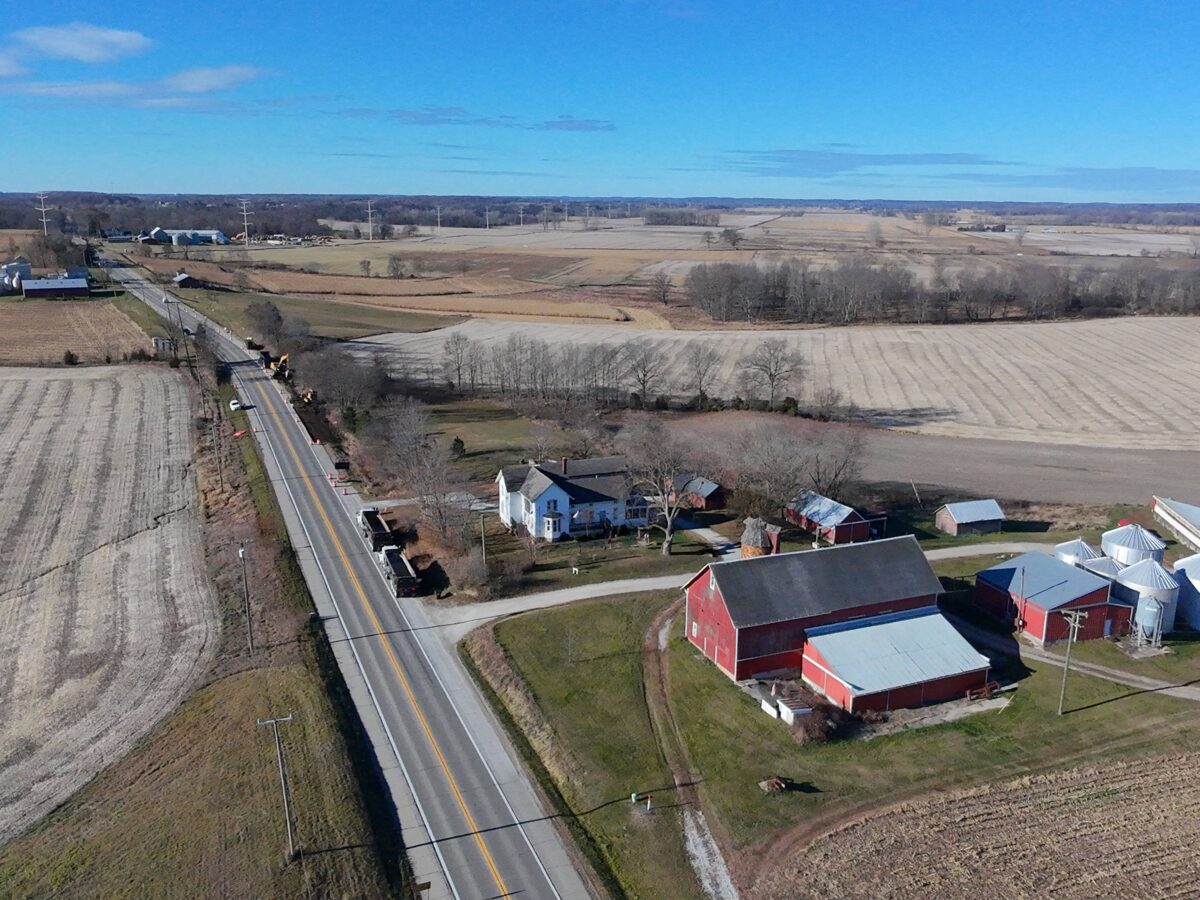
The $7 billion, 1.4 gigawatt Oracle and OpenAI data center is planned for 575 acres of farmland south of Ann Arbor.