

Overview:
- Data center developers are applying to fill in wetlands, temporarily disturb a stream and install a culvert, and install three stormwater structures that will discharge treated stormwater into the Saline River and Bridgewater drain.
- As part of Related's settlement with Saline Township, roughly 200 acres of wetlands, open space, and agricultural land on the data center site will be preserved with a conservation easement.
- "How can we call ourselves the Great Lakes state when we can't even protect our watersheds?" says Michigander Dylan Tremba.

Michigan environmental regulators held a hearing Thursday night on a proposed permit to disturb 10 acres of wetlands for a $7 billion Oracle and OpenAI data center in Saline Township.
The hearing came hours after the Michigan Public Service Commission approved DTE Energy’s application for quick approval of its power contracts for the 1.4 gigawatt data center, which met with widespread public opposition.
Around 180 people attended the Michigan Department of Environment, Great Lakes, and Energy’s online hearing Thursday, according to agency staff.
Many commenters said they’re concerned about the environmental harms of destroying wetlands, potential contamination from the facility’s closed-loop cooling system, and data centers’ impacts to Michigan’s water resources and climate goals.
‘Huge risk to the Saline River’
The rapid expansion of data centers has severe climate impacts, and the facility’s cooling system will concentrate contaminants that could impact nearby waterways, said Alex Beauchamp, with the nonprofit Food & Water Watch.
“We cannot allow this huge risk to the Saline River to be permitted further,” he said.
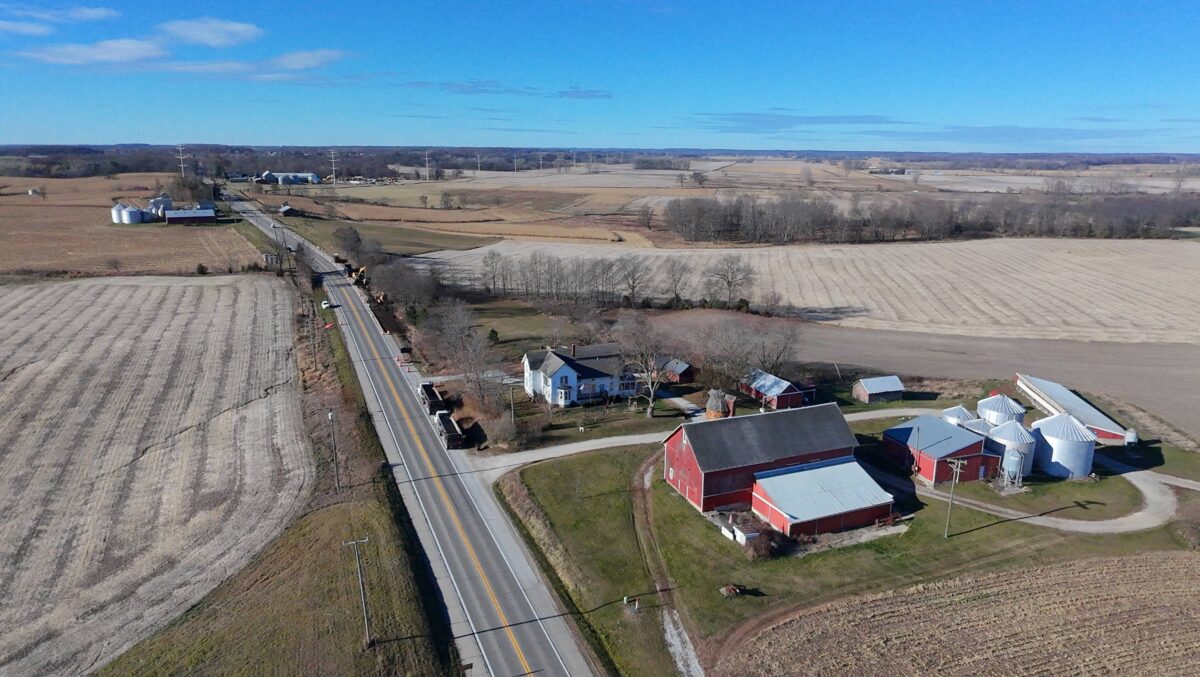
To make way for the 250-acre data center on a 575-acre property, developers are applying to fill in wetlands, temporarily disturb a stream and install a culvert, and install three stormwater structures that will discharge treated stormwater into the Saline River and Bridgewater drain. One stormwater outflow would be placed in the Saline River’s 100-year floodplain.
Jonathan Furman, vice president at data center developer Related Digital, said the company is developing the site in “a community focused and responsible way” and stressed the safety of the facility’s closed loop cooling system.
“In the unlikely event that there is a small spill from the closed loop system, each building on our site has dedicated storage tanks specifically designed to catch any leak,” Furman said. The liquid would be pumped into a truck and taken offsite, he said.
The facility will use 10,000 to 20,000 gallons of water daily, the executive said.
He added that Related tries to be a good neighbor.
Several attendees at the virtual hearing referenced the Saline Township board’s vote against rezoning land for the development in September, and its subsequent agreement to a settlement after the landowners and Related filed suit.
Wetlands ‘not a marginal issue’
Lansing resident Marshall Clabeaux stressed the importance of wetlands for people and wildlife.
“Wetlands are not a marginal issue, they’re fundamental to the water cycle our planet depends on for our global response to climate change and are essential for the well-being of billions of people and protecting species under imminent threat of extinction,” Clabeaux said.
Wetlands were abundant in Michigan 200 years ago, covering 17% of Michigan’s land and provided habitat for fish and migratory birds while absorbing rainfall and protecting against flooding.
Over the last two centuries, roughly 40% of these areas were destroyed for development or agriculture, according to Michigan State University Extension, with southeast Michigan experiencing the highest percentage of wetland loss in the state.
Related’s Furman said the project will mitigate stormwater runoff from the site, reducing the peak flow into the Saline River during storm events.
As part of Related’s settlement with Saline Township, roughly 200 acres of wetlands, open space, and agricultural land on the data center site will be preserved with a conservation easement. The deal also includes $4 million for a township farmland preservation trust fund, along with millions in other benefits.
Michigander Dylan Tremba said the site is among the “the few crumbs of productive riparian zones left in the lower in the southern Lower Peninsula.”
Wetlands take decades to fully mature and “can’t simply be picked up and rebuilt somewhere else,” Tremba said, adding these systems play an important role in filtering pollutants and protecting regional water quality.
Michigan residents are tired of watching corporations destroy limited natural areas, he said.
“How can we call ourselves the Great Lakes state when we can’t even protect our watersheds?”
🗳️ What’s next? Tips for civic action
Why it matters
⚡ Wetlands play an important role in Michigan, helping to filter pollution, prevent flooding, and protect biodiversity. Data center power demands could make it more difficult for the state to meet its climate goals, depending on what generation sources are used.
Who’s making civic decisions
🏛️ Michigan’s Department of Environment, Great Lakes, and Energy will decide on a wetland permit for the Saline Township data center development.
How to take civic action now
- 📩 Email Public comments can be made to EGLE on the agency’s public notice webpage for the wetland permit. Comments will be accepted until Dec. 28.
- 📣 Ask EGLE how the Saline data center will impact wetland habitats and regional water quality.
What to watch for next
🗓️ A decision from the EGLE Water Resources Division on the wetland permit for the Saline data center site.
Civic impact
🌍 Following EGLE permitting decisions and commenting at public hearings is one way to you can stay informed and influence issues impacting regional water quality and wildlife.
⭐ Please let us know what action you took or if you have any additional questions. Please send a quick email to connect@planetdetroit.org.
MORE ON THE SALINE DATA CENTER

Live recap: Data centers and local power in Michigan
In Michigan, rural communities are grappling with the impact of major tech companies proposing large-scale data centers, raising critical questions about energy consumption, water use, and who truly benefits from tax incentives.


DTE Energy’s Saline data center contracts win quick state approval, despite uproar
The $7 billion, 1.4 gigawatt Oracle and OpenAI data center is planned for 575 acres of farmland south of Ann Arbor.

Data center protest at Michigan Capitol aims to pressure regulators ahead of DTE Energy decision
New legislation would roll back Michigan’s tax incentives for large data center developments, which were signed by Gov. Gretchen Whitmer at the end of 2024.