

Overview:
- A developer is proposing a 1 gigawatt data center in Van Buren Township, already home to the Wayne Disposal landfill, which is at the center of a fight over acceptance of radioactive waste.
- "Pretty much all of the township officials" signed nondisclosure agreements with the developer, says Van Buren's director of municipal services.
- Read Planet Detroit's tips for civic engagement on the data center issue in Van Buren Township.

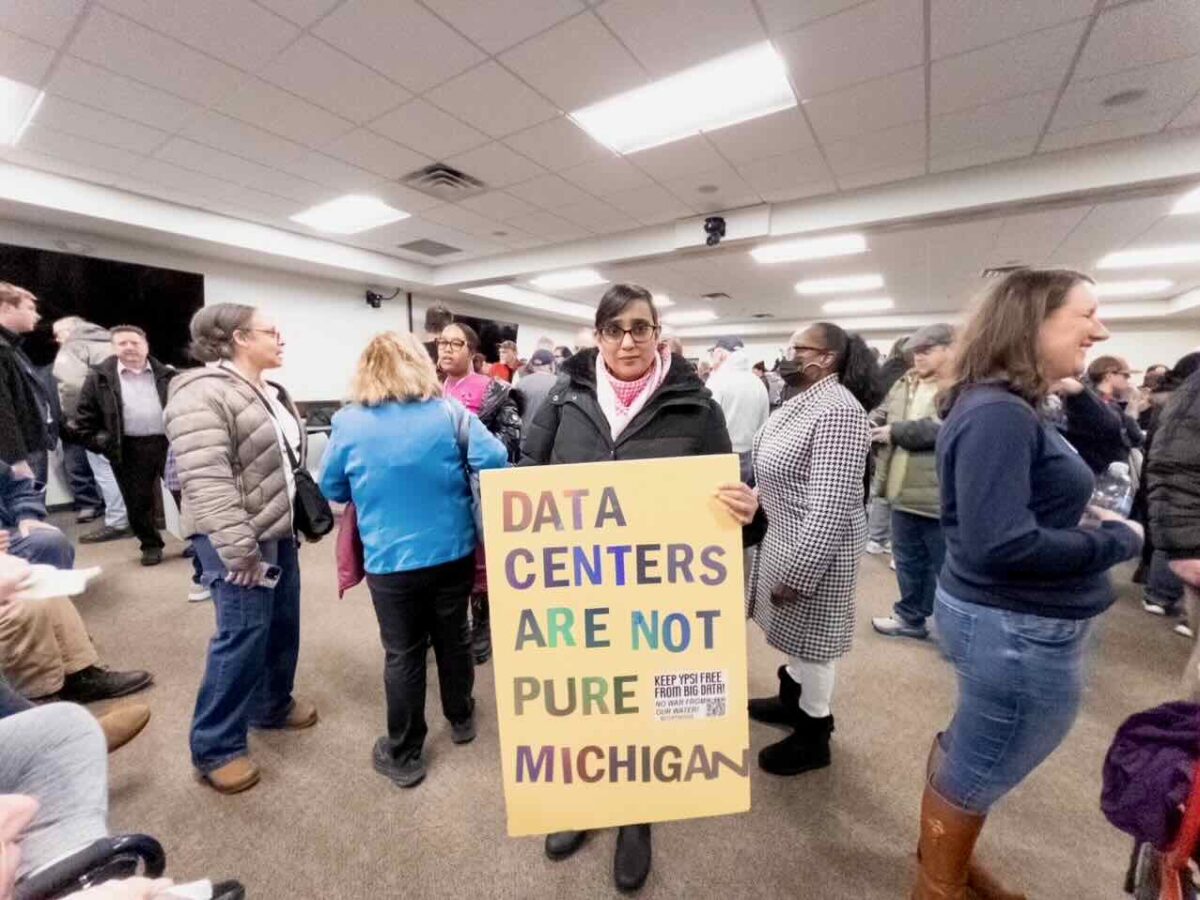
People flooded a catered open house for a proposed Van Buren Township data center Thursday, with representatives of the Panattoni Development Co. and DTE Energy on hand to discuss what’s billed as “Project Cannoli” on Panattoni’s materials.
Planet Detroit received conflicting information about the project from developers and township officials. All agree the facility would use roughly 1 gigawatt of electricity, equivalent to the energy required to power around 800,000 homes.
The project would likely require diesel backup generators for use during an outage, Adam Kramer, head of data centers for Panattoni, told Planet Detroit. The company hasn’t determined what kind of cooling technology is needed, he said.
Van Buren Township Supervisor Kevin McNamara said it’s his understanding the project includes three buildings, two with air cooling and one with water cooling. The water-cooled building could use around 750,000 gallons a day, he said.
Ron Akers, the township’s director of municipal services, said the project is proposed for land north of I-94 between Haggerty and Hannan roads and incorporates a 30,000-square-foot office building and three data center buildings with a combined area of about 800,000 square feet.
The data center elicited concern from some residents who said it could lead to air and water pollution, raise costs for residential utility customers, and increase the frequency of power outages.
State lawmaker questions use of nondisclosure agreements
Several residents questioned township officials’ decision to sign nondisclosure agreements for the project, which Akers said were signed by “pretty much all of the township officials.”
State Rep. Reggie Miller (D-Van Buren Township) criticized the use of NDAs and expressed concerns that water released from the data center could contain harmful chemicals or that its energy use could impact ratepayers.
“I’m not against data centers,” she said. “What I oppose is lack of regulation. That should have been in place before these tax credit bills ever were put up for a vote.”
In early 2025, Michigan Gov. Gretchen Whitmer signed tax break legislation for large data centers.
McNamara told Planet Detroit he expects the developer to request an additional 50% tax break using Public Act 198, a state tax abatement law for manufacturers. The NDA only prevents McNamara from divulging the name of the data center’s client, he said.
The client is a Fortune 50 company, according to Panattoni’s Kramer, who defended the company’s outreach around the project.
The company wants to go into a community where it’s wanted, and where it “leaves the community better than we found it,” he said.
Public engagement began 18 months ago with a meeting where residents responded more positively to a potential data center than other industrial developments, Kramer said.
He acknowledged that what people want today could be different than what they wanted 18 months ago.
This may be especially true in Michigan, where an onslaught of data center proposals across the state has led to significant public backlash.
Van Buren residents raise ratepayer, environmental justice concerns
The room where DTE and Panattoni presented the project was crowded by 6 p.m. Thursday, with residents crowded around posters and a table full of largely untouched food.
One of these attendees, Ypsilanti Township resident Sadaf Ali, said the data center could increase residential electric bills at a time when ratepayers are already struggling, and add to reliability issues.
“These data centers, they’re built as part of a very crummy electrical grid that we have in Michigan, so we’re going to get blackouts and brownouts,” she said.
DTE spokesperson Jill Wilmot said in a statement that the company remains focused on reliability and affordability.
“Unlike other states, Michigan law prohibits utility customers from subsidizing the costs of data centers,” Wilmot said.
Ratepayer advocates and energy experts previously told Planet Detroit that Michigan’s tax break legislation for data centers includes language to protect ratepayers, but provides little detail.
Douglas Jester, a consultant with 5 Lakes Energy, said in October the existing framework for allocating costs could leave residential ratepayers and other customers paying for a portion of the electric generation needed solely to power large data centers.
Demand from data centers without sufficient generation could also lead to an increase in wholesale power costs that could filter down to other customers, Jester said.
Van Buren Township resident Courtenay Hall said a data center could add to environmental justice issues in the area, which is confronting issues related to the Wayne Disposal landfill.
Wayne Disposal Inc. has taken in hundreds of thousands of tons of Manhattan Project-era radioactive waste and is seeking a permit to increase its capacity by 23%.
According to MiEJScreen, Michigan’s environmental justice screening tool, areas to the east and northeast of the proposed data center are in the 84th and 82nd percentile. These scores indicate well above average pollution exposure and sensitive populations.
Rep. Miller criticized the open house format of the meeting, which she said resembled one-on-one sales pitches rather than a traditional public meeting.
Residents “don’t know what questions to ask,” Miller said. “Many are just new to this whole thing.”
During a public hearing, people learn from questions asked by other attendees and build on them, she said.
Akers defended the format of the meeting, saying it provides an opportunity for two-way communication, adding that the conversations could be used to inform township decision-making.
Sanjay Singh, a Van Buren Township resident who helps organize opposition to the landfill expansion, shared other attendees’ concerns about power costs and water pollution. He added that diesel generators could increase noise and air pollution in the area.
Singh supports a moratorium on data center developments, like the one recently enacted in Howell Township, and said a moratorium could give Van Buren Township an opportunity to develop a data center ordinance.
“We need to put our arms around this because what happens here today decides the next 50 years.”
David Boyack, senior development manager for Panattoni, said the company’s zoning request for the data center could go in front of the Van Buren Township Planning Commission at its Jan. 14 meeting.
🗳️ What’s next? Tips for civic action
Why it matters
⚡ Data centers have large energy and water demands that environmental advocates argue could jeopardize Michigan water resources and state climate goals. At the same time, the developments can bring job creation opportunities and revenue for municipalities.
Who’s making civic decisions
🏛️ The Van Buren Township Planning Commission could consider zoning for the data center project as soon as Jan. 14. The township board would have final say over the facility’s application.
How to take civic action now
- 📅 Attend the Van Buren Township Planning Commission meeting at 5:30 p.m. Jan. 14 in the Board of Trustees Room at Township Hall, 46425 Tyler Road, Van Buren Township, MI 48111. Planning meetings can also be attended via Zoom.
- 📩 Email or call the Van Buren Township supervisor or other members of the board of trustees.
- ✉️ Mail Van Buren Township, 46425 Tyler Road, Van Buren Township, MI 48111.
- 📣 Ask if public officials support the Panattoni data center proposal.
What to watch for next
🗓️ A potential decision on the Van Buren Township data center project at the planning commission’s Jan. 14 meeting.
Civic impact
🌍 Following and weighing in on data center projects in your community can help shape the water and energy impacts these facilities have in the state.
⭐ Please let us know what action you took or if you have any additional questions. Please send a quick email to connect@planetdetroit.org.
MORE DATA CENTER NEWS
Solar panel group buys spread across Michigan as residents band together for discounts
Grassroots ‘Solarize’ programs have expanded across Michigan cities and counties, helping residents access group discounts on solar installations even as federal incentives have been cut.


DTE appeals $100 million federal judgment over Zug Island air pollution
DTE Energy is challenging a federal court’s $100-million judgment over sulfur dioxide pollution from its Zug Island coke facility. The utility must also fund $20 million in community air quality programs.

Century of contamination: How Zug Island became Detroit’s industrial epicenter
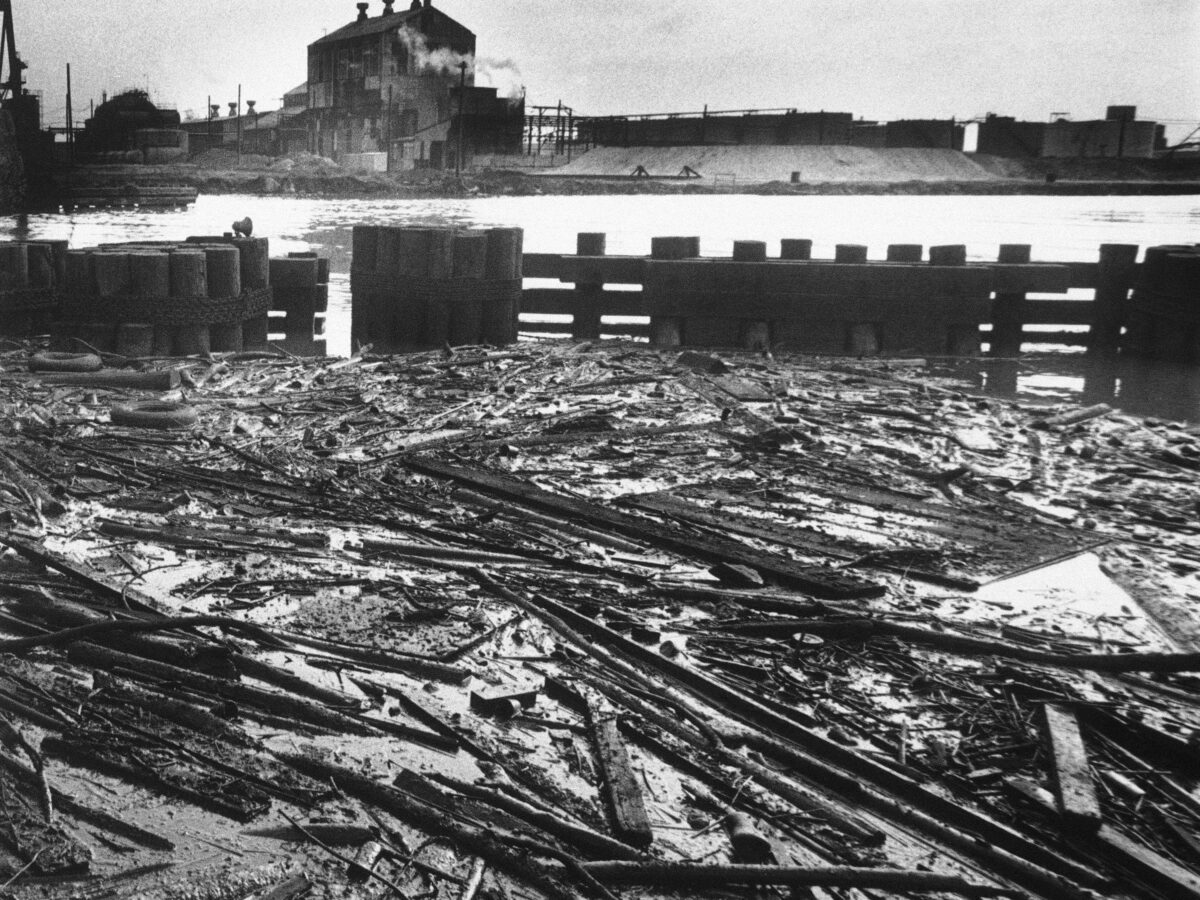
Early ideas for the island included a city garbage dump with a promise of the operations being “smokeless and odorless,” or improving the land into a “healthful resort similar in attractiveness to Belle Isle.”