

Overview:
- Michigan's air quality index values are the highest so far in 2026.
- Moderate air quality levels are expected to last through Friday, says state meteorologist Stephanie Hengesbach.
- When the AQI is in the moderate 51 to 100 range — color coded yellow — sensitive individuals should consider limiting prolonged outdoor activity.

Detroit’s air quality deteriorated Tuesday and Wednesday, making life more difficult for sensitive populations.
The air quality index in the city Tuesday afternoon spiked to 101, a level unhealthy for sensitive groups, due to particulate pollution. Monitors in the Detroit area show AQI figures in the moderate category Wednesday morning. The AQI values are the highest so far in the new year.
The poorer air quality is due to a combination of factors, Stephanie Hengesbach, a meteorologist with the Michigan Department of Environment, Great Lakes, and Energy (EGLE) Air Quality Division, said Wednesday.
Michigan is in a warmer weather pattern with lighter winds, surface moisture due to melting snow, and atmospheric inversions that limit mixing and create stagnant conditions, Hengesbach told Planet Detroit.
“The combination of these parameters is keeping pollution trapped at the surface, causing an increase in fine particulate concentrations,” she said.
When there’s snow on the ground and warmer air above, the snow melts, and PM 2.5 — fine particulate matter — can exist in water particles and hold on to them, the EGLE meteorologist said.
While some air quality monitors tipped into the unhealthy for sensitive groups range Tuesday, the daily averages of fine particulate matter remain moderate statewide, Hengesbach said.
“This is something we are keeping an eye on, and we expect the same (Wednesday) where some monitors may experience hourly concentrations in the (unhealthy for sensitive groups) range for a short period of time, but daily averages should remain in the moderate range.”
Moderate air quality levels are expected to last through Friday, the meteorologist said. Air quality numbers are unlikely to reach unhealthy levels because the wind will start picking up Thursday, Hengesbach said.
“We’re not really going to see a cleanout until a front goes through” on Friday or Saturday with northerly winds, she said.
When the AQI is in the moderate 51 to 100 range — color coded yellow — sensitive individuals should consider limiting prolonged outdoor activity.
When the AQI reaches 101 to 150, it’s unhealthy for sensitive groups, color coded orange. During these periods, children, active adults, and people with respiratory disease such as asthma should limit prolonged outdoor exertion.
PM 2.5 is 30 times smaller than the width of a human hair and can lodge itself in lung cells and move into the bloodstream. It comes from sources like roads, smokestacks and wildfires and is linked to cardiopulmonary illness, premature mortality and mental health issues.
Michigan’s winter air quality trends
The state issued numerous air quality advisories in 2025, largely driven by Canadian wildfire smoke. No advisory has been issued due to the spike in particulate pollution this week.
“It’s not that common for us to issue advisories or alerts in the wintertime. That is just because levels typically don’t get as high,” Hengesbach said.
EGLE forecasts fine particulate matter, or PM 2.5, on a 24-hour average, she said. If the daily average is expected to reach the unhealthy for sensitive groups range, or the orange range on an AQI scale, the state issues an air quality advisory.
The highest pollution in the winter season is usually caused by these weather episodes, Hengesbach said, and PM 2.5 is typically higher in colder months.
Particulate levels are not as high in the summer, with fewer inversions. A wildfire “is something totally different,” she said.
The higher particulate pollution driven by winter weather patterns is a regional dynamic, Hengesbach said: “We had pollution levels up in the Upper Peninsula, in Marquette, that were almost as high as values in the southern portion of the state” on Tuesday.
Planet Detroit previously reported on how warming winters associated with climate change could drive more particulate matter pollution.
A 2016 study found that winter temperature inversions and summer heatwaves, both of which can lead to extreme pollution events, increased 50% over the last 60 years in mid-latitude regions like the United States .
MORE AIR QUALITY NEWS

Zug Island’s EES Coke Battery singlehandedly put air quality over federal limits: Expert testimony
An air quality expert testifies about a computer-generated model used to evaluate pollution from Zug Island.

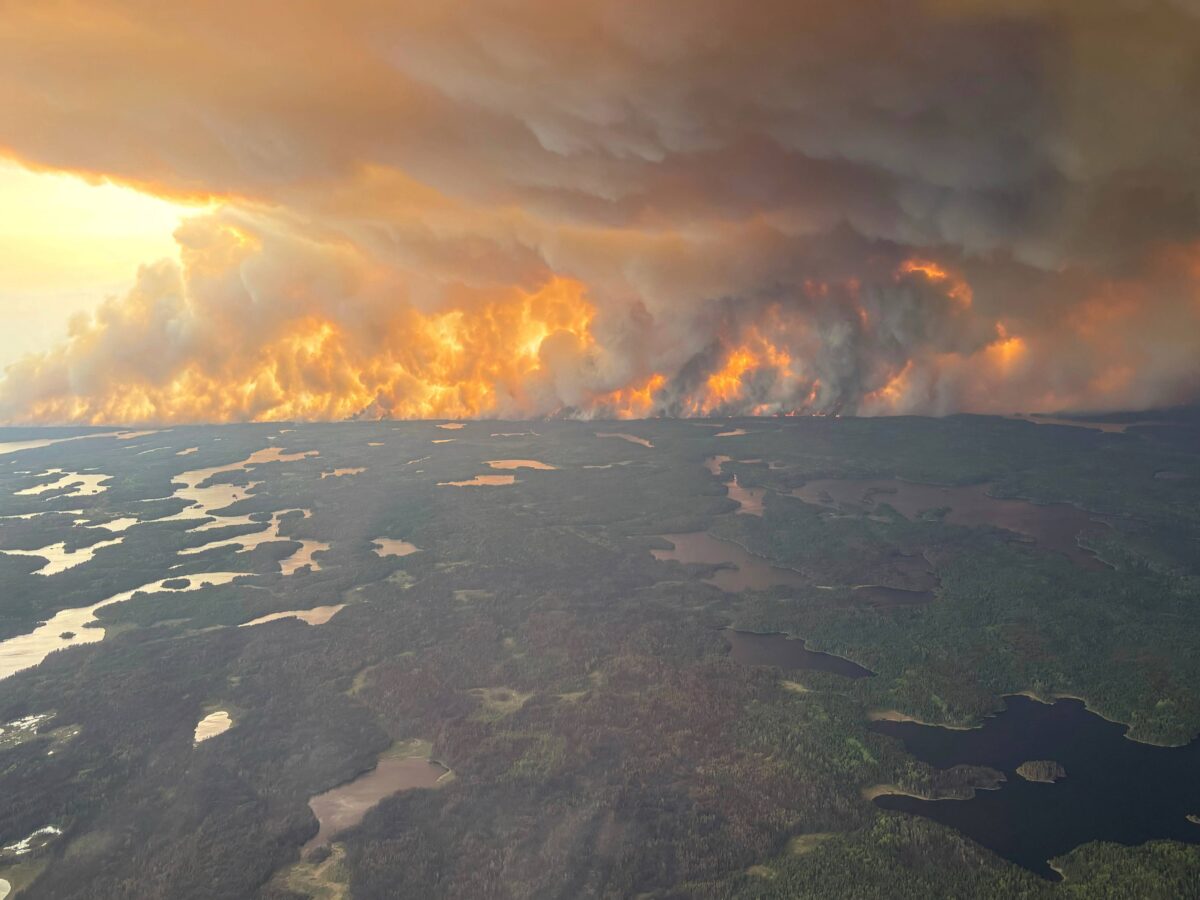
Canadian fire official says more international help needed to fight wildfires Macomb politician calls ‘uncontrolled’
The 2025 wildfire season is straining Canada’s capacity, says Mike McCulley of the Canadian Interagency Forest Fire Centre.

GUIDE: What to do when Detroit air quality is poor
Planet Detroit’s guide to air quality, including the Environmental Protection Agency’s air quality index and the six criteria air pollutants identified in the Clean Air Act.