

Overview:
- Environmental experts say the EPA's new approach could increase pollution in Detroit, which already fails to meet federal standards.
- "EPA’s current leadership has abandoned EPA’s mission to protect human health and safety," says Jeremy Symons, senior advisor at the Environmental Protection Network.
- Read Planet Detroit's tips for civic engagement on the air quality issue.

The Environmental Protection Agency will stop considering how many deaths are prevented and how much money is saved in health care costs when considering air pollution rules for two common pollutants, a change that advocates say will compound health risks in Detroit.
The EPA said in a Jan. 9 decision that it will stop calculating monetary benefits for reducing ozone and fine particulate matter pollution, but still consider the costs regulations place on industry.
If the decision is finalized, it would largely remove the public health benefits of regulation from the EPA rulemaking process, Nick Leonard, executive director at the Great Lakes Environmental Law Center, told Planet Detroit.
Regulating fine particulate matter, or PM 2.5, and ozone is massively important for Detroit, he said.
“They are the front line in protecting people from things like developing asthma, from asthma attacks, from cardiovascular disease,” he said of the regulations.
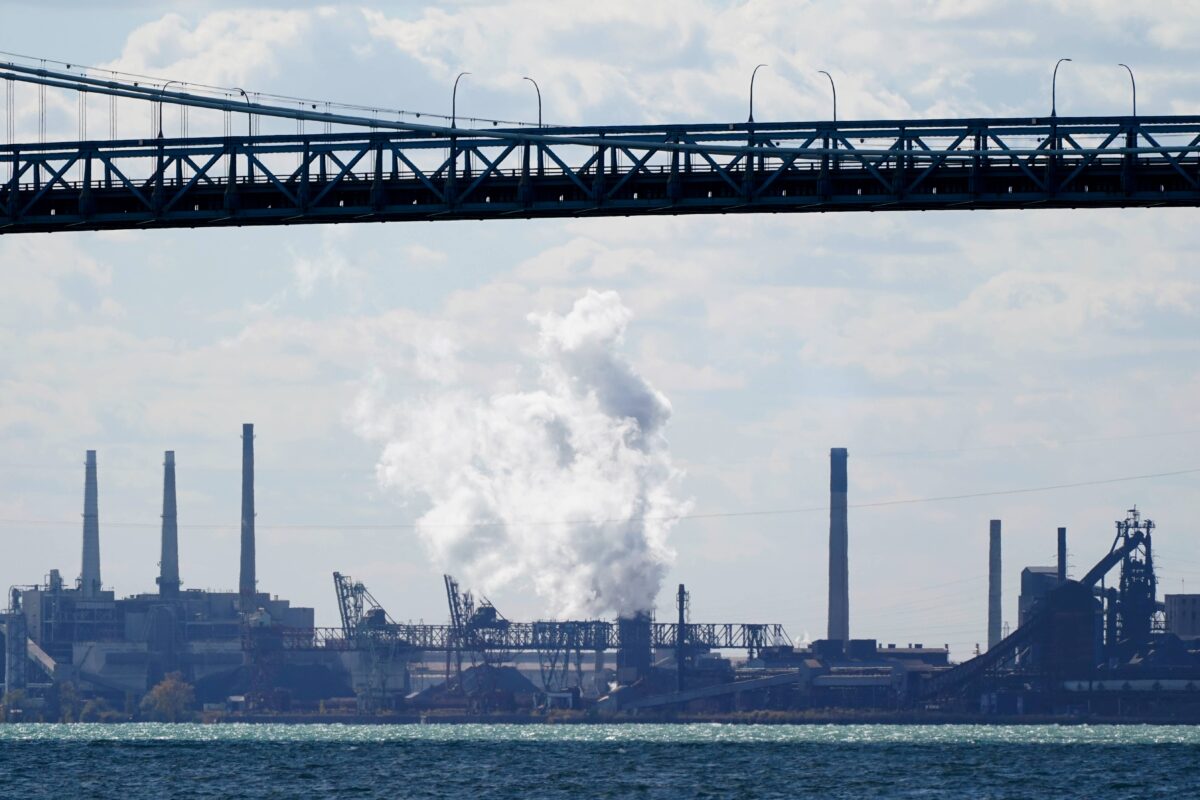
Environmental experts say the EPA’s new approach could influence tailpipe emissions rules, updates to air quality standards for specific pollutants, power sources used by massive data centers — and increase pollution levels in Detroit, which already fails to meet federal standards.
Detroit’s air quality problem
Michigan’s Department of Environment, Great Lakes, and Energy determined in 2025 that Wayne County failed to meet the EPA’s revised PM 2.5 standard, which was tightened during the Biden administration.
In December, a federal appeals court overturned a 2023 EPA decision that found the Detroit area was in compliance for ozone pollution, returning the region to nonattainment status.
In 2025, The American Lung Association gave the Detroit area an “F” rating for air quality in its annual State of the Air Report.
Environmental rollbacks proposed early in President Donald Trump’s term were already poised to increase pollution, according to the Environmental Protection Network, a group of former EPA staffers and political appointees.
EPN Senior Advisor Jeremy Symons previously told Planet Detroit the group’s research showed the administration’s rollbacks of federal clean air rules could lead to 200,000 premature deaths nationally by 2050 and 10,000 asthma attacks a day.
“EPA’s current leadership has abandoned EPA’s mission to protect human health and safety,” Symons said in a Jan. 12 statement following the EPA’s decision to drop health cost calculations.
An EPA spokesperson told Planet Detroit in a statement the agency will still consider the impacts of PM 2.5 and ozone emissions, but will not monetize them at this time.
Reductions in pollution over recent decades make it more difficult to estimate the benefits, according to the EPA, which said it is “refining its methods to ensure future monetized estimates reflect the most accurate and transparent understanding of public health and environmental outcomes.”
The EPA said it is committed to its core mission of protecting health and the environment by relying on “gold standard science, not the approval of so-called environmental advocates that are funded by far-left activists.”.
Undermining PM 2.5, ozone rules is ‘the whole ball game’: Environmental lawyer
Industry and right-wing politicians have previously sought to attack how air pollution harms are calculated because it’s easier than directly attacking safeguards, John Walke, a senior attorney for the Natural Resources Defense Council, told Planet Detroit.
“This is a bank shot gimmick that some have been pushing for a long time,” he said, using a pool metaphor.
The EPA’s move to discount health care and mortality costs from air pollution means regulators will look only at industry’s side of the balance sheet when weighing the costs and benefits of air quality rules, Walke said.
Undermining rules for PM 2.5 and ozone is “basically the whole ball game,” he said.
“The two of them are responsible for over 85% of the health benefits of the Clean Air Act.”
The Trump administration is trying to abandon the Biden administration’s stricter PM 2.5 standard, with the EPA siding with Republican-led states and business groups that challenged it as unlawful.
Environmental lawyer Leonard said the EPA’s new cost accounting change could impact rules on auto emissions, which are largely set by the federal government and are a major pollution source in Metro Detroit.
Regulations for natural gas turbines at data centers are another cause for concern, said the NRDC’s Walke.
The EPA’s change to health calculations came as part of a rollback of standards for stationary combustion turbines.
The xAI facility in Memphis, Tennessee uses such turbines, which the Southern Environmental Law Center said are polluting a majority Black area with smog-forming pollution, nitrogen oxides, and chemicals like formaldehyde.
When contacted for comment about pollution at the Memphis facility, an xAI spokesperson replied: “Legacy Media Lies.”
Walke said the EPA’s move to deprioritize public health accounting won’t stand up to court challenges, adding that the agency is not allowed to ignore public health when the Clean Air Act is “a public health law on every page.”
“There’s a body of case law that finds EPA actions illegal when they put their thumb on the scale, when they engage in arbitrary and abusive rulemaking,” he said.
EPA rollbacks coincide with rising air pollution
While legal challenges may rein in EPA rollbacks eventually, Walke said he expects the Trump administration will initially get away with changes that make the air more polluted in Detroit, Chicago, and other cities.
These threats will come as climate change and wildfire smoke has increased U.S. pollution in recent years, reversing long-term air quality improvements, he said.
Leonard said the Michigan Department of Environment, Great Lakes, and Energy (EGLE) could potentially help make up for federal air quality rollbacks, but it could be challenging to find the capacity and political will to act quickly enough.
An EGLE spokesperson told Planet Detroit the agency’s Air Quality Division remains committed to protecting the environment and public health, and will continue enforcing state and federal air quality rules and regulations.
“At this time, it is not yet clear what impact federal changes may have should they move forward.”
Teresa Homsi, executive director for the nonprofit Michigan Clinicians for Climate Action, told Planet Detroit the EPA change will add to the threat from previous rollbacks, including an attempt to revoke the endangerment finding, which found that greenhouse gases and other air pollutants threaten public health and future generations.
It’s unsurprising the Trump administration would prefer to disregard public health in its decision-making, Homsi said.
“This has already been apparent in attempted rollbacks over the last year, and now they’re just dropping pretenses that they care about human health.”
🗳️ What’s next? Tips for civic action
Why it matters
⚡ Advocates say public health is jeopardized by the EPA’s move to stop calculating health costs and the prevention of deaths when considering air quality rules for fine particulate matter and ozone.
Who’s making civic decisions
🏛️ The Environmental Protection Agency could incorporate the change in health cost calculations into its future regulatory decisions. Michigan could potentially add additional air quality protections to make up for less stringent federal rules.
How to take civic action now
- 📩 Comment on EPA regulatory decisions at regulations.gov.
- 🧑💻 Contact EPA Administrator Lee Zeldin at 202-564-4700 and Zeldin.Lee@epa.gov.
-Email Michigan Gov. Gretchen Whitmer about EGLE decision-making using this form.
-EGLE can be reached at 800-662-9278 from 8 a.m.-4:30 p.m., Monday through Friday or by email at EGLE-Assist@Michigan.gov. - ✉️ Mail Gov. Gretchen Whitmer P.O. Box 30013, Lansing, MI 48909, and the EPA at Environmental Protection Agency at 1200 Pennsylvania Ave. N.W., Washington, D.C. 20460.
- 📣 Ask how decision-makers will protect Detroiters from ozone and fine particulate matter pollution.
What to watch for next
🗓️ Legal challenges could undermine the EPA’s attempt to roll back air quality regulations.
Civic impact
🌍 Staying informed about state and federal air quality decisions and contacting public officials is one way you can influence Detroit’s air quality.
⭐Please let us know what action you took or if you have any additional questions. Please send a quick email to connect@planetdetroit.org.
MORE EPA COVERAGE
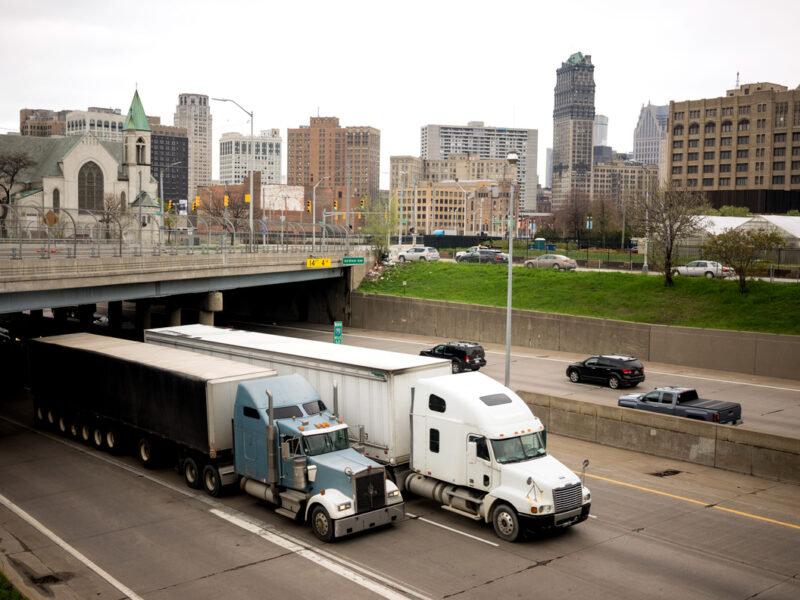
Detroit’s ozone status downgraded: What’s next in the fight for clean air?
The Sixth Circuit ruling returns Southeast Michigan to nonattainment status for ozone and requires state regulators to adopt additional pollution control rules before seeking redesignation.

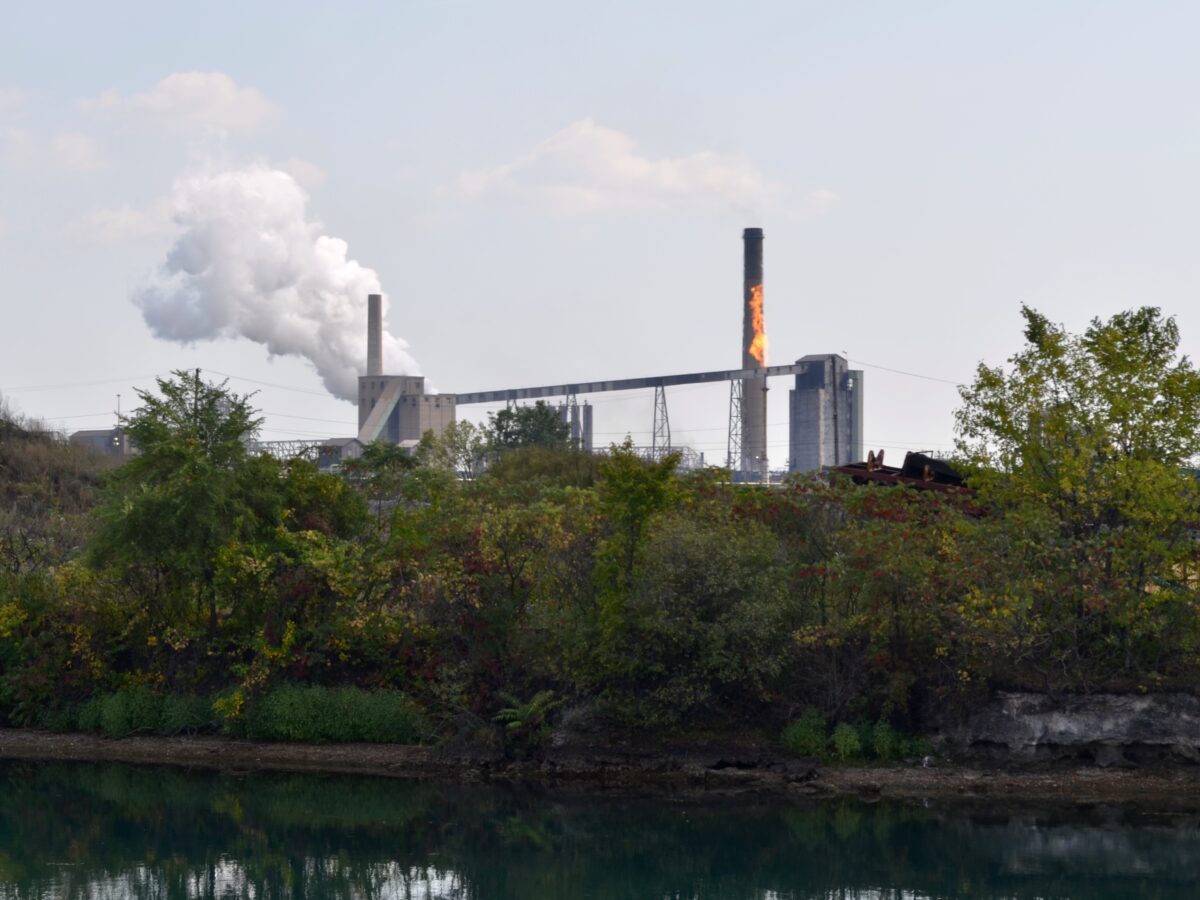
Trump exempts Zug Island’s EES Coke Battery from new pollution rules for 2 years
In May, Planet Detroit reported that EES Coke Battery was offered a two-year exemption by the Trump administration from deadlines to comply with air pollution standards.

EPA, EES Coke Battery are $135 million apart on Clean Air Act penalties as Zug Island pollution trial ends
The EPA is seeking a $140 million civil penalty against Zug Island’s EES Coke Battery, while the facility and its owner DTE Energy propose a $5 million penalty.
