

Overview:
- Michigan Attorney General Dana Nessel is suing fossil fuel companies, alleging cartel-like tactics to kill competition from renewable energy and electric vehicles.
- The suit alleges violations of antitrust laws resulting in inflated energy prices for Michigan residents.
- The Trump administration has already sued, seeking to block state-level climate litigation.

by KELLY HOUSE and SIMON D. SCHUSTER, Bridge Michigan
Jan. 23, 2026
This story was originally published by Bridge Michigan, a nonprofit and nonpartisan news organization. To get regular coverage from Bridge Michigan, sign up for a free Bridge Michigan newsletter here.
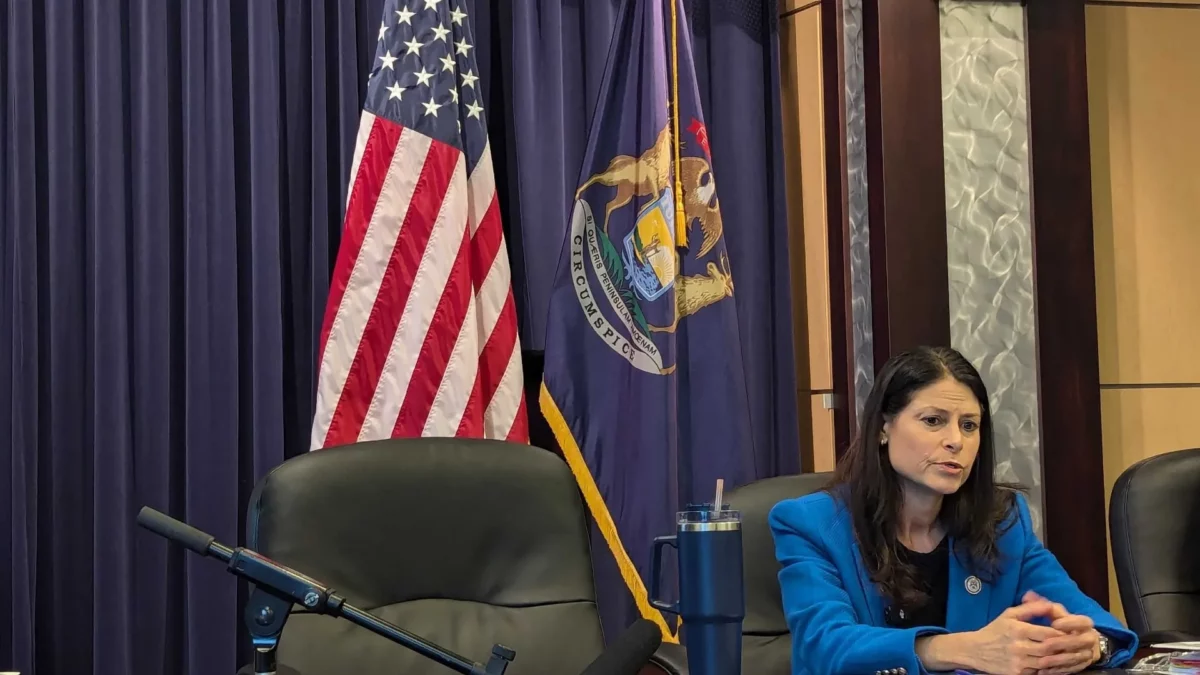
Michigan Attorney General Dana Nessel is suing some of the world’s largest oil companies, accusing them of colluding for decades to keep renewable energy and electric vehicles on the margins.
The landmark lawsuit, filed Friday morning in the US District Court for the Western District of Michigan, seeks unspecified financial compensation and forfeiture of profits from oil giants BP, Chevron, Exxon Mobil, Shell and their subsidiaries, as well as the industry lobbying group American Petroleum Institute.
Rather than a suit about environmental harm, “at the heart, this is an energy affordability case,” Nessel said in an interview with Bridge Michigan.
Michiganders pay among the nation’s highest residential energy rates — costs Nessel said “could have been prevented had the fossil fuel cartel not worked together to postpone innovation and to eliminate cost-effective alternatives.”
Ryan Meyers, senior vice president and general counsel for the American Petroleum Institute, criticized Nessel’s new suit. In a statement provided to Bridge, he called it part of “a coordinated campaign against an industry that powers everyday life, drives America’s economy, and is actively reducing emissions.”
With the suit, Michigan joins dozens of cities and states that have sued oil corporations, alleging they used illegal tactics to maintain market dominance and conceal the risks of their products.
Petroleum industry representatives have begun lobbying Congress for legal immunity, calling such lawsuits a waste of taxpayer resources.
Today’s suit comes more than a year-and-a-half after Nessel first announced plans to sue the fossil fuel industry over climate change.
While many other state and local lawsuits have accused oil companies of violating environmental and public trust laws, Michigan’s case hinges on antitrust laws designed to protect consumers from monopolies.
In the 126-page complaint, state lawyers argue the fossil fuel companies acted like a cartel, conspiring to thwart competition from EVs and renewable energy. That includes using “capture-and-kill tactics” such as buying renewable energy patents and then restricting their use, suing rival companies to keep them from deploying EVs and renewables, misleading the public about the risks of fossil fuels and hiring hackers to “surveil, intimidate and disrupt” investigations by journalists and activists.
Taken together, the lawsuit alleges, those actions amount to “an illicit conspiracy” to restrain free trade. In a world without such collusion, the lawsuit states, Michiganders would have more and cheaper transportation and energy options while avoiding the “staggering external costs” of climate change.
Oil company executives knew as far back as the 1960s that fossil fuels cause climate change, but spent decades publicly denying the science.
Greenhouse gas emissions caused by burning fossil fuels have destabilized Earth’s climate, prompting a global panel of experts to warn that humanity must stop emitting by 2050 or face dangerous “tipping points” such as mass extinction and runaway sea level rise, heatwaves, droughts and fires.
Last year was the third-hottest year on record, just barely cooler than 2023 and 2024.
While the lawsuit sparked effusive praise from environment advocates, it was harshly criticized by business groups.
Mike Alaimo of the Michigan Chamber of Commerce said Nessel’s lawsuit “weaponizes the Attorney General’s office against broad segments of Michigan’s economy,” arguing such moves inject “uncertainty into our business climate and jeopardizes our competitiveness.”
But the Michigan chapter of the Sierra Club, an environmental advocacy organization, hailed the suit as a way to push back against longstanding industry influence.
“These companies have used their outsized political influence to preserve the status quo and pave the way for a wave of energy-intensive data center projects across the state, even as renewable energy remains the cheapest source of new power and what Michiganders deserve,” Sierra Club lobbyist Tim Minota said in a statement.
Michigan Climate Action Network Executive Director Denise Keele called lawsuits like Nessel’s “exactly the kinds of things that we need to be doing.” She argued fossil fuel companies “should be chipping in to pay for all these catastrophic (climate) impacts.”
Even before it was filed, Nessel’s lawsuit drew a rebuke from President Donald Trump’s administration. Michigan’s top Democratic prosecutor has filed or joined dozens of lawsuits against the administration, and has claimed they have resulted in more than $2 billion in funds returned to the state.
Trump, who campaigned on a promise to “unleash” American oil and gas, has spent the first year of his second term bolstering fossil fuels.
In May, his Department of Justice preemptively sued Michigan, with US Attorney General Pam Bondi arguing that state climate lawsuits “threaten American energy independence and our country’s economic and national security.”
That case is pending in US District Court.
In addition to rolling back regulations on greenhouse gases and toxic coal plant pollution, Trump has canceled tens of billions of dollars’ worth of federal climate grants and clean energy subsidies while pushing instead to expand subsidies for fossil fuels.
Some $540 million in climate-related grants to Michigan have been canceled or held up since Inauguration Day. Nessel has sued the administration in hopes of reversing some of those cuts.
Nessel’s antitrust case will likely not conclude before she leaves office at the end of 2026. She expressed hope that her successor will continue to pursue the case, regardless of their party affiliation.
“Michigan is facing this affordability crisis when it comes to our energy,” she said. “This is not a partisan issue.”
This article first appeared on Bridge Michigan and is republished here under a Creative Commons Attribution-NoDerivatives 4.0 International License.
MORE FROM PLANET DETROIT

DTE Energy’s Saline data center contracts win quick state approval, despite uproar
The $7 billion, 1.4 gigawatt Oracle and OpenAI data center is planned for 575 acres of farmland south of Ann Arbor.

EPA drops health cost calculations for air pollution: How it could harm Detroiters
The agency will no longer consider health costs and deaths prevented when reducing two major pollutants, but will account for costs to industry.

New permit allows increased production at Marathon’s Detroit refinery
The state has granted Marathon Petroleum Co.’s request to remove capacity limits at its Southwest Detroit refinery with changes that consider public input. In March, the company sought a permit from the Michigan Department of Environment, Great Lakes, and Energy (EGLE) to allow the oil refinery to produce up to 140,000 barrels of oil daily,…
