

Overview:
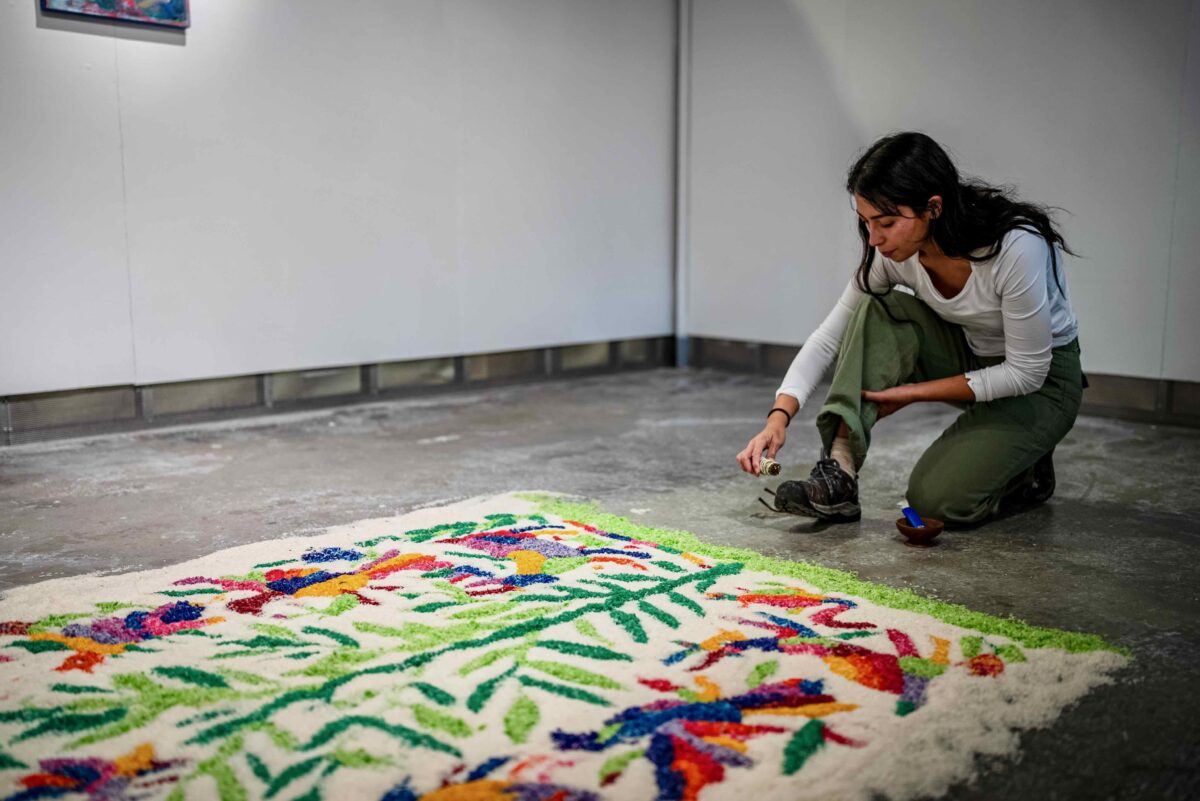
- Hospice social worker Theresa Beckley-Amaya and artist Julianna Sanromán launched Altars for Collective Grief, a community art project in Southwest Detroit responding to the shared trauma of immigration enforcement and family separation.
- The participatory installation invites residents to honor loved ones affected by deportation through posters, candles, and mixed-media altars rooted in cultural and ancestral traditions.
- The project aims to reduce isolation, foster solidarity, and create visible spaces of mourning and resistance.

What happens when immigration enforcement separates a person from their loved ones? The question has shaped the life of artist Julianna Sanromán, an MFA candidate at the University of Michigan, since her parents were deported when she was 7.
“I’ve lived most of my life overwhelmed by grief because of my parents’ deportation,” Sanromán said. “It is such a lonely, scary feeling to process it by yourself.”
In Southwest Detroit, that grief is increasingly collective. After hearing stories of local deportations, Theresa Beckley-Amaya, a hospice social worker at Michigan Palliative and Hospice Care, said she began thinking about how to acknowledge the community’s pain.
Her initial idea: place posters and candles throughout the neighborhood to signal support for families affected by immigration enforcement.
After connecting with Sanromán, the idea grew into Altars for Collective Grief, a participatory, mixed-media project inviting the public to submit photos of loved ones affected by immigration enforcement.
Residents, elected officials, and community leaders say there’s been an uptick of Immigration and Customs Enforcement activity in Southwest Detroit beginning in 2025.
Since President Donald Trump took office, federal agents arrested 1,432 undocumented immigrants in Michigan as of July 2025, 40% of whom had no criminal convictions, according to a Detroit Metro Times analysis of data from the Deportation Data Project. The arrest number is nearly triple that of the same period in 2024.
The altars seek to address the fear of separation felt in communities heavily impacted by enforcement, while also honoring ancestors and cultural traditions.
“With more deportations, how do we continue to create a network for them to not feel tremendously alone?” she said.
‘What our community is going through is grief’
Sanromán is still experimenting with the physical form of the altars, but she envisions wooden structures incorporating family photos rendered through mixed-media techniques such as cyanotype and wheat pasting, she told Planet Detroit.
The installations will be placed on walls of participating businesses and are designed to function as traditional altars where people can add candles or flowers.
Since November 2025, at least four Detroit teens seeking asylum have been jailed in facilities operated by federal officials. All attend Western International High School in Southwest Detroit.
Beckley-Amaya, a six-year resident of the largely Latino neighborhood, attended a Detroit Public Schools Community District board meeting in support of the students.
“I was listening to all these stories, and it just really broke my heart,” Beckley-Amaya said. “What our community is going through is grief, and I was trying to figure out, how do I fit into that landscape?”
The project’s first phase includes posters featuring Sanromán’s writing, such as, “We move the way our ancestors taught us. Migration is an inherited knowledge,” and “Movement is older than borders. We carry it in our bodies, in our blood, in our memory.”
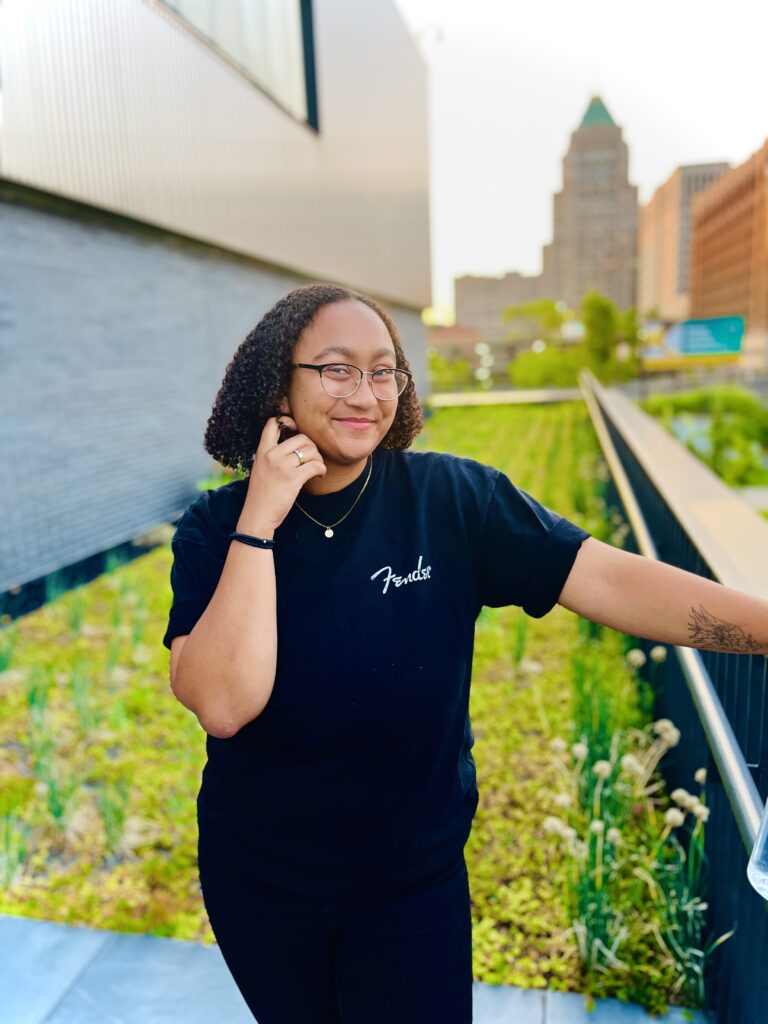
Beckley-Amaya said the team hopes to place posters and candles across Southwest Detroit by the end of the month and install the personalized altars by springtime.
Submissions opened on Dec. 27 via Instagram and closed Jan. 9, and eight people contributed. Sanromán hopes to install the altars by April at locations including Vámonos Detroit and Garage Cultural.
Sanromán received $5,000 from the Visionary Resistance Fellowship from Petty Propolis, a Detroit-based organization supporting artists, with a portion of the funding supporting the project.
It’s the project’s first iteration, Sanromán said, adding that she won’t turn away anyone who wants to participate. Her hope is to expand the work to other immigrant communities, including Dearborn and other parts of Detroit, she told Planet Detroit.
Beckley-Amaya said that regardless of what elected officials are or are not saying, “our community sees each other, and we don’t stand for this.
“Everyone should be able to walk around the streets without fear of being separated from their families.”
Editor’s note: This story has been updated with additional information and to more accurately depict Theresa Beckley-Amaya and Julianna Sanromán’s roles in creating Altars for Collective Grief.
MORE FROM PLANET DETROIT
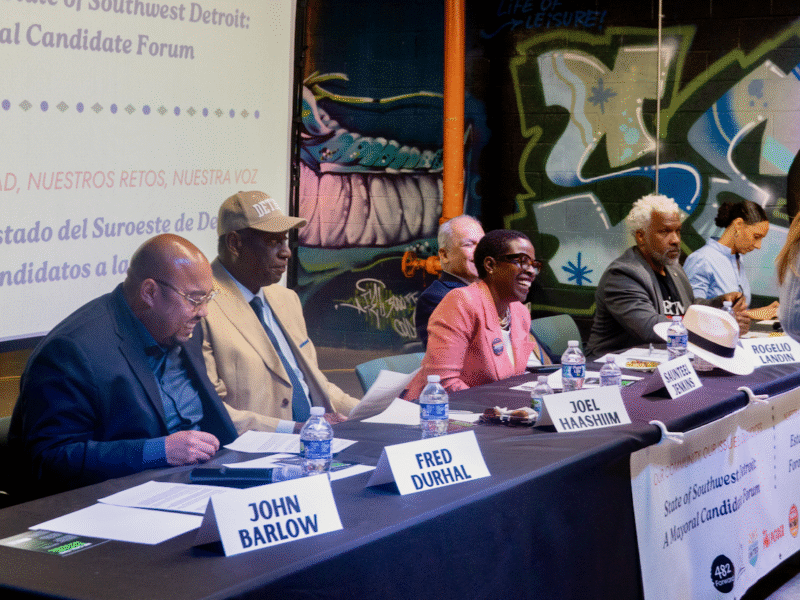
Southwest Detroit mayoral forum highlights public health, immigration
Southwest Detroit residents raise ongoing issues from February’s water main break and health impacts from truck traffic. Candidates promise action to help an area they say has been neglected.

Immigration crackdown’s health effects: ‘Like a roller coaster’
A Venezuelan couple describes navigating life in Michigan in an uncertain environment for immigrants. The executive director of Ypsilanti’s Corner Health Center says public health impact of immigration crackdown by Trump administration will be felt “for a generation.”

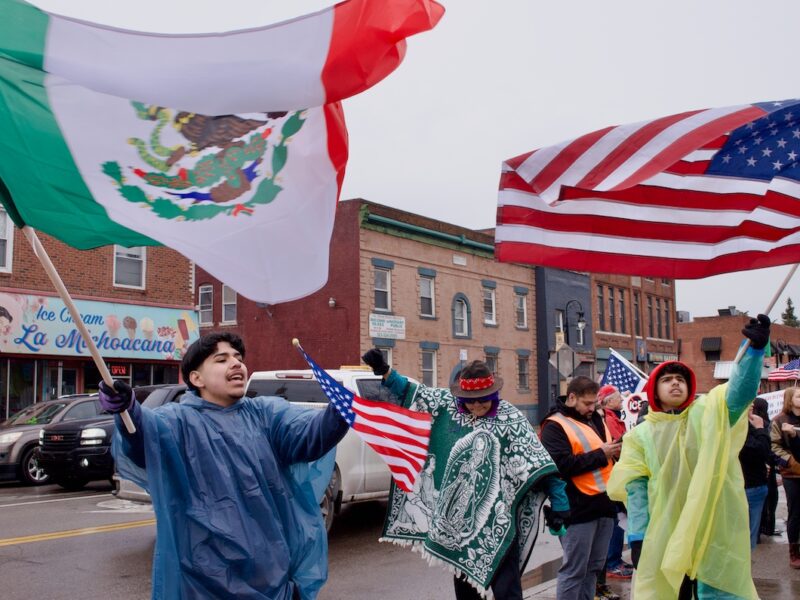
Southwest Detroit residents take stand against ICE crackdown: ‘Our presence enriches this country’
Tuesday’s rally demands dignity for immigrant families while providing protection strategies and mutual aid resources.