


The National Wildlife Federation is working to protect the Great Northwoods — millions of acres of forests and waters across Michigan, Minnesota, and Wisconsin that provide vital wildlife habitat and connect nearby communities to nature.

We promote business practices that advance climate leadership, social justice, and the creation of a circular economy
Years ago, climate change might have seemed like a distant problem, but now it’s apparent to Michiganders. Michigan is experiencing increased flooding, more frequent extreme weather events, and changing lake levels.
Now, someone might say: “I’m hunting for deer in November, and I’m wearing a T-shirt,” said Marc Smith, Great Lakes policy director for the National Wildlife Federation. “My dad used to hunt for deer in November, and he was wearing wool and a hat, and there was a foot of snow on the ground.”
Warming temperatures are altering plants and wildlife, weather patterns, water and air quality, the economy, and people’s health across the state.
Although the climate is changing, Michigan’s forests provide a buffer that mitigates the impact. “Michigan, with and without forests, would be a completely different climate,” said Inés Ibáñez, a professor at the University of Michigan School for Environment and Sustainability.
“If you think about winds coming from the west, the reason we don’t experience the full force is that we have all these forested areas,” that slow down the winds and make them less severe.
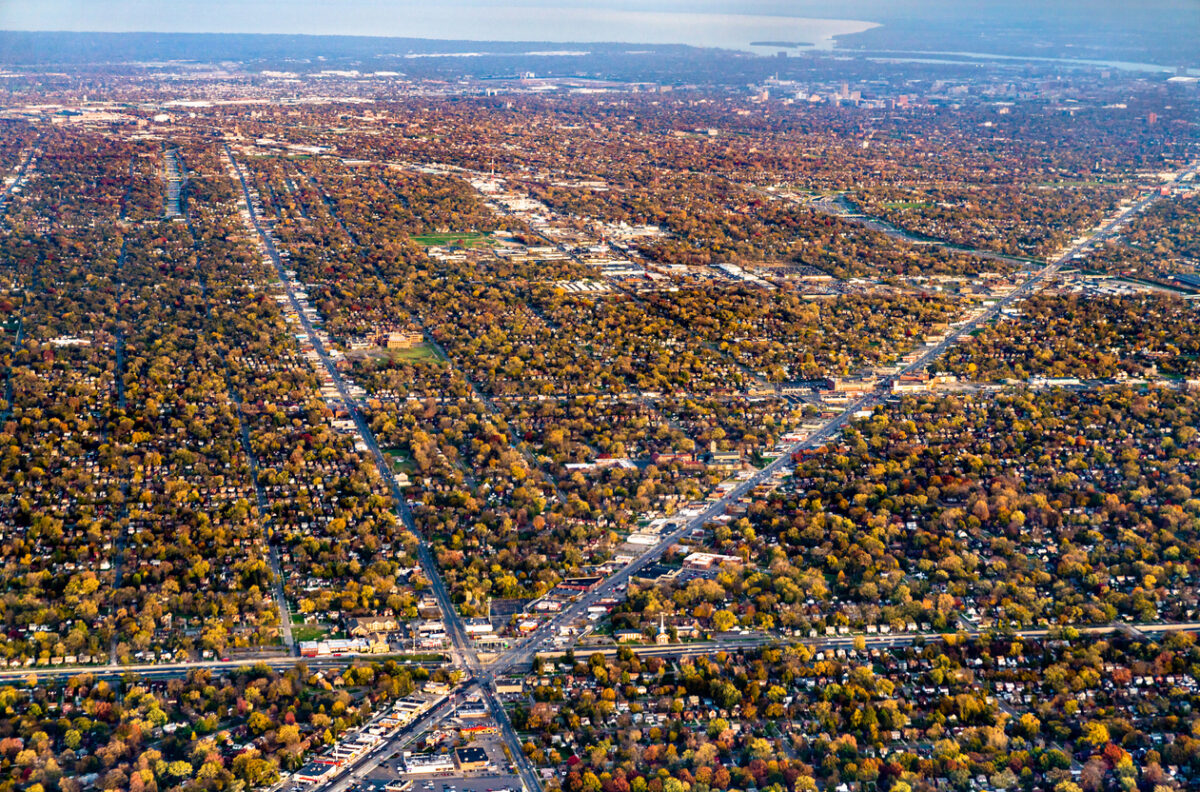
Climate buffering works on a smaller scale, too—the trees on your street and in local parks decrease temperature and help manage stormwater to reduce flooding. Forested watersheds also provide clean water, but climate change will lessen their ability to do that, according to climate experts.
Trees and wildlife at risk
Michigan’s northern forests are part of the Great Northwoods, covering the entire Upper Peninsula and portions of the northern Lower Peninsula, plus parts of Wisconsin, Minnesota, Ontario, and Manitoba. Climate change is causing hotter, drier conditions, which are likely to harm many tree species common in northern Michigan.
As the habitat warms, species like jack pine will move north, and species more common farther south will move into the UP, said Marvin Roberson, forest ecologist with the Sierra Club Michigan Chapter.
But many species won’t be able to move fast enough to keep up with climate change. Some of these trees are culturally important to Indigenous people, such as the cedars’ significance to the Anishinaabe.
Certain tree species are vital to industries, from fisheries to tourism. “Right now, Michigan’s timber industry is designed to use the species that are here. Fifty years from now, those species might not be here, and so the timber industry might not have the feedstock they need,” Roberson said.
Trees also support fish habitat in local streams and rivers. “The only way you can maintain fisheries is if you have good grounds for fish to spawn,” Ibáñez said. “If those areas are forested, it’s a much better environment because they keep temperatures cool and [provide] plenty of hiding places and resources for the eggs to develop.”
Warming temperatures may benefit some plant and wildlife species, like white-tailed deer, but harm others, like moose and osprey. And species often are connected in unexpected ways.
Michigan has a high population of white-tailed deer, “in part because it’s easier for them to find things to eat, and one of the things they eat is cedars,” Roberson explained.
“Cedars, when they’re not eaten, get big and drop on rivers and provide trout habitat by cooling the rivers down. So rivers are getting warmer because deer are eating cedars, and the cedars aren’t falling into the river to provide shade.”
Along with hotter, drier conditions, warming temperatures are making the growing season longer and changing precipitation patterns. More often, precipitation comes in heavy rain events of 3 inches or more.
Michigan is seeing more precipitation in spring, stronger storms, and drier summers, none of which are optimal conditions for plants, Ibáñez said. Warmer winters also harm the snowpack, which insulates the ground and protects roots from freezing.
At the same time, Michigan’s forests face invasive plants and insect pests, and some forests have become fragmented by agriculture and development, which hampers trees’ ability to migrate. Climate change is likely to exacerbate these stressors in both natural and urban forests.
Because some urban forests are made up of non-native trees, “they may not have as wide a capability of conditions they can survive in, and so they may be more susceptible to climate change than some of the northern forests,” Roberson said.
Health effects in Detroit
Climate change can exacerbate asthma, allergies, and other chronic health conditions through warmer temperatures, extreme weather, and poor air quality. Climate change also increases wildfire risk, and when forests burn in northern Michigan or Canada, that smoke travels south.
In 2025, the Allergy and Asthma Foundation of America put Detroit at the top of its list of “asthma capitals” because of its high rates of asthma and asthma deaths. Several factors contribute, including significant air pollution, high poverty rates, and limited health insurance coverage. Air pollutants include increased levels of ground-level ozone and fine particulate matter pollution, or PM 2.5.
People with asthma should see an asthma specialist at least twice a year, but that’s hard in Detroit, where only about two standalone asthma specialists practice, said Kathleen Slonager, executive director of AAFA Michigan Chapter. Hospital-based specialists have waitlists that are months long.
Climate change is exacerbating allergies because longer growing seasons mean plants release pollen earlier and for longer. Climate change is also affecting people with lung cancer, cardiovascular disease, and diabetes, and poor air quality can affect children’s development, Slonager said.
When northern forests burn, Detroiters breathe the smoke. Wildfire smoke has worsened fine particulate matter pollution in Detroit. During the Canadian wildfires, anecdotal evidence indicated increased ER visits for asthma, Slonager said.
If climate change continues to worsen asthma, “access to good quality care is going to be critical,” Slonager said, including “being able to get to the right kind of doctor, get the right medication, and learn how to take it correctly.”
The AAFA’s Health Equity Advancement and Leadership (HEAL) Detroit program has made progress. It provides education on asthma management, access to specialists, and other support services. Participants have had their asthma better-controlled, missed less school and work, and had fewer ER visits.
—
This story is part of Rooted Together: Connecting Detroit and Michigan’s Great Northwoods series, co-produced with the National Wildlife Federation’s Great Northwoods Initiative.