

Overview:
- DTE Energy must pay $100 million within 90 days for Clean Air Act violations at EES Coke Battery on Zug Island.
- The company must create a seven-member community committee with $20 million in funding for air quality improvement programs over seven years.
- EES Coke Battery was Michigan's third-largest sulfur dioxide polluter in 2023, emitting over 3,000 tons of the harmful air pollutant, according to court testimony.

This story was produced with support of Internews’ Earth Journalism Network.
DTE Energy and three of its subsidiaries must pay $100 million for Clean Air Act violations at EES Coke Battery on Zug Island within 90 days, according to a final judgment entered in federal court Tuesday.
🗳️ Civic Action Toolbox
Why it matters
Who's making public decisions
Organizations to Follow
What to watch for next
Whether DTE Energy appeals a $100-million federal court judgment.
Did you take action? Let us know.
Civic resources compiled by Planet Detroit
The facility must come into compliance with the Clean Air Act by submitting New Source Review Permit applications within 250 days, and form a community committee within 120 days and provide it with $20 million in funding for air quality improvement programs over seven years.
The $100-million fine is payable to the U.S. Treasury and will accrue interest until paid in full.
DTE stands by a previous statement that it plans to appeal U.S. District Judge Gershwin Drain’s decision, a spokesperson told Planet Detroit Tuesday.
“We are focused on making our appeal to the 6th Circuit Court for an outcome that recognizes we have been operating within the limits of the valid original state permit,” Jill Willmot, director of DTE corporate communications, said in a Feb. 17 email to Planet Detroit.
Danny Wimmer, press secretary for Attorney General Dana Nessel, said any effort by DTE to pass a judgment on to customers would likely have to be approved by the Michigan Public Service Commission, which regulates the utility.
“While our office would have to thoroughly review all the facts of the case, should DTE attempt to recover such a civil penalty in a future rate case, Nessel would surely oppose this before the commission,” Wimmer said in a Friday email.
DTE exerted sweeping control over a heavily polluting coke facility, profiting from delayed compliance while nearby communities bore irreversible health costs, Drain said in a Feb. 17 order that followed a September bench trial of an Environmental Protection Agency lawsuit over sulfur dioxide emissions from Zug Island.
EES Coke Battery produces coke, a raw material in the steelmaking process. Coke is produced by heating coal in an oxygen-free environment.
DTE argued unsuccessfully in the case that it is not liable for EES Coke Battery and its Clean Air Act violations.
DTE must pay the court costs for the EPA, Sierra Club, and River Rouge, Drain said. The EPA sued EES Coke Battery in 2022, and the Sierra Club and River Rouge intervened in the case. DTE and two of its subsidiaries were added as defendants in 2024.
The following are takeaways from the federal court decision against DTE Energy and its Zug Island subsidiary, plus answers to key questions about costs, environmental compliance, and community health.
How did court calculate DTE’s fine?
The court found that DTE saved $70 million by failing to comply with the Clean Air Act. The estimate was presented in testimony from government expert Dan Leistra-Jones.
“By failing to install pollution controls at the time of the major modification, defendants gained an economic benefit between $46.4 million and $99.1 million,” Drain said in a Feb. 17 order.
“By delaying or avoiding compliance costs, defendants were able to use that money in other ways, including for income-producing purposes and reinvesting in their own operations,” Drain said.
The defendants’ “good faith efforts to comply” with the 2014 permit justify a $5-million discount to the penalty, Drain said.
EES Coke Battery did not curtail sulfur dioxide emissions after a violation notice from the EPA, nor has it taken steps to obtain required New Source Review permits, Drain said.
“Nevertheless, it appears defendants earnestly believed their excess emissions were lawful under the 2014 permit. This reduction brings the civil penalty to $100 million,” Drain said.
Where do $20 million in community funds go?
The defendants must create a community quality action committee within 120 days from Tuesday’s final judgment.
The committee will have seven members, including one representative from the lawsuit’s defendants; one from a college or university focused on public health or environmental issues; two from environmental groups active in the area; and three community members who reside in River Rouge, Ecorse, or the 48217 zip code.
The committee’s projects may include providing HEPA air purifiers to nearby homes, installing air filtration systems in schools, and supporting home weatherproofing programs.
The defendants must spend $20 million over the course of seven years, with at least $5 million spent in the first three years. DTE must post progress reports semiannually on a public website.
How will EES Coke Battery comply with Clean Air Act?
The court ordered DTE to bring EES Coke Battery into compliance by obtaining the New Source Review permits required for a “major modification” to its operations, and gave a timeline of 250 days from the court’s entry of judgement to submit applications to the Michigan Department of Environment, Great Lakes, and Energy.
The Clean Air Act requires specific technology and emission rates for major new or modified pollution sources in clean areas, and in non-attainment areas, according to the EPA. The agency requires best available control technology in clean areas, and the lowest achievable emission rate in non-attainment areas.
Specific requirements under the Clean Air Act, such as installing the best available control technology or lowest achievable emissions rate will be up to state regulators, Drain said.
How does Zug Island pollution harm public health?
EES Coke Battery is one of Michigan’s largest sulfur dioxide emissions sources, according to testimony during the EPA trial by Virgnia Galinsky, an EPA environmental engineer who reviewed self-reported data from the Michigan Air Emissions Reporting System.
In 2023, the facility was the third-largest source of the pollutant in Michigan, emitting over 3,000 tons of sulfur dioxide that year, she said.
Sierra Club members who live within a few miles of Zug Island testified that the emissions have harmed their health and decreased their quality of life.
Expert witness Lyle Chinkin, CEO and chief scientist of Sonoma Technology, said the highest concentrations of particulate matter from the facility’s excess sulfur dioxide emissions were in the Detroit area, including River Rouge and the 48217 zip code, Drain said.
Even “very brief exposure” to sulfur dioxide can increase the risk of asthma attacks, as well as other respiratory effects and the exacerbation of respiratory diseases, Drain said, referring to testimony by government expert Dr. Joel Schwartz, a scientist who studies the health effects of air pollution.
“Where there are multiple pollution sources in an area, injuries need not be traced to a single facility. These injuries are fairly traceable to defendants’ excess SO2 and PM2.5 emissions because they arise in close geographical proximity to the facility. Moreover, the respiratory symptoms described by Sierra Club members are consistent with the effects of SO2, as Dr. Schwartz testified,” the judge said.
Court: DTE controls Zug Island coke oven
The Clean Air Act “imposes strict liability” on noncompliant owners and operators, Drain’s order said.
The court ruled that DTE, along with EES Coke Battery and two other DTE subsidiaries, is liable as an operator of the facility because it exercised a “high degree of control” over the polluting facility, including environmental decision-making.
Under DTE’s corporate structure, EES Coke Battery cannot function without DTE, has no employees of its own, and does not maintain any cash of its own or have its own bank account, Drain concluded.
A 2008 management services agreement gives DTE Energy Services “exceptionally broad authority” over the facility’s operations, the order said.
Since at least 2012, the DTE subsidiary has led the facility’s day-to-day operations and made the decision to pursue environmental permits in 2013 and 2014, and obtained them for EES Coke Battery. These employees chose not to install desulfurization technology at the facility in 2015, Drain said.
ZUG ISLAND COVERAGE
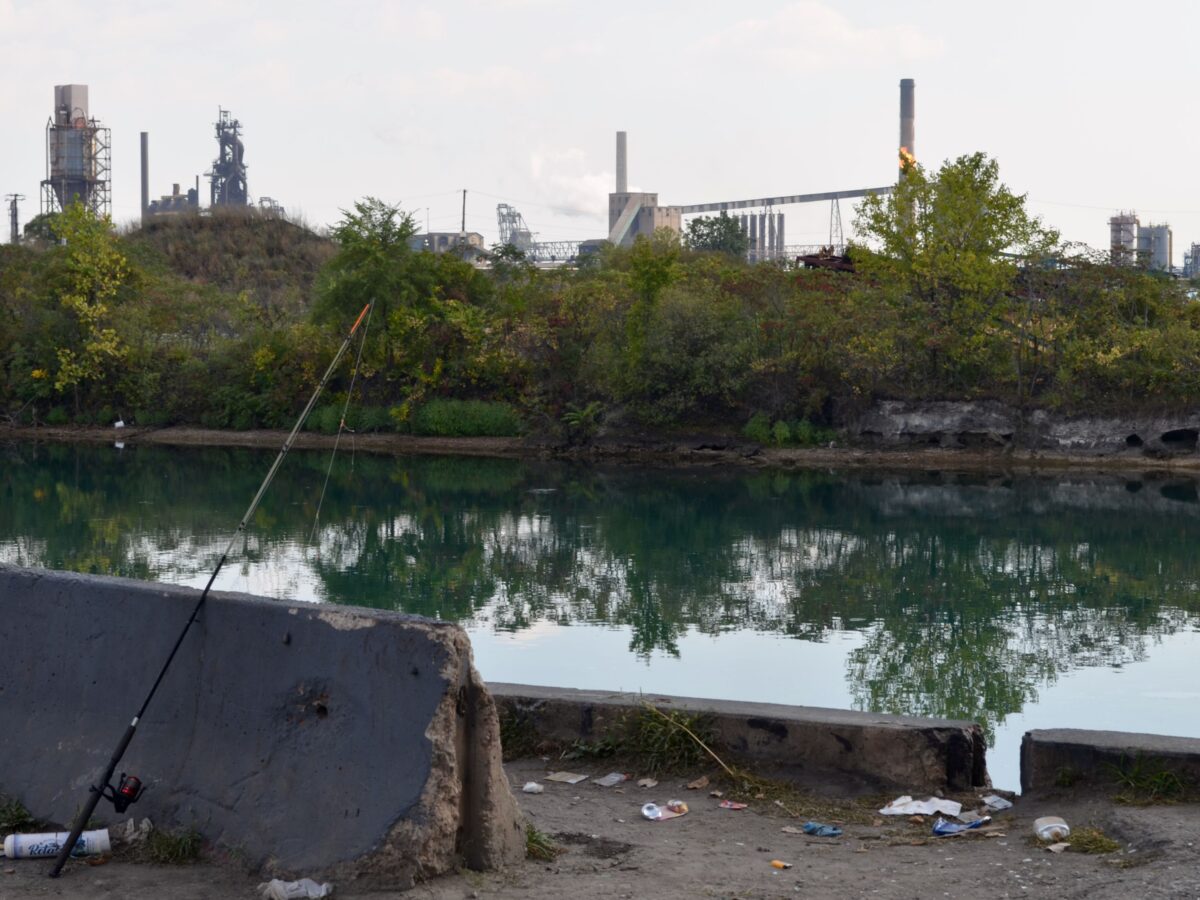
Judge fines DTE, its Zug Island facility $100 million for Clean Air Act violations
The EPA sought a $140 million civil penalty in the lawsuit, which DTE lawyers said amounts to a shutdown order on Zug Island.


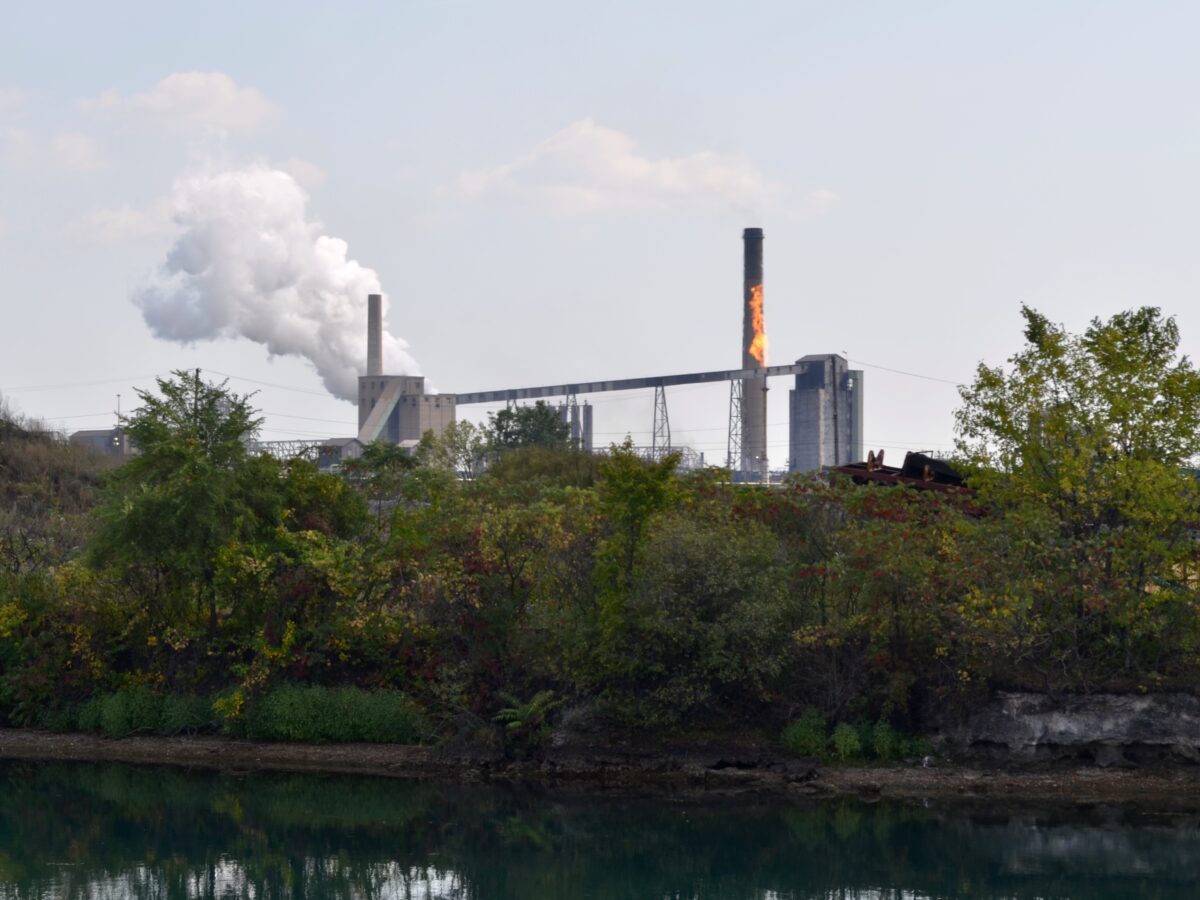
Trump exempts Zug Island’s EES Coke Battery from new pollution rules for 2 years
In May, Planet Detroit reported that EES Coke Battery was offered a two-year exemption by the Trump administration from deadlines to comply with air pollution standards.
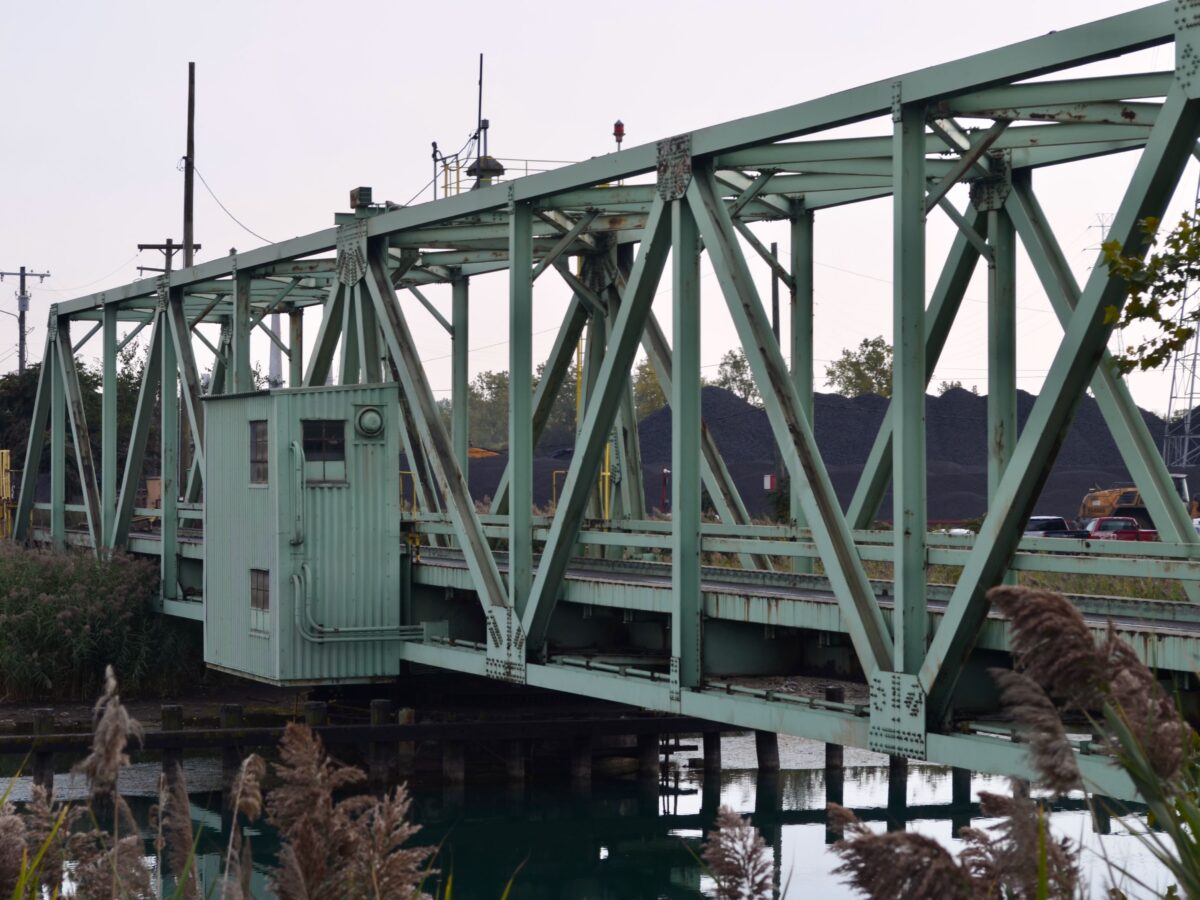
EPA, EES Coke Battery are $135 million apart on Clean Air Act penalties as Zug Island pollution trial ends
The EPA is seeking a $140 million civil penalty against Zug Island’s EES Coke Battery, while the facility and its owner DTE Energy propose a $5 million penalty.