


Overview:
- In addition to the fine, federal judge orders compliance with the Clean Air Act and $20 million in community air quality improvement projects.
- DTE and its subsidiaries requested a $5 million penalty in the case.
- At the end of a September bench trial, when faced with testimony that Zug Island’s EES Coke Battery is one of Michigan’s worst sulfur dioxide polluters, an attorney for the facility said: “So what?”

This story was produced with support of Internews’ Earth Journalism Network.
A federal judge ordered DTE Energy and its Zug Island facility Tuesday to pay a $100 million fine, comply with the Clean Air Act, and fund $20 million in community air quality improvement projects.
The ruling against the utility and its EES Coke Battery subsidiary by U.S. District Judge Gershwin Drain follows a September bench trial of an Environmental Protection Agency lawsuit over sulfur dioxide emissions from Zug Island.
DTE — which argued in the case that it is not responsible for EES Coke Battery and its Clean Air Act violations — is liable, Drain said in the ruling.
In addition to the $100,000,001 civil penalty to be paid to the government, Drain ordered DTE and EES Coke Battery to come into compliance with the Clean Air Act by applying for and obtaining needed New Source Review permits, and to form a community action quality committee and fund it with $20 million for community air quality improvement projects.
DTE plans to appeal Drain’s order, a spokesperson for the utility said Tuesday.
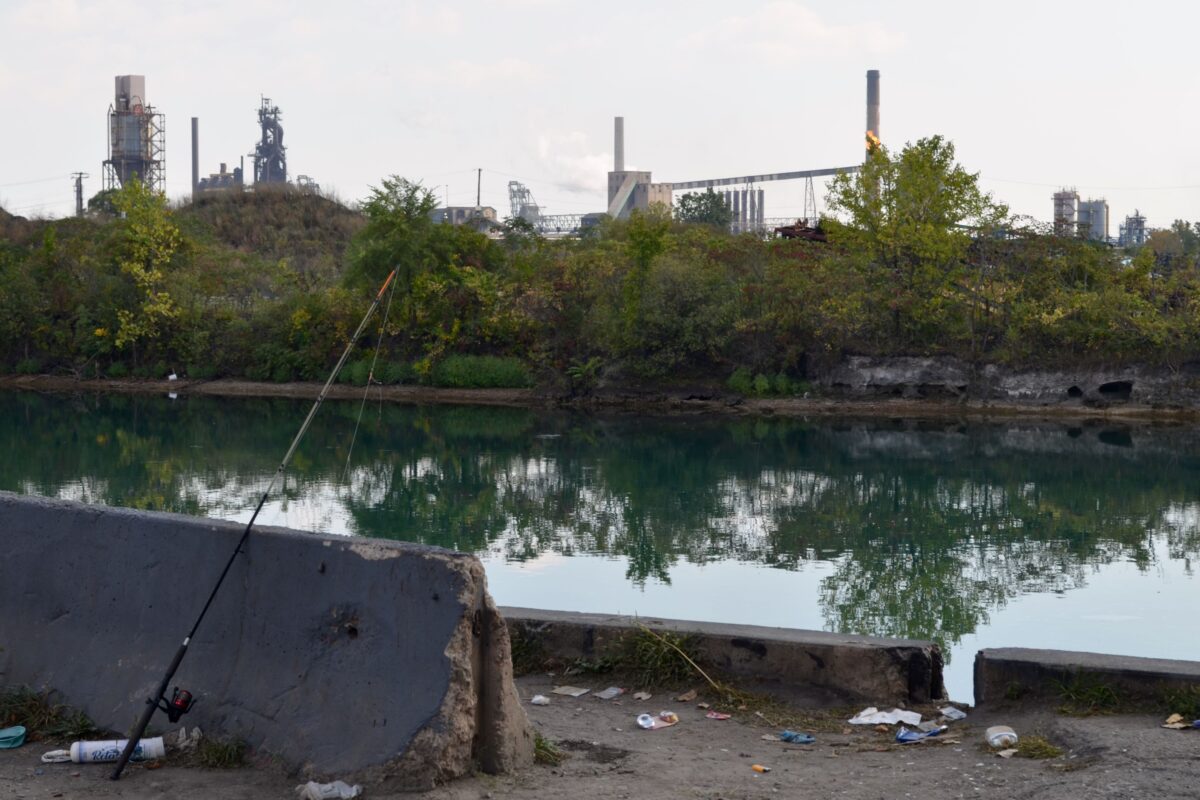
EES Coke Battery produces coke, a raw material in the steelmaking process, and contributes to the environmental burden in Southwest Detroit and surrounding communities. Coke is produced by heating coal in an oxygen-free environment.
Judge: DTE saved $70 million by failing to comply with air quality rules
The EPA sought a $140 million civil penalty in the lawsuit, which DTE lawyers said amounts to a shutdown order on Zug Island. DTE and its subsidiaries requested a $5 million penalty in the case.
DTE and its related companies saved about $70 million by failing to comply with environmental regulations, Drain said in his findings of fact and conclusion of law, which follow a bench trial.
“Defendants were able to use that money in other ways, including for income-producing purposes and reinvesting in their own operations.”
The judge applied a 1.5 times multiplier to the $70 million figure, known as the economic benefit of noncompliance, to deter future violations.
The control a DTE subsidiary has over the coke battery “goes well beyond what is consistent with a parent company’s investor status” and “amounts to actual, sustained control,” he said.
Elsewhere in Drain’s order, he noted that EES Coke Battery has no employees of its own, but rather employees of DTE subsidiaries.
“The DTE defendants exhibit a high degree of control over the facility, including over environmental decision-making and the facility’s emissions-related activities,” Drain said.
“This is shown through the individual actions of the DTE defendants’ employees and is baked into the DTE corporate structure. The facility cannot function without the DTE defendants exercising control.”
Drain ruled Aug. 25 that EES Coke Battery violated the Clean Air Act by making a major modification to its operations, instead of a minor modification as its 2014 permit allowed.
DTE is “extremely disappointed in the court’s ruling and its negative implications on the domestic supply of coke to the U.S. steel industry,” Jill Wilmot, the utility’s director of corporate communications, told Planet Detroit in a statement.
“We have been anticipating this order and are eager to make our appeal to the 6th Circuit Court. We remain committed to compliance and have been operating within the limits of the valid original state permit — both today and during the time period in question.”
DTE and two of its subsidiaries were added as defendants in 2024 in the federal lawsuit, which was filed by the EPA in 2022.
Adam Gustafson, principal deputy assistant attorney general in the Justice Department’s Environment and Natural Resources Division, said Tuesday’s decision shows the Justice Department will seek relief against companies that fail to comply with environmental laws.
“This ensures a level playing field for all businesses and advances the administration’s initiative to Make America Healthy Again,” he said in a statement to Planet Detroit.
In the time since the trial concluded, Planet Detroit reported on a two-year exemption granted by President Donald Trump in November to EES Coke Battery for coke oven pollution rules enacted during the Biden administration.
Drain ordered the EPA, Sierra Club, and city of River Rouge to submit a joint proposed judgment in the case by Friday.
The city of River Rouge, where Zug Island is located, and the Sierra Club intervened in the case.
Environmental activist says ruling ‘gives me hope for the future’
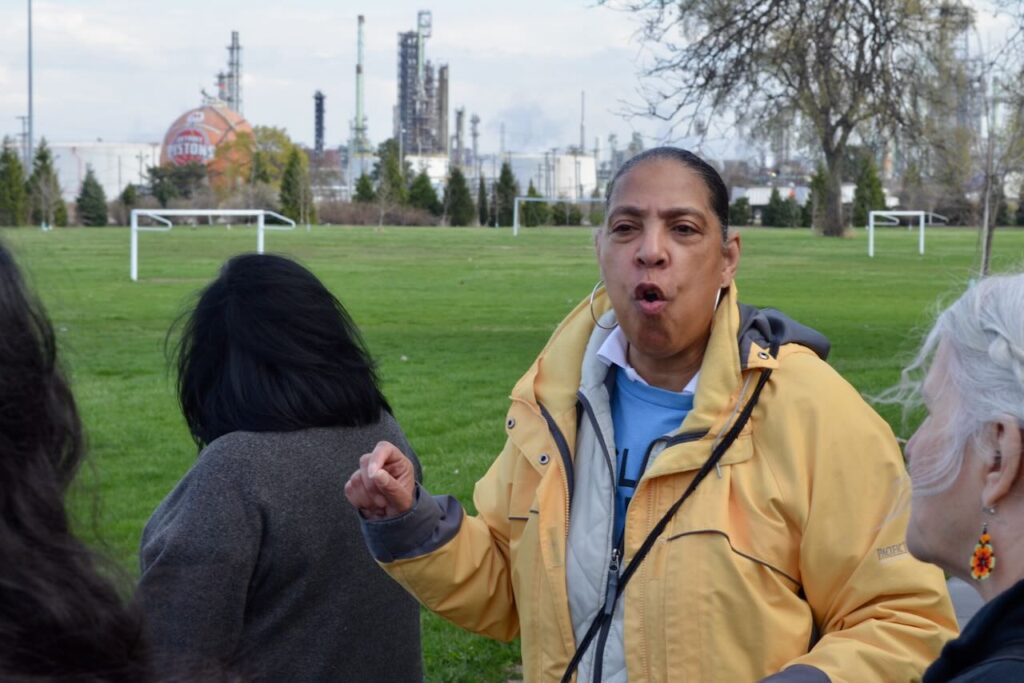
Theresa Landrum, an environmental activist and lifelong resident of Detroit’s polluted 48217 zip code, described Drain’s order as “a monumental victory” in a statement.
“Our families and neighbors can never get back the years lost to breathing dirty air. This ruling gives me faith that big corporations can be held accountable for breaking the law, and it gives me hope for the future.”
The community committee Drain ordered to be formed will have seven members, according to a press release from Earthjustice, which represented the Sierra Club in the lawsuit alongside the Great Lakes Environmental Law Center.
The committee’s possible projects could include the funding and distribution of standalone HEPA air purifiers to households near Zug Island; filtration systems in schools; and home weatherization programs, according to Earthjustice.
The committee members will include residents and environmental advocates who aim to maximize public health and air quality improvements in Ecorse, River Rouge, and 48217, the statement said.
Sulfur dioxide emissions at center of case
Drain’s order did not mandate the installation of desulfurization technology at EES Coke Battery, the Earthjustice statement said, adding that it would have reduced the company’s sulfur dioxide emissions by 95%.
Any new permit Michigan Department of Environment, Great Lakes, and Energy issues for EES Coke Battery should require updated pollution controls, the environmental law nonprofit said.
An EPA environmental engineer testified during the trial that EES Coke Battery emitted 14,180 tons of excess sulfur dioxide from 2019 to 2023, and will continue to emit about 3,000 tons of the pollutant annually until desulfurization is installed.
The EPA sought an order for full desulfurization technology on Zug Island within three years, while EES Coke Battery proposed pollution controls that would reduce at least 33% of sulfur dioxide emissions.
Sulfur dioxide is one of six criteria pollutants regulated under the Clean Air Act, and can trigger asthma after short-term exposure and cause other respiratory problems.
Sulfur dioxide can also react with other compounds to form fine particulate matter, or PM2.5, which is linked to cardiopulmonary problems and premature mortality.
‘So what?’
At the end of the bench trial, when faced with testimony that Zug Island’s EES Coke Battery is one of Michigan’s worst sulfur dioxide polluters, an attorney for the facility said: “So what?”
The DTE Energy-owned coke oven was “permitted to do so,” said Michael Hindelang, attorney for the utility and its subsidiaries.
The final filings and verdict in the case were delayed by the federal government shutdown, as the U.S. attorneys representing the EPA were furloughed.
Editor’s note: This story has been updated with additional information.
ZUG ISLAND COVERAGE
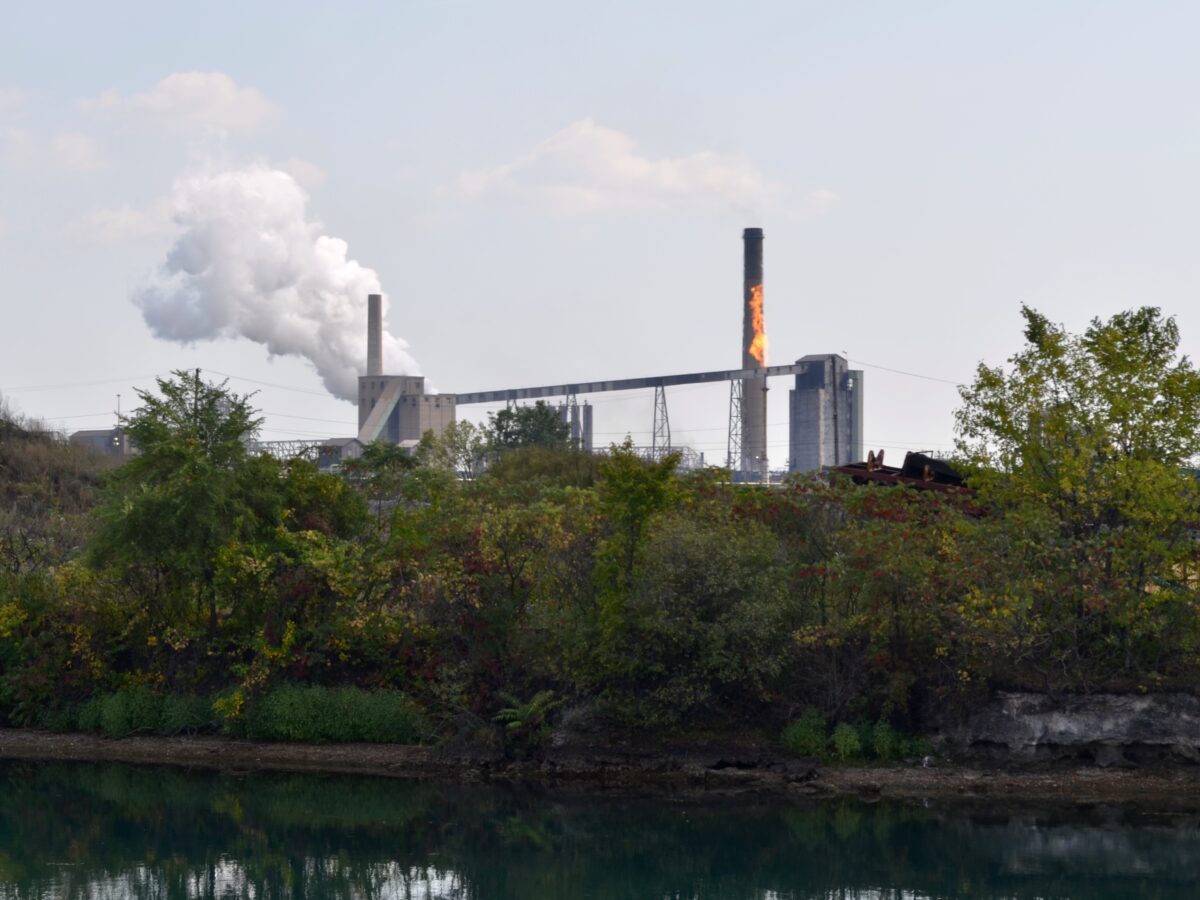
Trump exempts Zug Island’s EES Coke Battery from new pollution rules for 2 years
In May, Planet Detroit reported that EES Coke Battery was offered a two-year exemption by the Trump administration from deadlines to comply with air pollution standards.

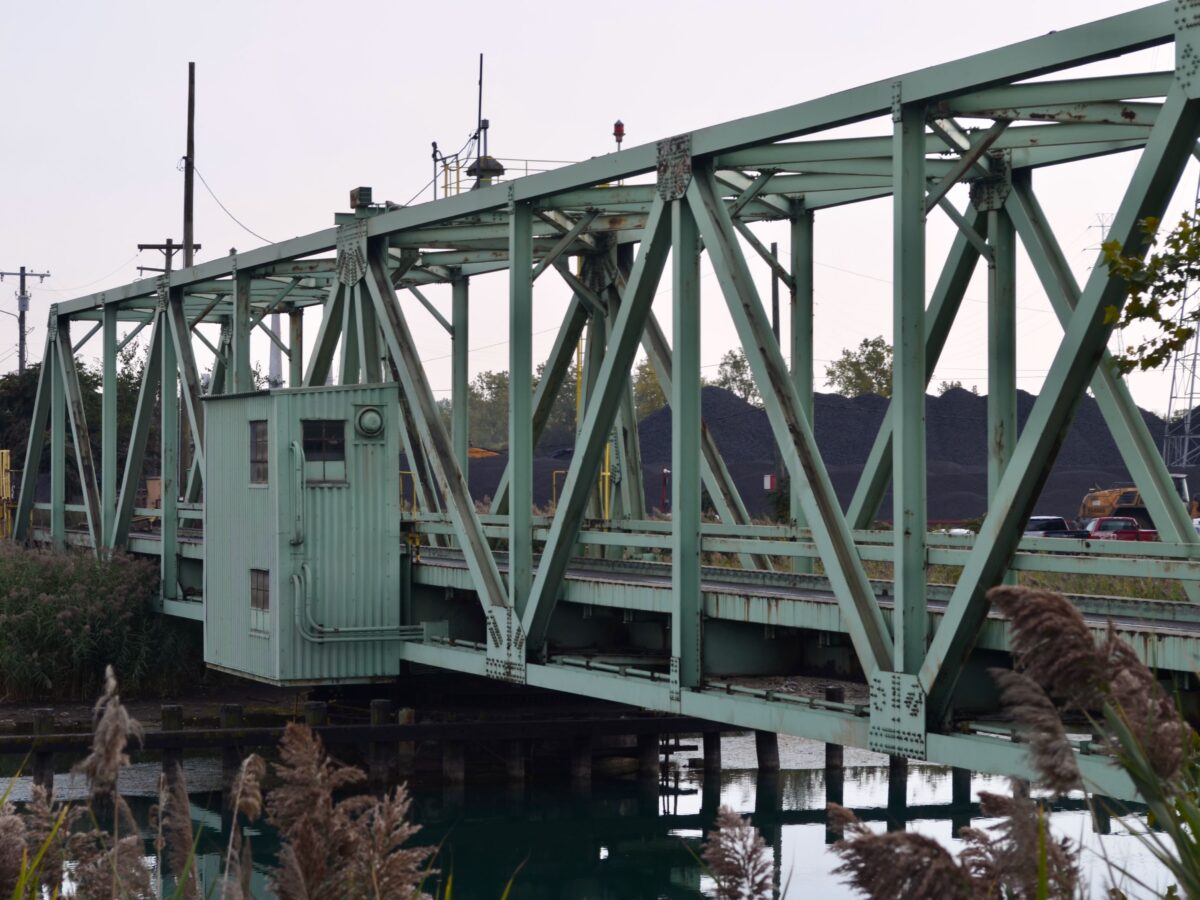
EPA, EES Coke Battery are $135 million apart on Clean Air Act penalties as Zug Island pollution trial ends
The EPA is seeking a $140 million civil penalty against Zug Island’s EES Coke Battery, while the facility and its owner DTE Energy propose a $5 million penalty.

DTE’s Zug Island operation switched fuel sources after damage to facility: Court testimony
EES Coke Battery on Zug Island switched to coke oven gas as its exclusive fuel source after damage to the facility was discovered around 2011 and 2012, according to federal court testimony.