

Overview:
- Michigan regulators issue permits allowing Oracle and OpenAI data center project to destroy 9 acres of wetlands and install 15 diesel backup generators.
- State granted waiver in October for installation of generators, three months before final permits were approved.
- The data center is expected to discharge 34.86 tons per year of nitrogen oxides, its largest source of air pollution.

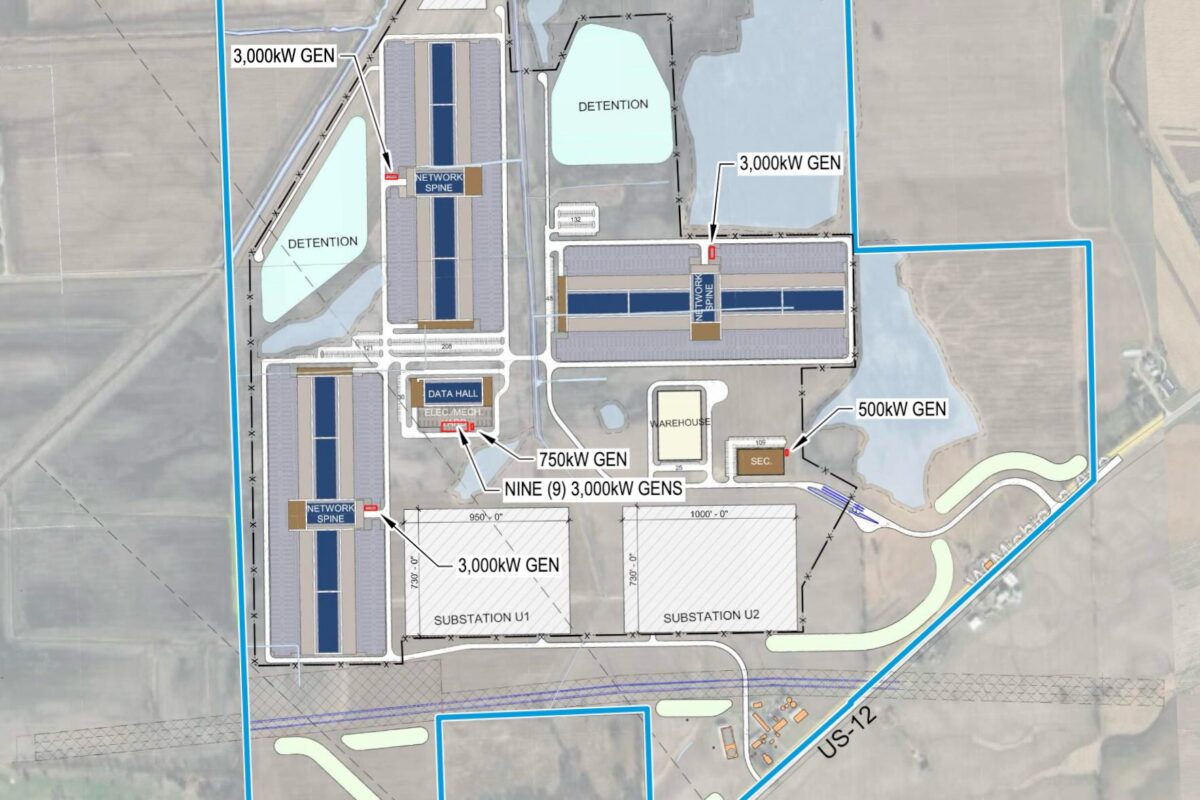
Michigan regulators granted air and wetland permits for Oracle and OpenAI’s $7-billion Saline Township data center in January, allowing for the destruction of around 9 acres of wetlands and the installation of 15 diesel backup generators.
The Michigan Department of Environment, Great Lakes, and Energy (EGLE) issued a permit waiver to data center developer Related Digital Oct. 17, 2025 to begin installation of the generators, roughly three months before the final air quality permit was issued.
The developer applied for the waiver Sept. 24, 2025 to “begin installation of Project Mitten,” referring to the data center, according to the state document.
Related Digital obtained the waiver in case it took extra time to receive the permit, said spokesperson Natalie Ravitz.
“However, largely due to the minimum air impact, we received the air permit relatively quickly and therefore the construction waiver was not actually needed.”
Civic Action Toolbox
🗳️ Civic Action Toolbox
Why it matters
Data center power demands could make it more difficult for the state to meet its climate goals, depending on what generation sources are used.
Attorney General Dana Nessel filed a motion Jan. 20 to reopen the conditional approval of DTE Energy’s contracts for the Saline Township data center as a contested case with the Michigan Public Service Commission. Nessel also filed a petition for a rehearing in the case Jan. 8.
Who's making public decisions
Upcoming Meetings
Civic Actions: What You Can Do
Organizations to Follow
What to watch for next
The MPSC could decide on Nessel's motion for a contested case at an upcoming meeting.
Did you take action? Let us know.
Civic resources compiled by Planet Detroit
EGLE spokesperson Dale George said Related Digital met the requirements for a construction waiver, adding that such waivers do not allow companies to operate equipment; lessen their obligations to meet air quality rules and regulations; or change EGLE’s review of air permit applications.
“Construction waivers may be granted when an applicant shows that waiting for a permit to install would cause significant hardship,” George said.
“If a waiver is approved, the company may begin construction but assumes all risk until the permitting process is complete,” he said, adding there is no guarantee a permit will be granted.
The Saline Township board voted against rezoning land for the development in September, then agreed to a settlement the following month after the township was sued by landowners and the developer.
On Dec. 18, the Michigan Public Service Commission granted DTE Energy’s application for quick approval of its contracts for the data center. The lack of a formal approval process and numerous redactions in the electric contracts sparked a public backlash that included multiple protests.
Nitrogen oxides are data center’s largest air pollution source
The EGLE air quality permit issued Jan. 13 allows for the installation of 14 diesel backup generators and one diesel firewater pump for use during fire emergencies.
The nitrogen oxides, carbon dioxide, volatile organic compounds, fine particulate matter, and other pollutants emitted by the generators fall below the threshold for major pollution sources, according to an EGLE project evaluation.
The data center is expected to discharge 34.86 tons per year of nitrogen oxides, its largest source of air pollution. The major source threshold for NOX is 250 tons per year.
The project will require backup generation for approximately 1% of the data center’s total power load, according to a document submitted by developers.
The project requires “far fewer backup generators than other data centers of this size” due to energy plans that include an onsite substation and offsite battery storage, said Related’s Ravitz.
The project’s 1.4-gigawatt power demand is equivalent to the amount of electricity needed for more than 1 million homes.
Data center’s wetlands, Saline River impacts
Residents expressed concern about the project’s impact on the Saline River at a December hearing, saying wetlands are important for protecting local water quality, and the data center’s cooling system could contaminate local waterways.
Related Digital has storage tanks designed to catch any leaks from the data center’s closed-loop cooling system, and the liquid would be taken offsite, Jonathan Furman, the company’s vice president, said at the December hearing.
The wetlands permit, issued by EGLE on Jan. 16, allows developers to temporarily disturb a stream and install a culvert, and construct three stormwater structures that will discharge into the Saline River, Bridgewater Drain, and an unnamed stream.
Two outflows will be placed in the Saline River’s 100-year floodplain. A wastewater treatment outfall will discharge treated wastewater into the Saline River.
The developer will acquire 13.68 acts of wetlands in the River Raisin Watershed to mitigate the loss of 9.12 acres of wetlands at the data center site, according to the permit.
“We have worked carefully with EGLE on our site design and plans, and are putting 47.5 acres of woodlands and wetlands under a conservation easement,” said Related Digital’s Ravitz.
Related Digital is developing 250 acres of land in Saline Township and protecting and preserving 750 acres as open space, farmlands, and wetlands, Ravitz said. The company owns an additional 475 acres in neighboring Bridgewater Township that will not be developed, she said.
Editor’s note: This story has been updated with comments from Related Digital and the Michigan Department of Environment, Great Lakes, and Energy.
MORE SALINE DATA CENTER NEWS
Judge denies Saline Township resident’s move to intervene in data center settlement
Washtenaw County judge finds resident Kathryn Haushalter’s motion to intervene in settlement came too late and would only apply to an open case.

Saline Township resident alleges data center settlement was improper: Township attorney says ‘everybody saw them vote’
Saline Township’s settlement with data center developer Related Digital was not properly approved, a resident says in new court filing.
Data center is threat to Saline River, residents say in wetlands hearing
Pollution from closed-loop cooling systems, wetland destruction are among the issues aired at EGLE hearing on Oracle, OpenAI data center’s wetland permit.