

Overview:
- “As far as me and my household, it's not the same as what it was,” says Southwest Detroit resident Erica Brown, who lives in the neighborhood where a 54-inch water main ruptured one year ago.
- Last year’s transmission main break “changed how we assess and prioritize risk across the system,” says Peter Fromm, director of water transmission at GLWA.
- Read Planet Detroit's tips for civic engagement on water infrastructure in Metro Detroit.
When chest-high waters receded from Lexington Street one year ago, Erica Brown hesitated to step outside into the single-digit temperatures.
“It looked like a beach, a mini beach,” remembers Brown, who looked out the window of her two-story house as water from a 54-inch water main break submerged the cars and homes of Brown and her neighbors.
“It was very hard, very sudden, very quick, very unstoppable,” she said. “You couldn’t even stop this stuff from happening, because the water was just overpowering everything.”
The scene played out last February in Southwest Detroit, where hundreds of residents like Brown were impacted by one of the worst water main breaks in recent city history.
Houses went without power or heat for days. Appliances and vehicles were totaled. The water main break area encompassed around 400 houses, and roughly 300 residents were displaced and moved into hotels.
A year later, residents and local organizers say the totality of the incident – from financial losses to health concerns – prolonged the recovery process.
“As far as me and my household, it’s not the same as what it was,” said Brown.
Flooded families ‘still to this day have not been able to be made whole’
For Brown, the worst reminders of the water main break are the objects she’s unable to replace, such as her washer and dryer, her downstairs shower room, and countless family photos and belongings stored in the basement.
“I’ve lost memories over the years from all my kids, my sisters — our baby pictures were down there,” she said.
In the days after the main burst on Feb. 17, then-Mayor Mike Duggan and other city officials promised a speedy recovery, outlining a plan that involved inspectors assessing damages in a matter of days and conducting repairs within weeks.
The 54-inch water main break was described as an “infrastructure failure” by the Great Lakes Water Authority, which oversaw the repair process in collaboration with the Detroit Water and Sewerage Department. Both utilities urged residents to file insurance claims as soon as possible for reimbursement of damaged property.
Nearly $12 million went toward repairs, restoration and recovery efforts tied to the water main break, including cleaning and sanitizing basements, installing new furnaces and hot water tanks, and conducting electric and plumbing repairs, said Kierra Smith, a DWSD spokesperson.
“The city response to this event spanned multiple departments and agencies which provided support services for several months,” Smith said in an email.
Detroit City Council Member Gabriela Santiago-Romero said it’s hard for many Southwest Detroit residents to call the response to last year’s water main break a success. Many of her District 6 constituents who live in the flood zone “still to this day have not been made whole” by the city’s efforts, she said.
“The fact that people lost things that are meaningful to them, that could not be repaired – cars, completely renovated basements – all of that is terrible, and there’s just different levels of trauma and pain and repair work that still needs to be done,” Santiago-Romero said.
While crews took some families out of their houses in rafts, Brown was among the residents who bunkered inside until conditions improved.
Brown chose to stay inside because she didn’t want to overwhelm her children, she said. Instead, they huddled around their heater until night fell, the heat went out, and they needed to relocate to a hotel.
GLWA: Water main break ‘disrupted lives and displaced families’
While Detroit’s water department oversees over 2,700 miles of water mains across the city, the Great Lakes Water Authority manages the larger transmission main that burst in Southwest Detroit last February.
Since 2016, the city of Detroit has leased its regional water and sewage infrastructure to GLWA, with the regional water authority paying yearly to replace and rehabilitate DWSD’s aging system. Altogether, GLWA maintains over 800 miles of transmission mains across Southeast Michigan, including Detroit, which operates smaller service lines that feed into households and businesses across the city.
Last year’s transmission main break “changed how we assess and prioritize risk across the system,” said Peter Fromm, director of water transmission at GLWA.
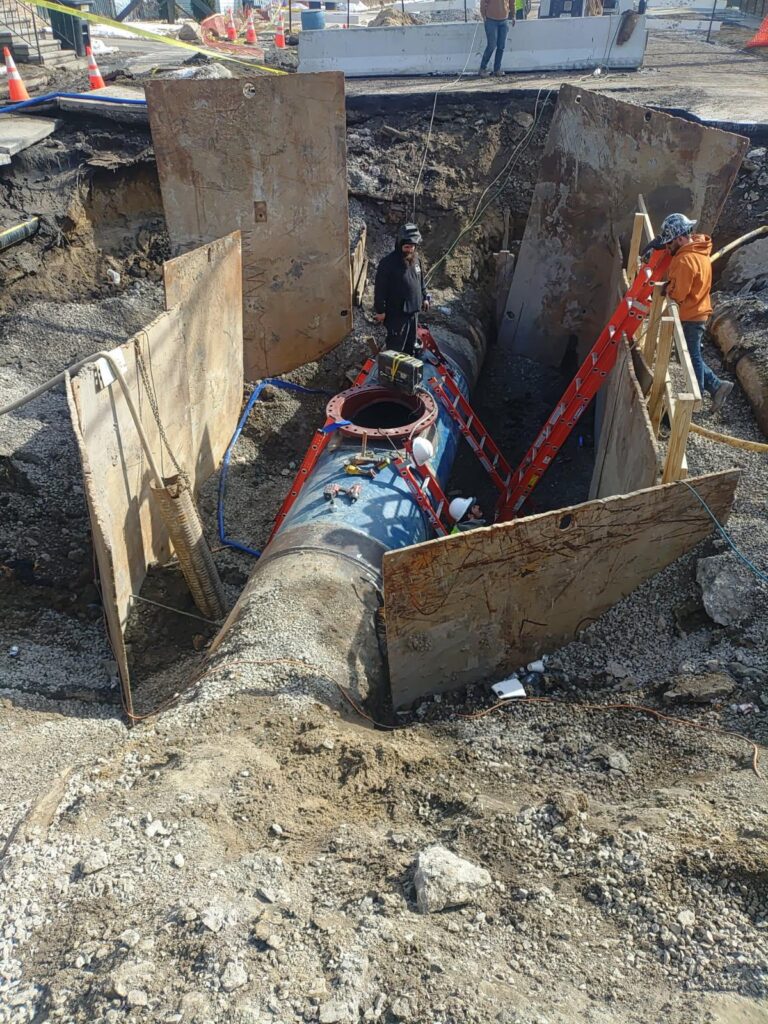
The water main break can be pinpointed to an “unprecedented weld failure” in the nearly 100-year-old, 54-inch steel main, added Fromm.
“We are now more explicitly weighing the consequences of failure — particularly in densely populated areas — alongside traditional measures of likelihood of failure.”
Water main breaks are a threat in Metro Detroit, where aging infrastructure is tested by subzero temperatures.
Many water transmission mains, including the one in Southwest, are nearly a century old and require significant replacement and rehabilitation, according to GLWA documents.
Experts have previously told Planet Detroit the rapid change between hot and cold periods could be increasing with human-caused climate change, leading to more burst pipes.
While the water main at the intersection of Rowan and Beard streets is repaired, it remains out of service for the foreseeable future.
The water authority is preparing to launch a pilot program that will use electromagnetic technology to inspect the conditions of steel pipes across its system. The program is set to start in March.
Last month, DWSD reported 51 water main breaks across the city’s system. At a Jan. 27 news conference about the recent breaks, DWSD Director Gary Brown said it’s difficult to compare them to last year’s water main break in Southwest Detroit.
“The sheer fact that we have these temperatures for the next seven to 10 days and we have to travel and mobilize crews citywide … makes it somewhat challenging and slows us down,” he said.
House repairs, health problems linger 1 year later
Since the frozen waters receded and the contractors and repair crews moved on, residents are still figuring out how to move forward, with limited means and resources.
“You’re already struggling to repair your house and then this monumental flood happens,” said Christine Bell, executive director of Urban Neighborhood Initiatives.
“We’ve seen pictures of people’s houses, and sometimes when you look at the house, you’re like, ‘did that all happen because of the flood, or is part of that deferred maintenance on your (the homeowner’s) part?’”
Nearly one-third of residents in the area in which the water main break occurred live below the poverty line, with a per capita income of $19,100, according to Census data.
Resident Brown said she encountered challenges with filing a claim: she did not keep receipts of the things she lost, and the filing deadline came and went while many residents were staying at hotels.
Brown doesn’t have enough money to buy new household appliances, she said; she stays at home to take care of her youngest daughter. The money Brown received from the flood claim went toward replacing her car, she said.
Today, when Brown needs to do multiple loads of laundry for her family, she brings them to her sister’s house.
DWSD’s Smith said no cap existed on claim settlements for residents.
“Settlements were offered based on the documentation provided by the claimant. All claimants had the opportunity to follow-up with supporting documentation if they believed their settlement offer did not reflect their claim demand,” the spokesperson said.
“All basement cleaning and sanitizing requests” were addressed by the city, she said, adding there were “some unrelated home plumbing issues that caused basement flooding” after the water main break and early basement cleanings that “could not be addressed using city resources.”
Rachel Marquez, a community organizer with the Detroit Hispanic Development Corp. (DHDC), said other short- and long-term problems became clearer in the weeks and months after the main break. DHDC is one of the primary groups that responded during the crisis.
In a text message survey DHDC conducted with 102 residents, 57% of respondents said they got sick shortly after the water main break, whether dealing with respiratory issues, bad allergies from mold, or autoimmune flare ups.
Anxiety and sadness are the most glaring health problems, Marquez said.
“Mental health was a big thing that we are still seeing the effects of from the flood,” Marquez said. “There was a payout, but there wasn’t any sort of mental health healing in the aftermath.”
ICE arrests prompt fear during emergency response
The water main break not only caused damage to people’s homes and valuables, but heightened other pressing community concerns, such as the threat of deportations during the second Trump administration.
“We started the year with know your rights (trainings),” said Laura Chavez, the president of the Southwest Detroit Business Association at the time of the main break.
“Do not answer the door. Do not let anybody in. Carry your red card so you know what your rights are if you get pulled over by Border Patrol or ICE.”
In the days after the main break, rescue crews made up of firefighters, city workers, and police officers went house-to-house conducting wellness checks, community organizers told Planet Detroit.
Seeing law enforcement stoked people’s fears, said Chavez, and prompted some residents to stay home.
The area where the water main break occurred is 75% Hispanic, with a quarter of residents being foreign-born.
“There were people living in their car because they were afraid to leave their house,” said Chavez.
“Undocumented people were afraid to do anything because they didn’t know what was going to happen. Then you had renters that felt like they had no rights at all.”
Alyssa Avila, communications director for Urban Neighborhood Initiatives, said many households “refused to evacuate” until local, Spanish-speaking volunteers came with care packages, including a family of nine she met.
“The grandmother was like, ‘I haven’t slept for three days’ and they had a little 2-year-old,” Avila recalls. “It could have been sad.
Residents, organizers criticize city response
For DHDC’s Marquez, last year’s water main break marked the first time she’s organized in an emergency of that scale. While she said she learned a lot about collaborating with the city, she’s learned more about the “power of community working with each other to fix” problems.
“We can’t wait for the city to just save us or offer these services,” said Marquez.
“It really took organizers and volunteers to come and get residents what they needed. If we weren’t all there, this could have ended completely differently.”
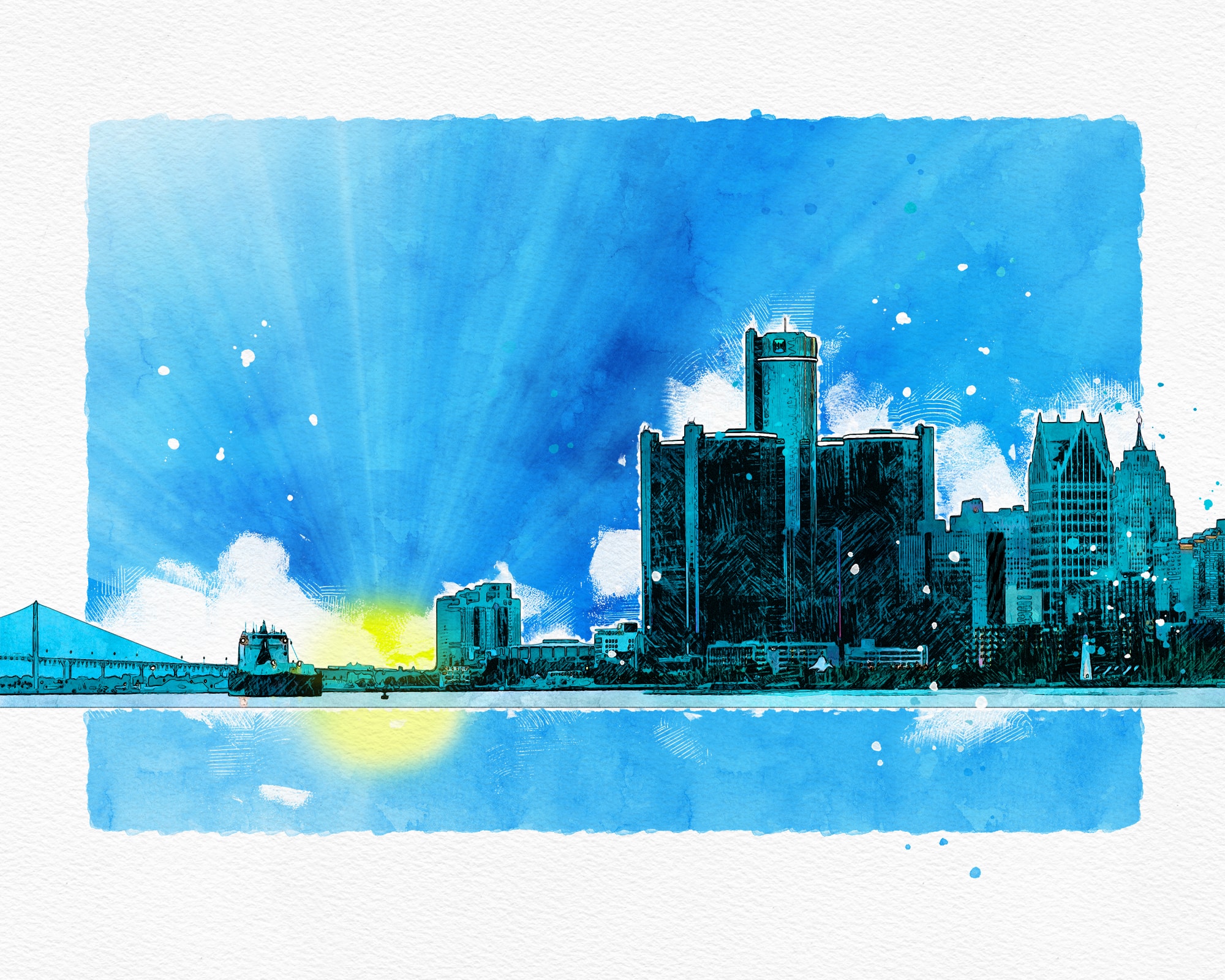
Mutual aid efforts organized by local residents and businesses ultimately played a major role in the post-break recovery, providing cases of water, clothes, toiletries, and pet food in mass quantities.
While Brown said she’s thankful her children are safe, it’s difficult to find relief one year later.
“There’s water bursts still happening all around Metro Detroit. It’s repeated itself,” she said. “Even when it rains, our house gets flooded … it’s like the house is crying. The basement is crying.”
Ethan Bakuli reported this story while participating in USC Annenberg’s Center for Climate Journalism and Communication and Center for Health Journalism 2025 Health and Climate Change Reporting Fellowship.
🗳️ What’s next? Tips for civic action
Why it matters
⚡ Water main breaks occur year-round and increase rapidly when there are drastic changes in temperature, such as extreme heat or cold. The 54-inch water main break in Southwest Detroit is among the worst incidents of its kind in recent history, and illustrates water infrastructure challenges across Southeast Michigan.
Who’s making civic decisions
🏛️ The Great Lakes Water Authority manages the water main that burst in Southwest Detroit last February, and the Detroit Water and Sewage Department oversees smaller mains across the city.
How to take civic action now
- 📅 Attend GLWA’s monthly Board of Directors meetings and/or DWSD’s monthly Board of Water Commissioners meetings to keep track of both agencies’ efforts to address Detroit’s aging water infrastructure. Alternatively, follow Detroit Documenters’ past and future coverage of DWSD and GLWA meetings.
- 🌱 Follow Urban Neighborhood Initiatives and Detroit Hispanic Development Corp. for future programming related to the February 2025 water main break and flooding in Southwest Detroit.
- ☎️ Call DWSD’s main hotline at 313-267-8000, in the event of a water or sewer emergency, or use the Improve Detroit mobile/online app to report a water main break, service leak, sink hole or other issues.
- ✉️ Mail written comments about water main breaks or other water infrastructure issues to Suzanne R. Coffey, CEO, Great Lakes Water Authority, 735 Randolph, Detroit, MI 48226.
- 📣 Ask your local officials and board members at GLWA and DWSD how they are addressing water infrastructure problems in your community.
What to watch for next
🗓️ GLWA’s upcoming board meeting will take place at 1 p.m. Feb. 25 and will include a public hearing on proposed budgets for fiscal years 2027 and 2028, as well as potential charges for water and sewage services. You can attend the meeting on Zoom, over the phone, or in person on the fifth floor of the Water Board Building at 735 Randolph St. in Detroit.
The next DWSD Board of Water Commissioners meeting is scheduled for 2 p.m. Wednesday, Feb. 18 and will be held virtually via Zoom.
Civic impact
🌍 Following and weighing in on how city and regional utilities address water infrastructure challenges could influence the trajectory of future water or sewage emergencies like the one that devastated a Southwest Detroit neighborhood in February 2025.
⭐ Please send a quick email to connect@planetdetroit.org to let us know what action you took.
MORE PLANET DETROIT REPORTING
House bill would expand FEMA coverage for flooded, moldy Michigan basements: ‘There needs to be some equity’
“It is so bizarre as a member of Congress, finding out that FEMA will come and cover getting a new furnace or water heater, but won’t actually cover the actual mitigation and cleaning up of the sewage and the water in people’s basements,” says U.S. Rep. Rashida Tlaib.

Southwest Detroit school built atop contaminated site not impacted by nearby flood, officials say
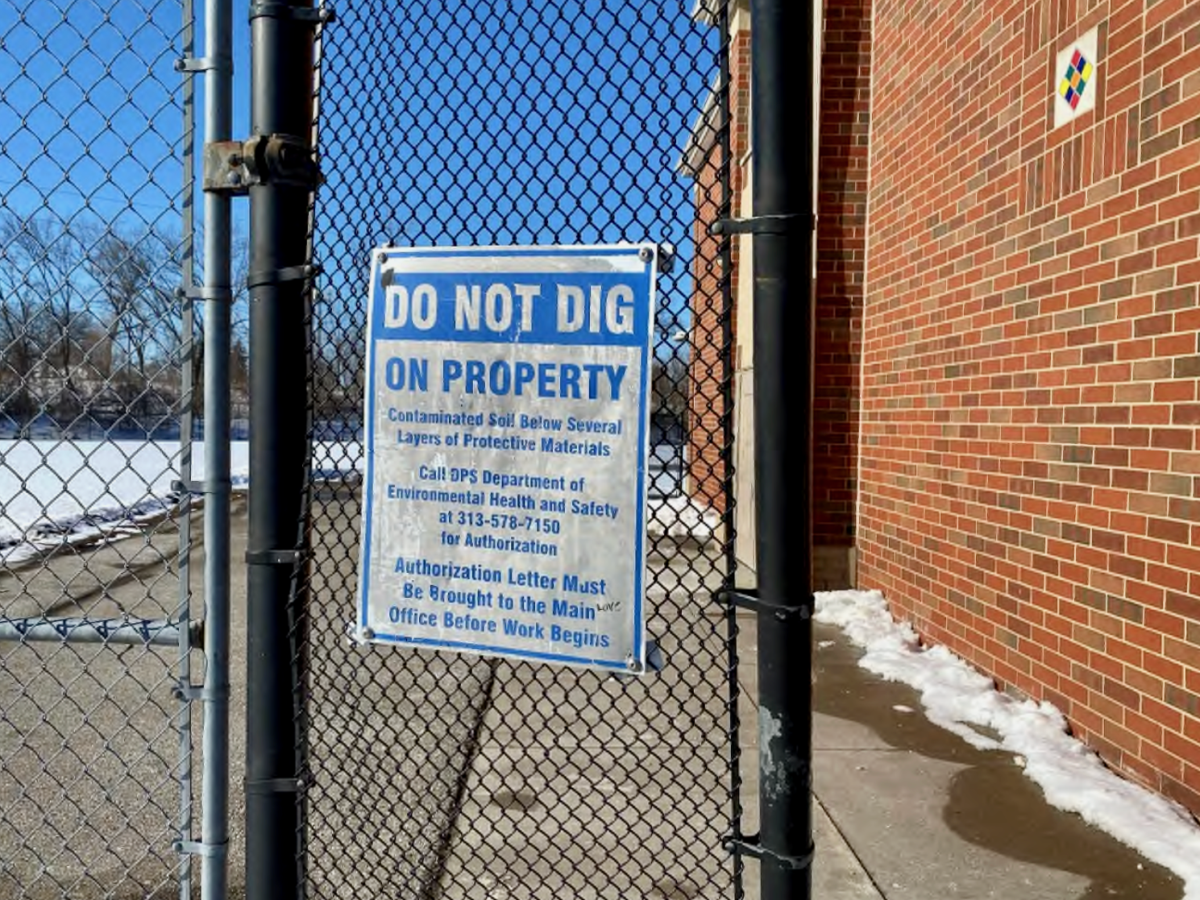
Roberto Clemente elementary school sits across the street from homes that were flooded on Feb. 17. The site is capped to prevent exposure to chemicals left over from a legacy of industrial use.

Water service returns ‘shortly’ in Southwest Detroit neighborhood devastated by flood
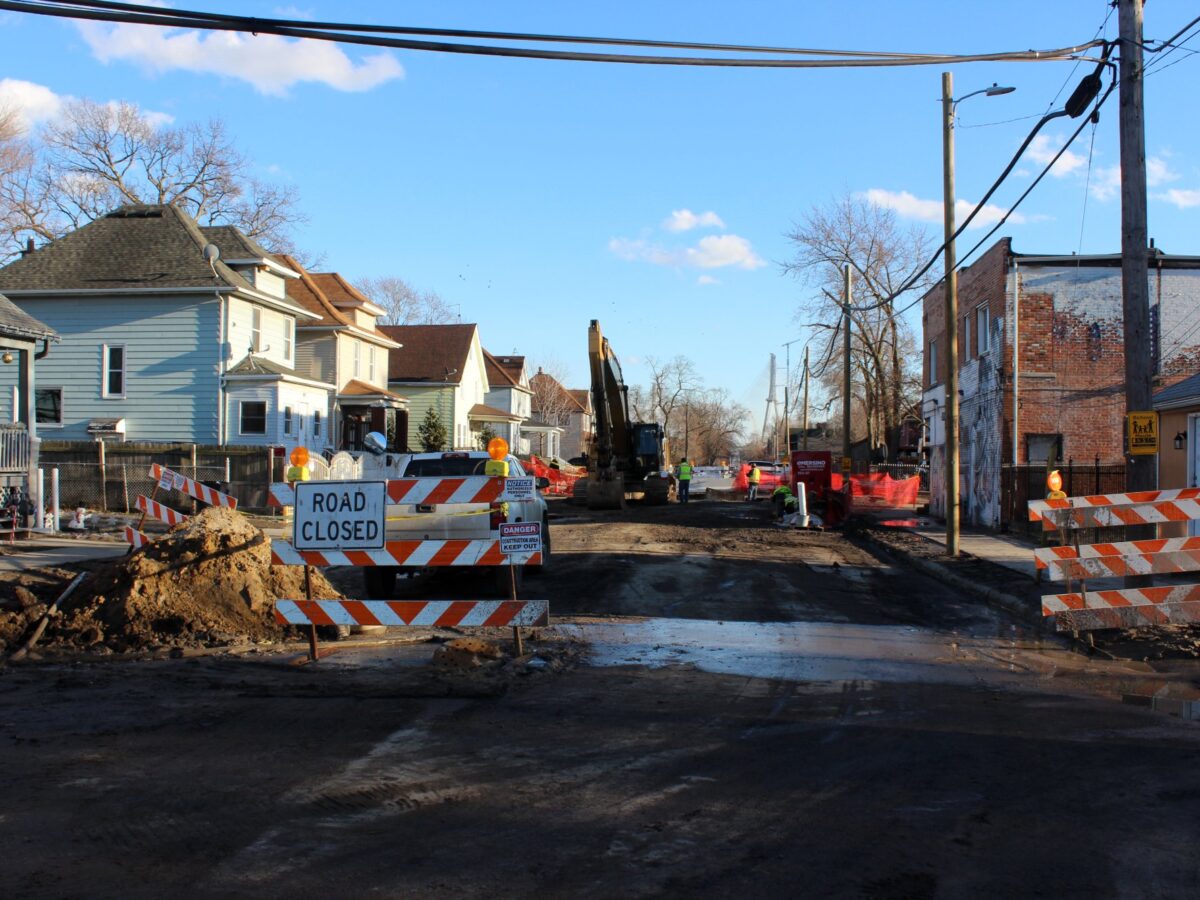
Claims process prioritizes vehicles, mud cleaned out of sewers, GLWA to invest in preventative maintenance.