

Overview:
- Mike Caldwell, an attorney for Wayne County, describes landfill's radiation data as "garbage in, garbage out."
- Wayne Disposal attorney says the evidence shows the plaintiffs’ fears are unfounded, and no evidence of actual harm was presented.
- Judge sets March 10 deadline for attorneys to submit their findings of fact and conclusions of law to the court.

Lawyers presented closing arguments on Tuesday in the bench trial to decide whether shipments of Manhattan Project-era waste to a Wayne County landfill can resume.
Attorneys for Wayne County and communities near the landfill warned Wayne Disposal could receive radioactive waste from many more sites, posing a public health risk, while the landfill’s attorneys said such fears are unsubstantiated.
The legal battle over the shipments began in 2024 after it was revealed the U.S. Army Corps of Engineers planned to transport elevated radiation waste from the Niagara Falls Storage Site in Lewiston, New York to the Wayne Disposal landfill in Van Buren Township.
Belleville, Van Buren Township, Canton Township, Romulus, and the Van Buren Township fire chief filed suit in September 2024 to stop the shipments, and Wayne County intervened in the case.
The lawsuit is primarily a nuisance case, and it’s unreasonable to dispose of so much elevated radiation waste, called TENORM, in a highly populated area, less than 1 mile from downtown Belleville, said Stephen Brown, an attorney for the Wayne County communities.
Brown asked whether it’s reasonable to dispose of hundreds of thousands of tons of “culturally notorious” waste in an area with vulnerable populations that are already burdened by other environmental problems.
Landfill owner Republic Services owns other disposal sites in states like Texas and Idaho where waste could be shipped, he said.
“These alternative sites are readily available, and they have no schools, churches, residences, towns or the world’s largest supply of fresh water located nearby,” Brown said, arguing the trial is only taking place because it’s cheaper to truck materials to Wayne Disposal.
Michigan’s law governing TENORM is deficient, with carve-outs that fail to effectively regulate thorium and radium, he said.
Brown quoted a section of Michigan’s Natural Resources and Environmental Protection Act that says if a court finds a standard to be deficient, it can direct the adoption of a standard approved and specified by the court.
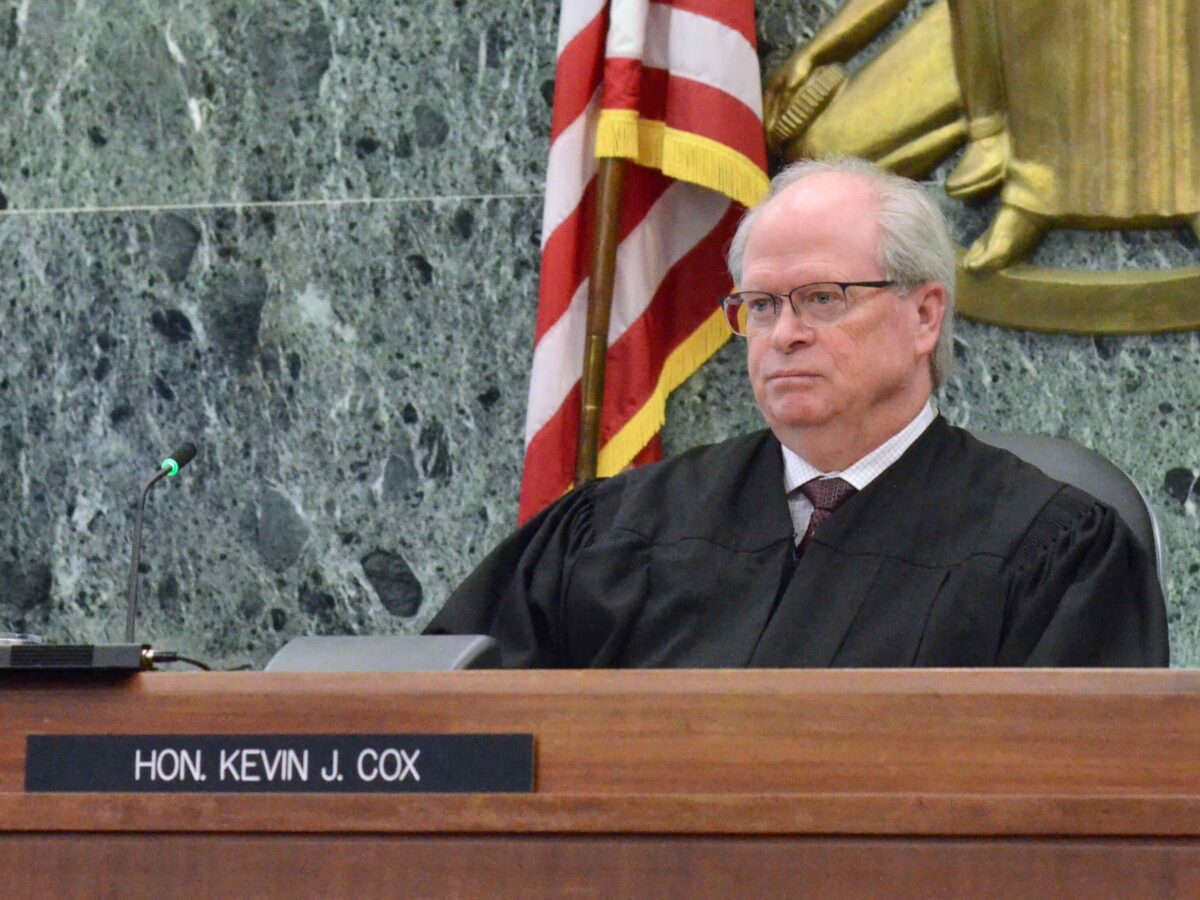
Brown asked Wayne County Circuit Court Judge Kevin Cox to retain his Aug. 6 preliminary injunction that bars shipments of TENORM from Army Corps sites to Wayne Disposal — or to at least set volume limits on TENORM disposal at the facility.
Scott Watson, an attorney for Wayne Disposal, said in his closing arguments that evidence shared at the trial showed the plaintiffs’ fears are unfounded, and no evidence of actual harm was presented. Over 600,000 tons of TENORM were already disposed of at the facility without incident, he added.
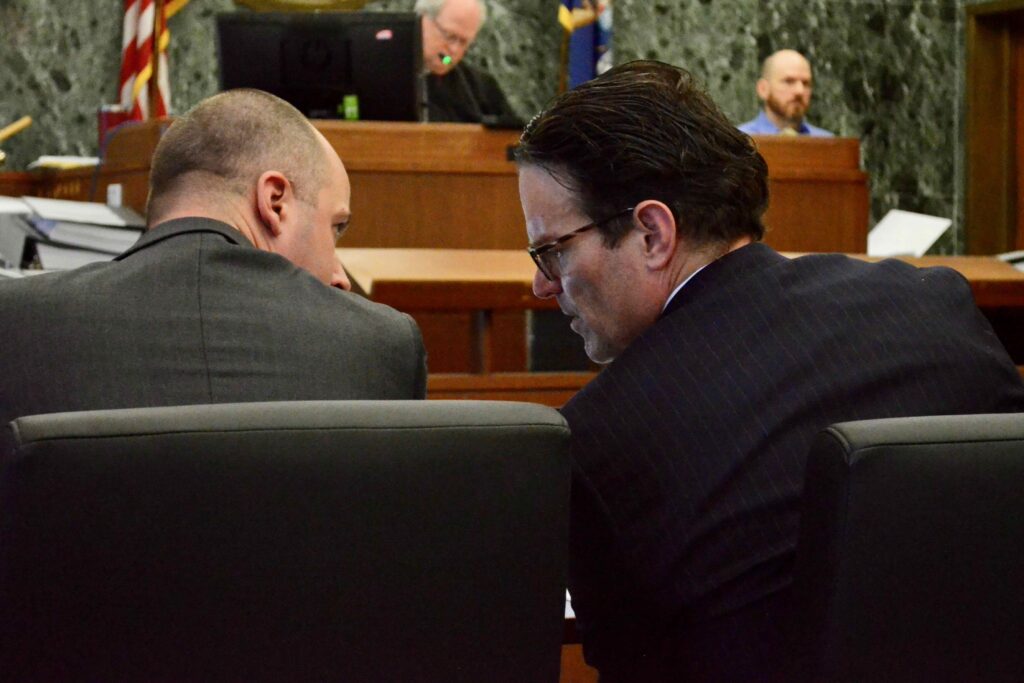
“They offered no evidence that the harm they complain of, the fear and anxiety, would be redressed by an injunction prohibiting the disposal of FUSRAP TENORM,” Watson said, using the acronym for the Army Corps’ Formerly Utilized Sites Remedial Action Program.
The plaintiffs offered no evidence to support adoption of stronger pollution control measures beyond the current limits on uranium, thorium, radium, and lead-210, Watson said.
Landfill monitoring is ‘garbage in, garbage out’: Wayne County attorney
Radiation monitoring data was a key point of contention during Tuesday’s closing arguments, with attorneys drawing opposite conclusions from the data presented at trial.
This data showed radiation at Wayne Disposal’s fence line present at 10 millirem per year, said Wayne Disposal’s Watson.. One millirem is equivalent to the radiation received from watching television for one year, according to the U.S. Nuclear Regulatory Commission.
The dose someone would receive from living on top of the landfill for 1,000 years would be “functionally zero,” Watson said.
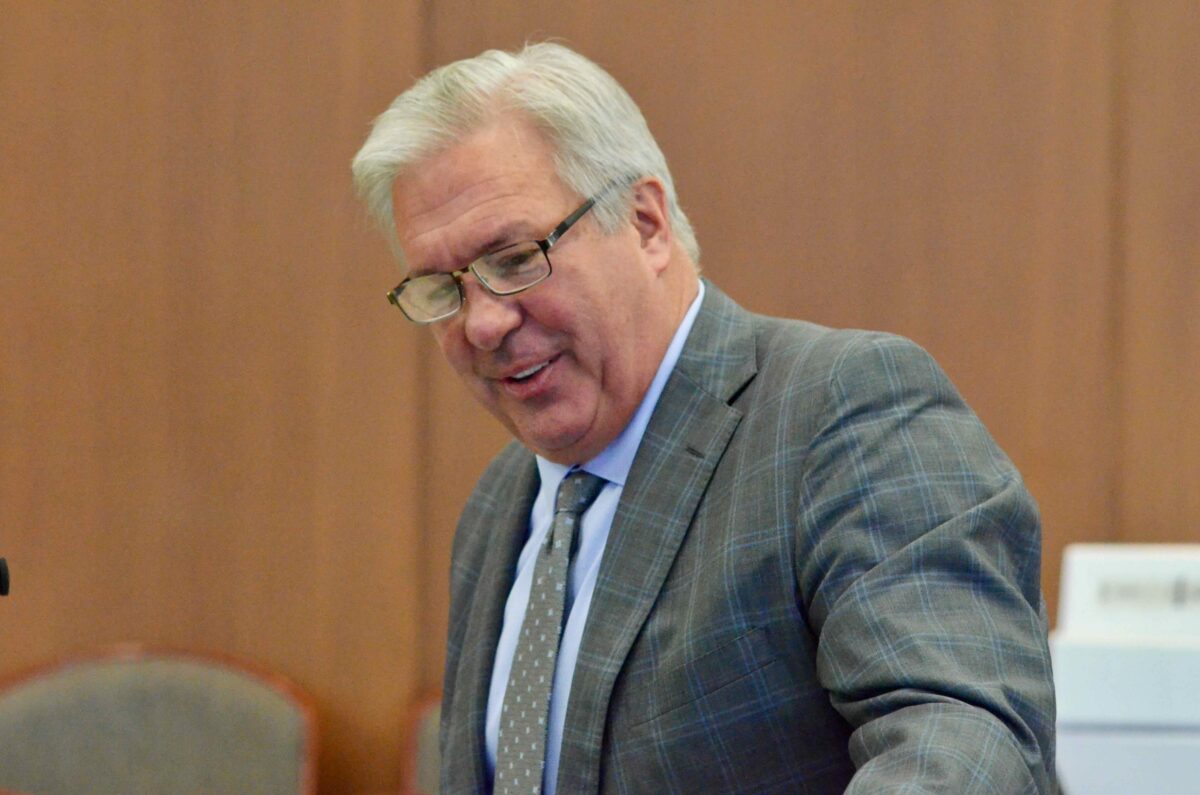
Mike Caldwell, an attorney for Wayne County, said radiation assessments were based on Wayne Disposal’s data, which he called “garbage in, garbage out.”
Kimberlee Kearfott, a University of Michigan professor and radiation protection expert, previously testified that Wayne Disposal failed to properly account for background levels because it didn’t monitor radiation levels off-site.
Caldwell said monitoring data showed gamma radiation levels increasing at the monitor on the facility’s eastern perimeter, which is intended to serve as the background monitor.
This worked in the landfill’s favor because the higher the background dose, the lower the supposed dose of radiation from the landfill, he said.
On Feb. 5, Cox asked Kearfott about her statement that radiation from the site is increasing, and what the impacts of this would be.
Kearfott said: “It’s increasing the risk of cancers, life-shortening, and other effects associated with radiation.”
At the close of Tuesday’s hearing, Caldwell presented a map with around 20 actively managed Manhattan Project-era sites, most of them in the Northeast and Midwest. Wayne Disposal is set to receive hundreds of thousands of tons of material from these sites because its proximity reduces transportation costs, he said.
“Your honor, we’re gonna get all of it,” he said.
Cox set a March 10 deadline for the attorneys to submit their findings of fact and conclusions of law to the court before the judge renders a decision.
🗳️ What’s next? Tips for civic action
Why it matters
⚡ A Wayne County Circuit Court bench trial could determine whether shipments of Manhattan Project-era radioactive waste to a landfill in western Wayne County can resume. The outcome could affect residents who live near the hazardous waste facility.
Who’s making civic decisions
🏛️ Wayne County Circuit Judge Kevin Cox, who issued a preliminary injunction in the case in August that temporarily halted the radioactive waste shipments.
How to take civic action now
- 🌱 Follow Michigan Against Atomic Waste for resident perspectives on Wayne Disposal.
What to watch for next
🗓️ Attorneys have until March 10 to submit their findings of fact and conclusions of law to the judge. Judge Cox will decide the outcome of the bench trial of a lawsuit filed to block radioactive waste shipments to Wayne Disposal.
⭐ Please send a quick email to connect@planetdetroit.org to let us know what action you took.
WAYNE DISPOSAL TRIAL COVERAGE
No risk to public from stored Manhattan Project waste: Wayne Disposal trial witness
Judge questions why waste was being sent to Wayne County if it poses no risk in New York.

‘Downblending’ under scrutiny in Wayne Disposal radioactive waste trial
Republic-owned Michigan Disposal is not mixing Manhattan Project-era waste with other material to lower radiation levels, but could do so, employee testifies.
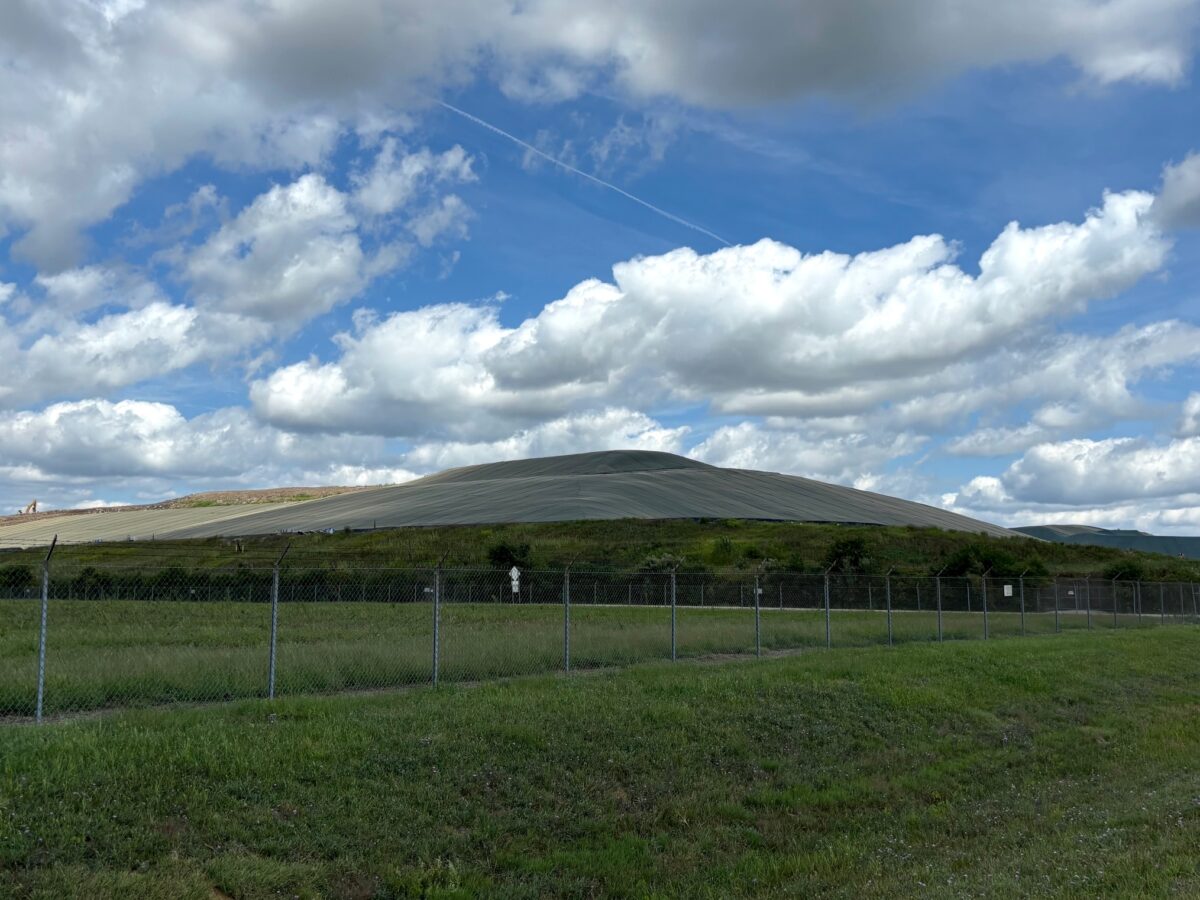
Is Wayne County’s health at risk from radioactive waste?
Residents of western Wayne County face potential health risks as a bench trial examines the impact of radioactive waste shipments, with experts highlighting the need for effective shielding to mitigate exposure.