

Overview:
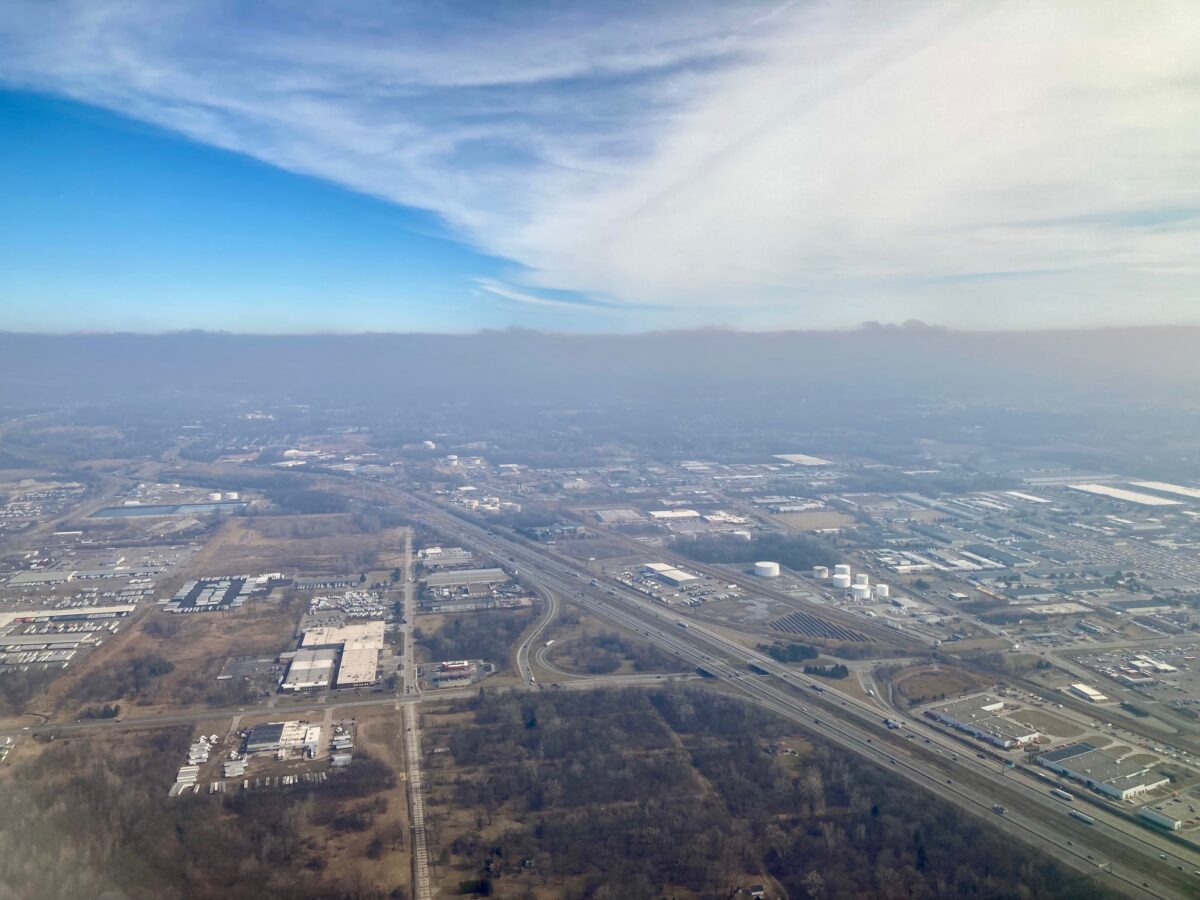
• A temperature inversion is responsible for Wednesday morning's stagnant air and pollution, although low winds contributed to the problem, meteorologist says.
• Typically, air is warmer closer to the ground and colder above. An inversion reverses this dynamic.
• Metro Detroit's air should clear up Thursday and Friday with rain and a change in the air mass coming through.

Metro Detroiters woke up to poor air quality Wednesday morning, with commercial monitors showing air in the Air Quality Index’s unhealthy range in some locations.
A temperature inversion is responsible for Wednesday morning’s stagnant air and pollution, although low winds contributed to the problem, said Alec Kownacki, a meteorologist with the Michigan Department of Environment, Great Lakes, and Energy (EGLE) Air Quality Division.
The inversion was largely driven by the combination of relatively warm air and cold ground temperatures, he told Planet Detroit.
“What happens there is it traps pollutants from dispersing in the atmosphere,” Kownacki said. “Rush hour traffic, day-to-day industrial emissions — those are being trapped closer to the surface.”
Typically, air is warmer closer to the ground and colder above. An inversion reverses this dynamic, with cool air close to the ground remaining trapped under a layer of warmer air.
Inversions are a common phenomenon during this time of the year, especially in the morning, and they are likely to continue until the ground thaws, Kownacki said.
Mist or fog like what metro Detroit experienced Wednesday morning can coincide with inversions and increases in fine particulate matter, or PM2.5. Water droplets in the air can serve as nuclei to which particulate matter can attach, he said.
PM2.5 is small enough that it can penetrate deep into the lungs and enter the bloodstream, and it’s associated with aggravated asthma, decreased lung function, nonfatal heart attacks, and premature death, among other health problems.
Detroit air quality to improve Thursday, Friday
Metro Detroit’s air should clear up Thursday and Friday with rain and a change in the air mass coming through, Kownacki told Planet Detroit.
The area is likely to see additional periods of poor air quality soon, although it’s unlikely to be bad enough to require an air quality alert, he said.
Government monitors did not show air quality levels in the Detroit or Ann Arbor areas above the moderate range on Tuesday night or Wednesday. On Feb. 14-16, Metro Detroit saw pollution climb into the Air Quality Index’s Unhealthy for Sensitive Groups and Unhealthy ranges.
This week’s inversion was a shallow one, Kownacki said, with a relatively thin layer of cold air and pollution stuck close to the ground, driven in part by the cooling effect of evaporating snow.
A 2016 study found that summer heatwaves and temperature inversions, both of which can contribute to extreme air pollution events, increased over the last 60 years, with winter inversions in the United States more than doubling the probability of severe particulate matter pollution.
MORE AIR QUALITY NEWS
Detroit has ‘necessary ingredients’ for poor air quality: Forecast calls for improvement
Stagnant atmospheric conditions are contributing to Southeastern Michigan’s high air quality index numbers.

Trump’s abandonment of greenhouse gas rules will add to Detroit pollution: Former EPA staffer
Ozone pollution can cause respiratory problems and increase the frequency of asthma attacks, while PM2.5 is linked to cardiopulmonary problems and premature death.

Detroit air quality declines due to winter weather patterns: What the forecast says
Michigan is in a warmer weather pattern that traps pollution at the surface, a meteorologist tells Planet Detroit.