

Overview:
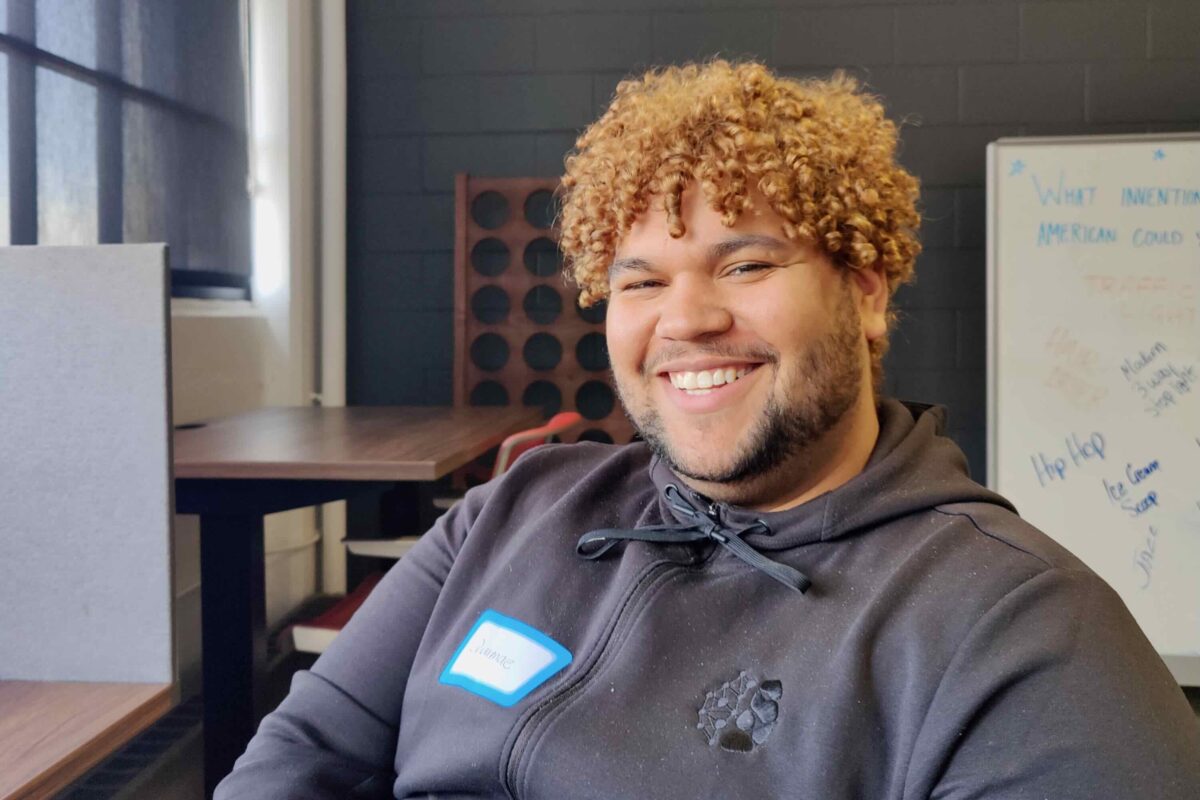
- Shaquille Quamae Hall found his first positive male role model at age 14, which led to opportunities in martial arts, photography, and wilderness programs.
- He works with Open Roads, taking youth on backcountry river trips while developing his own Detroit mentorship program.
- His photography-based mentorship program aims to provide life-altering experiences for Detroit youth, similar to the ones that changed his life.
Planet Detroit’s neighborhood reporters are local residents who cover health, environment and climate issues in their neighborhoods. The Lab is made possible with the generous support of the Kresge Foundation.
Shaquille Quamae Hall was first drawn to Detroit when he was a teenager, and he came to the city to heal “pain from youth,” as he describes it. The medium for the healing? Martial arts, and the arts of film and photography.
When he was 14, he met his first real mentor, a positive male role model, Ronald Lee Jr, who saw promise and talent in Hall and bought him a camera.
Lee introduced Hall to Jason Wilson, the founder of a martial arts male transformational academy for youth in the city, The Cave of Adullam. Wilson gave Hall opportunities to use and develop his burgeoning skills in a relationship that continues to this day.
This led Hall to deepen his passion and talents for creative pursuits in film and video, not only around the country, but around the world. He eventually participated in Open Roads, another youth leadership development organization that merges creativity with wilderness trips, allowing youth to tell their stories through media while building self-confidence, leadership aptitude, and life skills.
Hall works for Open Roads seasonally as a documentor and trip leader, and he has set out on a journey of his own, returning to Detroit in the off season to “be for others what I didn’t have” while growing up.
Hall, a professional photographer, is participating in Planet Detroit’s Neighborhood Reporting Lab. This interview has been edited for brevity and clarity.
What issues or causes are most important to you?
Mental health, especially when it comes to men and young men. And then access to outdoor spaces, particularly for young people who are forming their identity.
I want to be able to inject that into their identity … and becoming a bit more conscious of the environment, especially in a place where it’s kind of brushed off or brushed aside, like in the inner city.
How did you first get interested in the work that you’re involved in?
Now I work with a program called Open Roads, and we take students into outdoor spaces. We typically do river trips in the backcountry of Utah and Colorado. We do a lot of cool river trips. So we’ll be on the Yampa, the Colorado River, the Green River. And this is a really intense program where we take 14-to-20-year-olds, and we get them outside of their comfort zones. I have the privilege of capturing them doing this with video and photography, but also helping lead the experience.
When I was 16 and 17, I was actually a student on one of these trips; but growing up in Detroit I lived on Seven Mile and Van Dyke, so I lived on the east side in the hood, and I used to look for those spaces myself.
My father wasn’t in my life, so I didn’t really have anyone to look up to. He would come and go, but he was in and out of prison. He was in the streets, so I didn’t have anyone solid. And this is actually beautiful that we’re talking about this, because it’s helping me connect back to my why — yeah, I want to be what I didn’t have, to other people.
What do you think is the biggest challenge facing the community or neighborhood right now?
There’s this mindset that this is what it is, and there’s no forward progress, or there’s no need for forward progress, because it just is what it is, when that is far from the truth.
Everyone is trying to take a step forward. You know, when you’re doing it alone, obviously, it seems impossible. But many hands make light work. So if we’re all taking those steps forward, or at least getting the idea out there to move forward, I think that will just move the needle to a better environment or community. So I would say: a mindset that you’re stuck. So just thinking like, ‘Dang man, this seems immovable.’ But it will change. It is changing, slowly, step by step.
And I feel like being outside, being out in the outdoors, that kind of changes your perspective, because even outdoor spaces, and even mountains, they seem like they’ll be there forever. But they won’t, you know.
You talked a little bit about this, but have you been personally affected by the issue, the mindset of being stuck, and also the issue of not having positive role models, especially involving boys and men?
I didn’t have any positive male role models in my life until I was 14, and that affected me. I spent a lot of time alone, and I didn’t ask for much because I knew that there wasn’t — it wasn’t really at my side. I didn’t ask for much because I didn’t feel like there would be anything for me to get, even from my mother, or anything like that. So I just kind of played it safe.
And then when I was 14, I got that mentor, and then I went on this Open Roads trip. That’s when my mind opened up. That’s why it’s called Open Roads, because you are getting out there, and you’re opening your mind. I feel like that trip really changed my perspective on being able to tell my story the way I want to. And that’s really the whole thing, telling my story the way I want to, not just going, ‘Oh, I’m just gonna be like everyone else.’ That’s literally it.
And it seems like you’ve really viscerally grabbed onto that, because you’re a photographer and a filmmaker; and so, when you talk about telling your story, you’re not even putting that in someone else’s control. You’re like, ‘I’m telling it.’
Exactly right. But people don’t feel like they can. They just feel like this is what it is. And I used to have that mindset. Before the age of 14, I was on autopilot. I was just a product of the environment. I just didn’t really think about it too much. I just went along with everything. And that’s how people get in trouble.
A very important part of my story is when I was 14, that was a really pivotal year of my life. I got into this residential scholarship program called Boys Hope Girls Hope, and it gave me the opportunity to move into a kind of a residential boarding school. We would say, ‘I went to a private high school.’
So I literally went from not being able to … not eating some days, to having a safe place where I could study and do the things I was interested in and go to a really prestigious school, and then they also paid for half of my college, so I got lucky. Now it’s my turn to give that back to the community.
What do you think your neighborhood or city is doing well, and where is the room for improvement?
I feel like Detroit is very proud of its people. I feel like people, when they say they’re from Detroit, especially out in the world beyond Detroit, it’s easy to connect over being from this city.
Although I would say I feel like sometimes the pride of being here is like almost a shared trauma of being from here. It’s like: I know what you probably have been through, not saying that’s a bad thing. But I definitely would like to shift it. It’s one more positive experience.
I’m actually developing the program right now, and I don’t know if I should share it, because it’s kind of like in the developmental stages, but it’s a mentorship program for Detroit youth. And basically it’s a mentorship program through photography, and I want to be able to take them on a life-altering trip.
What’s your favorite spot in Detroit or Michigan, and why?
Marquette. ‘Why’ is that I went to school up there, and a lot of the reason I went to school there is because of the outdoor culture. There’s ice climbing, there’s caves, you can see the Northern Lights there. There’s a lot of hiking and camping.
And so growing up in Detroit, in Pontiac, that’s not something I did, but after going on these trips with Open Roads, I’m like, ‘I want to continue doing this.’ So when I was looking for a school that was in-state but also had access to outdoor wild spaces, that’s definitely where I wanted to go.
