

Overview:
- Chandler Park's marshland can collect over 2.5 million gallons of stormwater runoff and serves as an educational conservation campus for residents.
- Projects at parks and private homes provide environmental benefits beyond flood mitigation like increased pollinators and wildlife habitat.
- Join Planet Detroit on a walk at Chandler Park April 18 to learn more about the park, with a focus on its marshland.

April showers bring May flowers, but for Detroit residents citywide, increasingly heavy spring and summer rainfall brings the possibility of damaging floods along with the new foliage.
Insufficient infrastructure and a worsening climate crisis are the main culprits. Detroit’s public green spaces and private yards offer opportunities to explore creative approaches to green stormwater infrastructure (GSI).
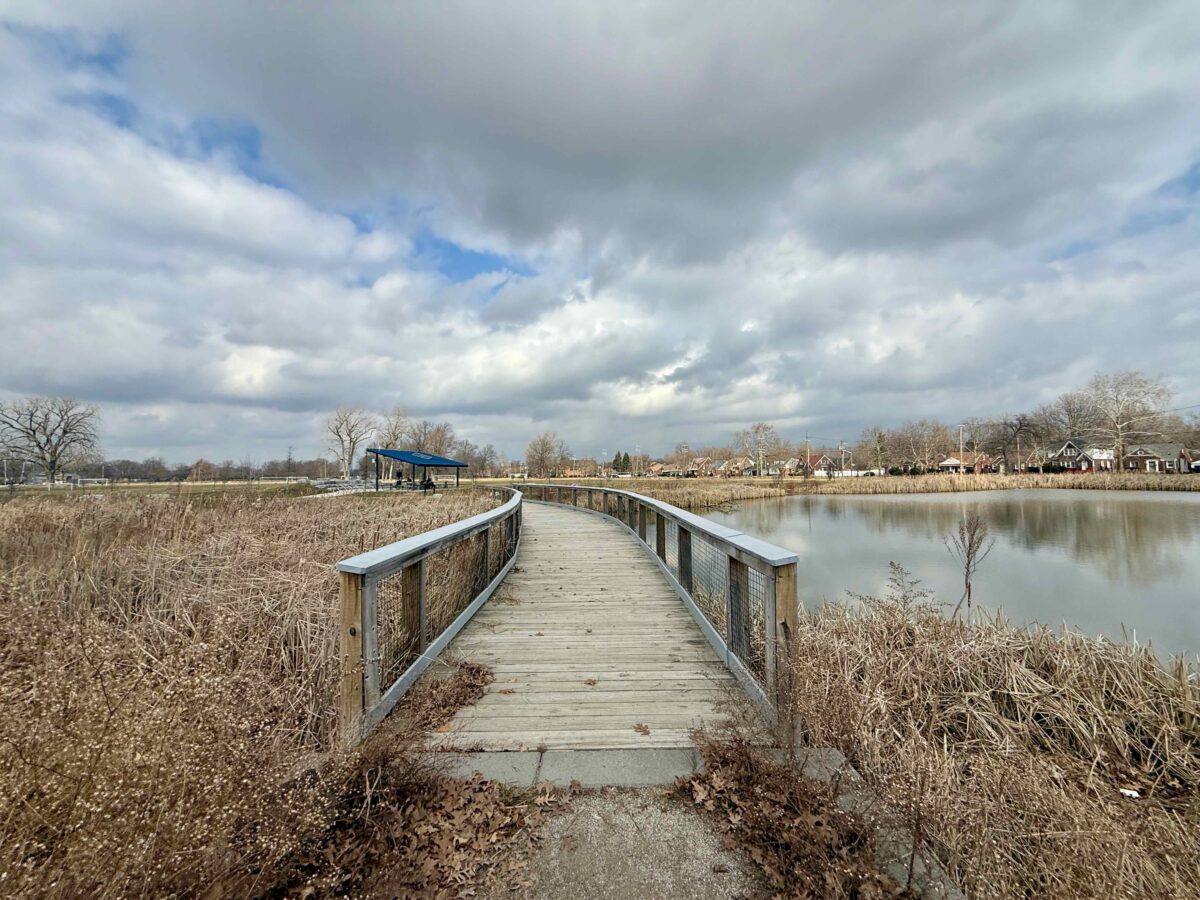
The Wayne County Family Aquatic Center has long served as a neighborhood waterpark at Chandler Park. On the park’s other end sits a lesser-known water feature that serves both the local environment and the community.
Chandler Park’s marshland, installed in 2019 in a previously swampy area at the corner of Dickerson and Frankfort streets, is capable of collecting over 2.5 million gallons of stormwater runoff.
As impressive as the water management sounds, Alex Allen, president of Chandler Park Conservancy, says flood mitigation is just one part of broader imaginings of how park infrastructure can serve communities.
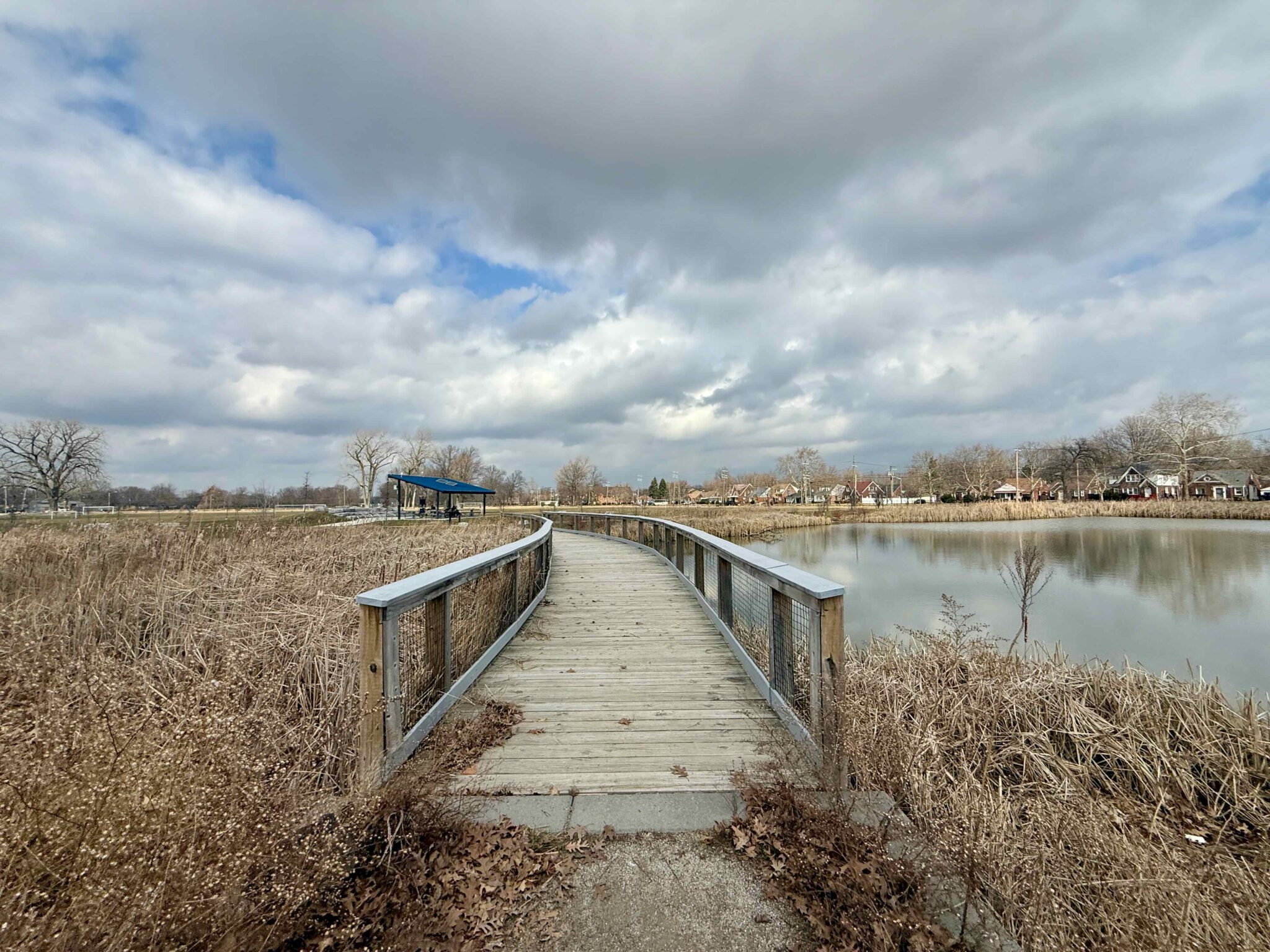
“About 15 years ago, a group of residents and stakeholders came together to reimagine Chandler Park,” Allen said. “One of the things they came up with was to use Chandler Park as a conservation campus to teach people how you can use stormwater management in a park as an educational place.”
‘Example of how we can do stormwater in the community’
Similar explorations bridging GSI and community education are unfolding at Eliza Howell Park on the city’s far west side. Sidewalk Detroit’s outdoor strategist, Alexus Boone, says stormwater was top of mind when developing Eliza Howell Park’s recently announced master plan.
The area behind the park’s sledding hill is “holding water every time it rains, so for our master plan, we are going to make that into an established retention pond and put boardwalks over it.”
Sidewalk Detroit is trying to make an impact on surrounding areas, but Boone says she’s unsure whether the bioswales are mitigating flooding from nearby Telegraph Road or Fenkell Avenue.
“I don’t know if it can stop that much water.”
The Chandler Park Conservancy’s Allen shared a similar sentiment.
“Helping the water table in the community was kind of a secondary thing … There’s still a lot of flooding in people’s basements when we have massive storms. Our marshland helps a little bit, but it really serves as an example of how we can do stormwater in the community.”
The tension between the scale of Detroit’s stormwater management issues and the utility of GSI can be found in private backyards.
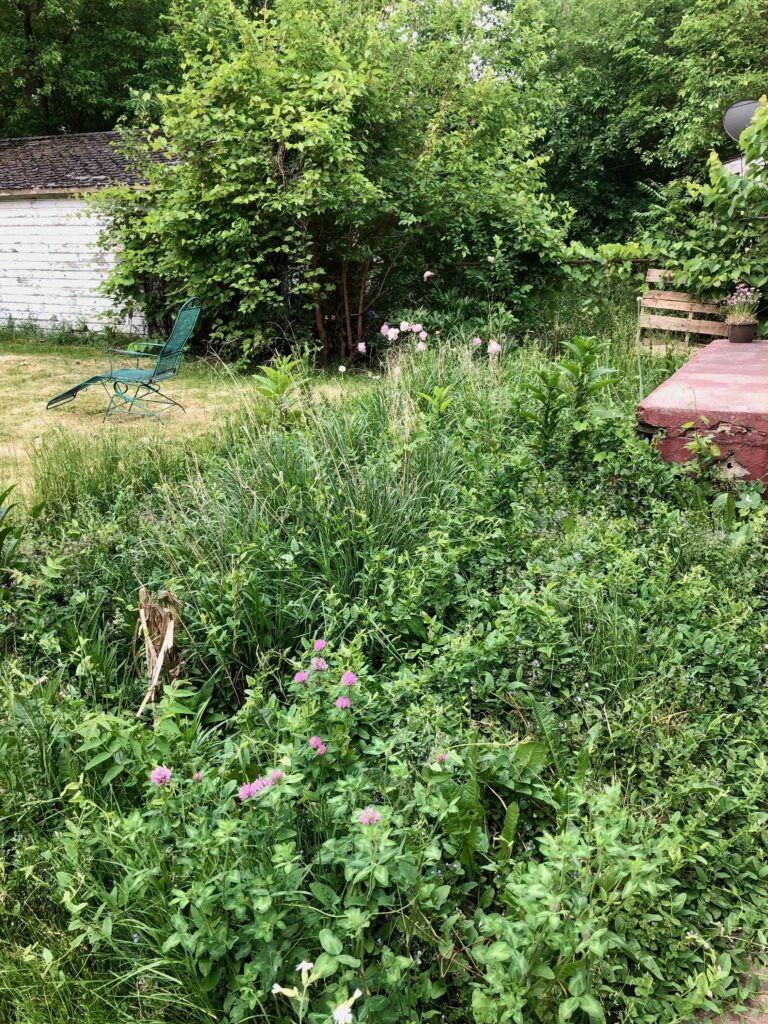
Elizabeth Garrett, a homeowner on the east side, says she was inspired by local spaces and organizations to create a rain garden in her backyard.
“I moved in and was dealing with water in the basement,” Garrett says. “I learned about green gardens and thought that was the cheapest way to deal with that issue.”
Unfortunately for her wallet, and similar to the projects Chandler Park and Eliza Howell Park, Garrett says the greatest benefits aren’t in filling gaps in stormwater infrastructure.
“I’ve been having it for a while now, and it honestly hasn’t stopped the flooding,” she says.
“I think people should still do it. It’s having a great benefit — the garden has definitely increased my pollinators. There are tons of birds in my yard, it’s so nice to see the bees and butterflies. I do love it, and I’m glad I have it.”
Chandler Park’s Allen says that while green stormwater infrastructure isn’t a complete solution, the marshland is a great addition to the park’s atmosphere.
“It is a nice place to come and meditate. We have an educational plaza out there,” he says, adding that it’s both educational as well as “just a good place to come and chill out, just relax.”
MORE OUTDOORS NEWS
Winter blues got you down? The solution might just be at your local Detroit park.
Detroit’s harsh winters bring more than just cold; they cast a shadow over residents’ mental health. With up to 40% of Michiganders experiencing Seasonal Affective Disorder, local groups like the Detroit Riverfront Conservancy and Friends of Rouge Park are stepping up.

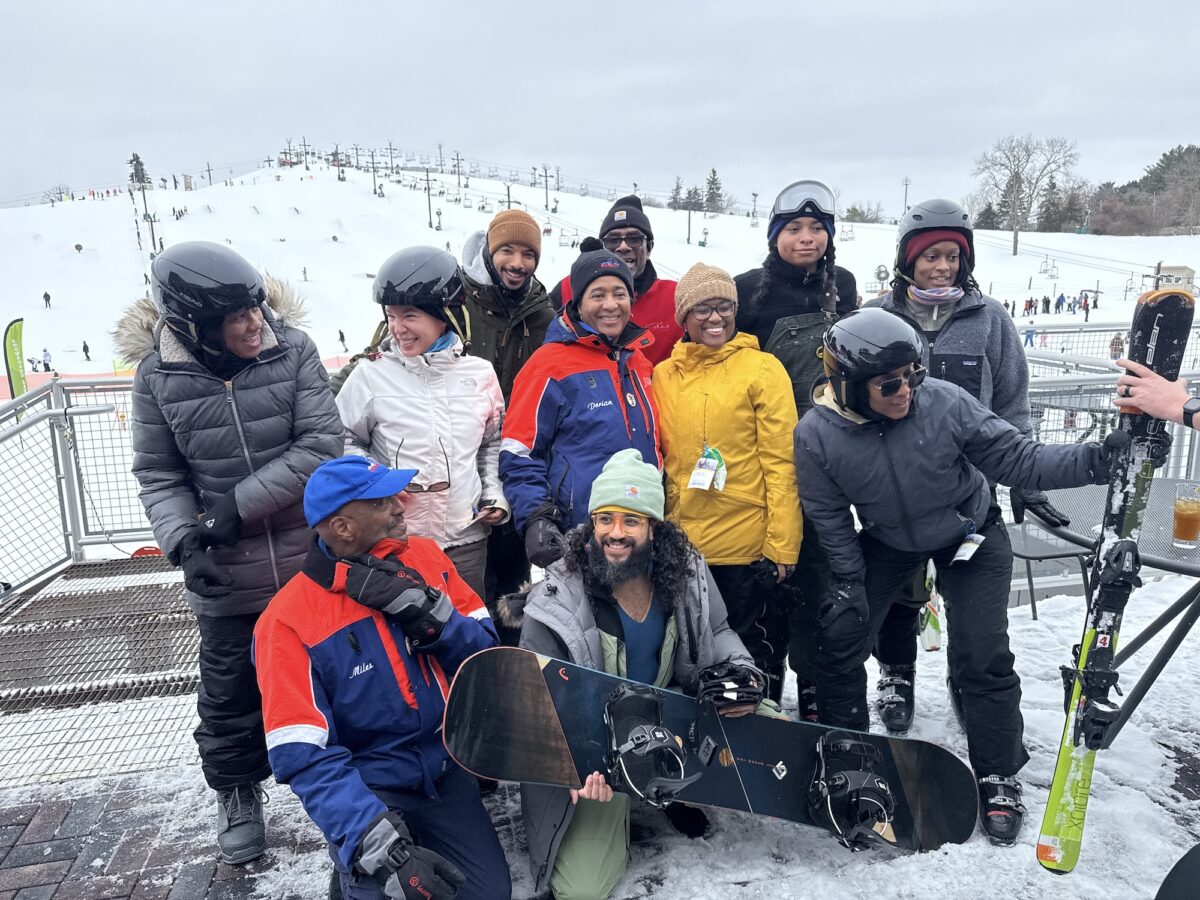
Jim Dandy Ski Club brings Black winter recreationists together — and creates family along the way
In a celebration of community and resilience, the Jim Dandy Ski Club — the nation’s first Black ski club — hosted its annual “Blackout” event at Mt. Brighton, drawing over 100 members and visitors. This gathering not only highlights the club’s historic role in promoting Black participation in winter sports but also underscores the ongoing…

Community embraces Ralph Wilson Park, Detroit riverfront’s $80 million addition: ‘Come on down’
As the sun set on the Detroit River Friday, Rex Powell enjoyed it from a bench at the Ralph C. Wilson Jr. Centennial Park. It’s his third time visiting since the 22-acre park opened Oct. 25. Powell, who lives in Lincoln Park and is retired, said he’d make the 12-mile journey to the park on…
