

Overview:
- The federal Elective Pay program returns 30%-70% of clean energy project costs as cash payments to tax-exempt organizations including schools, churches, nonprofits, and local governments.
- Organizations that installed solar panels, EV chargers, or other qualifying equipment in 2025 must file by May 15, 2026 to receive payment.
- Free regional ambassadors in Wayne, Oakland, and Macomb counties can help eligible organizations navigate the application process before the deadline.
If your organization installed solar panels, EV chargers, or other clean energy equipment in 2025, there’s a federal program that could send you a check for 30% to 70% of what you spent.
The filing deadline for 2025 projects is May 15, 2026 — less than three weeks away.
Here’s what Elective Pay is, who qualifies, and how to get help before the window closes.
What is Elective Pay?
Elective Pay (sometimes called Direct Pay) is a provision of the 2022 Inflation Reduction Act that lets tax-exempt organizations claim clean energy tax credits as actual cash payments.
Historically, tax credits were only useful to entities that paid federal income taxes — which meant schools, nonprofits, churches, and local governments got nothing.
Elective Pay changed that. Now those organizations can file a return, claim the credit as an “overpayment,” and receive a check from the IRS. The program has been available since 2023.
Who is eligible?
Tax-exempt organizations of all kinds: nonprofits, houses of worship, school districts, local governments, tribal governments, rural electric cooperatives, public hospitals and universities, and more. If your organization doesn’t pay federal income taxes, you’re likely in.
What projects qualify, and what are the deadlines?
There are 12 federal clean energy tax credits available through Elective Pay. Deadlines vary significantly by project type, and some have changed recently following passage of the One Big Beautiful Bill Act.
Here’s the current picture:
| Project type | Tax credit | Deadline |
|---|---|---|
| EV chargers | 30C | June 30, 2026 — must be placed in service |
| Solar & Wind | 48E | Dec. 31, 2027 — if construction starts after July 4, 2026 |
| Geothermal HVAC | 48 | Dec. 31, 2034 — no change |
| Energy storage | 48E | Dec. 31, 2035 — start construction by end of 2035 |
| Renewable Electricity Production | 45 | Check with ambassador |
| Clean Electricity Production | 45Y | Check with ambassador |
| Commercial Clean Vehicles | 45W | Check with ambassador |
| Zero-emission Nuclear Power Production | 45U | Check with ambassador |
| Advanced Manufacturing Production | 45X | Check with ambassador |
| Clean Hydrogen Production | 45V | Check with ambassador |
| Clean Fuel Production | 45Z | Check with ambassador |
| Advanced Energy Project | 48C | Check with ambassador |
For more details, see the IRS website. For more on solar opportunities in Michigan, see Planet Detroit’s reporting on grassroots solar programs in Michigan.
A note on new rules: Solar, wind, and energy storage projects now face Prohibited Foreign Entity requirements under the One Big Beautiful Bill Act. Projects can be disqualified if the organization itself, or a certain percentage of the equipment used, has ties to China, Russia, Iran, or North Korea. Projects that started construction before Jan. 1, 2026, are exempt from this rule. If you’re planning a future project, talk to an ambassador about how this affects your equipment sourcing.
One important caveat: Elective Pay is not upfront funding. Your organization must own the equipment (not lease it), and the project must already be placed in service before you can file. Projects that are 100% funded with restricted grant dollars may not qualify.
How much money are we talking about?
Roughly 30% to 70% of project costs are returned as cash, depending on which credit applies and whether any bonus credits stack on top.
What’s the process?
Once a project is placed in service, you preregister it through an IRS portal. The IRS recommends doing this 120 days before your filing deadline, though you can still complete registration and file if you haven’t yet. After you file your tax return, the IRS sends a check. The agency estimate about 45 days from filing to payment.
Who can help in Metro Detroit?
Michigan’s Infrastructure Office runs an Elective Pay Ambassador Program with 10 regional experts across the state, providing free one-on-one support. For Wayne, Oakland, and Macomb counties, contact:
Mason Christerfield and Peggy Matta — Region 10 Ambassadors
masonch@2030districts.org; peggymatta@2030districts.org.
Visit michigan.gov/whitmer/issues/michigan-infrastructure-office/elective-pay for fact sheets, filing checklists, and deadline guides. You can sign up for email updates and find your regional ambassador contact there.
Ambassadors can also connect you with accounting assistance for filing.
Have any local organizations done this successfully?
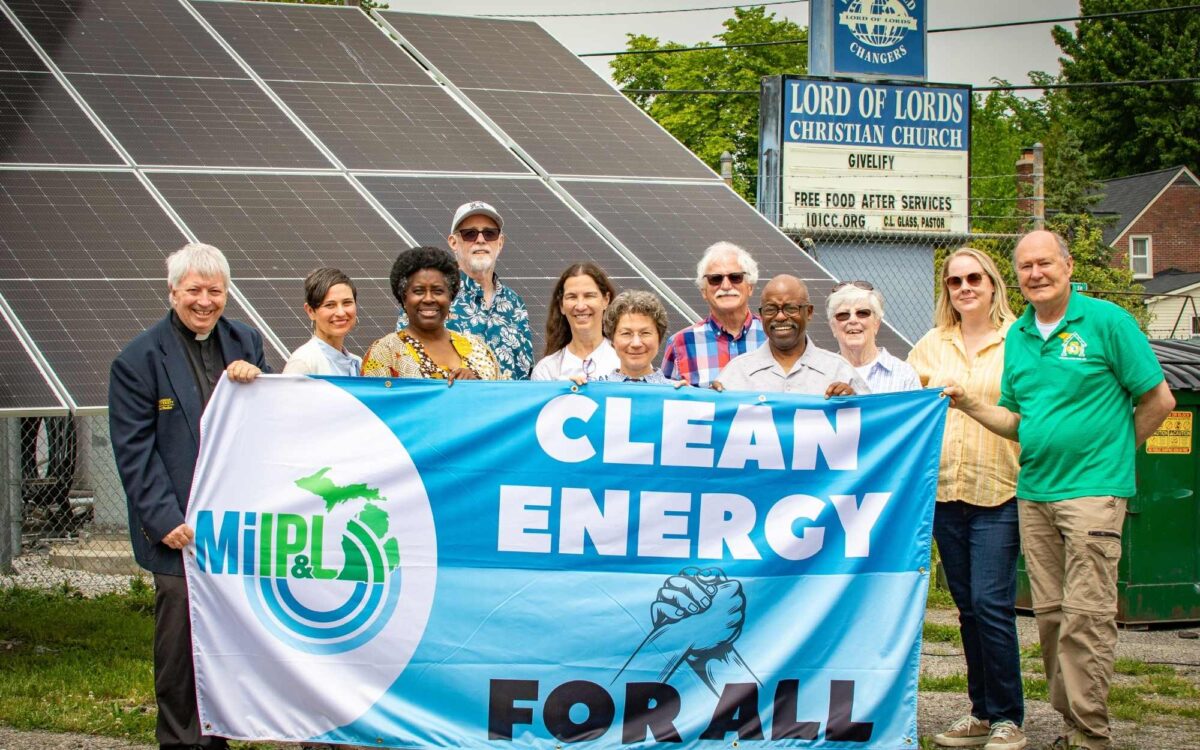
Lord of Lords Church in Detroit is believed to be the first Michigan organization to receive an elective paycheck. Learn more in this video:
Upcoming events
A Wayne County Solarized meeting is scheduled for April 28, and an Oakland County meeting takes place the following day. Check the Great Lakes Renewable Energy Association events page and the Planet Detroit events calendar for dates and details.