


Overview:
- DTE Energy appealed a $100-million fine for Clean Air Act violations at Zug Island and requested a delay on pollution controls and community investment.
- The community committee ordered by a judge in the case would direct $20 million for air quality improvements over seven years.
- Youth ambassadors share their vision for community investment, including mental health clinics and housing support.
Annie Seaman worked on Zug Island for 40 years from 1973 to 2013. She wore all pink to a community meeting about pollution from the island, but the stories she tells about her time as a U.S. Steel Great Lakes Works employee are less than rosy.
🗳️ Civic Action Toolbox
Why it matters
The $20 million in community funds from ordered by a judge in a Zug Island air pollution lawsuit could directly improve health and quality of life for nearby residents.
Who's making public decisions
A community committee will decide how $20 million in air quality improvement funds are spent. The Sixth Circuit Court of Appeals will decide on DTE Energy’s challenge to a court order, and U.S. District Judge Gershwin Drain will decide on the utility’s motion for a stay.
Upcoming Meetings
Contact Your Representatives
Civic Actions: What You Can Do
Organizations to Follow
What to watch for next
A Sixth Circuit Court of Appeals decision on DTE’s appeal of the judgment in a Zug Island pollution lawsuit.
Are you taking action? Let us know.
Civic resources compiled by Planet Detroit
Seaman, who lives in Detroit, worked as a powerhouse operator at a boilerhouse that processed raw material for steelmaking brought in “through ships like the Fitzgerald.”
She applied a sealant to her skin daily to protect from possible acid splashes, and wore safety goggles, and additional personal protective equipment.
Seaman is one of nearly 50 people who attended an April 11 community meeting at River Rouge High School held by the Sierra Club to discuss the outcome of a Clean Air Act lawsuit filed by the Environmental Protection Agency over emissions from EES Coke Battery on Zug Island, a subsidiary of DTE Energy.
DTE appeals $100-million Zug Island judgment
In February, U.S. District Judge Gershwin Drain ordered DTE Energy and subsidiaries including EES Coke Battery to pay a $100-million fine, install air pollution controls, and fund $20 million in air quality improvement programs in nearby areas over a seven-year period at the direction of a community committee.
Drain ordered DTE to pay the $100-million fine within 90 days; apply for New Source Review permits under the Clean Air Act by Nov. 1; and form the community committee within 120 days.
DTE appealed the judgment to the Sixth Circuit Court March 25, and filed a motion for a stay that asks Drain to pause enforcement of the orders while it appeals the case.
DTE expects a Sixth Circuit Court of Appeals decision in about nine months, the company said in a court filing. The utility told the court that, without a stay, “EES Coke will likely be forced to shut down the facility.”
In a court filing opposing DTE’s motion, Sierra Club lawyers wrote: “Each day that the communities around the facility wait for relief, they are forced to breathe its unlawful pollution.”
The court’s decision on DTE’s motion for a stay in the case could come within weeks or months, Nick Leonard, executive director of the Great Lakes Environmental Law Center and an attorney representing the Sierra Club in the case, told the audience at River Rouge High School.
The lawsuit would not have been possible without the “decades of time and attention that residents have put into demanding better air quality and health protections, Leonard said.
“I know at times, it can seem like you’re screaming into the void, but I can tell you, people were listening,” he said. “People like myself, folks at the EPA. This case is the combination of all of that work.”
Mary Rock, senior attorney for Earthjustice, a law firm representing the Sierra Club, said the environmental organization intervened in the Zug Island case to ensure the community was heard.
The court is ordering funds to be “invested to offset the pollution” in the community, in addition to fines to be paid to the U.S. Treasury, she said.
Leonard urged residents to stay engaged following the litigation.
“The next thing going forward is thinking about, what does your community need? What kind of role do you want to play in making decisions about how that money is spent in the next seven years?” he said.

‘Emissions that never should have happened’
In 2014, EES Coke Battery made a change in its operations that led to higher emissions from the facility, Rock said, adding that the company “should have gotten a permit for and installed the best possible pollution controls that could have reduced the sulfur dioxide emissions by 95%, but it did not.”
The EPA filed the Clean Air Act lawsuit in 2022, and the Sierra Club and city of River Rouge intervened in the case.
Leonard highlighted the testimony of an epidemiologist and air quality experts from the trial, drawing nods, wide eyes, and head shakes from the crowd.
An expert who testified during the two-week bench trial said that 26 premature deaths, 3.8 nonfatal heart attacks, 8,000 acute respiratory symptom days, 14.5 new asthma cases, and additional Alzheimer’s cases are modeled to have occurred nationally in 2019 due to excess sulfur dioxide emissions from EES Coke Battery.
“We’re talking about thousands of tons of sulfur dioxide emissions that never should have happened,” Leonard said.
A resident of Detroit’s environmentally burdened 48217 zip code asked the attorneys whether the lawsuit provides direct compensation for residents whose health has been harmed by pollution.
Leonard said Clean Air Act lawsuits do not have to show that someone has been directly harmed, only that the law was broken.
Under this structure, relief is “somewhat limited,” he said. The community committee is the closest the Sierra Club could get to the kind of relief the community member asked about, he said.
Youth share vision for community development in 48217
A group of more than 15 high school students from the Tri-Cities Youth Ambassadors Program spoke of their ideas for the Eden Park project.
The $21-million health and wellness project by the Tri-City Community Development Corp. is proposed for a nearly 6-acre lot on the former Mark Twain Elementary School site in Detroit.
Siwatu-Salama Ra, the youth program’s facilitator trainer, said the students are learning about environmental justice in their neighborhoods.
“These are the young people who come out of the No. 1 most polluted zip code … they hold a lot of knowledge in their bodies they want to share,” Ra said.
“They also are aware of this victory that this community just won, and they want to tell you what they think investment should look like.”
The students spoke of issues ranging from mental health, to housing security, to a need for more medical clinics in the area.
Amira Thomas, 14, is a youth leader and ambassador for the program. She highlighted the importance of housing security.
“Housing gives people safety, stability and the ability to focus on building a better future, instead of just trying to survive on their own,” Thomas said. “Remember to listen to the youth, as we are here too.”
Damiana, a youth leader and ambassador for the program, said she dreams of a mental health clinic in the Tri-City area with an art studio and music room.
“We intend to bring fun and uplifting activities based on the ideas we receive from the community,” she said. “We are hoping to implement an art studio, music room and other creative spaces for individuals to flourish.”
Rhonda Anderson, a retired environmental justice organizer with the Sierra Club, closed the meeting by encouraging residents to turn their losses into wins.
“So in this community, we have a lot of wins and losses, but if you look at the losses, they turn into wins, because from every loss, we learn something,” Anderson said.
“If it looks like a loss, don’t let it be a loss. You got to keep coming. You don’t give up.”
ZUG ISLAND COVERAGE

DTE appeals $100 million federal judgment over Zug Island air pollution
DTE Energy is challenging a federal court’s $100-million judgment over sulfur dioxide pollution from its Zug Island coke facility. The utility must also fund $20 million in community air quality programs.

Century of contamination: How Zug Island became Detroit’s industrial epicenter
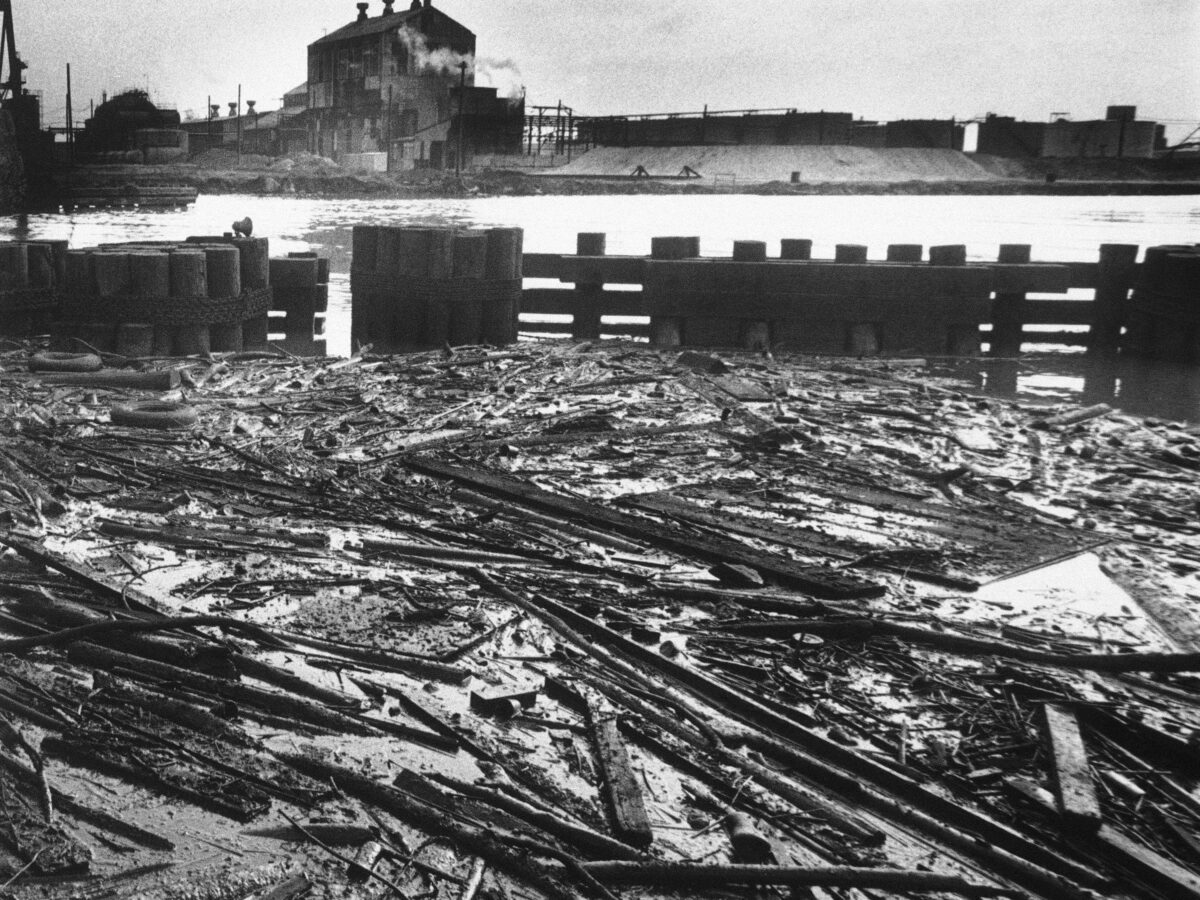
Early ideas for the island included a city garbage dump with a promise of the operations being “smokeless and odorless,” or improving the land into a “healthful resort similar in attractiveness to Belle Isle.”
Court finalizes $100 million judgment against DTE Energy for Zug Island air pollution
This story was produced with support of Internews’ Earth Journalism Network.DTE Energy and three of its subsidiaries must pay $100 million for Clean Air Act violations at EES Coke Battery on Zug Island within 90 days, according to a final judgment entered in federal court Tuesday. The facility must come into compliance with the Clean…