
Overview:
- Dearborn's Arab American voters shifted dramatically in 2024. In Arab American majority precincts in East Dearborn, 36% voted third party.
- Community members say foreign policy, fears about Trump administration immigration enforcement among top issues ahead of midterms.
- Arab American voters are engaging through organizations like The People's Coalition, pushing Democrats for progressive candidates who oppose AIPAC funding.
This reporting was made possible in part with support from the Poynter Institute.
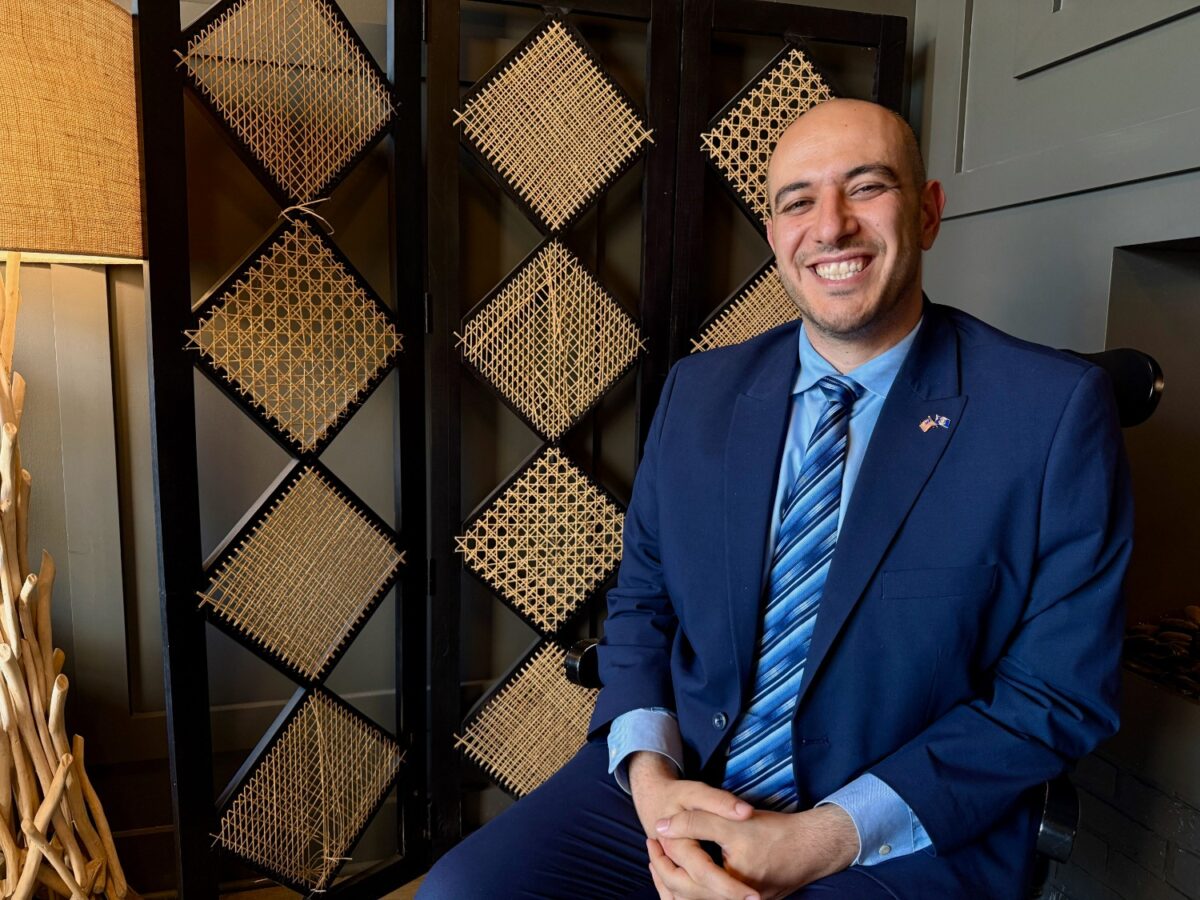
Abbas Alawieh received calls from three community members one recent morning whose family members were killed by Israeli airstrikes in Lebanon.
Alawieh, a Democratic primary candidate for Michigan State Senate District 2, cofounded the discontinued Uncommitted National Movement, which declined to endorse Democratic Party nominee Kamala Harris in the 2024 presidential election due to the war in Gaza.
Two years later, the political sentiment among Dearborn’s Arab Americans as the midterm election approaches “is rooted in a deep sense of frustration and grief, specifically in response to Trump’s illegal wars in the Middle East,” Alawieh told Planet Detroit.
🗳️ Civic Action Toolbox
Why it matters
Arab Americans make up roughly 10% of Wayne and Macomb counties’ population, and their shift away from traditional Democratic voting patterns — with a 35% swing in Michigan in the 2024 presidential contest — could determine the outcome of close contests in the midterms.
Who's making public decisions
Voters in Michigan’s Aug. 4 primary elections will determine which candidates from each party advance to the Nov. 3 general election for state legislative seats and the 2026 Michigan gubernatorial race.
Civic Actions: What You Can Do
What to watch for next
How candidates running for Michigan offices address the concerns of Arab American voters in this year’s midterm election cycle, and the outcome of the Aug. 4 primary election.
Are you taking action? Let us know.
Civic resources compiled by Planet Detroit
On Aug. 4, voters will decide which candidates from each party advance to the Nov. 3 general election. Alawieh said he’s trying to win people back from “disillusionment.”
“A lot of folks are fundamentally perplexed. We pay taxes here to improve our lives here, and the tax dollars are being used to destroy our families’ homes abroad,” he said. “It’s a very difficult and challenging reality to live with.”
The contradiction, he said, is “not lost on people locally.” In March, Alawieh’s grandmother’s home in Lebanon was destroyed.
Michigan’s 12th U.S. congressional district, which includes Dearborn, Dearborn Heights, and parts of Detroit, has the largest Arab American population among the state’s congressional districts, an estimated 82,536 people, according to 2023 American Community Survey data from the U.S. Census Bureau.
And the community is growing. Between 2010 and 2020, the Arab American population in Wayne, Oakland, Macomb, and Washtenaw counties increased from 4.9% to 8.4%, according to the nonprofit Arab American Institute. In Wayne and Macomb counties alone, Arab Americans make up roughly 10% of the population.
Alawieh said the “path to electoral success, even nationally, goes through southeastern Michigan.”
Midterms hold ‘similar dynamic’ as 2024
An Arab American Institute analysis of the 2024 presidential election described it as “not normal.”
“Faced with a choice between one candidate who was the vice president in the administration who funded and provided diplomatic support for the genocide of Gaza, and another candidate with a history of anti-Arab bigotry who described himself as Israel’s greatest friend during the genocide, many Arab Americans found it hard to vote for either major party candidate,” the report said, referring to Harris and Republican nominee Donald Trump.
In Michigan, the Arab American swing toward third-party candidates was larger than the swing toward Donald Trump, according to the report: “While nationally, the swing away from the Democratic ticket was 12%, in Michigan, Arab Americans moved away from the Democrats at a staggering 35%.”
Across Dearborn as a whole, Trump won 42% of the vote; 29.11% of voters chose Harris; and third-party candidates received 27.11%.
In Arab American majority precincts in East Dearborn, third-party candidates, mainly Jill Stein, received 36% of the vote.
In Dearborn Heights, Harris received 34.28% of the vote, and third-party candidates took 23.77%.
Bilal Beydoun, 36, a writer and policy expert who was born and raised in Dearborn, said the 2024 election was “a contest between President Trump’s lies, Jill Stein’s opportunism, and Kamala Harris’s absence.”
Despite Dearborn being a “Democratic stronghold” in previous elections, Harris didn’t make a campaign stop in the city. She made 25 Michigan stops, according to MLive.
“I do think the Democratic Party’s reluctance to speak out against the Gaza genocide played a major role in its lack of electoral fortunes the last time around. This time around, I think we’re seeing a similar dynamic at play,” Beydoun said.
Hannah Fahoome, a 28-year-old Palestinian American filmmaker and community organizer living in Detroit, said it frustrates her when people blame Arab Americans for the outcome of the 2024 election.
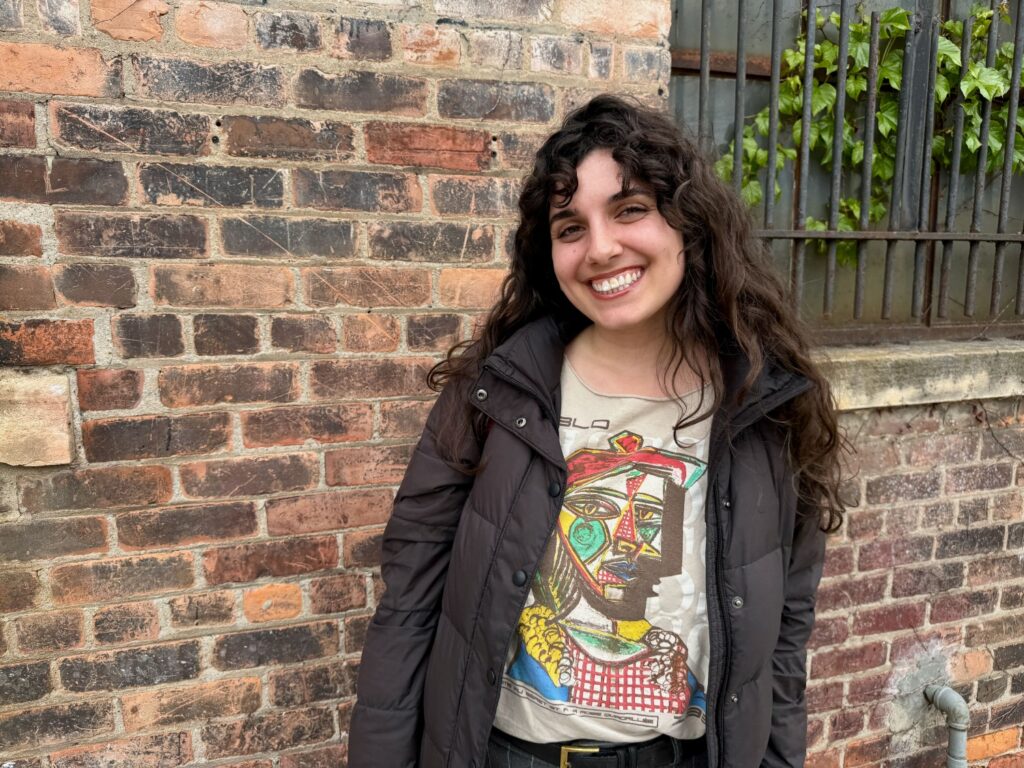
Harris didn’t try to secure the Arab American vote, Fahoome said. Her campaign strategy of speaking “as close to the center as they possibly could” was a “colossal failure.”
“They thought they could win over enough Republicans who had lost faith in Trump. They said, we’re not going to worry about these radical people over here … about the Palestinians. We’re not going to worry about Dearborn,” Fahoome said.
When pro-Palestinian demonstrators interrupted Harris’ Aug. 7, 2024 Detroit rally, chanting “Kamala, Kamala, you can’t hide. We won’t vote for genocide,” Fahoome said Harris dismissed them.
“You didn’t try to get my vote. You actually laughed in my face,” Fahoome said. “So of course, I’m not going to vote for you.”
For Zena Ozier, a 35-year-old public interest attorney and mother in Dearborn, Democrats didn’t present a “progressive enough” platform to earn her vote in 2024. Foreign policy played a “big role” in her decision to vote for Stein, she said.
“Democrats really failed to take seriously the concerns that many of their constituents had regarding the funding of Israel’s genocide in Gaza, and I think that it did impact the outcome of the election,” she said.
Among her community, some voted for Harris as “damage control,” a sizeable number voted third party, and some were “so disenchanted by Biden’s handling of the genocide” that they voted for Trump, Ozier said.
Immigration fears: ‘Could we be next?’
In Dearborn, Alawieh said there’s widespread concern about Trump’s immigration policies among Arab and non-Arab voters alike.
Immigration is the first issue most non-Arab voters bring to him, he said. Some Arab voters are more cautious about voicing their frustrations for fear of being targeted themselves. A Middle Eastern man with a green card recently pulled Alawieh aside after a speech and said he’s afraid of “getting picked up by ICE.”
Family reunification has been difficult for a while, Alawieh said, but now “there’s a real concern that ICE will show up in our communities.”
Beydoun said immigration enforcement is “absolutely a concern” in the community. Many Arab American families have trouble in the form of harassment by the Department of Homeland Security when they travel back and forth to their home countries, he said. Beydoun wishes he could bring his aunt from Lebanon, who is “currently living under some of the most intense bombing that we can ever remember,” to the U.S., he said.
Ozier said the Trump administration is focused on a “certain type of immigrant,”, but she worries that could change.
“We may be in a more secure position in the United States, but that’s temporary. I think that there could be more large-scale deportations of Arab Americans,” she said.
Trump’s immigration policies toward Arab countries began in 2017 with a travel ban on Iraq, Syria, Iran, Libya, Somalia, Sudan, and Yemen.
In 2026, lawyers argued the Trump administration fast-tracked immigration proceedings against Mahmoud Khalil, a pro-Palestinian activist. In New York City, immigration agents mistakenly detained and injured a U.S. citizen on May 6 while pursuing someone else with a similar profile, according to WPIX-TV.
“Arab Americans need to be outspoken and stand with our Latino brothers and sisters and the fight against this violent immigration policy,” Ozier said. “Complacency is not going to save us.”
The fear isn’t abstract. Ozier said even U.S. citizens in the Arab American community feel targeted, and those with “precarious” immigration status are on edge.
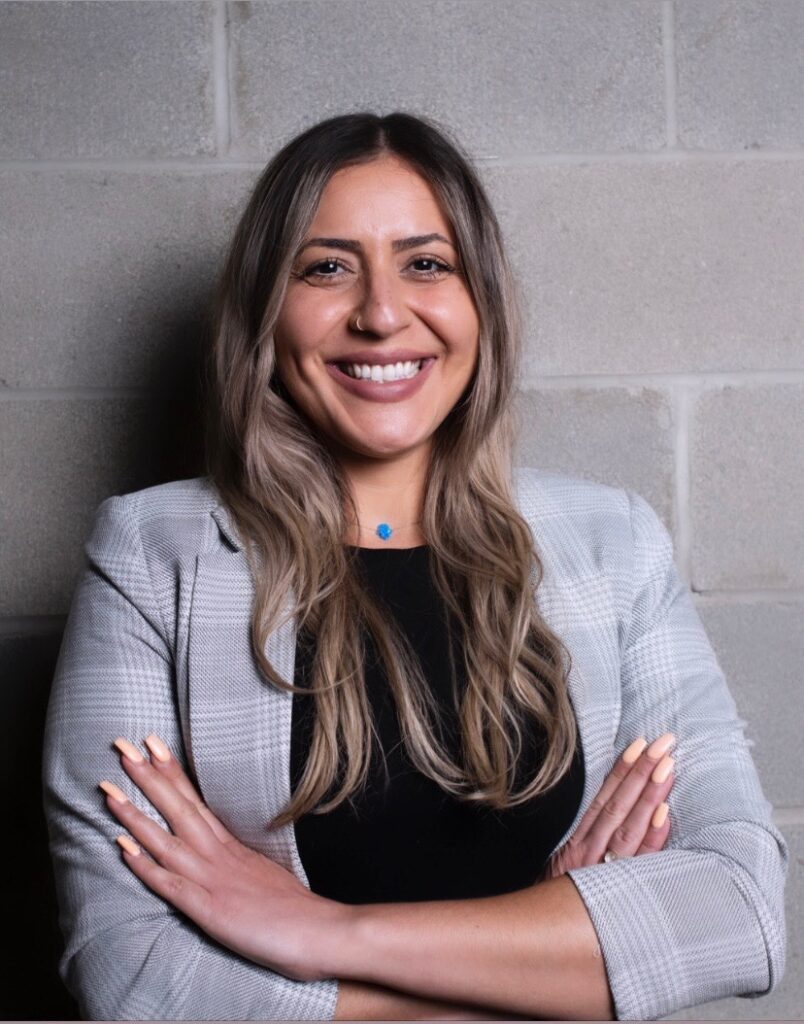
The pathway to the U.S. looks different now than when her grandfather came from Lebanon, Ozier said. Many families had “straightforward” routes to citizenship in the 1970s and 1980s that allowed them to bring other family members over.
Arabs have been immigrating to the United States since the 1890s from 22 Arab countries stretching from North Africa to western Asia, according to the Arab American National Museum.
The 1965 Hart-Celler Immigration and Nationality Act opened pathways from non-European regions, including the Arab world. By 1970, there were roughly 400,000 Arabs in the U.S.
Census figures today count 2.8 million Arab Americans, though the Arab American Institute estimates the true number is 3.7 million due to “systemic undercounts.”
“My grandfather had one sibling that got his citizenship and he brought so many other family members to the United States,” Ozier said. “I think they still believe in the immigration system and in American democracy in a way that younger generations are a bit disenchanted with.”
Michigan’s Arab American voters look forward
If 2024 shook people’s sense of loyalty to either major party, Beydoun said, Dearborn residents of Lebanese and Palestinian descent are focused on what’s ahead — particularly the Michigan gubernatorial race.
That lost sense of loyalty created an opening for independents like former Detroit Mayor Mike Duggan, who ended his campaign May 21, and for candidates who are “explicitly known as pro-peace, anti-war candidates,” like Alawieh, he said.
Beydoun said the top issues in Dearborn span from U.S. support for “forever wars” in the Middle East, to road safety and public education.
“People are quite angry about the Trump administration, about the erosion of democracy,” he said. The frontrunners for the 2028 presidential contest, he added, are “far more reluctant to be full-throated in their opposition to the pro-Israel war machine.”
Alawieh said he’s seeing a significant increase in political engagement among younger Arab Americans, particularly at April’s Michigan Democratic Convention.
The Uncommitted Movement, which “lives in 2024,” allowed voters to organize within the party “to take power away from those in the party that are wielding it in favor of war,” he said.
Many of those organizers went on to found The People’s Coalition, which Alawieh said had “the biggest influence” on the Michigan Democratic Party’s primary endorsements.
Endorsements were made at the party’s April convention for secretary of state, attorney general, the Michigan Supreme Court, the state Board of Education, and three state university boards.
The outcome that drove thousands to the convention was the result of “relational organizing” and “speaking to the issue that the party is failing to speak to itself,” he said.
“I think the party would be wise to engage with the issues that a lot of voters feel the party has lost touch with,” Alawieh said.
Ozier said the convention made clear that Arab Americans want Democrats to embrace a progressive platform. Outspoken candidates like New York City Mayor Zohran Mamdani, who didn’t “shy away from talking about Palestine,” are getting the vote, she said.
“That’s a testament to folks wanting AIPAC funding out of elections, wanting Palestine to be front and center, getting money out of wars and into our communities, and for a progressive platform when it comes to immigration,” she said.
Fahoome said she never thought she’d see opposition to the American Israel Public Affairs Committee, or AIPAC, become a campaign issue in her lifetime.
U.S. Senate candidate Dr. Abdul El-Sayed, a former Wayne County health director, has criticized his opponents for accepting AIPAC donations.
The taxpayer funds that could address some of Fahoome’s top local issues, like DTE Energy’s consistent rate hikes, the high cost of living, and literacy rates, are being sent to support Israel, she said.
In Detroit, over $50 million in “spending on Israel’s weapons” could fund 8,373 families with one year’s free groceries, according to Not My Tax Dollars, a project of the U.S. Campaign for Palestinian Rights Action.
“It’s the worst of both worlds,” Fahoome said. “We’re paying higher taxes, none of it is being kept here, and the conditions keep getting worse.”
Fahoome said she’s lost faith that stepping into a voting booth will “change anything.” She’s put her confidence instead into community organizing: knowing her neighbors’ immigration status and individual needs, whether that’s helping with food or childcare, or connecting them to an attorney.
“We keep ourselves safe. Anybody who comes from a disenfranchised demographic, we’ve learned that over time any promises from candidates … it’s rarely translated into protecting folks,” she said.
“That’s the only thing that I can say for certain I believe in.”
If candidates addressed the loss of trust among the Arab American community ahead of the midterms, Fahoome said, that would “go a long way.”
MORE FROM PLANET DETROIT
As Michigan insurance costs rise, ballot drive highlights Blue Cross lobbying
A Michigan ballot drive aims to curb Blue Cross Blue Shield’s political influence over health insurance reforms.

With a legendary juror, ‘Trabajadores’ show connects art, labor, Latino identity
‘Trabajadores’ opens May 1 in Southwest Detroit, celebrating Latino workers with 94-year-old Kresge artist Nora Chapa Mendoza as juror.

Social worker, artist honor Southwest Detroit’s grief over deportations with community altars
The Altars for Collective Grief project invited the Southwest Detroit community to submit photos of loved ones affected by immigration enforcement.