

Overview:
- DTE Energy files for a $474.3-million electric rate hike that would increase residential rates by 9.7%.
- DTE says it could pause rate hike requests for two years if an Oracle data center in Saline Township comes online by 2027 and the utility receives other regulatory approvals.
- Attorney General Dana Nessel, who's appealing the Saline contracts and intervening in the rate case, calls DTE's conditional offer "a ransom note."
DTE Energy, which filed a $474.3-million electric rate hike request Tuesday, says it could pause rate hike requests for at least two years if the utility secures a “constructive” outcome in the rate case and an Oracle data center in Saline Township comes online by the end of 2027.
🗳️ Civic Action Toolbox
Why it matters
A proposed DTE rate hike would increase residential electric bills increase by 9.7% — well above the 4.1% hike approved just months ago. DTE offers a conditional promise to pause future increases if the Saline Township data center is fully online by the end of 2027.
Who's making public decisions
The Michigan Public Service Commission will decide whether to approve DTE’s $474.3-million rate hike request, while the Michigan Court of Appeals will hear Attorney General Nessel’s challenge to the Saline data center contract approval.
Upcoming Meetings
Contact Your Representatives
Civic Actions: What You Can Do
Organizations to Follow
What to watch for next
Watch for the Michigan Court of Appeals ruling on Attorney General Nessel’s challenge to the MPSC’s expedited approval of DTE’s data center contracts, which could influence whether a conditional pause on rate hikes moves forward.
Are you taking action? Let us know.
Civic resources compiled by Planet Detroit
DTE needs the higher rates to improve grid reliability and “sustain the reliability of its generation fleet while moving toward cleaner sources of generation,” the utility said in a filing with state regulators.
The Michigan Public Service Commission (MPSC) granted DTE’s last electric rate increase in February, approving a $242-million rate hike.
That’s less than half the $574.1 million the company requested. Days later, the company announced its intention to file for another increase.
DTE’s latest rate hike proposal would increase residential rates by 9.7%.
Michigan Attorney General Dana Nessel appealed the conditional approval of power contracts for the Saline Township data center April 17, and announced Tuesday that she’ll intervene in DTE’s latest electric rate case.
“DTE only offers a break in rate hikes if they win some other, unnamed data center approvals, and their Saline data center comes online with no delay,” Nessel said in a statement.
“This isn’t a commitment, it’s a ransom note.”
DTE spokesperson Jill Wilmot told Planet Detroit: “Nowhere has DTE tied our intention to pause future rate increases to data center approvals.”
What do data centers mean for DTE customers?
In its rate hike request announcement, DTE said large customers spread fixed costs more evenly.
Planned hyperscale data centers in Saline Township and Van Buren Township will contribute nearly $9 billion to improving DTE’s electric system by 2045 and reduce the amount of revenue needed from other customers, the company said.
Lee Shaver, senior energy analyst for the Union of Concerned Scientists, told Planet Detroit that DTE’s argument that acquiring a large customer could spread out costs is “true in theory.”
The total cost of serving the data center could offset the savings, he said.
Data centers could create congestion on power lines, require new power plants, and drive up the demand for gas and electricity, all of which could add costs for other ratepayers, Shaver said.
The approval of a rate increase based on data centers lowering costs is a “huge risk,” he said.
“What happens if those data centers don’t get built, or they get built and they’re smaller than projected, or they pack up and leave earlier?”
DTE Energy maintains that supplying power to data centers will not increase costs for other customers.
DTE’s contracts for the 1.4-gigawatt Saline Township data center contain some protections for other ratepayers, including a power supply agreement of 19 years, with an option to extend it by 20 years. It also includes an energy storage agreement with a duration of 15 years.
DTE spokesperson Ryan Lowry said the contracts include protections to keep other ratepayers from subsidizing data center rates and ensure Oracle covers the cost of battery storage and grid upgrades needed to protect system reliability.
Nessel’s challenge to Oracle, DTE contracts
DTE’s contracts for the Oracle and OpenAI data center received conditional approval in December, despite environmental and ratepayer advocates’ objections that the company pursued a rushed “ex parte” approval process, which does not allow intervenors to submit testimony.
Nessel filed a claim in the Michigan Court of Appeals earlier this month over the Michigan Public Service Commission’s ex parte approval of DTE’s contracts.
The MPSC is authorized to grant such approvals without hearings only when it will not increase the cost of service to customers, Nessel said.
“It has never been publicly verified that these contracts will not entail an increase in the cost of service to ratepayers,” she said.
MPSC Chair Dan Scripps said in a statement to Planet Detroit: “The commission’s conditional approval of these contracts included some of the strongest consumer protections in the country and is consistent with literally decades of applicable precedent.”
The MPSC will vigorously defend the conditional approvals to realize an estimated $300 million in affordability benefits to customers, Scripps said.
MPSC spokesperson Matt Helms said the other approvals for the Saline Township data center that are needed from the commission are for elements like energy storage that are part of the special contracts with DTE.
The Michigan Department of Environment, Great Lakes, and Energy (EGLE) granted air and wetland permits for the data center in January.
EGLE spokesperson Dale George said a National Pollutant Discharge Elimination System application associated with the Saline Township site is under review.
Related Digital, the developer of the Saline Township project, said in a Friday statement that it secured financing for the $16-billion project. The project will bring over 2,500 union construction jobs, 450 on-site jobs, and over 1,500 jobs nationwide, the statement said.
It will bring millions in local tax revenue, while preserving over 750 acres of open space, wetlands, and farmland, according to Related.
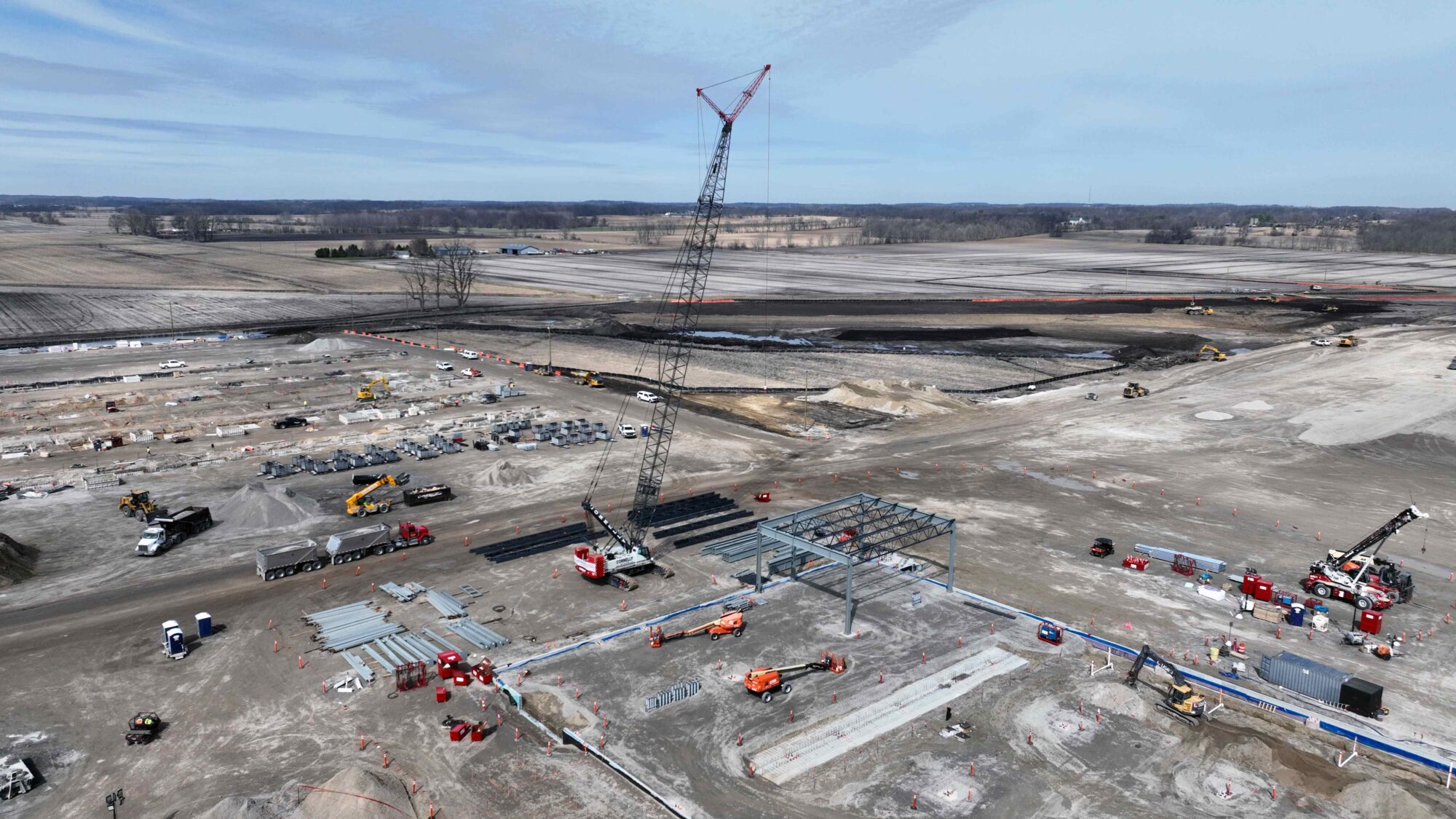
The company said major construction is “well underway” in Saline Township.

Google data center may require new power generation by 2033, witness says
DTE is pursuing a contested rate case for a planned 1-gigawatt data center in Van Buren Township, rather than the fast-tracked process used for the Saline Township project.
Google’s Michigan operations will be served by 2.7 GW of new grid resources in the form of solar power, energy storage, and demand flexibility, Will Conkling, Google’s head of data center development for the Americas, said in a March blog post.
Shaver, with the Union of Concerned Scientists, said DTE’s filings for the data center contracts show that additional generation will be needed by 2033.
Witness Justin J.W. Brooks, an energy consultant with the company PowerGEM, testified on DTE’s behalf in the MPSC case, and said the company performed modeling for a natural gas plant with carbon capture and storage to address this need.
Shaver said other ratepayers would pay for a share of this new generation.
DTE’s Lowry said the utility is considering multiple baseload generation sources, including nuclear energy and natural gas with carbon capture and storage, to help replace its Monroe coal plant and serve new demand from data centers.
“Any additional, potential load from data centers will be met with a combination of renewables, energy storage, and 24/7 baseload generation,” Lowry said.
The utility’s proposed path forward will be included in its next Integrated Resource Plan, which it will file in late 2026, he said.
The MPSC’s Helms said there is no statutory deadline for the approval of data center contracts.
EGLE’s George said developers of the Van Buren Township project submitted a joint wetland permit that is under review.
‘Bills are too damn high’: Ratepayer advocate
Alex Kellogg, energy accountability manager for the Michigan League of Conservation Voters, called for an end to the constant churn of rate hikes and criticized the company for tying a pause in filings to a controversial data center.
DTE customers pay the highest energy costs in the Midwest for some of the worst reliability in the country, he said in a statement.
“Our bills are too damn high, and it’s a joke that DTE is trying to act like they’re doing us a favor while holding us captive for a controversial warehouse of computer servers dressed up as the ‘Red Barn Project,’” he said, referring to the Saline data center, named “The Barn” by Related Digital.
DTE says it reduced the time customers spent without power in 2025 by 60% compared to 2024, after a 70% improvement the year before.
The MPSC’s annual report for 2025, which includes more Michigan utilities beyond DTE, said the state’s average home electric bill as of 2024 is $119.31, nearly $23 lower than than the national average of $142.16.
The report, which was issued last month and is based on U.S. Energy Information Administration Data, said the average Michigan bill amount is lower than in two neighboring states, Ohio and Indiana, and lower than a $121.66 per month average in the region including Michigan, Illinois, Indiana, Ohio, and Wisconsin.
Amy Bandyk, executive director of the Citizens Utility Board of Michigan, said in a statement that DTE’s proposed rate hike would increase residential rates by 9.7%, well above the 4.1% increase approved in February.
The company is also requesting a return on equity (ROE) of 10.25%, well above the national average of 9.7%, which would make DTE one of the most profitable utilities in the country, she said.
The return on equity generates profits for shareholders and is defined as the net income of a utility’s gas or electric operation divided by shareholder equity.
Cutting the utility’s ROE would save customers money and make DTE less focused on capital investments, which allow it to collect a high return, and more willing to focus on reliability-improving measures like shortening tree trimming cycles, Bandyk previously told Planet Detroit.
Agreeing to a 9.7% rate increase to avoid an increase next year is not a good deal for customers, Bandyk said this week.
“It is better for groups like CUB to fight this rate case and convince regulators to approve a lower amount, even if that means DTE will file another rate case next year.”
Editor’s note: The headline and body of this story have been updated based on further comment from DTE Energy, which says the offer of a two-year freeze in electric rates is not based on data center approvals.
UTILITIES NEWS
Ypsilanti utility OKs 12-month ban on supplying water for data centers
The Ypsilanti Community Utilities Authority approves a 12-month moratorium on supplying water to data centers, blocking service to facilities including a planned $1.2-billion University of Michigan project.

Michigan increases energy bill assistance as White House looks to end LIHEAP
Michigan increases energy assistance by $15 million as White House proposes cutting federal LIHEAP program that helps 400,000 residents.

After Zug Island pollution lawsuit, attorney urges community engagement
Annie Seaman worked on Zug Island for 40 years from 1973 to 2013. She wore all pink to a community meeting about pollution from the island, but the stories she tells about her time as a U.S. Steel Great Lakes Works employee are less than rosy. Seaman, who lives in Detroit, worked as a powerhouse…