

Overview:
- The EPA resumes dredging 100,000 cubic yards of coal tar- and petroleum-contaminated sediment from the Lower Rouge River Old Channel near Zug Island.
- The $84-million project, funded by the Great Lakes Restoration Initiative and Honeywell Inc., will remove large debris including cars and tires while stabilizing 2,500 feet of shoreline.
- The cleanup addresses legacy contamination from over a century of industrial activity, when factories discharged millions of gallons of wastewater daily into the Rouge River.
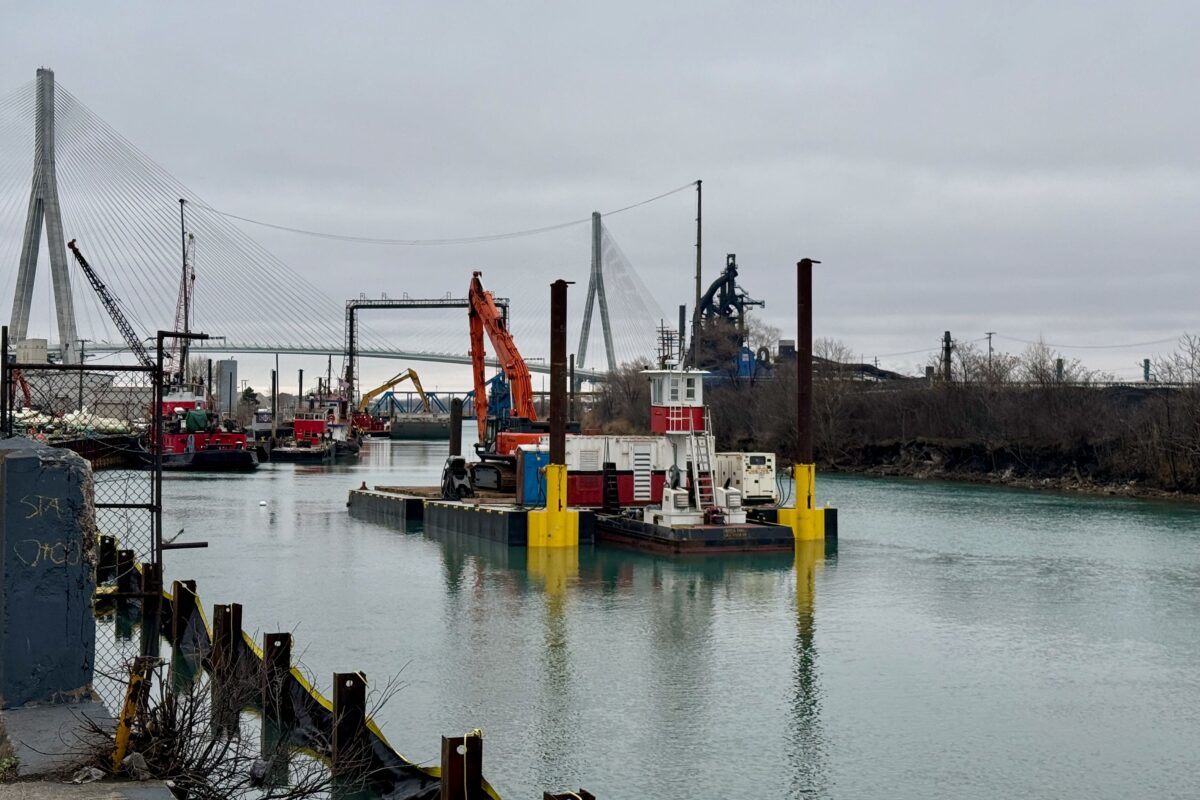
On March 30, the Environmental Protection Agency resumed dredging more than 100,000 cubic yards of sediment contaminated with coal tar and petroleum products from a 0.75-mile stretch of the Lower Rouge River Old Channel around Zug Island.
🗳️ Civic Action Toolbox
Why it matters
Who's making public decisions
The Environmental Protection Agency is managing the cleanup of the Lower River Rouge Old Channel.
Civic Actions: What You Can Do
Organizations to Follow
What to watch for next
Are you taking action? Let us know.
Civic resources compiled by Planet Detroit
The dredging, in the EPA’s Rouge River Area of Concern, aims to improve the water quality of the highly industrialized federal navigation channel. It’s the second phase of an $84-million project funded by the Great Lakes Restoration Initiative and Honeywell Inc through a cost-sharing agreement.
In the project area, 70,000 cubic yards will be dredged and transported by barge to a U.S. Army Corps of Engineers-managed facility in Monroe, according to the EPA. The remaining approximately 35,000 cubic yards of sediment will be covered to prevent the spread of contamination, a press release said.
The completion of the channel cleanup will advance efforts to remove three beneficial use impairments, according to the EPA: Degradation of fish and wildlife populations, loss of fish and wildlife habitat, and degradation of benthos, or aquatic bottom dwellers.
The EPA declined to comment before press time.
Robert Burns began his career in the 1980s in marine construction, dredging contaminated sediment along the Rouge River. He recalls when the buckets of mud he would pull out of the water were “just oil, black, smelly,” he said. “It was bad.”
Burns, the Detroit riverkeeper for the nonprofit Friends of the Detroit River, said at that time, he looked down the river from where he was dredging and saw kids jumping into “that plume of black muck.
“The things that I used to see up there compared to what I see today, is like night and day,” Burns said.
“The work that has been done over the last 30 years has really had some impact.”
Lower Rouge River Old Channel cleanup timeline
The project removes large debris like metal, wood, tires, and nearly a dozen vehicles from the riverbed, working to stabilize the shoreline, according to the EPA.
The Old Channel cleanup began in 2010 through an EPA partnership with Honeywell Inc. under the Great Lakes Legacy Act. The first phase of the restoration started in 2018 with the installation of a sheet pile wall – a zig-zagged retaining system – along 2,500 feet of shoreline.
The dredging of the channel, initially contracted 2018 but delayed until 2024 due to “substantial quantities of previously unanticipated buried debris,” kicked off in the fall of 2024.
The dredging is expected to conclude this year, according to the EPA. It will finalize removal and capping of contaminated sediment in the river.
Burns said he prefers that sediment is removed rather than capped, but adds that dredging is “horrendously expensive.”
Capping is valuable if the area is not easily disturbed by a current or shipping traffic, he said.
The impact of contaminated sediment
Toxic chemicals such as PCBs, mercury, oil, grease, and other petroleum byproducts “settled into sediment at the bottom of rivers and harbors” in the EPA designated areas of concern, according to the EPA.
Zug Island became a powerhouse for the steel industry in 1891 when the land was dedicated to industrial use. By 1895, the Rouge River area was described as “the busiest scene of industrial activity in Michigan” by the Detroit Free Press.
In 1948, the Detroit Free Press reported that the Solvay Process Co. discharged 30 million gallons of wastewater per day into the Rouge River, containing calcium chloride, unreacted brine, and calcium sulfate.
Detroit riverkeeper Burns said until 40 years ago, there were no regulations to stop contamination from entering the river.
The Clean Water Act – which was enacted in 1948 and expanded in 1972 – regulates discharges of pollutants into water and regulates water quality standards for surface waters.
Legacy contaminated sediments from industry have “far reaching impacts,” Burns said.
Contaminated sediment works its way up the food chain, from vegetation at the bottom of the river that’s eaten by smaller fish, to the bigger fish that are caught and eaten by humans, he said.
“All of these things that are being done to remediate sediments and clean up the water quality are having a tremendous environmental as well as physical improvement for people who swim and consume things from the river,” Burns said.
WATER QUALITY NEWS

Ypsilanti utility OKs 12-month ban on supplying water for data centers
The Ypsilanti Community Utilities Authority approves a 12-month moratorium on supplying water to data centers, blocking service to facilities including a planned $1.2-billion University of Michigan project.

Historic wild rice restoration underway in the Detroit River: ‘Living tribute to the First Nations’
The Nottawaseppi Huron Band of the Potawatomi is working with conservation partners to restore wild rice in Detroit River wetlands, bringing back a sacred grain that disappeared over a century ago.


VOICES: Time for Congress to step up for the Great Lakes
In Washington, D.C., Great Lakes Day unites Congressional leaders in bipartisan support for the Great Lakes, yet expert Mike Shriberg warns the Great Lakes Restoration Initiative alone cannot safeguard water quality.