

Overview:
- Aevitas Specialty Services is seeking approval to reopen and expand its Detroit oil recycling facility after a June 2025 fire.
- The facility has received five air quality violations and 64 complaint investigations from state regulators since 2012, primarily for persistent odors affecting nearby residents.
- Residents and advocates are urging the city to deny the expansion, citing years of odor complaints and lack of community outreach, while the company proposes new odor control systems.
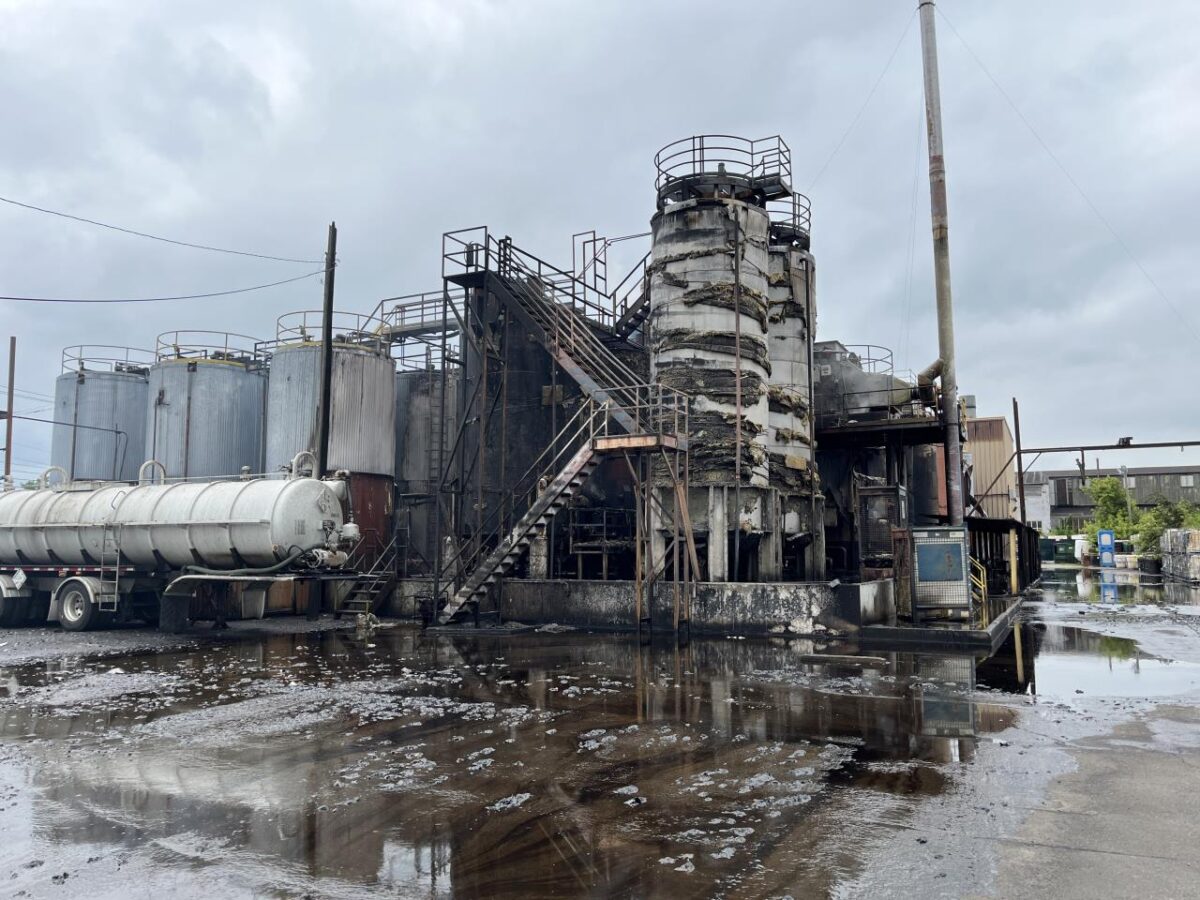
A Detroit oil treatment facility with a history of odor complaints that caught fire a year ago is seeking approval from the city and state regulators to reopen.
🗳️ Civic Action Toolbox
Why it matters
Residents near Aevitas on Detroit’s east side say they endured years of noxious odors until the facility shuttered after a fire.
Who's making public decisions
The Detroit Buildings, Safety Engineering, and Environmental Department will issue a decision letter on Aevitas’ site plan within two to three weeks, while the Michigan Department of Environment, Great Lakes, and Energy is reviewing an air quality permit, with a public comment opportunity expected later this summer.
Upcoming Meetings
Civic Actions: What You Can Do
Organizations to Follow
What to watch for next
Watch for BSEED’s decision letter on Aevitas’ plan within two to three weeks and the opening of EGLE’s public comment period on the air quality permit later this summer.
Are you taking action? Let us know.
Civic resources compiled by Planet Detroit
Aevitas Specialty Services Corp., which handles and recycles used hydraulic oil from the automotive industry, informed Detroit’s Buildings, Safety Engineering, and Environmental Department (BSEED) Wednesday that it wants to expand its Lycaste Street facility on the east side.
A fire June 30, 2025 caused extensive damage to the facility’s waste treatment machinery and caused roughly 1,000 gallons of oily water to spill onto the street, prompting Aevitas staff to close the building indefinitely.
The company’s site plan calls for the demolition of a portion of the building impacted by the fire, and an expansion of the remainder, bringing it from roughly 15,700 to 24,100 square feet, Aevitas CEO Rob Slater said at a BSEED special land use hearing Wednesday.
“We have the opportunity to improve our wastewater system with better design and new equipment, as well as our oil recycling and reclamation systems,” Slater said.
“In the community, there have been concerns about odors from the site. We don’t dispute that.”
The odors largely stem from sulfuric compounds within the waste oils Aevitas treats; the facility uses sulfuric acid and potassium hydroxide to treat and separate water and oils from the industrial byproducts it receives, he said.
Aevitas has received five air quality violations and 64 air complaint investigation reports from the Michigan Department of Environment, Great Lakes, and Energy (EGLE) since 2012. Four violations were for “persistent objectionable odors” impacting residents who live downwind of the building, according to EGLE documents.
“I have suffered through the noxious fumes, waking me up out of my sleep, just being so pungent and so unpleasant,” east side resident Latonya Foster said.
“I’ve been honestly complaining about this place for years now, and it seems to me that it’s not a healthy thing.”
In October, the Detroit City Council approved a resolution introduced by Councilmember Latisha Johnson that outlined pathways for the city to fine or penalize Canadian-owned Aevitas.
Nuisance odor ‘permeates through the entire community’
As part of the proposed rebuild, Slater said the facility’s updated design would enclose some of its oil tanks, install a scrubber system for odor control on some of them, and install a foam fire suppression system.
At Wednesday’s hearing, representatives from departments including the Detroit Health Department, the City Planning Commission, and the Fire Department questioned Slater, noting resident complaints and state investigations into nuisance odors.
Scott Withington, a city environmental health manager, said Aevitas should address in writing the ways it will control odor and truck traffic from its operations.
He raised concerns about the facility’s fugitive dust mitigation, noting the gravel surface surrounding the property could “increase the potential issues with dust and trackout, especially after heavy rainstorms and other conditions.”
Hilton Kincaid, director of Homeland Security and Emergency Management for the city, said the facility should have a redundancy system for any wastewater runoff.
“Once they get into the sewer system and those gasses start coming out, when we have the perfect amount of rain, it just permeates through the entire community,” said Kincaid.
“We start getting those complaints, and we have to come out and try to find out what the problem is, and bring down the fears of the community.”
State to take public comments on Aevitas permit
Aevitas projects annual emissions of 5.6 tons of nitrogen oxides (NOx), 1.1 tons of volatile organic compounds (VOCs), and 0.25 tons of particulate matter, the company said in its April air quality permit application to EGLE.
The application is being reviewed, said EGLE spokesperson Josef Stephens. A public comment period on the draft permit is likely to open later this summer.
At Wednesday’s city hearing, Slater said the Aevitas facility does not have any air monitoring along its property line, but that monitors may be agreed upon with EGLE during the permitting process.
Andrew Bashi, a Great Lakes Environmental Law Center attorney, said at the city hearing he believes Aevitas’ projected emissions “are significantly undercounted.”
Southeast Michigan is in nonattainment of ozone standards. The environmental law group is pursuing legal action against the Environmental Protection Agency to move the region from moderate to serious nonattainment status, which would result in stricter pollution controls.
In addition to permission from BSEED and EGLE, Aevitas is seeking a discharge permit from the Great Lakes Water Authority for treated wastewater. The facility’s sewage system is separate from the city’s wastewater system, Slater said.
Aevitas expects to demolish a portion of the property as soon as July 20, Slater said. The company submitted a demolition notice to EGLE June 15.
Residents push city to deny Aevitas site plan
Residents and community advocates who spoke at Wednesday’s hearing said that in lieu of stronger pollution enforcement from state regulators, they want the city to deny Aevitas’ application.
Valencia Stoudamire, a resident in the Jefferson Village condominiums near Aevitas, said she doesn’t “expect that they will be a strong community partner going forward.”
“There has been no communication, to my knowledge, with this community about what’s transpired there,” said Stoudamire. “My mother was receiving hospice care in my home, and I wanted to open the windows so she could get fresh air, and we had to close them back because of the smell.”
No decision was made at the BSEED public hearing. A decision letter will be drafted within two to three weeks, according to city documents.
MORE EAST SIDE NEWS
GLWA’s Jefferson Chalmers pump station wins zoning approval: ‘We don’t want another 2021’
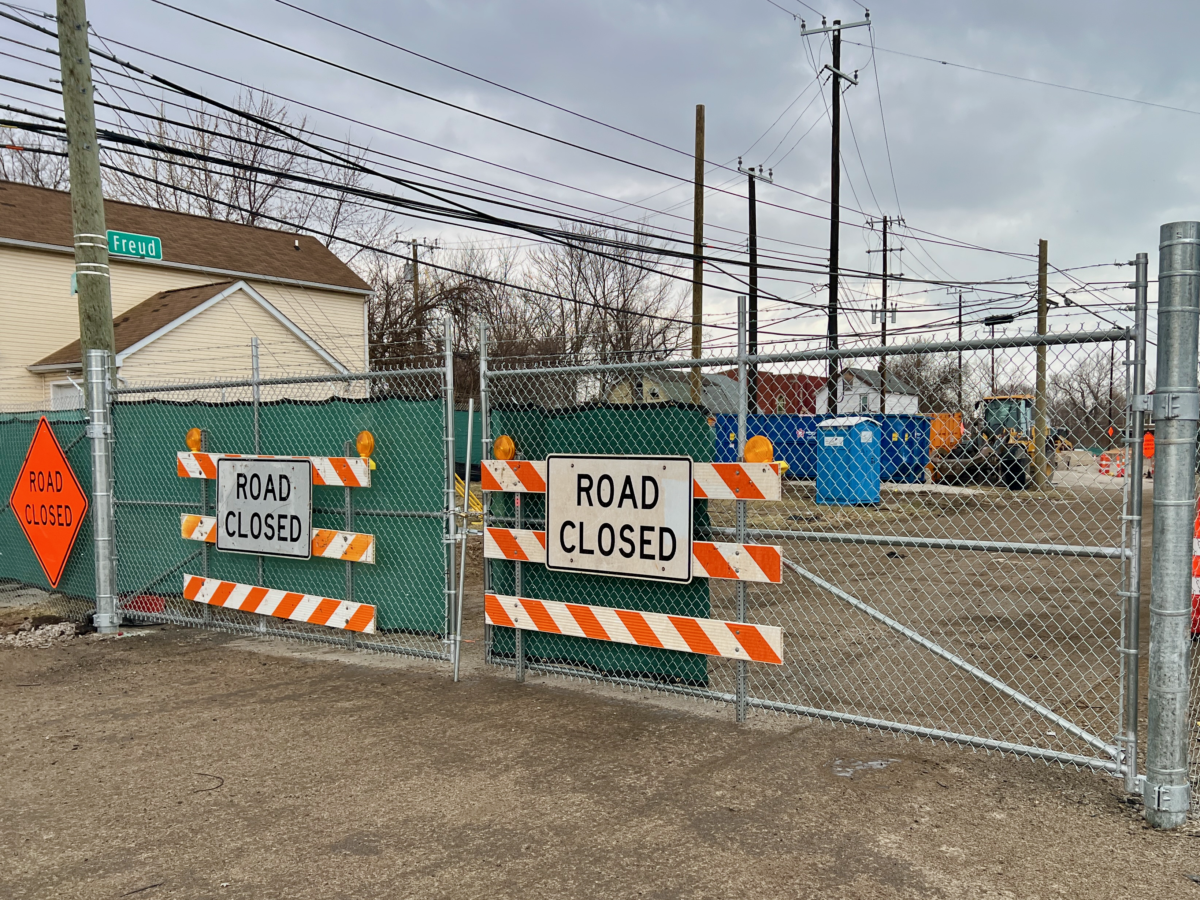
Detroit City Council approves a hotly debated $130-million pump station project in Jefferson Chalmers, which received a flood zone designation after devastating 2021 basement backups. The project includes $5 million in community improvements, but some residents question whether it will prevent future flooding.



Detroit community group launches study of data center development: ‘It’s really important that we do this soon’
As data center proposals spread across Michigan, residents on Detroit’s east side are organizing to slow development or minimize harm to neighborhoods already overburdened with industry.
City must act against Aevitas oil treatment facility that caught fire: Detroit councilmember
A Detroit firefighter was injured during the response to the June 30 fire at Aevitas Specialty Services, which took about seven hours to bring under control.
