


Overview:
- Abdul El-Sayed and Haley Stevens debated environmental policy questions Monday, focusing on power grid reliability, renewable energy, and air quality impacts from wildfires.
- El-Sayed criticized DTE Energy's political spending and its role in data center approvals, while Stevens has proposed legislation to cut federal funding for utilities that raise rates.
- Recent polls show conflicting results: one gives Stevens a 7-point lead, and another shows El-Sayed ahead by 15 points among likely Democratic primary voters.
In the final debate of Michigan’s closely watched U.S. Senate primary, Haley Stevens and Abdul El-Sayed answered voter questions about the state’s frequent power outages, climate change, and air quality impacts from recent wildfires in Ontario.
🗳️ Civic Action Toolbox
Why it matters
The winner of Michigan’s Senate race could help shape health care, climate, and campaign finance policy in Washington, D.C.
Who's making public decisions
Michigan Democratic primary voters will choose between Haley Stevens and Abdul El-Sayed Aug. 4, determining who faces Republican Mike Rogers in the November general election for U.S. Senate.
Upcoming Meetings
Civic Actions: What You Can Do
Organizations to Follow
What to watch for next
The Democratic primary election Tuesday, Aug. 4 will determine which candidate advances to face Republican Mike Rogers in the general election for Michigan’s U.S. Senate seat.
Are you taking action? Let us know.
Civic resources compiled by Planet Detroit
The race for the Democratic nomination for the open Senate seat has been marked by differences over campaign contributions, military support for Israel, and frequent personal attacks.
Voters in the Democratic primary Tuesday, Aug. 4 will choose between El-Sayed and Stevens, and the winner will face Republican Mike Rogers in the Nov. 3 general election.
Wayne State University student Kimora Riddick asked the candidates Monday what they would do to decrease the dangers of pollution, noting the heavy impact of smoke on Detroit.
U.S. Rep. Stevens (D-Birmingham) said it’s important to fight for good climate policy, not the “junk science” of President Donald Trump’s administration.
“We’ve got to cut the carbon emissions,” she said. “We’ve got to lessen our dependence on big oil and gas investments.”
El-Sayed, a former Detroit and Wayne County health director, said he worked to fight air pollution from companies like Marathon Petroleum in the city.
To achieve 100% renewable energy, it’s critical to take on fossil fuel corporations and their political spending, El-Sayed said.
El-Sayed drew a line between climate change and wildfires that dramatically impacted Michigan air quality earlier this month.
“These wildfires are happening more often because it’s drier and hotter than it has been in the past,” El-Sayed said. “It’s drier and hotter because we continue to rely on fossil fuels for our energy.”
Political spending is an environmental issue, state senator says
At Monday’s debate, a voter named Hannah asked how Stevens and El-Sayed would address high energy costs and poor reliability in the state — and the strain hotter summers and severe storms are placing on the grid.
Stevens said she’ll fight for strong climate legislation and pressure utilities to either lower their rates or lose federal funds.
Stevens’ campaign previously touted her introduction of the Stop Unfair Electricity Prices Act.
The bill would strip federal funding from investor-owned utilities that raise customers’ rates within a year of the last rate hike, or that raise rates in the second and third years out from a rate hike, unless they cut executive pay by twice the percentage of the rate increase.
In Michigan, utilities must wait a minimum of 12 months between rate hike filings under state law.
El-Sayed zeroed in on DTE Energy’s political spending in his response, which he argued allowed the company to gain fast-tracked approval for its Oracle and OpenAI data center contracts in Saline Township.
The contracts were approved in December by the Michigan Public Service Commission (MPSC), which is appointed by the governor.
In contrast, DTE is pursuing a contested case for a planned Google data center in Van Buren Township. A contested case at the MPSC allows representatives for ratepayers, environmental groups, and other interests to submit testimony.
DTE says its corporate and PAC contributions support policies that “help our local communities prosper and flourish while promoting opportunity for all in an open and just society.”
Earlier in the debate, El-Sayed said he’s the only candidate in the race who has not received donations from corporate political action committees, including those funded by DTE.
Stevens said her campaign has not accepted donations from DTE.
The Detroit News reported that Stevens’ House campaigns took $63,500 from DTE and Consumers Energy PACs between 2019 and 2025.
Her House committee forwarded $2,500 from DTE and $2,500 from Consumers to her Senate committee last year, before she formally launched her Senate campaign in April 2025, the report said.
Stevens campaign spokesperson Arik Wolk reiterated the candidate’s statement that she has not received DTE contributions.
Stevens cosponsored the For the People Act, which would require super PACs and dark money groups to disclose large donors, and create a voluntary public financing system for campaigns that matches small donations.
El-Sayed’s campaign website says he supports public election funding; banning Super PACs and dark money groups from making donations; and legislation to overturn Citizens United, a 2010 U.S. Supreme Court decision that allowed corporations and outside groups to make unlimited campaign donations.
State Sen. Jeff Irwin (D-Ann Arbor), who endorsed El-Sayed, stressed the environmental ramifications of reforming political spending.
“One of the ways that we get more pollution into our bodies is the pollution of big money in politics,” he said.
Utilities, auto companies, and chemical companies all have large political influence that allows them to keep polluting, Irwin said.
Affordability a key issue in Senate race
Both candidates mentioned economic pressures facing Michiganders on Monday. Stevens cited rising grocery, medical, and utility bills, while El-Sayed called for a tax on billionaires to fund investments in education.
A June EPIC-MRA poll found 61% of Michigan voters believe the national economy has worsened over the last year.
Irwin told Planet Detroit that El-Sayed’s support for Medicare for All and his opposition to corporate political spending connects economic and environmental issues.
“He has a clear message that speaks to the actual needs and the actual problems that people face,” Irwin said, adding that El-Sayed is focused on a broken and expensive health care system, and rising cost of living.
“He doesn’t lose the message in a long list of policy points,” Irwin said, adding that this is a common problem for Democrats.
Stevens is also seen as strong on environmental issues, according to environmental advocates who spoke with Planet Detroit. The League of Conservation Voters (LCV) gave Stevens a 98% lifetime score for pro-environmental votes.
Stevens has attracted support from several prominent Michigan political figures who cite her effectiveness as a legislator.
Michigan Gov. Gretchen Whitmer endorsed Stevens last week, saying in a video that the four-term lawmaker would take on Republicans who are making life more expensive with tariffs, Medicaid cuts, and higher gas prices.
“Haley is taking them on and putting money back in Michiganders’ pockets,” Whitmer said, praising Steven’s efforts to protect Social Security and lower prescription drug prices.
El-Sayed is endorsed by prominent national progressives, including U.S. Rep. Alexandria Ocasio-Cortez (D-NY) and Senators Bernie Sanders (D-VT) and Elizabeth Warren (D-MA).
El-Sayed, Stevens at odds over Medicare for All
An opportunity exists to enact Medicare for All — if a Democratic president is elected and the Senate eliminates the filibuster, El-Sayed said during Monday’s debate.
The Senate filibuster effectively requires a 60-vote supermajority to pass many pieces of legislation.
A July 2 poll from Progress Michigan, a left-wing advocacy organization, found 58% of Michiganders strongly or somewhat support a single payer, universal health care system.
El-Sayed said he would look to eliminate the nation’s medical debt, which he said totals $225 billion.
State Sen. Stephanie Chang (D-Detroit), who endorsed El-Sayed, told Planet Detroit that his support for Medicare for All is the kind of bold change voters are looking for to make their lives more affordable.
Stevens mentioned rising health care costs as being among the challenges facing Michiganders several times Monday night, but didn’t put forward a specific health care plan.
Campaign spokesperson Wolk said Stevens has fought for expanded Affordable Care Act tax credits and helped cap older adults’ insulin costs at $35 a month, as well as other out-of-pocket drug costs,, and pushed for expanded drug negotiation powers for Medicare.
Stevens told Michigan Public she supports expanding Medicaid.
“We’ve got to work with the system that we have, but we got to stop these big insurance companies from robbing us blind,” she said when asked directly by the radio station whether she supports single payer health care.
She added: “I think going into litigation and lawsuits and more disruption may not be the answer.”
General election could come down to partisanship: Consultant
Recent polling paints a mixed picture of who leads in Michigan’s Democratic Senate primary.
A July 8-11 Glengariff Group poll found Stevens has a 48% lead over El-Sayed’s 41%, with 10% undecided. When considering voters who are committed to a candidate, the race is a dead heat, the poll said. It was commissioned by The Detroit News and WDIV-TV.
An Emerson College, WLNS-TV, and WOOD-TV poll released Thursday said El-Sayed leads 54% to Stevens’ 39%, with 6% undecided. When the leanings of undecided voters are included, El-Sayed takes 57% to Stevens’ 41%, according to the poll.
Michigan EPIC-MRA pollster Bernie Porn said he has a lot of confidence in Glengariff’s polling showing Stevens in the lead.
He isn’t necessarily convinced by Stevens’ argument that she’s the more electable candidate in November, and said El-Sayed may fare better in debates with Rogers, a former member of Congress running unopposed in the Republican primary.
In a hypothetical general election matchup, Rogers beats El-Sayed by 10 points, while Stevens and Rogers are essentially tied, according to a survey conducted by the Glengariff Group and backed by Michigan Education, The Hill reported Tuesday.
Chang said El-Sayed’s focus on Medicare for All, getting money out of politics, and saving voters money will translate well in the general election.
Chang said that arguments he isn’t electable are based on “an older way of thinking” and fail to account for the number of young people who are involved in the campaign.
Adrian Hemond, CEO of political consulting firm Grassroots Midwest, is skeptical Medicare for All could become a winning issue in the general election, adding that support for the policy evaporates when it encounters Republican messaging.
Stevens will benefit from a high level of name recognition and the fact that she has already won competitive primaries and general elections, Hemond said.
“Stevens is kind of weird, but she’s sort of a legible Midwestern weird,” he said.
A video of Stevens saying she would work with a little bit of “stick it to ’em” because “that’s the Michigan way” recently went viral.
Dan Amira, a writer at The Daily Show, said in a post on X that the speech sounded like a “baseball coach from the Great Depression.”
In a statement to The Detroit News, Stevens said she is campaigning as “authentically myself and authentically Michigan.”
“They can throw whatever attacks they want at me,” she said. “My fight is as strong as ever. My resolve to deliver for Michigan is as strong as ever.
Regardless of who wins the primary, Hemond said the general election will likely be decided by “base partisanship.”
“Republicans do really bad in the Trump era when Donald Trump is not on the ballot.”
MORE MIDTERMS 2026 COVERAGE
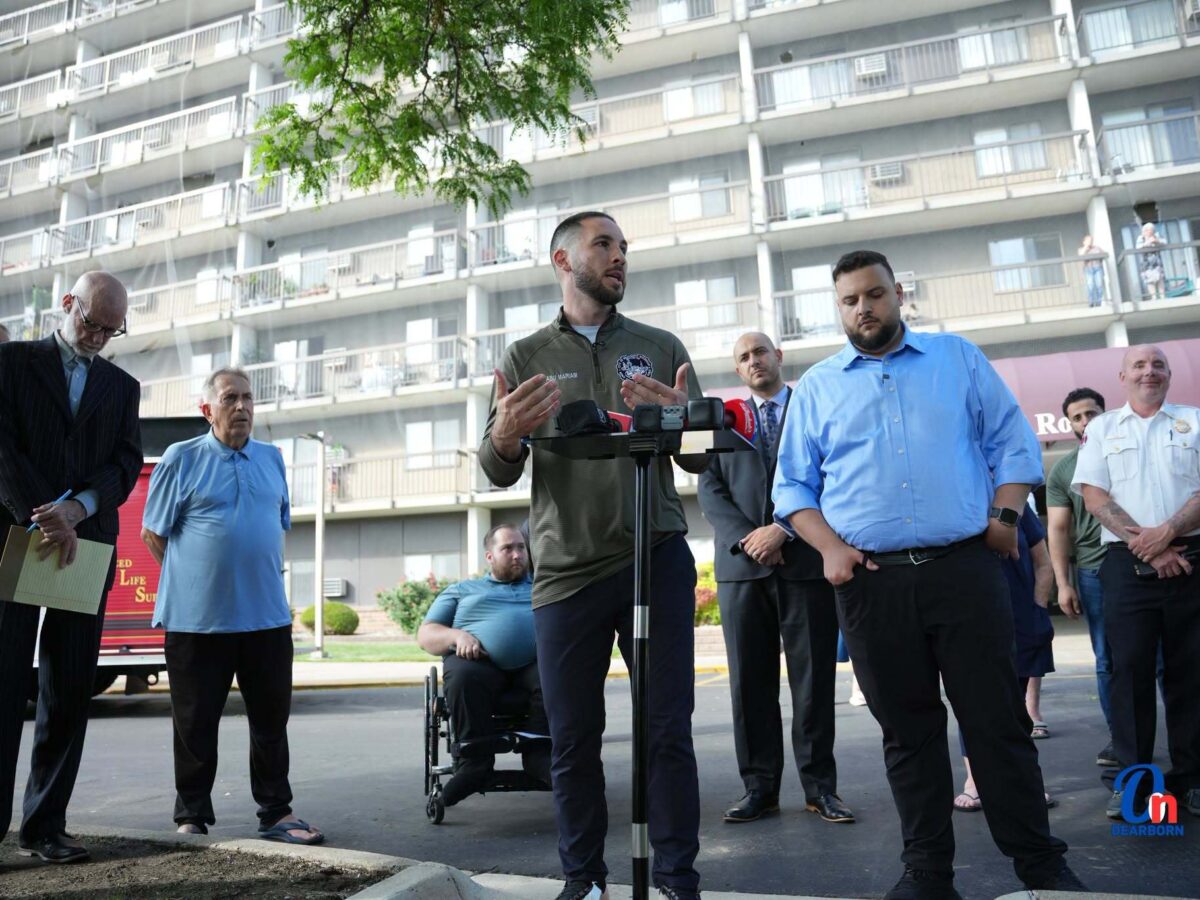
Blowback from latest DTE outage surfaces on midterm campaign trail
A July 4 weekend power outage affecting 400,000 DTE customers has intensified the political debate over utility accountability, with Senate candidates in Dearborn-area races calling for reforms.

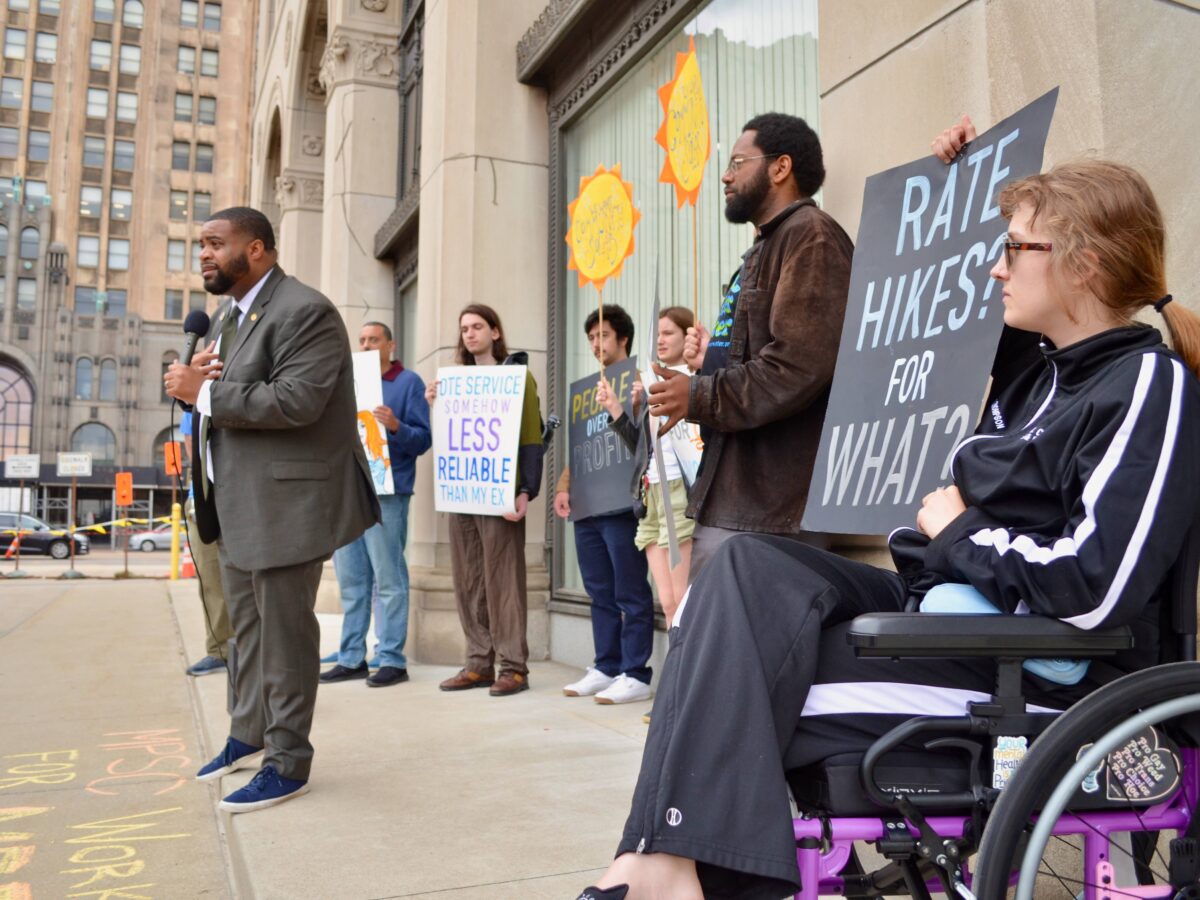
Guide: How Michigan’s process for setting DTE, Consumers rates factors into midterms
As utility rate hikes pile up and data centers add power demands, Michigan’s Public Service Commission faces growing pressure to balance infrastructure needs with affordability for Metro Detroit ratepayers.

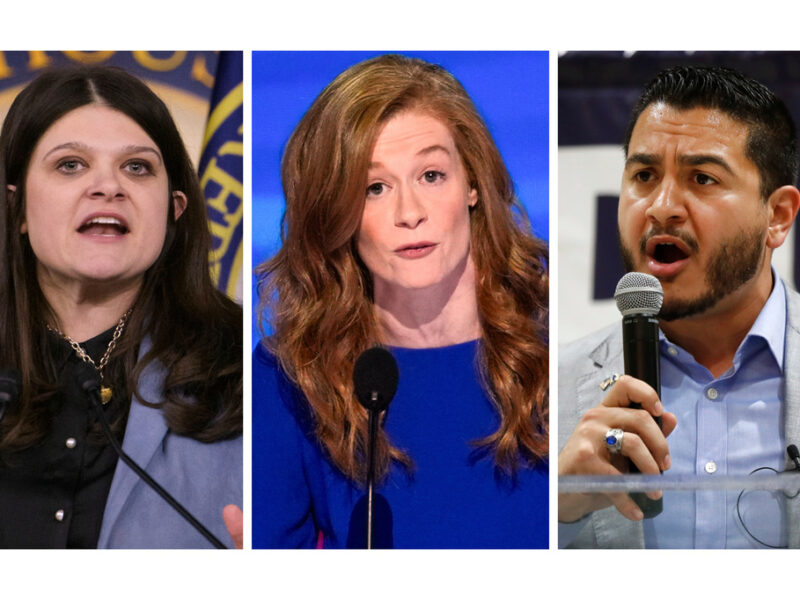
Why data centers are key issue in Michigan’s Democratic Senate primary
Candidates in the closely watched Senate race need to offer specific plans for addressing data centers, environmental advocates say.