


Overview:
- Detroit's air quality index reached 650 Thursday, the highest since monitoring began in 1999, surpassing 2023's Canadian wildfire smoke events.
- Metro Detroit hospitals report notable increases in emergency visits for asthma, COPD, and respiratory complaints as pollution exceeds.
- “Protecting respiratory health during periods of poor air quality is essential, and prompt medical evaluation can prevent serious complications,” says Trinity Health Livonia's Dr. Patricia Paz-Arabo.
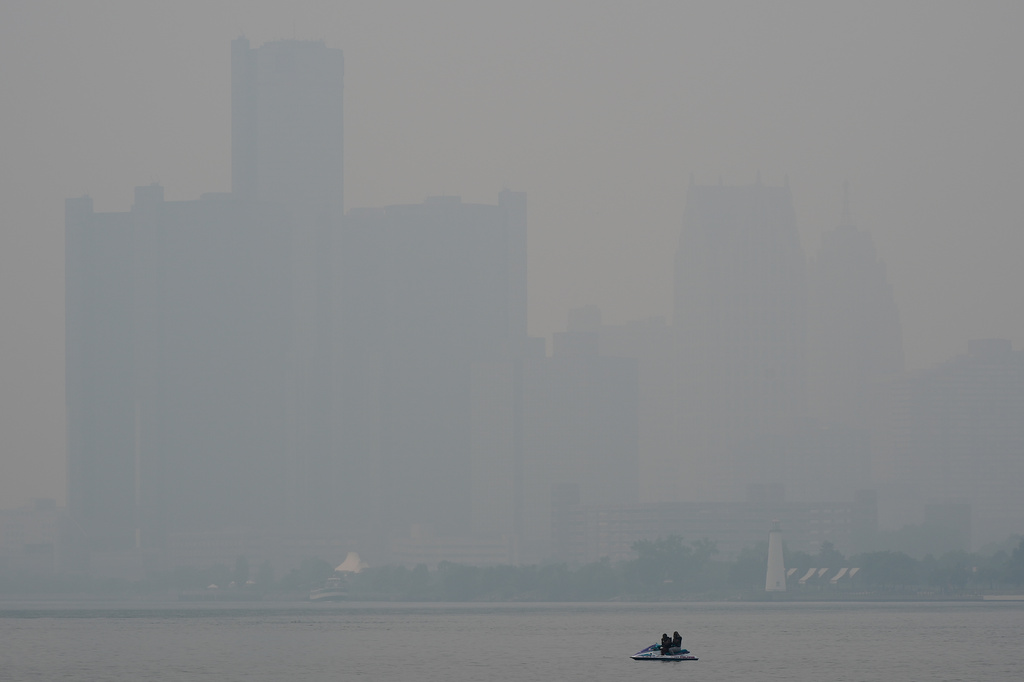
Detroit is experiencing its worst air quality Thursday since record-keeping began due to thick wildfire smoke.
🗳️ Civic Action Toolbox
Why it matters
Who's making public decisions
The Michigan Department of Environment, Great Lakes, and Energy is issuing guidance and monitoring the air quality crisis.
Upcoming Meetings
Civic Actions: What You Can Do
Organizations to Follow
What to watch for next
Watch for air quality updates and alerts from EGLE and the EPA as wildfires that affect Michigan air quality continue to burn.
Are you taking action? Let us know.
Civic resources compiled by Planet Detroit
Ontario wildfires flooded Michigan with smoke Wednesday, and hazardous levels of air pollution reached Detroit Wednesday night.
Short-term air quality index (AQI) values in Detroit reached 650 at a monitor in Southwest Detroit Thursday, according to the Environmental Protection Agency’s AirNow tool. A private air monitor at the Stoudamire Wellness Hub on the city’s east side showed an AQI of 874.
An AQI of 300 or more is considered hazardous, the scale’s highest category. AQI reporting for Detroit began in 1999. This week’s values are higher than any in the past, including during the influx of Canadian wildfire smoke in summer 2023, the EPA told Planet Detroit in a statement.
The Motor City’s air is the most polluted in the world Thursday, according to the website IQAir, which ranks AQI readings.
While the city opens cooling centers during heat emergencies, an equivalent solution for air quality has yet to be developed, said Dr. Jennifer Stevenson, an emergency department physician at Henry Ford Medical Center – Fairlane.
“Necessity is the mother of invention,” Stevenson said Thursday. “I’m going to bet that our leadership within the city of Detroit, who do a really amazing job of supporting our vulnerable populations, are going to have to start talking about opening good quality air resource centers.”
The poor air quality impacts people who are housing insecure and simply have no place to go, as well as community members who don’t have air conditioning at the place where they reside, she said.
In Detroit, recreation centers and public libraries are open during normal business hours. The city is distributing free face masks while supplies last during regular business hours at six locations. Find details at this link.
The combination of wildfire smoke, a heat wave, and power outages is evident in the emergency room, Stevenson said.
“We’ve seen people present to the ER today whose power went out; they had to open their windows; it exposed them to particulate matter; it exacerbated their asthma; and they presented to our ED for support.”
AQI may need to go beyond hazardous: Meteorologist
Maximum hourly concentrations for fine particulate matter, or PM2.5, have climbed above 400 micrograms per cubic meter (ug/m3) at many locations across the state.
Michigan’s previous highest maximum hourly values fell between 250 and 350 ug/m3 in 2023, said Josef Stephens, spokesperson for Michigan’s Department of Environment, Great Lakes, and Energy (EGLE).
EGLE Senior Meteorologist Jim Haywood told Planet Detroit the pollution that’s hit Michigan is not only the worst the state has seen, but it’s exceeded the AQI itself, which runs from zero to 500.
“We’re thinking we need to rework the AQI to go beyond hazardous,” he said, adding that the agency is pushing people to avoid the smoke as much as possible.
“Try to stay indoors where you’ve got good air conditioning and a good filtration system,” he said. “Right now, it’s just basically riding the storm out.”
Record-shattering pollution shows up in Metro Detroit emergency rooms
Corewell Health Beaumont Troy Hospital is seeing more patients with respiratory complaints, especially those with underlying lung diseases, said Dr. David Donaldson, the hospital’s emergency center chief.
Individuals with lung diseases such as asthma and COPD “should consider staying indoors and avoiding unnecessary outdoor exposure to help reduce the risk of symptom flare-ups,” he said.
Henry Ford’s Stevenson said the fundamentals of emergency medicine are the ABCs: airway, breathing, and circulation.
“These are the three aspects of our existence that absolutely have to be maintained and supported,” she said.
“I would recommend people have a really, really low threshold for coming to see us” for respiratory distress, the physician said.
“Don’t hesitate to call 911, for crying out loud. Respiratory difficulty — if you’re not breathing well, you’re not surviving well. This is something we absolutely cannot play with.”
Stevenson recommends wearing an N95 mask while outdoors in poor air quality.
Smoke effects not limited to people with respiratory conditions
At DMC Detroit Receiving Hospital’s emergency department, Dr. Tanaz Salimnia said there’s a rise in upper respiratory complaints. Her colleagues at DMC Harper University Hospital and Karmanos Cancer Institute are reporting the same.
“This is being amplified by the combination of the heat, humidity, and now the smoke from the wildfires,” said Salimnia, a DMC pulmonologist and critical care medicine physician.
“I have also had an increase in the number of patients in my pulmonary clinic who have asthma or COPD noting they need to use their inhalers more frequently.”
The complaints aren’t only from patients with underlying lung and heart issues, she said.
“We have otherwise young, healthy individuals who are noticing they have a cough, eye and nasal irritation, and overall a more difficult time breathing.”
The DMC physician advises staying inside with an air filter running if possible, and seeking out one of Metro Detroit’s cooling centers to get away from heat and smoke.
“If you cannot stay inside, wear a mask to at least reduce the smoke inhalation. Most importantly, do not hesitate to reach out to your doctor if you feel that your breathing is not getting back to baseline,” Salimnia said.
4 symptoms to watch
At Trinity Health Livonia, the emergency department is experiencing a “notable increase” in visits for COPD exacerbations and asthma over the last 24 hours, said Dr. Patricia Paz-Arabo, chair of emergency medicine.
Residents should seek immediate medical attention if they experience any of the following symptoms, Paz-Arabo said:
• Persistent or worsening cough.
• Difficulty breathing or shortness of breath.
• Chest pain or tightness.
• Worsening symptoms of any chronic respiratory condition.
“Protecting respiratory health during periods of poor air quality is essential, and prompt medical evaluation can prevent serious complications,” she said.
When will Detroit get a break from the smoke?
EGLE extended a statewide air quality alert into Friday, predicting fine particulate matter levels will be in the AQI’s hazardous range.
The intense smoke is due to the number and size of the fires and their proximity to Michigan in a part of Ontario just north of Minnesota, EGLE’s Haywood said in a Thursday forecast.
A front that moved through the region Wednesday trapped and dragged smoke southward, he added.
The best smoke model used by EGLE predicts 48 hours out, and it shows improvements on Saturday, Haywood said.
Tom Kines, senior meteorologist for AccuWeather, said forecasting smoke is difficult because of the nature of fire activity: fires start, grow, or diminish rapidly.
Along with the smoke, Southeast Michigan continues to experience high temperatures.
The National Weather Service Detroit/Pontiac office forecasts a maximum heat index of 92 F in Detroit Friday.
Accuweather’s Kines said wildfire smoke should slightly reduce the temperatures that would otherwise occur, Kines said.
Showers on Saturday and winds coming directly from the north on Sunday could help reduce smoke levels in Michigan, but this relief could be temporary, he said.
EGLE’s Haywood said he usually looks for winds from the northwest to clear out bad air in Michigan — but that’s where the smoke is coming from.
Mike Flannigan, a wildfire expert and professor at Thompson Rivers University in Kamloops, British Columbia, told Planet Detroit Wednesday that Michigan is likely to breathe wildfire smoke from the Ontario fires all summer.
“How much smoke you see will depend on the wind direction,” he said.
Metro Detroit meteorologist and weather consultant Paul Gross underlined the connection between wildfire and climate change.
“By increasing the favorable conditions for wildfires, we are seeing increased chances for that smoke to impact us here,” he said.
Editor’s note: This story has been updated to correct the name of the EPA’s online air quality tool: AirNow.
MORE AIR QUALITY COVERAGE
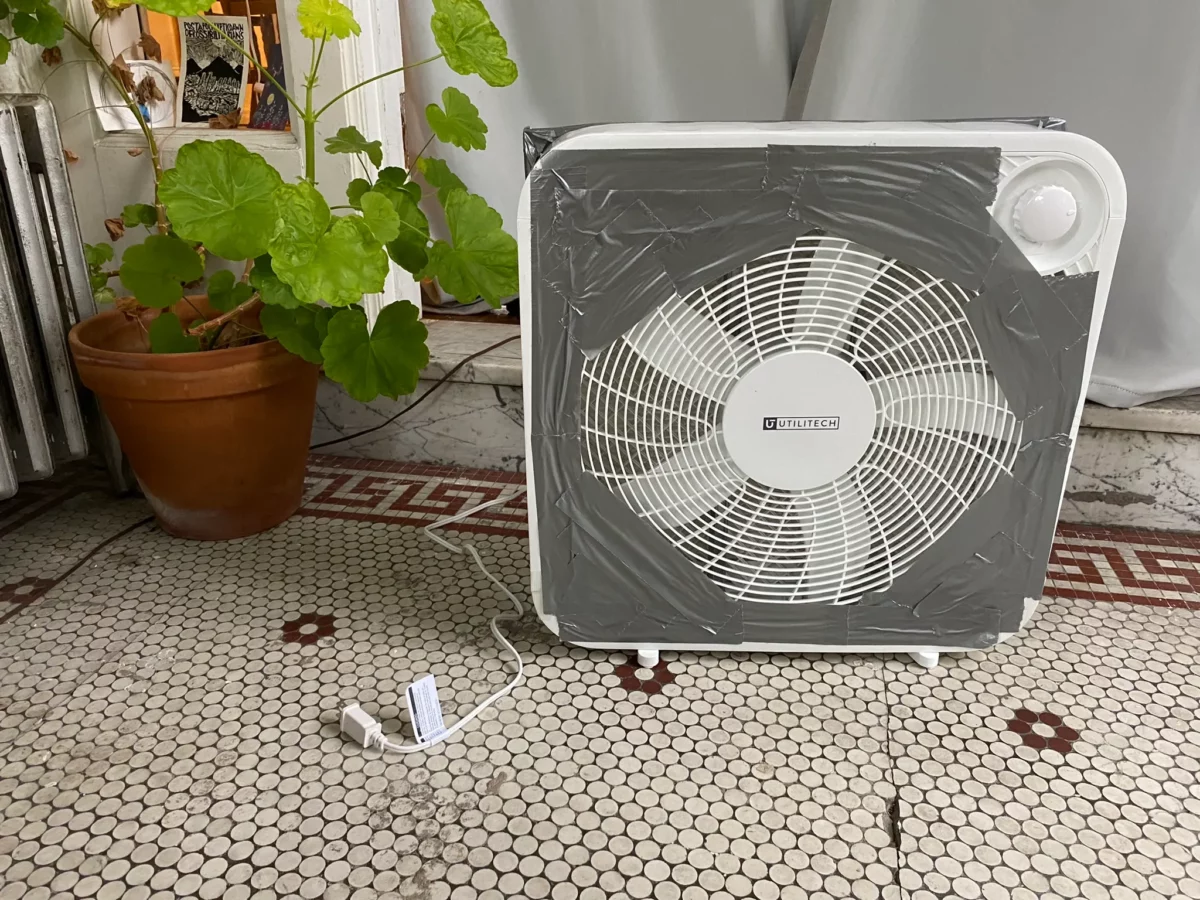
Wildfire smoke is back in Detroit. A cheap, DIY air purifier can help
As Canadian wildfire smoke returns to Detroit, a simple $40 DIY air purifier made from a box fan and furnace filter can help protect your lungs. Here’s how to build one.

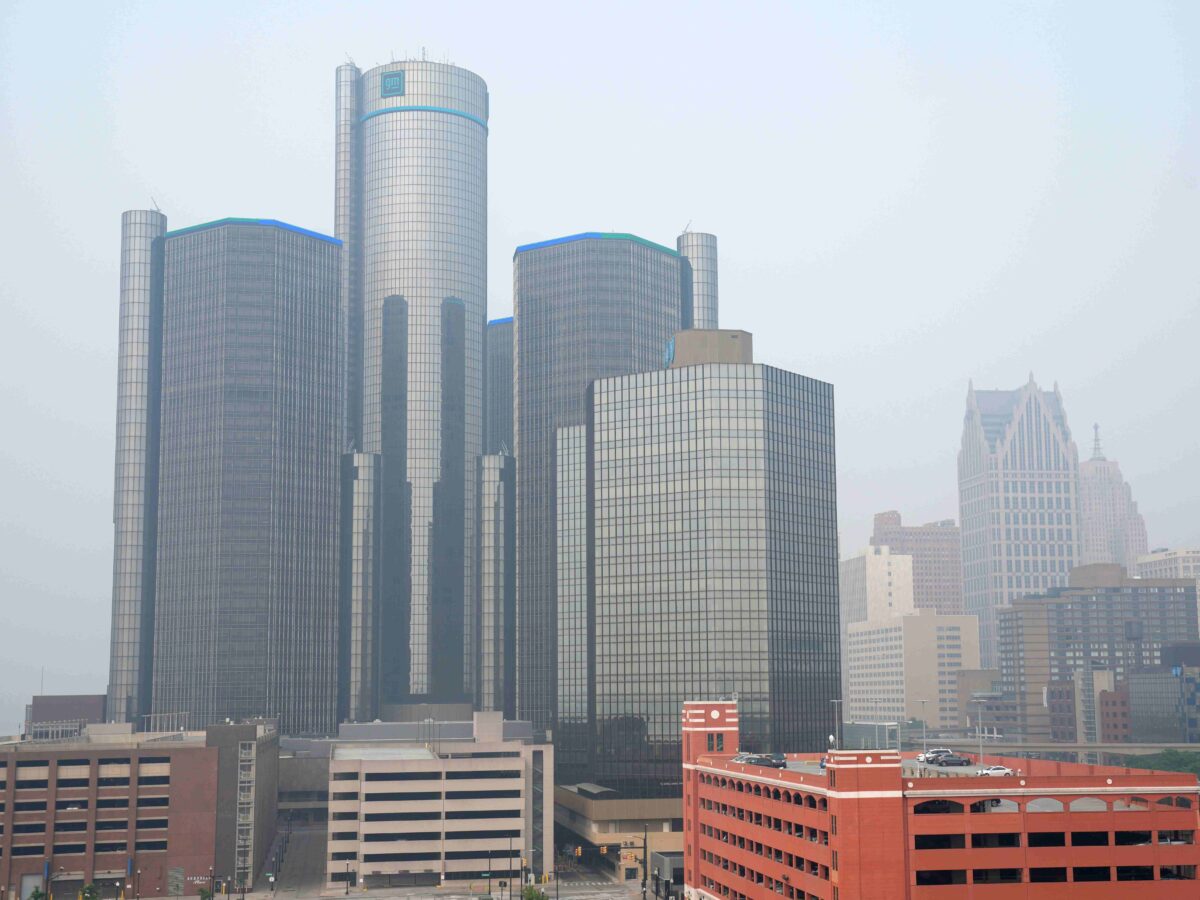
What to do when Detroit air is polluted with wildfire smoke
As wildfire smoke drifts across borders, its health impacts are felt unevenly. Vulnerable groups like those with chronic conditions, pregnant women, children, and first responders face heightened risks.

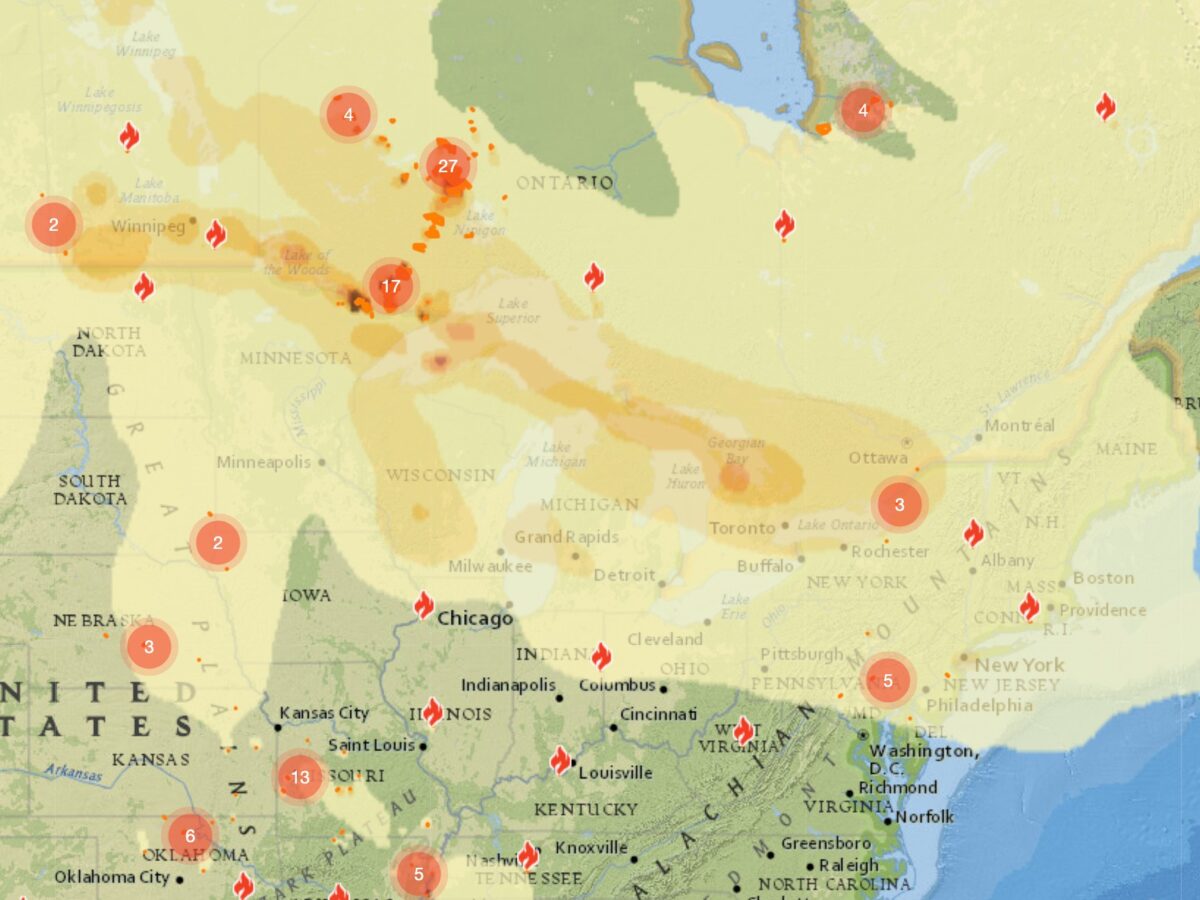
Detroit faces toxic smoke from Ontario wildfires on top of heat
Canadian wildfire smoke is likely to reach Metro Detroit late Wednesday, compounding health risks for vulnerable residents.