

Overview:
- Michigan faces an air quality alert through at least Thursday as smoke from Ontario wildfires reaches the state.
- The smoke arrives during a heat wave, compounding health risks for vulnerable residents including older adults, children, and people with respiratory conditions.
- Experts recommend staying indoors, using N-95 masks outside, and monitoring symptoms closely for both heat illness and air pollution effects.
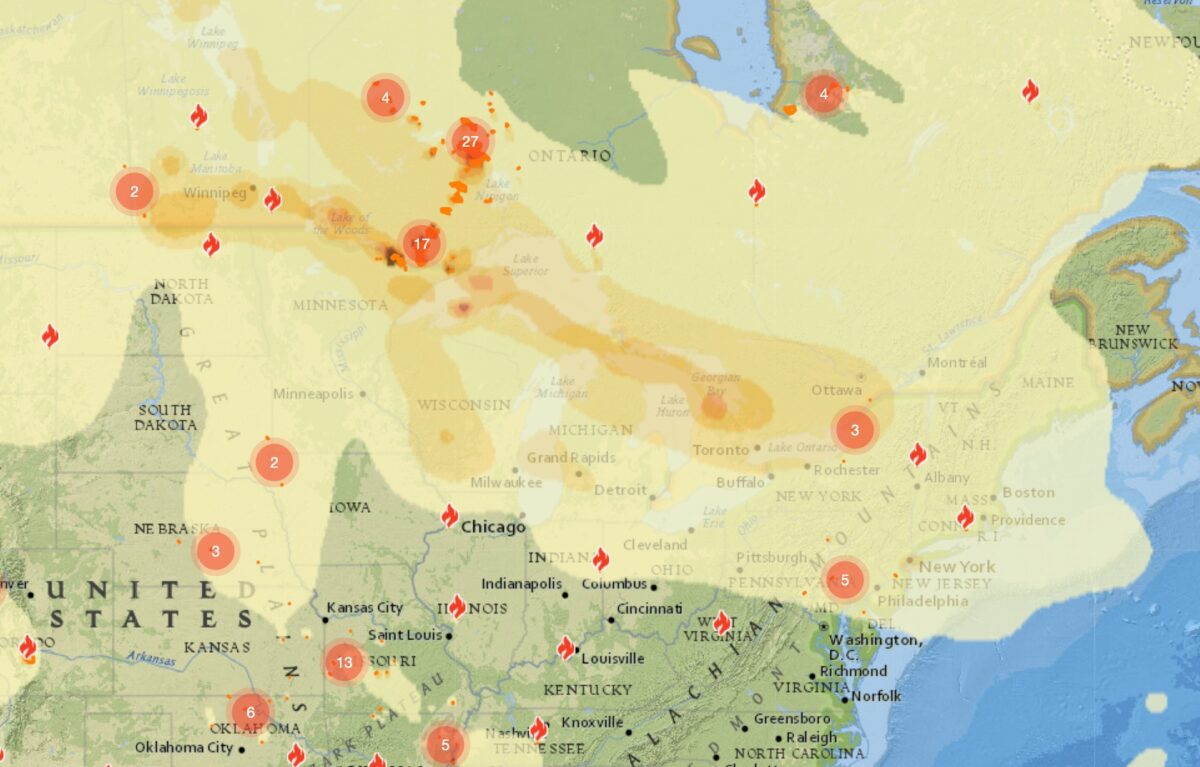
Michigan is under a statewide air quality alert as smoke from Canadian wildfires near Lake Superior moves into the southern Lower Peninsula and Metro Detroit, adding to the misery of a heat wave.
🗳️ Civic Action Toolbox
Why it matters
Dangerous wildfire smoke combined with extreme heat threatens residents’ health, particularly those with asthma, heart disease, or COPD.
Who's making public decisions
The Michigan Department of Environment, Great Lakes, and Energy issues statewide air quality alerts and provides protective health guidance to residents.
Upcoming Meetings
Civic Actions: What You Can Do
Organizations to Follow
What to watch for next
Monitor whether EGLE extends the statewide air quality alert beyond Thursday into Friday as meteorologists predict continued smoke from Canadian wildfires.
Are you taking action? Let us know.
Civic resources compiled by Planet Detroit
A state air quality monitor near Marquette in the Upper Peninsula registered an air quality index of 955 Wednesday evening. The Environmental Protection Agency’s air quality index identifies levels above 300 as hazardous — the scale’s highest category.
Michigan regulators issued the statewide air quality alert for Wednesday, July 15 and Thursday, July 16 as Canadian wildfires near Lake Superior began to blanket the state with smoke.
Air quality index values in the northern Lower Peninsula were registering more than 700 in some locations Wednesday night, according to private PurpleAir monitors.
On Thursday, state meteorologists expect AQI values ranging from very unhealthy (purple) in the Upper Peninsula to unhealthy (red) in the rest of the state. Some hourly readings could reach the hazardous (maroon) level.
Models show the Canadian wildfire smoke will reach the Michigan-Indiana border by Wednesday night, Michigan Department of Environment, Great Lakes, and Energy (EGLE) meteorologist Stephanie Hengesbach said in an email.
EGLE Senior Meteorologist Jim Haywood said a weak weather front will move south through Michigan on Wednesday, bringing the possibility of thunderstorms and dragging more smoke into the southern Lower Peninsula.
The persistent and aggressive nature of the Canadian wildfires means there’s a good chance the statewide air quality alert could extend into Friday, Haywood said in a forecast issued Wednesday.
Michigan could see wildfire smoke for months: Expert
The smoke comes as Southeastern Michigan is under a heat advisory. A maximum heat index of 107 degrees Fahrenheit is expected in Detroit on Wednesday, according to the National Weather Service (NWS) Detroit/Pontiac office.
The NWS forecast calls for actual temperatures to cool slightly this week, falling from highs of 100 F Wednesday to a high of 92 F Thursday and 90 F Friday in the city.
Michigan is likely to breathe wildfire smoke from the Minnesota and Ontario fires all summer, said Mike Flannigan, a wildfire expert and professor at Thompson Rivers University in Kamloops, British Columbia.
“How much smoke you see will depend on the wind direction,” he said.
Roughly 205,000 acres have burned in Ontario this year, according to the Canadian Interagency Forest Fire Centre.
Flannigan said this number is too low, and estimates the actual acreage is at least 400,000 hectares, or roughly 1 million acres.
Most of Ontario’s fires are north of Lake Superior.
In Minnesota, 44,200 acres have burned, KSTP-TV reported Wednesday.
Human-caused climate change is leading to an increase in heat waves, drought, and fire weather, according to a 2021 report by the Intergovernmental Panel on Climate Change.
Wildfires helped drive a reversal of air quality gains made in the U.S. following the passage of the Clean Air Act of the 1970s, according to Stanford University research published in 2023.
In Michigan, some two dozen Detroit residents may have died because of 2023’s Canadian wildfire smoke, according to estimates from a Cornell University study.
Protect yourself from heat, smoke
Most people vulnerable to air pollution are also susceptible to extreme heat, said Kindra Weid, a registered nurse at Chelsea Hospital. Both serve as threat multipliers for conditions like heart disease, asthma, and COPD, she said.
Older adults, children, outdoor workers, and pregnant people are most vulnerable, but extremely poor air quality could impact everyone, she said.
Michigan’s ongoing cyclosporiasis outbreak could add to the extreme heat risk.
“Someone who’s already fighting a foodborne illness is going to be dehydrated and at a greater risk for the impacts of the heat,” Weid said.
She encourages people to check for air quality updates at airnow.gov, and for those with known asthma or respiratory conditions to have their rescue inhaler on hand and avoid being outside when pollution levels are high.
“Make sure that you’re monitoring your symptoms really closely and don’t let them get out of hand before you seek emergency care,” Weid said.
Wildfire smoke contains large amounts of fine particulate matter, or PM2.5, which is 30 times smaller than a human hair, allowing it to lodge itself in lung cells and move into the bloodstream. PM2.5 is associated with cardiopulmonary illnesses, premature mortality, and mental health issues.
Signs of heat-related illnesses can include sweating heavily, pale or clammy skin, a fast pulse, nausea, muscle cramps, dizziness, and blurred vision, she said
Weid advises people with these symptoms to move to a cooler place immediately and drink water. If you’re vomiting or experiencing symptoms of heat stroke, seek immediate medical care, she said.
EGLE recommends that when the air quality is poor, individuals stay inside as much as possible, run forced air systems on “fan” or “cooling” modes and window units on “recirculate,” and wear an N-95 mask outside, according to the agency’s wildfire smoke webpage.
The EPA provides instructions for making a do-it-yourself air filter with a box fan and furnace filters on this webpage.
Additional resources are available in Planet Detroit’s guide for dealing with wildfire smoke.
MORE AIR QUALITY NEWS
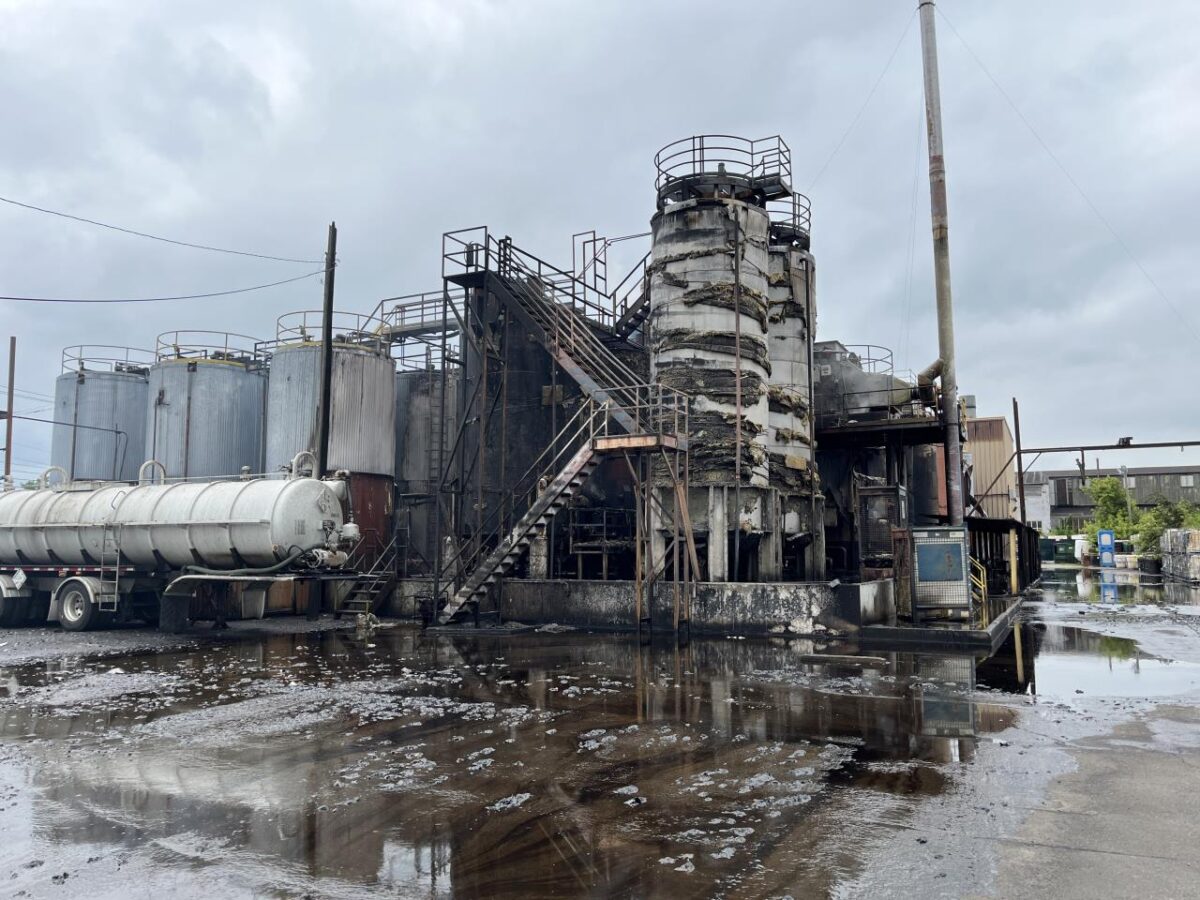
Detroit oil waste facility seeks approval to reopen, expand after fire: Residents protest ‘noxious fumes’
A Detroit oil recycling facility that caught fire in 2025 is seeking city and state approval to reopen and expand, despite a 13-year history of odor complaints and air quality violations that have affected nearby residents.

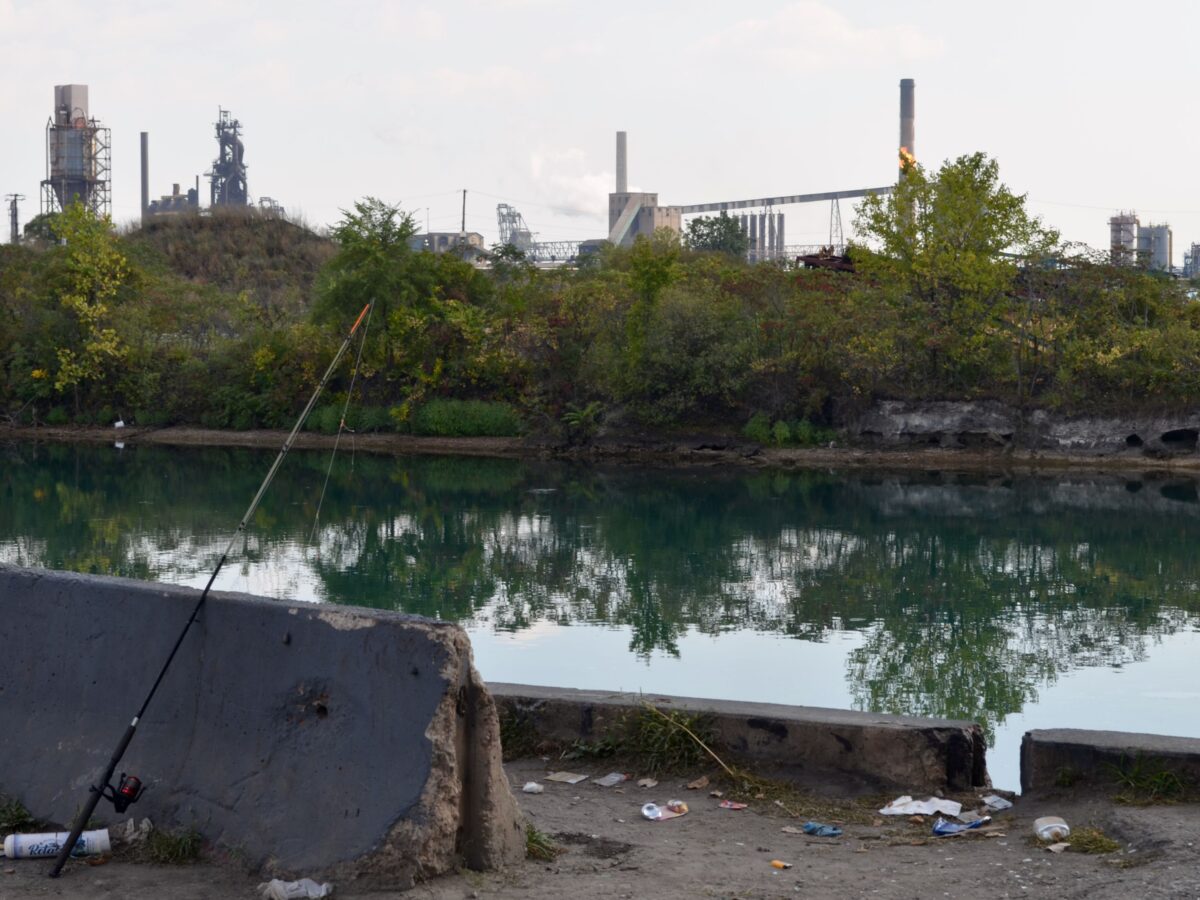
Guide: What cumulative impact legislation would mean for Michigan communities
Michigan environmental advocates have pushed for years for legislation to address cumulative impacts in overburdened communities like Southwest Detroit, where residents are affected by pollution from multiple major polluters, smaller operations, and mobile emissions sources.


How Detroit’s East Canfield Art Park merges public art, health data
Sculpture at East Canfield Art Park on Detroit’s east side embeds air quality monitors in public art, providing real-time environmental data for a community living near industrial facilities.