

Overview:
- Nearly 400,000 DTE customers lost power during July 4 weekend storms, with some facing five days for restoration after winds topped 60 mph across Metro Detroit.
- Customers without power for 96-plus hours in this 'catastrophic' storm automatically receive $42 per day in bill credits, while DTE seeks a $474-million rate increase
- A 2024 state audit found DTE's grid lags peers in reliability, though the utility reports improvements.
The storms that tore through Southeast Michigan on the evening of Friday, July 3 knocked out power to roughly half a million utility customers statewide over the holiday weekend, affecting nearly 400,000 DTE Energy customers.
Winds topped 60 mph. Downed trees crushed lines across Detroit, Allen Park, Garden City, Wayne, Westland, Dearborn, Madison Heights, Warren, the Grosse Pointes, and elsewhere. Detroit Mayor Mary Sheffield activated city departments to clear trees and check on vulnerable residents. Dearborn handed out dry ice. The Detroit Zoo closed.
As of Tuesday, 23,490 DTE customers are still in the dark. The utility said some customers will not have power restoration until late Wednesday, five days after the lights went out. All of this came on the heels of four days of extreme heat.
🗳️ Civic Action Toolbox
Why it matters
Metro Detroit residents are paying higher electric bills while facing multi-day power outages during extreme weather, with spoiled food, lost wages, and safety risks that far exceed the $42-per-day automatic credits.
Who's making public decisions
The Michigan Public Service Commission is reviewing DTE’s $474.3 million rate increase request, with a decision expected in early 2027. It’s also overseeing tracking of performance metrics that will feed a financial incentive and penalty mechanism for DTE beginning in 2027. Utilities could face penalties of up to $10 million for missing reliability targets.
Upcoming Meetings
Contact Your Representatives
Civic Actions: What You Can Do
Organizations to Follow
What to watch for next
The MPSC’s early 2027 decision on DTE’s $474.3 million rate-hike request, which includes costs tied to serving large data centers and could significantly increase monthly bills. Also watch the MPSC’s tracking of DTE’s reliability metrics.
Are you taking action? Let us know.
Civic resources compiled by Planet Detroit
If this feels familiar, that’s because it is. Here’s what to know about DTE’s outages, its reliability record, and the money and regulatory fights behind both.
1. This week’s outage was one of the largest since the 2023 ice storms
DTE reported 264,840 customers without power by 7:45 p.m. Friday, and the number climbed past 320,000 by 9 p.m.
The utility said it restored about one-third of affected customers overnight and set a target of 95% restoration by Monday — meaning tens of thousands of households spent the holiday weekend, in July heat, without refrigeration or air conditioning.
DTE blamed downed trees, and a spokesperson said the week’s extreme heat played no role in the storm outages.
But heat had already been breaking DTE’s equipment days earlier. Starting the afternoon of June 30, more than 5,000 customers in Warren lost power after substation equipment failed.
DTE’s director of electric distribution operations attributed the outage to a combination of heat and high usage, with some residents waiting until midday the next day for restoration. Roughly 2,000 DTE customers were still out when Friday’s storms hit.
2. You might be owed money — but only after four days in the dark this time
If your power was out this weekend, a bill credit of $42 per day should appear automatically on your DTE bill within one to two billing cycles. You don’t have to apply.
Here’s the catch. Because this storm knocked out more than 10% of DTE’s roughly 2.3 million customers, it qualifies as a “catastrophic” event under the Michigan Public Service Commission’s service quality rules.
That means the credit doesn’t kick in until you’ve been without power for 96 hours, or four full days. In smaller “gray sky” storms the threshold is 48 hours, and in normal conditions it’s 16 hours. Customers who experience more than six sustained outages in a 12-month period also qualify.
The MPSC made the credits automatic in 2023; before that, customers had to request a one-time $25 payment. The credit was raised to $42 per day in October 2025.
Michigan utility customers received $8.4 million in outage credits in 2024, seven times as much as they received in 2022.
Consumer advocates say that $42 doesn’t come close to covering a refrigerator full of spoiled food, lost wages, or a hotel room. A proposed “Ratepayer Bill of Rights” in the Legislature would pay $5 per hour during outages, rising to $25 per hour after 72 hours.
3. A state audit found DTE’s grid lags peers in reliability
In October 2022, after storms left nearly 500,000 customers without power and a downed DTE wire killed a 14-year-old, the MPSC ordered the first-ever comprehensive third-party audit of DTE Electric and Consumers Energy.
The findings, released in September 2024, documented below-average service and slow restoration times compared with Midwest peers.
In June 2025, the commission ordered both utilities to act on 75 recommendations, embedding them in future rate cases and distribution plans. It also required DTE to track a new metric: customers experiencing long-duration interruptions.
Michigan had the worst average power restoration times in the country in 2023, according to a Citizens Utility Board analysis.
4. DTE says reliability is improving
DTE calls 2025 its most reliable year in nearly two decades, citing a 60% reduction in time customers spent without power, on top of a nearly 70% improvement in 2024.
The MPSC largely backs this up: between 2019 and 2024, Michigan cut more outage minutes per customer than any other state, according to federal data.
Two caveats. First, DTE itself acknowledged that part of the 2024 improvement came from milder weather, not just grid work. Weather-driven metrics can swing back fast, as several hundred thousand customers learned this weekend.
Second, the improvements come after what regulators describe as decades of poor performance. Tree contact remains the single largest cause of outages in Michigan. The MPSC ordered DTE to maintain a five-year tree-trimming cycle in its latest rate case after the utility sought a longer one, authorizing up to $20 million to catch up on circuits where trimming had fallen behind.
Starting this year, the MPSC is tracking performance metrics that will feed a financial incentive-and-penalty mechanism for DTE beginning in 2027. Utilities could face penalties of up to $10 million for missing reliability targets. The Michigan League of Conservation Voters has called this a drop in the bucket for a company that reported $1.5 billion in profit in 2025.
5. Climate change is making destructive storms more likely
Four days of 97-degree heat preceded last week’s storms. Extreme heat is what DTE’s operations director blamed for the Warren substation failure, and it’s the event type scientists link to warming with the most confidence.
No individual thunderstorm can be attributed to climate change, and severe local storms are among the hardest events to connect to warming at all. A National Academies of Sciences report on extreme event attribution puts heat waves at the top of the confidence scale and convective storms like thunderstorms, derechos, and tornadoes near the bottom, because they’re small, short-lived, and hard to capture in climate models.
Science says the odds are shifting. The Great Lakes region has warmed 2.3 degrees Fahrenheit since 1951, rain falling in the heaviest storms increased 42% in the Midwest between 1958 and 2016, and researchers project more intense storms and wind damage in the region this century.
Roughly 80% of major U.S. power outages are weather-related, and that share is rising. So while we can’t say whether climate change caused this storm, it’s worth asking whether DTE’s grid is being hardened fast enough for the weather that’s coming.
6. Your rates went up in March. DTE is already asking for more
The MPSC approved a $242.4-million rate increase for DTE Electric in February, adding $4.93 a month to a typical residential bill starting March 5. The commission cut DTE’s original $574-million request by 58%, disallowing $63.7 million in proposed projects and $31.2 million tied to the former Trenton Channel coal plant, and it rejected DTE’s request to raise its shareholder return from 9.9% to 10.75%. Attorney General Dana Nessel, who intervened in the case, said her office has flagged “inappropriate costs” in recent utility rate requests, including private jet travel for executives.
Five days after that approval, DTE filed notice that it would seek another increase. The new case, filed in late April, asks for $474.3 million. It’s one of the largest requests in company history. The request is paired with a pledge to freeze rates for two years if certain large customer projects come online.
Nessel called the back-to-back filings astonishing and pledged to intervene again. Since 2020, the MPSC has approved more than $1 billion in annual revenue increases for DTE. A decision on the new request is expected in early 2027. A bill pending in Lansing would force utilities to wait at least three years between rate cases.
7. Data centers are now part of the rate story
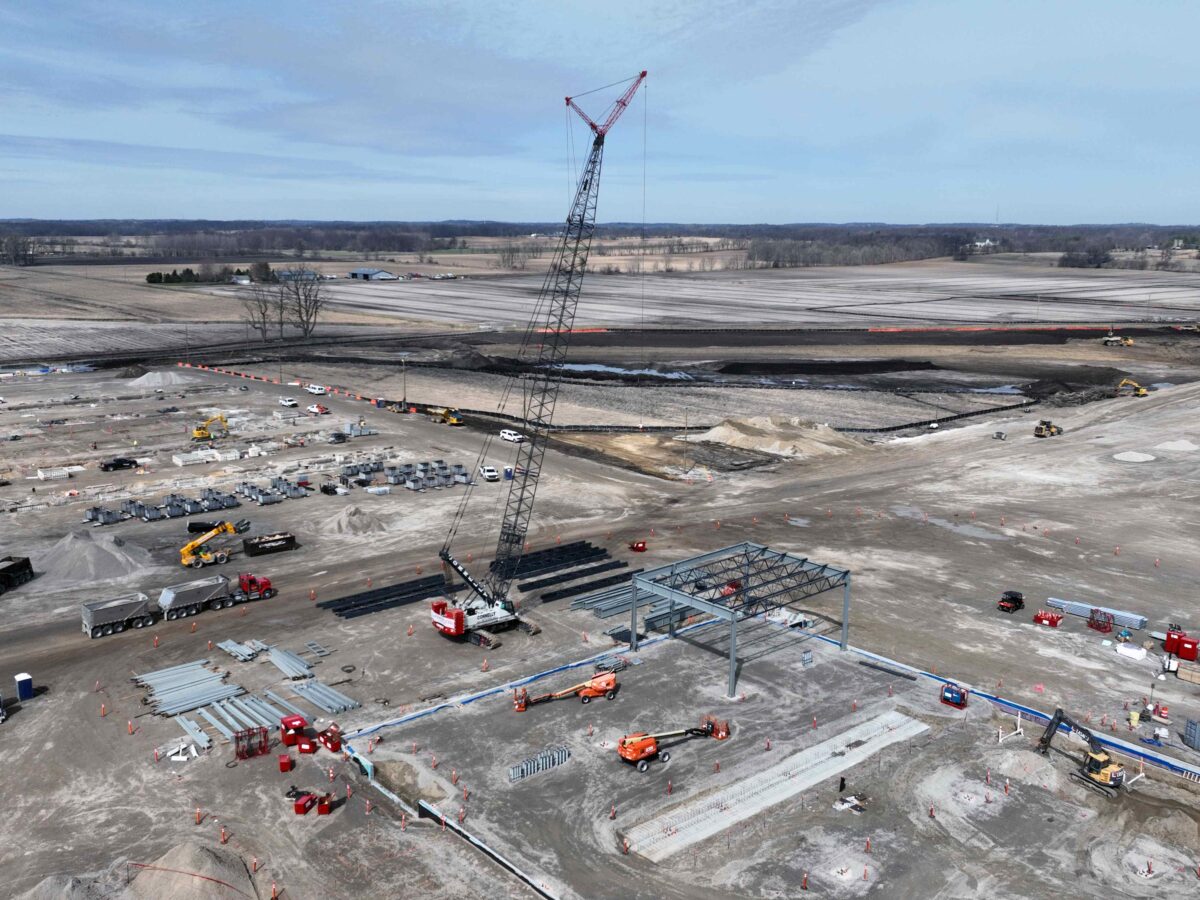
DTE has tied its latest rate request, in part, to serving new, large customers — most prominently the 1.4-gigawatt Oracle and OpenAI hyperscale data center under construction in Washtenaw County’s Saline Township.
The MPSC conditionally approved DTE’s special contract for the project with what it calls the nation’s strongest ratepayer protections: DTE agreed that other customers won’t pay any costs it can’t recover from the data center, and the facility’s load must be cut before any other customers’ during an energy emergency.
Whether those protections hold is one of the bigger questions hanging over Michigan energy regulation right now. Data center demand is the main driver behind DTE’s plan to spend $30 billion between 2026 and 2030. That’s a 25% jump over its previous five-year plan.
Editor’s note: This story has been updated to reflect that a total of almost 400,000 DTE Energy customers lost power, and to include the number of outages remaining as of Tuesday afternoon.
MORE DTE REPORTING

How to save money on your DTE bill during Michigan heat waves
DTE Energy charges higher electricity rates from 3-7 p.m. on weekdays during summer months. Here’s how Metro Detroit residents can lower their bills during heat waves by shifting energy use to off-peak hours.


Michigan environmental news: DTE ties future rate freeze to data centers
DTE Energy proposes a 7.6% rate increase but promised a two-year freeze if Oracle and Google data centers deliver revenue. Plus: Detroit Riverwalk reopens, toxic dirt scandal expands, and Michigan faces surge in Lyme disease cases.

DTE offers 2-year rate hike freeze if Saline data center opens on time: Nessel calls it ‘ransom note’
DTE Energy files for a $474-million rate hike, offers to pause increases for two years if rate case has “constructive’ outcome and Saline data center opens by target date.