

Overview:
- Noojimo'waning (The Place of Healing) is Detroit's first Land Back project, returning five lots in Poletown East to Anishinaabe stewardship for native meadow restoration and cultural programming.
- Detroit is the Third Sacred Stopping Spot of the Anishinaabek Nation.
- Land steward Hadassah GreenSky Meshekey founded The Flicker Exchange collective and partnered with Arboretum Detroit to restore ecological balance through Indigenous land-based learning.
Hadassah GreenSky Meshekey nindizhinikaaz. Mishiikehn ndodem gaye mukwa ndodem. Waawiyaatanong ndoojinbaa. Waganasking Odawa gaye Nagaajiwanaang Ojibwe gaye Bodewademi agokwe ndaw.
My people, the Anishinaabek, were led to the area, known as Detroit/Windsor, by a prophecy. They were told they’d return to their homelands when they found the food that grows on the water.
The river then was perhaps only 4-8 feet deep and 10 feet across. Instead of corrugated steel, rocky edges and a fast-moving river, the water would trickle through the feathered edges of the Curved Shores.
Here we found the aquatic grass seed that would later become our state’s grain and the staple of Anishinaabek diet: manoomin, or wild rice, the food that grows on the water.
Detroit sits on Anishinaabek land, but most importantly, on a place of prophecy. We call it the Third Sacred Stopping Spot of the Anishinaabek Nation. It was here that the Three Fires Confederacy was determined. Our people needed to maintain the cultural integrity and lifeways of our Nation, so we created three roles. They are Ojibwe, Keepers of the Knowledge; Odawa, Keepers of the Trade Routes; and Bodewademi, Keepers of the Fire.
When the French arrived at the Curved Shores, they called the area “at the straits,” or “dé troit.” From their arrival onward, genocide of my people quickly became commonplace. Treaties were constantly broken through both French and later British occupation.
I am a living descendant of those who walked before me, surviving genocide, land theft, Indian residential boarding schools, language, and culture loss.
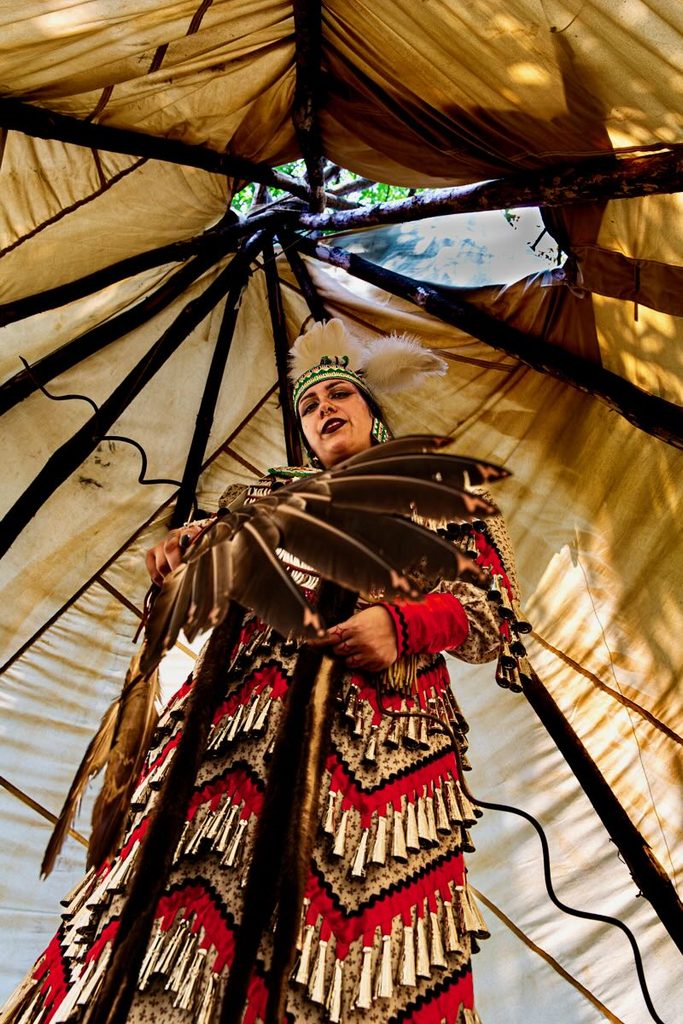
My existence was not supposed to happen. We were supposed to be a conquered nation. We were supposed to be exterminated. Records of the true foundations of America were to be recycled into stories of patriotism and Manifest Destiny. Yet here I am, living in a city they called Detroit, walking where my ancestors once walked.
In our language there is a concept called Akinomaagewin, which means “learning from the land you are on.” It involves deep listening to signs around you through observation of cycles over time. This concept is how I have led for the last year-and-a-half as a land steward for Detroit’s first Land Back project, Noojimo’waning.
Land Back is return of land taken through genocide, land theft, and manipulative tax laws to Indigenous stewardship, to build a world rooted in values of interspecies responsibility and balance. For Detroit, this means “Anishinaabe lands back into Anishinaabe hands.”
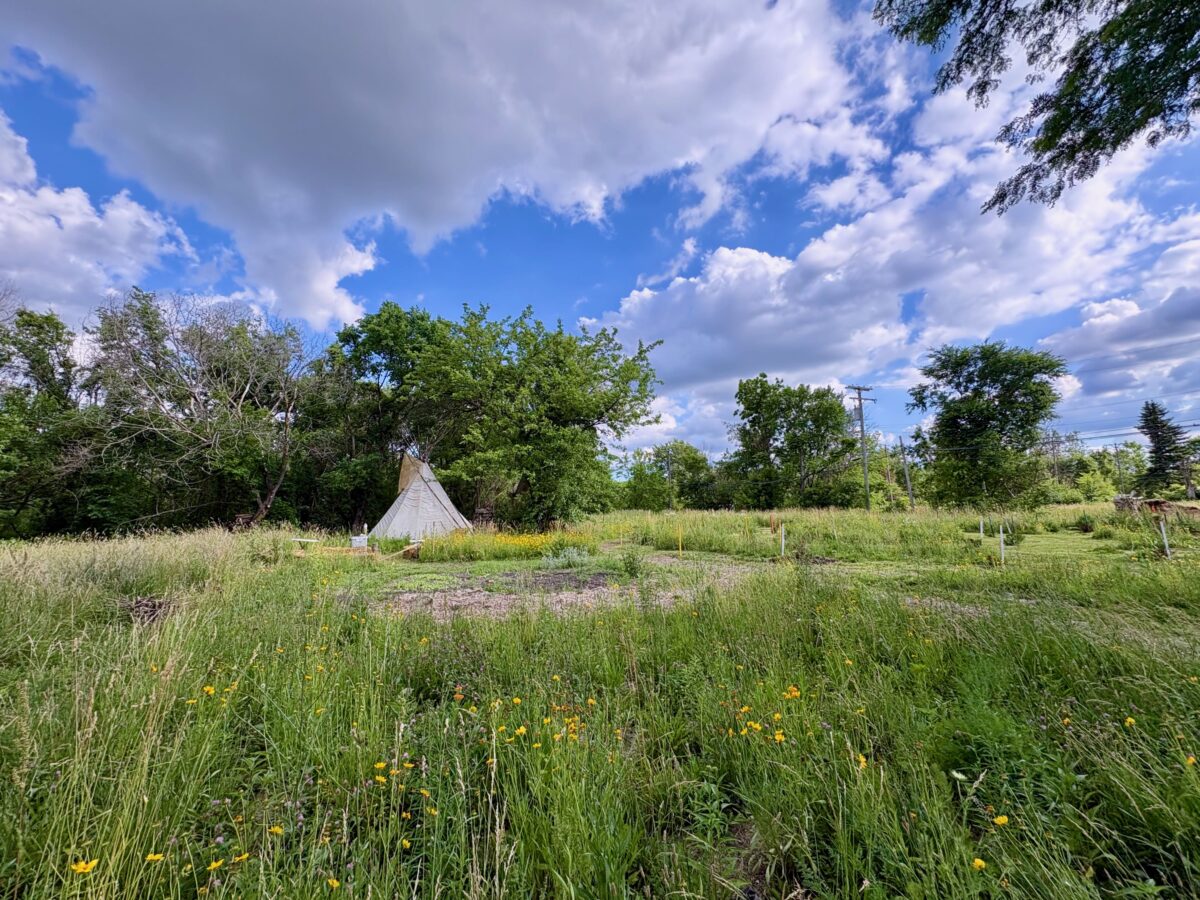
Nestled in Poletown’s Arboretum Detroit, Noojimo’waning, Anishinaabemowin for “The Place of Healing,” was established as an expansion of the Arboretum’s mission of ecological restoration.
The land, made up of five city lots, sits alongside the historic upper banks of the Bloody Run. It serves as the land base for The Flicker Exchange, a collective I founded to support the flow of goods and culture along the modern day trade routes where colonization has intentionally kept Indigenous people separated.
It began in 2024, when I was approached by Arboretum Detroit to begin discussions on tangible Land Back in Detroit. By 2025, we had partnered, held community work days to clear the land of debris, and began to listen to the desires of the land herself.
Today, the land has a native meadow restoration project with walking paths around a circle of trees; giant sequoias in a 66-foot diameter circle, and white cedars in a 33-foot diameter circle. The land also contains a circular garden where we’ve grown corn, beans, tobacco, and ground cherries.
We also raised funds for a 22-foot tipi and held many community gatherings, workshops, and work days. We have future plans to include ceremonial space for Native community, eco-art installations, an herbal clinic, and continued programming.
Land Back isn’t just to benefit Indigenous people. It’s for everyone. The return of land and waterways to Indigenous people isn’t about property (though property law plays a role). It’s about returning land to itself.
Indigenous people are extensions of the natural world, just like all humans are. My people have been in relationship with the plants, animals, and landscape around the area known as Detroit for thousands of years.
Our people maintained these interdependent relationships because we knew there is no distinction between human and natural life. Recent disasters caused by human-driven climate change, threats to clean drinking water, and the imbalances caused by logging and negligent forestry tell us that our survival still depends on these relationships.
Land Back is the integration of non-indigenous people, cultures and introduced species: processes of re-matriation, peacemaking and compromise between nations. Land-based learning is encoded into all ancestral lifeways, stories and language.
This sits in contrast to brick-and-mortar institutional Native spaces, which cannot host the aspects of our culture that need land access to be practiced. We see ancestral awareness and responsibility as an interface to land-based learning, and offer the Anishinaabe viewpoint as an invitation to allyship.
“We cannot change the political system, we cannot change the economic system, we cannot change the social system, until the people control the land, and then we take it out of the hands of that sick minority that chooses to pervert the meaning and the intention of humanity.”
— John Trudell
MORE FROM PLANET DETROIT
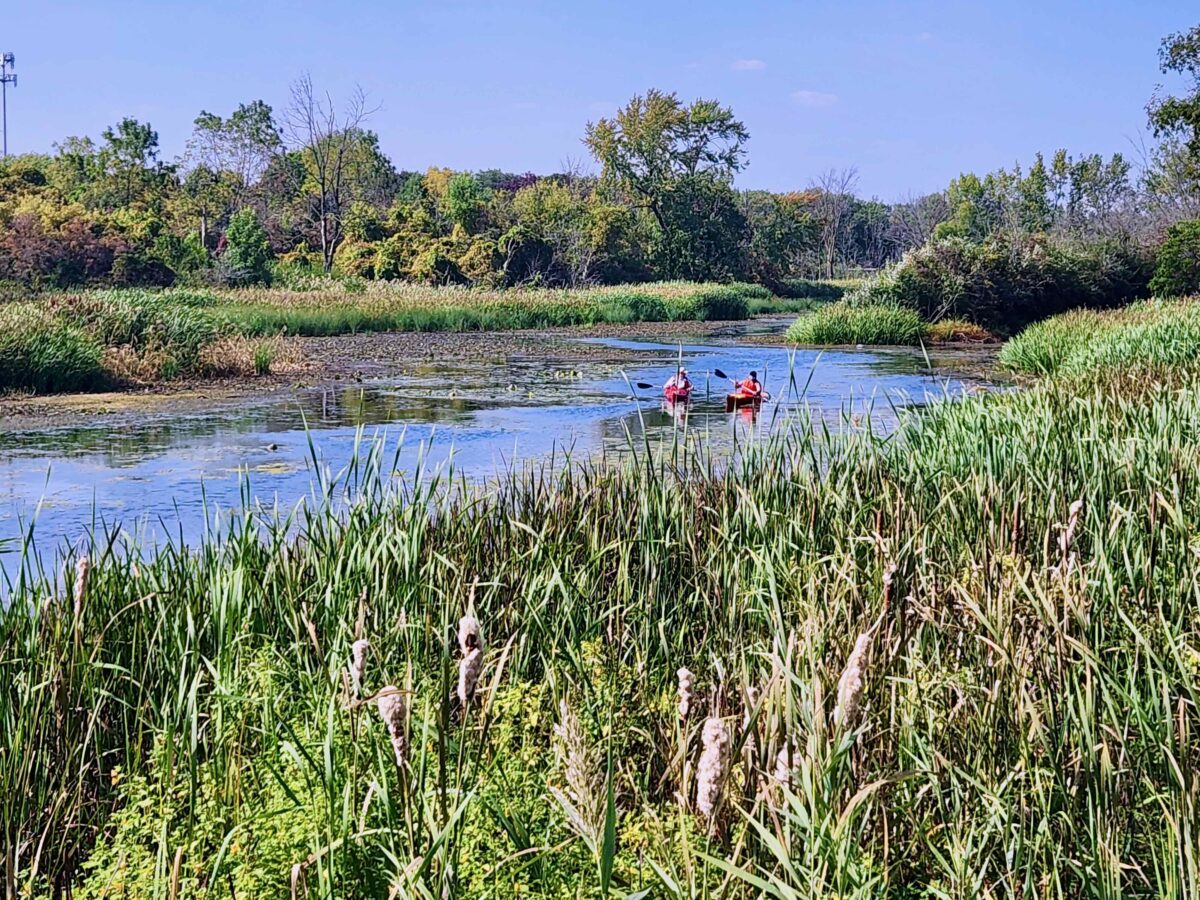
Historic wild rice restoration underway in the Detroit River: ‘Living tribute to the First Nations’
The Nottawaseppi Huron Band of the Potawatomi is working with conservation partners to restore wild rice in Detroit River wetlands, bringing back a sacred grain that disappeared over a century ago.


In Detroit’s Poletown East neighborhood, residents find healing among the trees
Detroit’s Poletown East residents turned a vacant lot into Circle Forest, a tree park offering a peaceful city retreat and encouraging nature enjoyment.

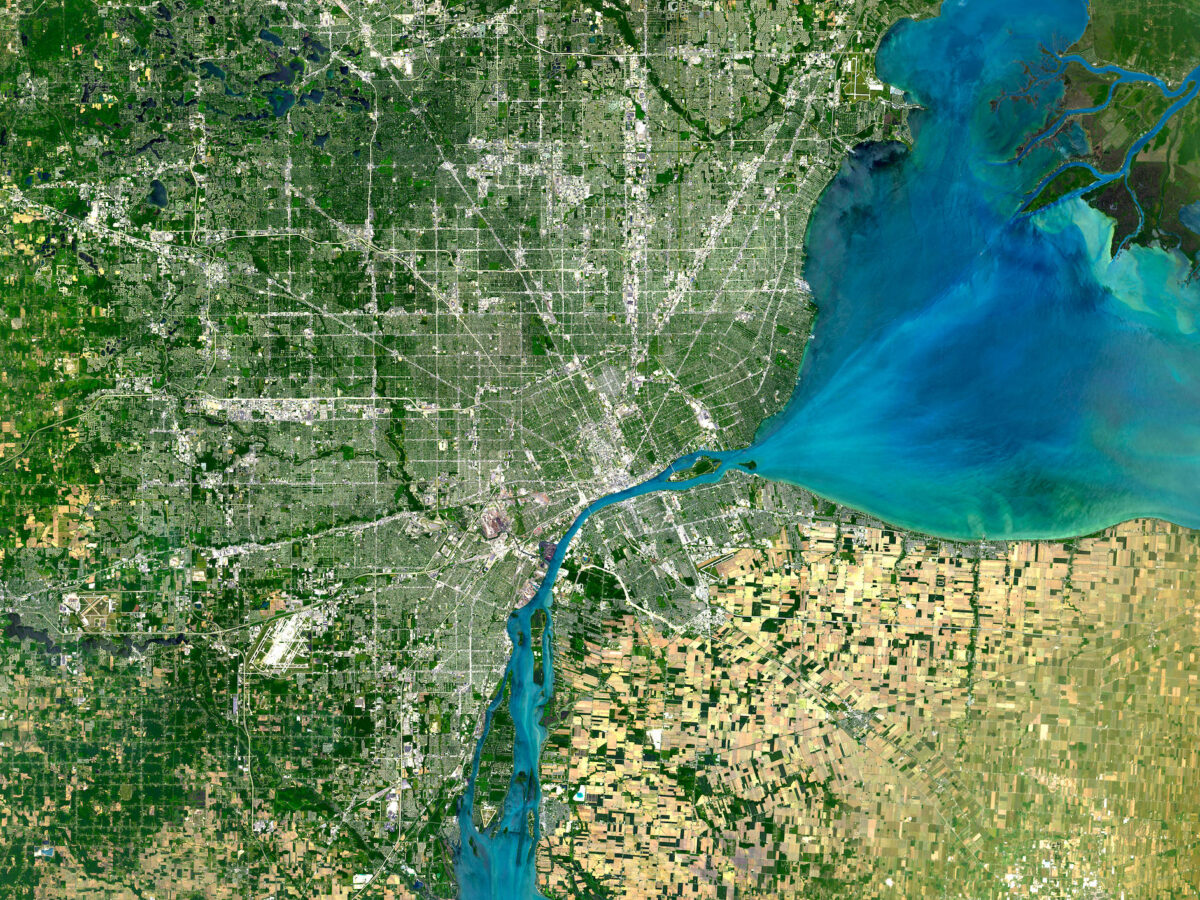
‘It’s all Waawiyaatanong’
A conversation with Hadassah GreenSky on the Detroit River, Anishinaabe stories, and the power of water

