


Overview:
- The completion of Pilgrim Baptist Church’s solar array was far from assured.
- Houses of worship and social service agencies like Pilgrim Baptist Church were at risk of losing out on major energy efficiency gains last year in the fallout from EPA cutbacks.
- "This solar project was able to come to fruition because we were able to get those drawdowns under the wire, ahead of the cancellation," says Michigan Interfaith Power & Light's Leah Wiste.
On the winter solstice, the Rev. Yvette Griffin convenes her congregation for a Sunday sermon.
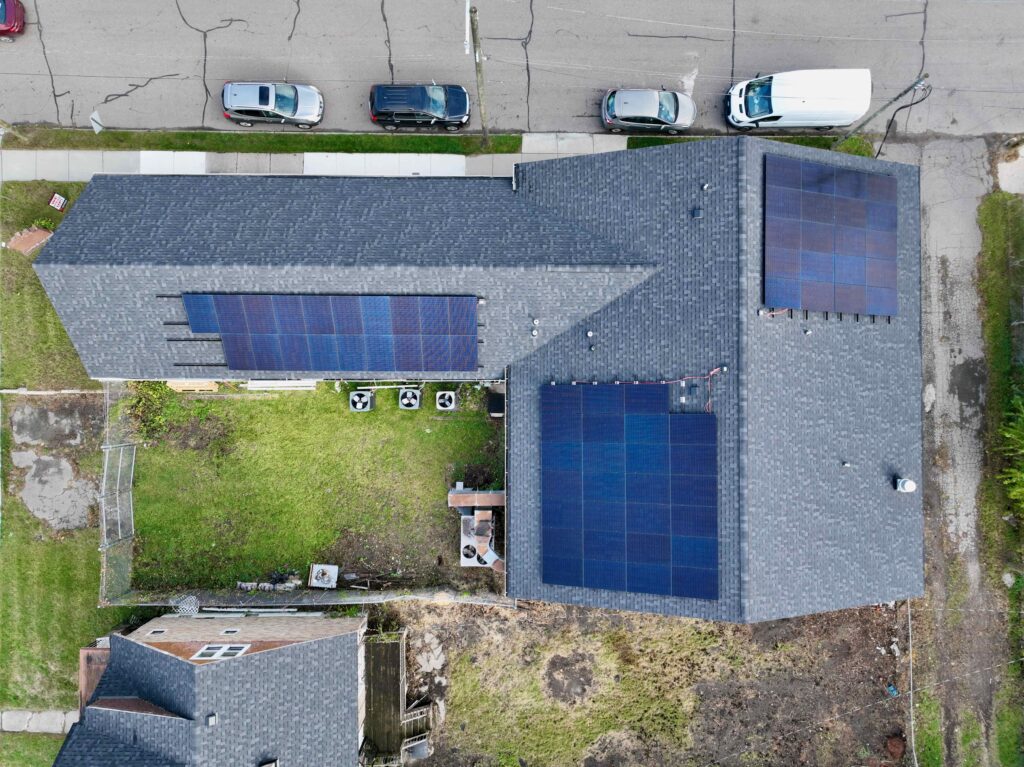
On this particular day, much of the attention goes to what’s above their heads: a solar panel system mounted on the roof of Pilgrim Baptist Church.
“We wanted people to know, the community to know, and those who have been working with us that this was a celebration, because what happened with the (Trump) administration has put a damper on people’s spirits,” said Griffin, lead pastor of Pilgrim, in Detroit’s Conant Gardens neighborhood.
Griffin’s congregation was joined by the environmental organizations EcoWorks, Solar Faithful, and Michigan Interfaith Power & Light Dec. 21 to celebrate the installation of the church’s solar array, as well as other building upgrades.
The completion of Pilgrim Baptist Church’s solar array was far from assured.
Last year, the Trump administration paused the delivery of $3 billion in Environmental Protection Agency grants, alleging the funding was going toward “wasteful DEI and environmental justice initiatives.”
🗳️ Civic Action Toolbox
Why it matters
Utility costs are a financial burden for community organizations. Investments in renewable energy have proven to be a useful strategy toward lowering expenses and providing year-round essential services to Metro Detroiters.
Over a dozen regional and national organizations are challenging the Trump administration’s decision to terminate $3 billion in federal funding for environmental justice grants earmarked to help low-income and minority communities improve their air and water, and protect against climate change.
Who's making public decisions
The Environmental Protection Agency clawed back funding intended to help improve energy efficiency at Detroit houses of worship, soup kitchens, and food pantries.
The United States Court of Appeals for District of Columbia Circuit is hearing an appeal of the case challenging the Trump administration’s cancellation of environmental justice grants, with oral arguments scheduled for March 16.
Civic Actions: What You Can Do
Organizations to Follow
What to watch for next
Watch for the outcome of a case in federal appeals court that could determine whether the remaining $20 million in frozen EPA grants for Detroit community resilience hubs will be restored.
Did you take action? Let us know.
Civic resources compiled by Planet Detroit
Of that amount, $20 million in “community change grants” earmarked for houses of worship, food pantries, and soup kitchens across Detroit were frozen, according to a news release from Michigan Interfaith Power & Light.
The money was intended for the transformation of these community staples into resilience hubs, powered by renewable energy and capable of sheltering residents during extreme weather emergencies and utility outages.
Houses of worship and social service agencies like Griffin’s were at risk of losing out on major energy efficiency gains last year in the fallout from the EPA cutbacks.
Before the Trump administration moved to freeze funding, the Detroit solar initiative drew down a portion of the $20-million EPA grant, enabling it to begin the solar installation work with half of the proposed locations, according to Michigan Interfaith Power & Light.
“This solar project was able to come to fruition because we were able to get those drawdowns under the wire, ahead of the cancellation,” said Leah Wiste, the organization’s executive director.
While a coalition of national nonprofits and local governments are entangled in a legal battle with the federal government over the allocation of the remaining money, EcoWorks and community organizations like Pilgrim are moving forward with existing energy infrastructure projects.
Energy savings support ‘cornerstones in the community’
Aside from its role as a house of worship, Pilgrim operates a weekly mobile food distribution to Metro Detroit residents through a partnership with Forgotten Harvest.
In 2025, the church served as many as 25,000 people with its distribution, up from roughly 20,000 the previous year, Griffin said.
“Because of the upgrades that we have, we’re able to save money,” said Griffin, rattling off a list of building improvements made with federal and state grant money: solar panels, mini splits, an HVAC system, and furnaces.
Community members reacted positively to the new additions, she said.
“Residents want to know more about it, because they want solar panels, because they realize that it can also help them,” said Griffin.
Pilgrim hopes to invite local elementary school students in the coming year to tour the church and learn more about renewable energy, the pastor said.
Briana DuBose, executive director of EcoWorks, said Pilgrim operates a 27.06 kW rooftop solar array, as well as solar energy batteries to provide on-site energy storage. The church has gas backup generators for outages.
Pilgrim is one of 20 sites across Detroit targeted for transformation into climate resilience hubs, she said. The effort launched at the end of 2024.
The resiliency hub initiative is designed to tie sustainability practices into the function of longstanding community organizations, and reduce high energy costs over time.
EcoWorks is focusing on 13 houses of worship as it awaits the release of the rescinded federal funds.
“We wanted this resilient hub to be a community center that would allow access to residents to be able to thrive,” DuBose said, adding that churches, soup kitchens, and food pantries are “cornerstones in the community.”
In 2023, Pilgrim and 10 other houses of worship were recipients of the “Sacred Spaces” grant from the Michigan Department of Environment, Great Lakes, and Energy, which provided funding for a series of energy efficiency improvements toward congregations located in areas disproportionately impacted by environmental pollution.
Pilgrim could save as much as $4,700 a year in energy costs with the recent upgrades, according to Michigan Interfaith Power & Light.
Those savings, said Wiste, are particularly valuable for organizations that serve as a social safety net for underserved communities.
‘The proof is at the Pilgrim Baptist’
EcoWorks’ DuBose said the clawback of federal funding ultimately put a freeze on plans to launch an electric vehicle charging station and ride-share program at Pilgrim, as well as a workforce development program to train residents in solar, heat pump, and EV installation.
The remaining funds for the resilient hub intuitive are “sitting in our treasury account waiting for us to use” while a coalition of national environmental groups and local governments is in litigation with the feds, she said.
Last June, two dozen community organizations, government agencies, tribal groups, and universities sued the EPA, aiming to repeal the Trump administration’s cancellation of environmental justice grants.
The EPA argued the case should be dismissed, and said that after canceling the grants, Congress passed the One Big Beautiful Bill Act, which included a line rescinding unobligated funds intended for environmental justice efforts.
A federal judge dismissed the complaint Aug. 29, citing a “lack of jurisdiction” and “failure to state a claim for relief.”
The plaintiffs filed an appeal in September, and the case is before United States Court of Appeals for District of Columbia Circuit, with oral arguments scheduled for March 16.
The goal is to “sustain progress and impact despite those shifting funding conditions,” DuBose said.
“We’re going to continue to try to get our funding, try to find other resources and other people that want to make investments,” said DuBose.
The sustainability efforts make a difference, she said, and the payoff is visible at Pilgrim Baptist.
“The proof is at the Pilgrim Baptist … the work has been done.”
MORE FROM PLANET DETROIT
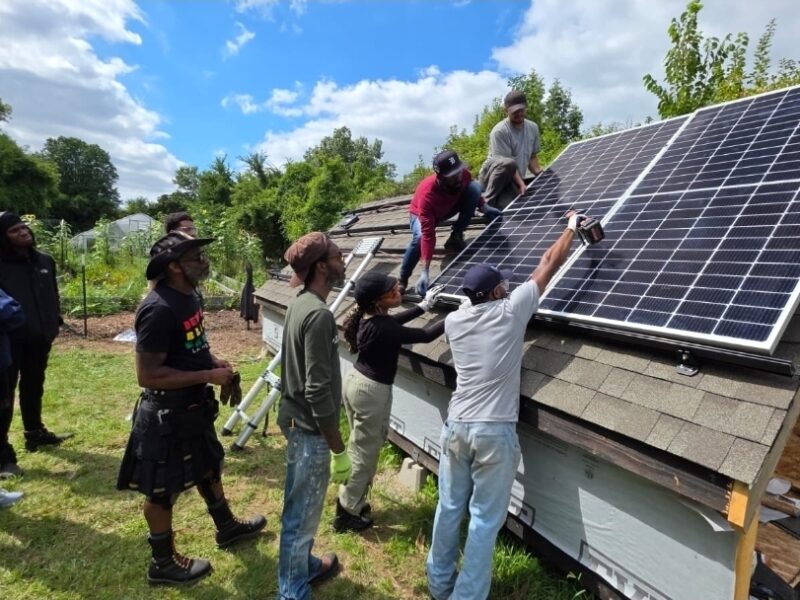
Solar training academy aims to make Detroiters ‘energy leaders’
The Solar Intelligence Training Academy, a workforce development program launched in June, is designed to equip Detroit residents with skills in solar technology, environmental justice, and sustainable energy.

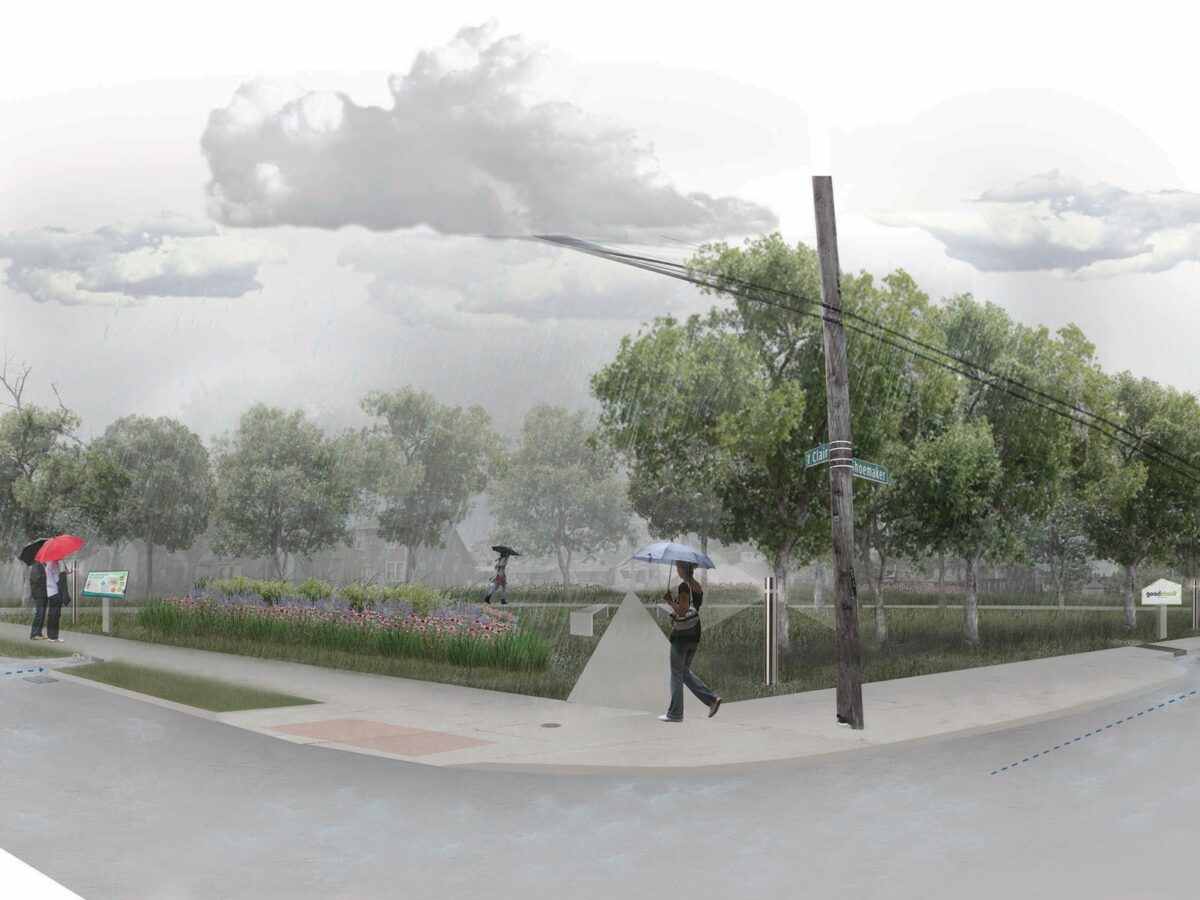
VOICES: Detroit’s climate response starts at the grassroots level
Hyperlocal, community-led solutions must drive policy and infrastructure for climate strategies that support neighborhood health and resilience in Detroit, writes Ceara O’Leary, an architect, planner and educator.


Coalition unveils initiative to build a network of community resilience hubs on Detroit’s east side
The initiative has received funding commitments totaling $2.7 million from local philanthropic organizations.


