

Overview:
- Detroit launches $1-million pilot program to repair or replace sea walls for low-income Jefferson Chalmers homeowners along canals fed by the Detroit River.
- The program prioritizes 15-20 properties and could help move the neighborhood off FEMA's flood hazard map.
- A resident-led 2025 survey found 70% of the neighborhood's waterfront properties have sea walls in fair or poor condition.
A new city program seeks to reinforce homes in Detroit’s Jefferson Chalmers neighborhood from the effects of recurring flooding from the Detroit River.
This month, officials from the city’s Housing and Revitalization Department launched the application for the Jefferson Chalmers Residential Seawall Program, designed to assist low-income homeowners in the waterfront community by replacing or repairing their sea walls.
“One of the reasons this project came about was the high water, the flooding that we had in our recent past,” said Amy Amador, deputy director of Bridging Neighborhoods, a division of the Housing and Revitalization Department, at a virtual meeting held Thursday to introduce the initiative to neighborhood residents.
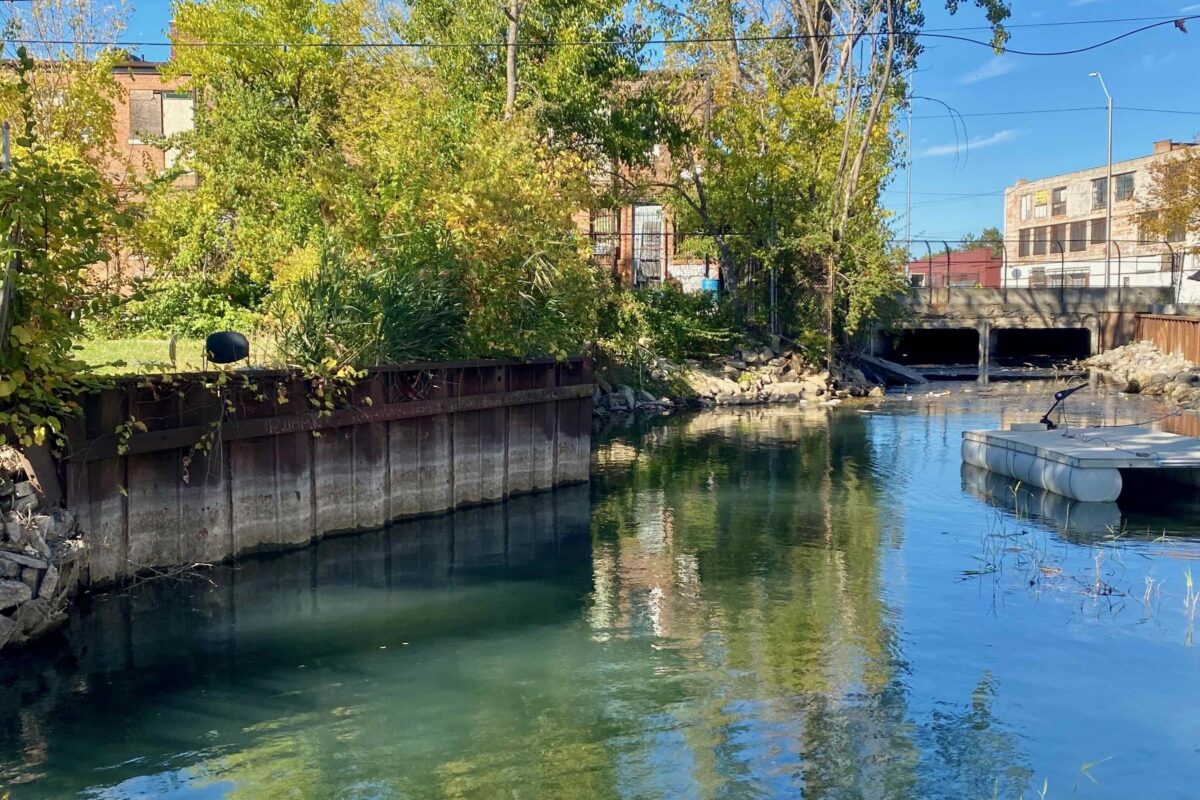
Many of the sea walls in Jefferson Chalmers are in disrepair, and some are missing completely, Amador said.
The city estimates it will repair a minimum of 15 to 20 sea walls during the program, she said. The program is administered by Bridging Neighborhoods and funded through a $1-million Michigan Economic Development Corp. grant.
The program is the latest in a decades-long effort to mitigate water damage across the neighborhood, given its location along canals fed by the Detroit River and susceptibility to stormwater overflow and sewage backups.
Pilot program aims to move neighborhood off FEMA flood map
The Residential Seawall Program will prioritize low-income neighborhood homeowners who live along the canals east of Lenox Street, do not have delinquent property taxes, and do not have a boat house or slip, Amador said.
🗳️ Civic Action Toolbox
Why it matters
The Jefferson Chalmers neighborhood on Detroit’s far east side has experienced street flooding and basement backups due to sewage overflow and runoff from Detroit River canals.
Residents have long advocated for a comprehensive infrastructure solution to reduce flood damage and health hazards.
Sea wall repair and maintenance along the canals and waterfront could reduce flood damage, and assist in removing the neighborhood from a Federal Emergency Management Agency flood zone designation that imposes restrictions on neighborhood development and home repairs.
Who's making public decisions
Detroit’s Housing and Revitalization Department is administering the sea wall pilot program. FEMA designated Jefferson Chalmers as a flood hazard area.
Civic Actions: What You Can Do
Organizations to Follow
What to watch for next
Applications for the seawall repair program are being accepted through March 23, with sea wall assessments beginning this summer and repairs continuing into 2027.
Did you take action? Let us know.
Civic resources compiled by Planet Detroit
The program guidelines could be flexible, depending on how many people apply and qualify, she said. The application process is underway, and materials will be accepted on a rolling basis through March 23.
If there’s leftover funding, “we will be looking to try to find ways to create more contiguous areas of sea wall in the area,” Amador said.
“We know that having a longer stretch of sea wall is going to be more effective in preventing flooding than just having individual sea walls.”
The city will look at areas where flood penetration has occurred in the past and prioritize them, she said.
Once the properties are selected, sea wall assessments will begin this summer, said Amador. The repair process is expected to continue into 2027.
The development comes roughly roughly five years after torrential rain swelled Jefferson Chalmers’ Fox Creek canal and devastated households across Metro Detroit.
Erin Stanley is a policy analyst for Detroit City Councilmember Latisha Johnson, who represents District 4, which includes Jefferson Chalmers.
The program is a “pilot project” to test the viability of sea wall restoration as a deterrent against flood damage, Stanley told Planet Detroit.
Johnson advocated for the $1-million state grant to target sea wall repairs as a step toward moving the neighborhood out of the Federal Emergency Management Agency’s flood hazard designation, which requires homeowners with mortgages to buy expensive flood insurance, and restricts federally funded home repairs and projects.
In 2022, the U.S. Army Corps of Engineers published a study of long-term flood mitigation strategies for Jefferson Chalmers, proposing three recommendations for how the city could reduce property damage and health hazards in the neighborhood.
Among the recommendations: keeping the canals open by strengthening the neighborhood’s shoreline with reinforced sea walls. The strategy “would allow the canals to remain open to the public” and would “remove the Jefferson-Chalmers neighborhood from the FEMA Flood Hazard Area,” according to the 2022 Army Corps study.
In October, city council allocated $20 million for a study and subsequent project by the Detroit Building Authority to mitigate flooding in Jefferson Chalmers. The DBA project will test recommendations from the Army Corps floodplain study, Stanley said.
If the Building Authority concludes sea walls are a good option from both an engineering and community perspective, the $1-million pilot program will provide a foundation, she said.
“It’s not seen as, ‘we’re going to fix everything with these 20 homes,’ but it’s a good start.”
70% of Jefferson Chalmers shoreline needs work, resident-led survey finds
The sea wall repair program shows “what can be done quickly to get us out of this floodplain,” and could benefit some of the neighborhood’s residents who live on fixed incomes, said Traci Rubin, chairperson of the Jefferson Chalmers WATER Project, a neighborhood advocacy group.
Other ideas floated by city and regional officials, such as installing flood gates or stoplogs along the canals, received a negative reception from residents in recent years due to the potential for the canals to be closed to public use.
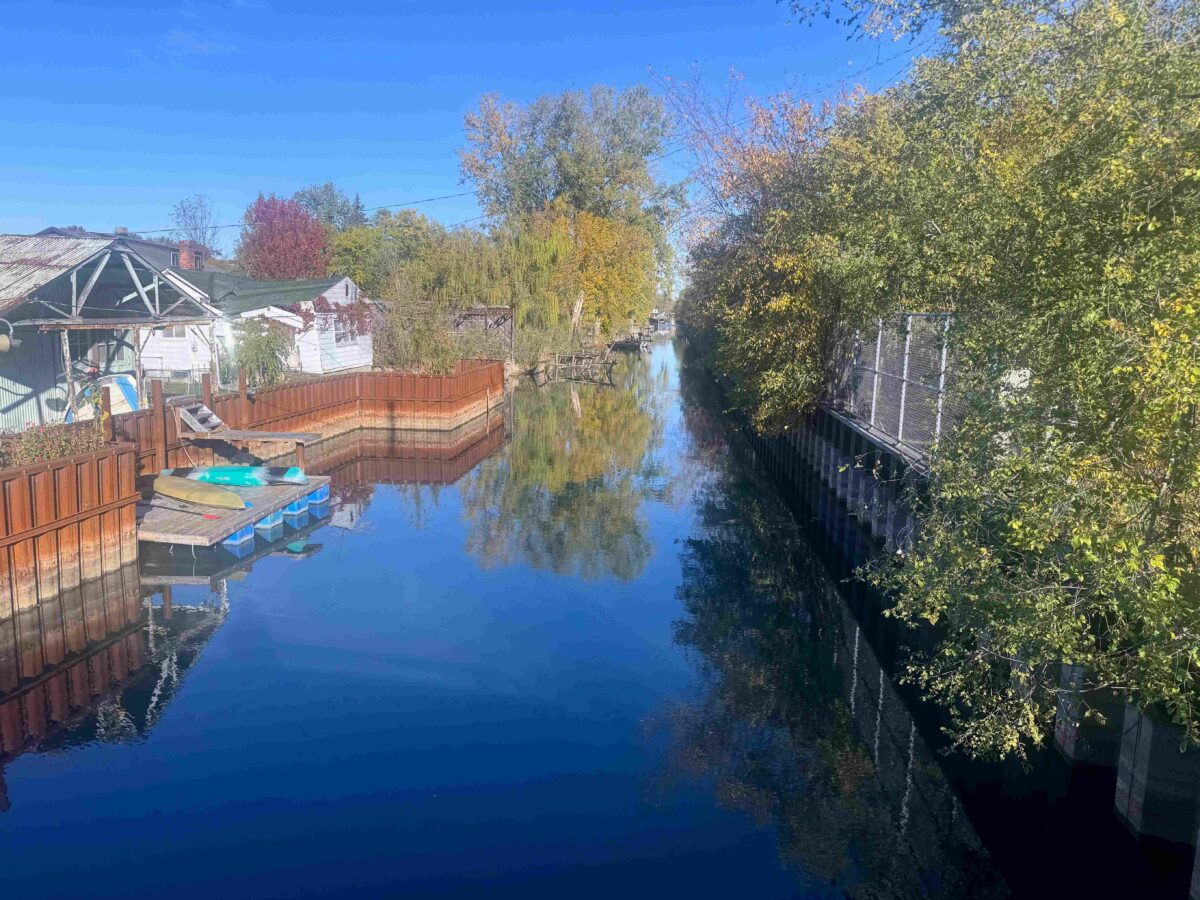
Last fall, a handful of Jefferson Chalmers residents surveyed the canals to document the shoreline conditions of nearly 300 waterfront properties that comprise residential, commercial, and city-owned parcels.
“We not only know conditions, we have a good idea of who’s paying the tax bill and who lives there,” said Dan Piepszowski, one of the residents who surveyed the conditions.
Of the shoreline properties surveyed, roughly 70% are in fair or poor condition, he said.
“We had a number of people that had done sea wall upgrades, and so we’re reaching out to them to get more details on who did the work, what cost, and what the permitting process was, because we think that’s valuable information if people have gone out on their own and taken on the responsibility of upgrading their sea wall,” he said.
The city sea wall program will select a marine contractor to assist in the repair and replacement process, according to Alison DeRees, spokesperson for the Housing and Revitalization Department. The department aims to have a contractor selected and approved by Detroit City Council by the end of June, she said.
Jefferson Chalmers residents who believe they qualify can visit https://bit.ly/4r5Wzbl or call 313-628-2232 to apply. Required materials, such as a recent DTE Energy bill, income documentation, and a valid, government-issued photo ID, can be scanned by a city staffer at a scheduled appointment at the A.B. Ford Community Center or uploaded online via a secure link.
MORE FROM PLANET DETROIT
Jefferson Chalmers looks to seawalls to overcome flood insurance burden
“It’s such a unique neighborhood, and there’s a lot of work that needs to be done to come up with a fix that is equitable,” says Jefferson Chalmers resident Dan Piepszowski.

Jefferson Chalmers residents say they were left out of GLWA’s $138M pump station project
The Great Lakes Water Authority says new pump station will improve stormwater management and prevent flooding, but residents contend the project was pushed through with little public input.


Climate costs imperil Detroit’s unique, diverse Jefferson Chalmers neighborhood
“Climate gentrification” in cities like New Orleans and Miami has seen wealthier and whiter residents displace low-income residents and people of color in less flood-prone areas. But in Jefferson Chalmers, climate gentrification could mean that those with the resources to manage the risks and expense of living in a floodplain may replace those without them.

