


Overview:
- DTE customers pay 16.7% of their electric bills toward company profits, while Consumers customers pay 13.9%, according to new report.
- Both Michigan utilities rank in the top half nationally for the percentage of customer bills going to profits.
- Consumer advocates call for lower returns on equity and more ratepayer representation to reduce utility bill burden.
A larger portion of DTE Energy and Consumers Energy bills go toward utility profits than most investor-owned utilities tracked by an online calculator.
A DTE Energy customer with a $150 monthly electric bill pays an estimated 16.7% of their bill, or $25.05, in utility profits, according to the calculator developed by the Energy & Policy Institute (EPI), which describes itself as a utility watchdog group.
A Consumers Energy customer with the same bill pays 13.9%, or $20.82, toward company profits, according to the report released last week.
An average of 12.8% of investor-owned utility revenues went to company profits from 2021 to 2024, according to an EPI report. Consumers ranked 52nd out of 110 utilities tracked by EPI and DTE ranked 33rd, putting both companies in the top half of utilities for the percentage of bills going towards profits.
DTE did not respond to requests for comment for this story.
Consumers spokesperson Katie Carey said the percentage of the company’s revenues going toward profits is lower than many utilities where percentages reach as high as 20% to 30%.
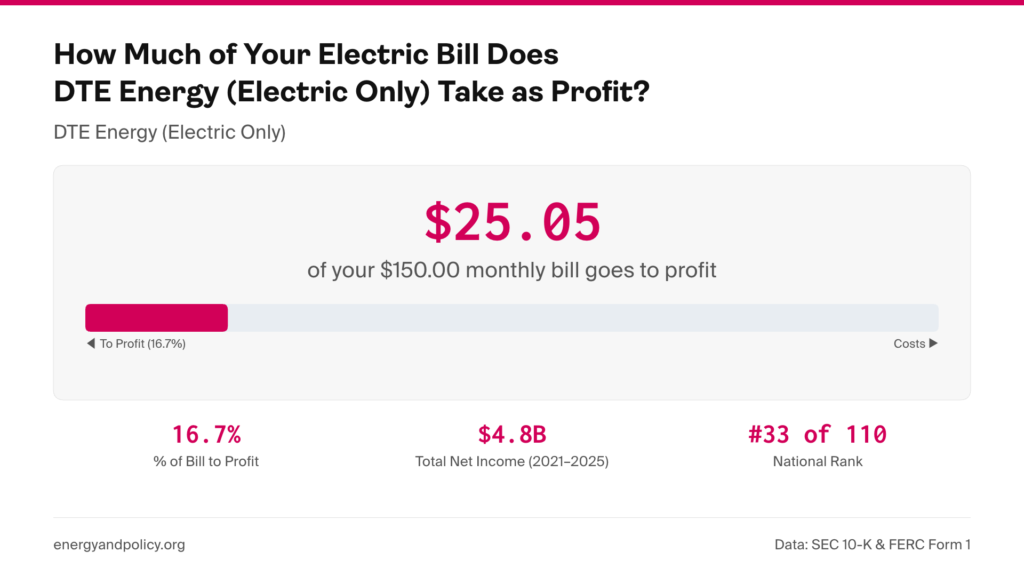
EPI said it based its estimates on U.S. Securities and Exchange Commission and Federal Energy Regulatory Commission data from 2021 through 2024, incorporating data from 2025 when available.
🗳️ Civic Action Toolbox
Why it matters
DTE Energy and Consumers Energy customers pay significant portions of their monthly bills toward utility profits. Decisions made by Michigan regulators influence the level of profit utilities can earn.
Who's making public decisions
The Michigan Public Service Commission sets the return on equity rates for utilities.
Upcoming Meetings
Civic Actions: What You Can Do
Organizations to Follow
What to watch for next
Watch for upcoming utility rate cases before the Michigan Public Service Commission where advocates may push for lower profit margins to reduce customer bills. DTE Energy has indicated it will file a rate hike request around April 27.
Did you take action? Let us know.
Civic resources compiled by Planet Detroit
Utility customers are feeling the affordability crisis acutely, Marissa Gillett, former chair of Connecticut’s Public Utilities Regulatory Authority, said on a Thursday press call held by the Energy & Policy Institute.
Gillett resigned under pressure from lawmakers and utilities in 2025, Canary Media reported.
“Customers expressed feelings on a spectrum ranging from confusion to outrage regarding the size of utility profits and the fact that the entity that was providing them their essential services was a for profit monopoly,” she said of her conversations with ratepayers.
EPI’s findings come at a time of rising utility bills, with Grist reporting residential energy bills increased 30% between 2021 and 2025, largely in line with inflation.
Michigan residential electricity prices were above the national average between 2010 and 2024, although commercial and industrial customers paid rates closer to those in other states, Grist reported.
Lower shareholder returns, consumer advocacy needed, expert says
To address the burden utility profits place on ratepayers, Gillett called for more consumer advocacy and reforms to utility returns on equity.
The Michigan Public Service Commission (MPSC) consistently approves returns on equity, or the profit on capital expenditures that goes to shareholders, that are well above the broader stock market’s long-term returns.
Planet Detroit previously reported on calls for the MPSC to lower the returns on equity it approves as part of utility rate hike requests. Consumer advocates said the ROEs are set well above those of much riskier investments.
When adjusting for inflation, stocks in the S&P 500 returned an average of 6.7% annually between 1994 and 2024, according to the personal finance company SoFi.
Granting high rates of return to utilities adds $300 annually to the average customer’s power bill, a 2025 study from the nonprofit American Economic Liberties Project found.
Gillett, who is now a senior fellow at the American Economic Liberties Project, compared the ROE to a mortgage because it compounds over time, leading to high profits.
A $1 billion power plant, financed by equal shares of debt and equity over 30 years for a utility with a 10% ROE, would incur over $2.1 billion in costs to customers, according to EPI. Customers would pay around $775 million in profits to shareholders for this power plant, the report says.
Consumer advocates are generally created by state legislatures to represent ratepayer interests in cases before utility regulators and argue for things like lower rates and consumer protections, according to the nonprofit Institute for Market Transformation.
“When it comes to questions of adjudicating utility profits, we need to get more consumer advocates better resourced and paying attention to these proceedings,” Gillett said.
DTE ENERGY NEWS
Gibraltar data center could support DTE grid with diesel generators: Developer
Around 150 people showed up for a town hall meeting on a proposed 100-megawatt Gibraltar data center Wednesday night, with many voicing concern about potential impacts to air quality, electricity bills, and the nearby Humbug Marsh. The Gibraltar City Council passed a one-year data center moratorium on Monday to give the city time to prepare…

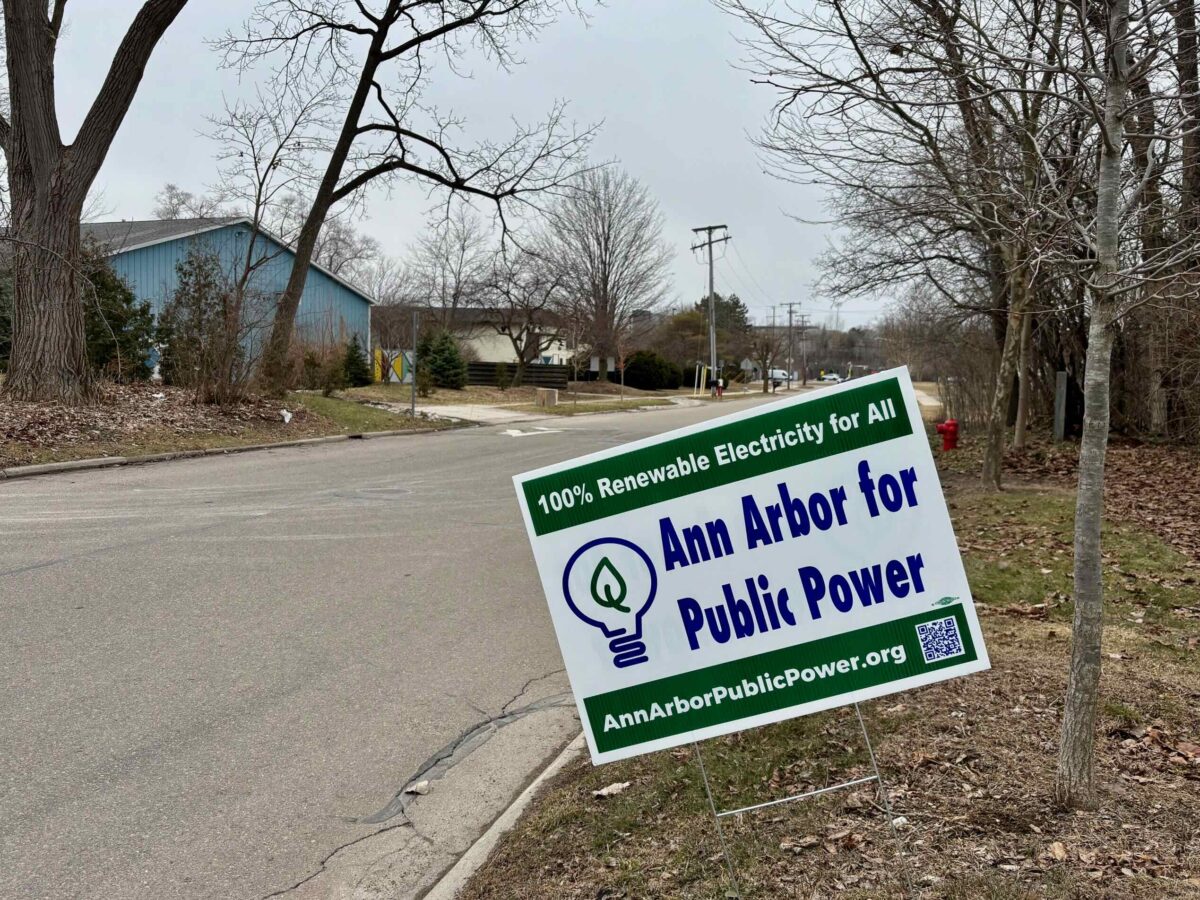
Ann Arbor voters could form city-owned utility in November: ‘Nobody has a good story about DTE’
Campaigners for an Ann Arbor municipal utility are collecting signatures to put a question on the November ballot, offering residents a path to replace DTE Energy with public power.
Data center moratorium bills reflect public sentiment, says Michigan lawmaker
Three bipartisan bills in Michigan would prevent state and local government from issuing permits for data centers until April 2027, giving lawmakers time to address concerns about energy demands and community impacts.