

Overview:
- Detroit City Council votes 6-2 for a resolution asking Mayor Mary Sheffield to impose a two-year moratorium on data center permits.
- The resolution calls for time to study grid stability, water use, noise pollution, economic impact, and land use.
- Detroit joins about 20 communities in Michigan that have either passed or proposed moratoriums on data center developments.
By CHRISTINE FERRETTI
BridgeDetroit
This story was originally published by BridgeDetroit, a nonprofit and nonpartisan news organization. To get regular coverage from BridgeDetroit, sign up for a free BridgeDetroit newsletter here.
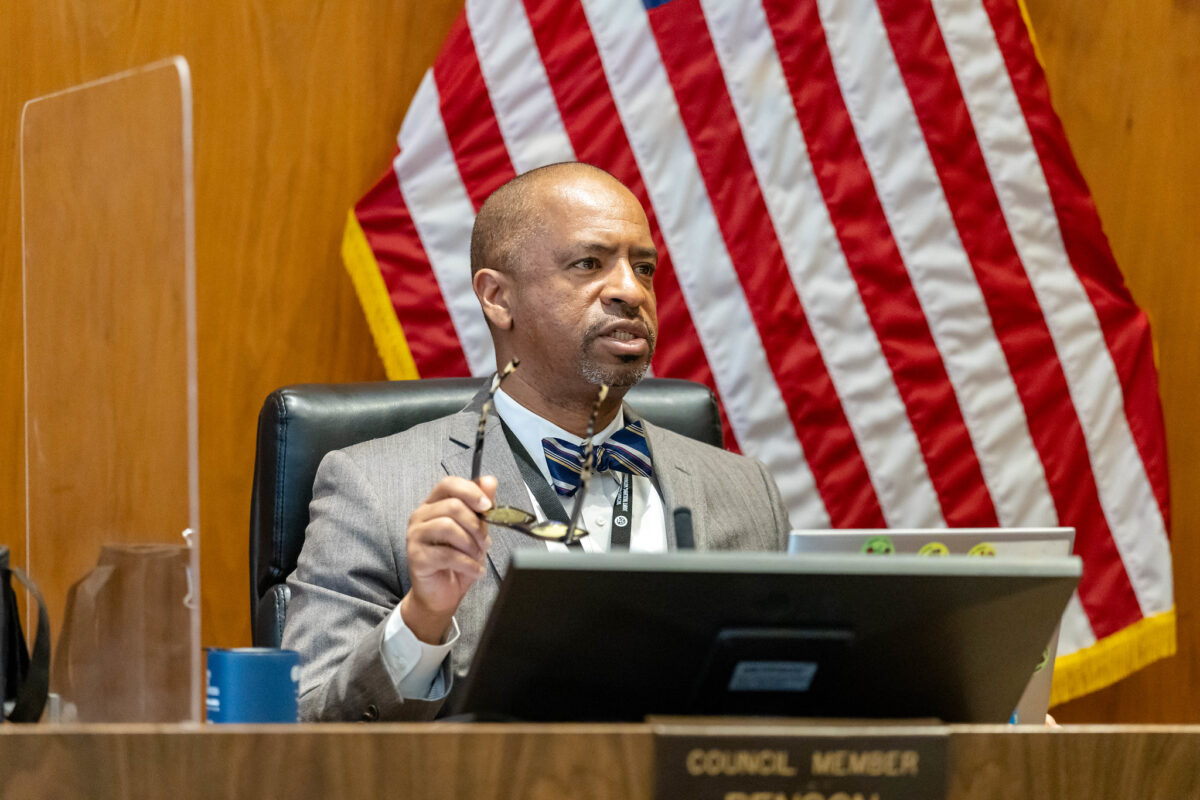
Detroit’s City Council is urging Mayor Mary Sheffield to impose a two-year moratorium on data centers in the city.
A resolution spearheaded by District 3 City Council Member Scott Benson asks that the mayor’s office and relevant city departments – the Buildings, Safety Engineering, and Environmental Department and Planning and Development Department – refrain from issuing any new data center permits until the city can “obtain a full understanding” of the types of data centers, infrastructure and associated environmental concerns “prior to their development” in the city.
The council voted 6-2 Tuesday in favor of the resolution, with Council President James Tate Jr. and Pro Tem Coleman A. Young II voting no, objecting to the length of time identified in the request. Council Member Angela Whitfield-Calloway was absent.
Benson’s push aligns with strategies being pursued in multiple Michigan municipalities to set parameters for data centers. The hyperscale data centers have been proposed for at least 11 Michigan counties. Some have secured key approvals; others have faced pushback from residents and legislators.
Benson stressed Tuesday, “I am neither pro nor con” on the centers. He said the measure is designed to ensure that the city has protections and established “rules of the road” for data centers, which is a public process, he said.
“Right now, we don’t have any regulations in place and what you’re seeing are the negative impacts around the country from municipalities that aren’t prepared to regulate data centers in any iteration,” Benson told BridgeDetroit after the meeting.
“We want to make sure that we know where they are located, we want the community to have some input. We want to ensure that we have proper guardrails around data centers. No one is suggesting we don’t support them – what we are saying is, until we get regulations in place, we don’t want to have to say ‘no or yes’ or guess. We want to do the proper work to get the regulations in place.”
Detroit joins about 20 communities in Michigan that have either passed or proposed moratoriums on data center developments. Several communities have rescinded or paused plans, including Howell Township, and some bipartisan lawmakers are pushing for state-level reforms and gubernatorial candidates are also vocal on their views.
Late in 2024, Michigan lawmakers narrowly approved tax breaks to lure the industry to the state.
Protecting ‘public peace’
If developers invest at least $250 million, employ 30 people and meet other requirements, they pay nothing in state sales and use taxes through at least 2050 — a savings that could amount to hundreds of millions of dollars per facility.
Benson’s resolution, drafted by the council’s Legislative Policy Division, notes that the city needs time to conduct a comprehensive study on ‘best practices’ for implementation of data centers. The two-year moratorium, it notes, would allow city officials to address grid stability, water consumption, noise pollution, economic impact and land use.
“It is incumbent upon those elected to serve the citizens of the City of Detroit to expend maximum efforts to protect the public peace, health and safety of all its constituents,” it reads.
Tate and Young pushed back on the resolution before voting against it, with Tate arguing, “it shouldn’t take us two years to investigate this issue.”
Tate added he believed six months to one year would be an adequate amount of time to do the necessary research. He urged colleagues to send the resolution back to a council subcommittee or to postpone a vote to first allow members to have a general discussion about data centers.
“We have not, as a body, ventured into a conversation in full detail so the public can understand why this decision is being made,” Tate said.
Others, including District 7 Council Member Denzel McCampbell, District 4 Council Member Latisha Johnson and District 6 Council Member Gabriela Santiago-Romero, said the moratorium, as proposed, is warranted. The three raised questions over long-term job creation associated with the facilities, environmental impacts, economic benefits and other concerns.
“I am in support of this moratorium and in support of two years,” said McCampbell, stressing the importance for municipalities of having conversations about “how we want or what we want this to look like.”
He noted that we are seeing data centers that are “not beneficial to communities and are very distracting,” amid a utility affordability crisis and doesn’t want to further burden residents.
Johnson joined Benson in his motion for the resolution and said a proposal for a data center was among the projects pitched via a request for proposals for the Shoemaker development site.
“There are a lot of question marks around the data centers. How do we filter through the questions, the concerns that have been elevated throughout this country before we actually move forward,” she said. “It’s not necessarily saying ‘let’s not do this.’”
In the mayor’s hands
Sheffield spokesman John Roach told BridgeDetroit on Tuesday that the mayor is aware of the data center moratorium resolution approved by the council.

“Upon receipt of an official copy and out of respect for her governing partners, she will fully vet the request and make a decision that is in the best interest of Detroiters and the future of our city,” Roach said.
Detroit City Planning Commission Director Marcell Todd said the administration and the planning commission have been “quite concerned” about what has been taking place with data centers.
“Our zoning ordinance does not have any regulations for such facilities,” Todd told council members.
The planning commission, he said, supported a request concurrent with what Benson asked for, saying the current zoning laws don’t adequately address protections for public health, safety and welfare of the public.
AI data centers, Todd said, are large-scale facilities that create a drain on area resources and infrastructure. He noted that the building department convened a meeting in February with several city departments to discuss data centers and a recommendation was made to pursue a moratorium request “to allow the city to do necessary research and advance any changes to the zoning code.”
DATA CENTER NEWS
Google, DTE plan 1 gigawatt Michigan data center, eye Van Buren Township site
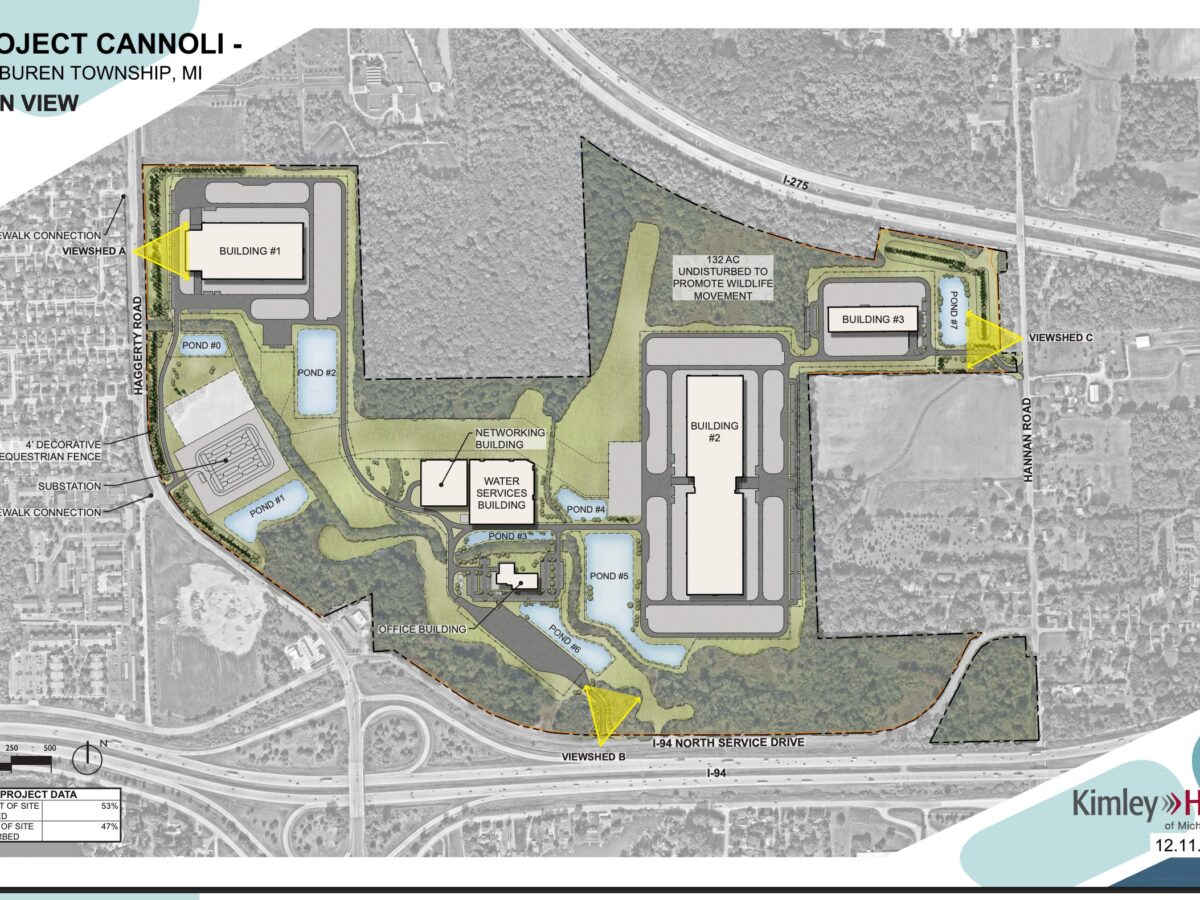
DTE Energy and Google announced plans on Tuesday to develop a 1-gigawatt data center, possibly as part of the “Project Cannoli” development in Van Buren Township. The company’s planned Michigan operations will be served by 2.7 GW of new grid resources in the form of solar power, energy storage, and demand flexibility, Will Conkling, Google’s…

Data center answers will come from Lansing or Washington: Allen Park official
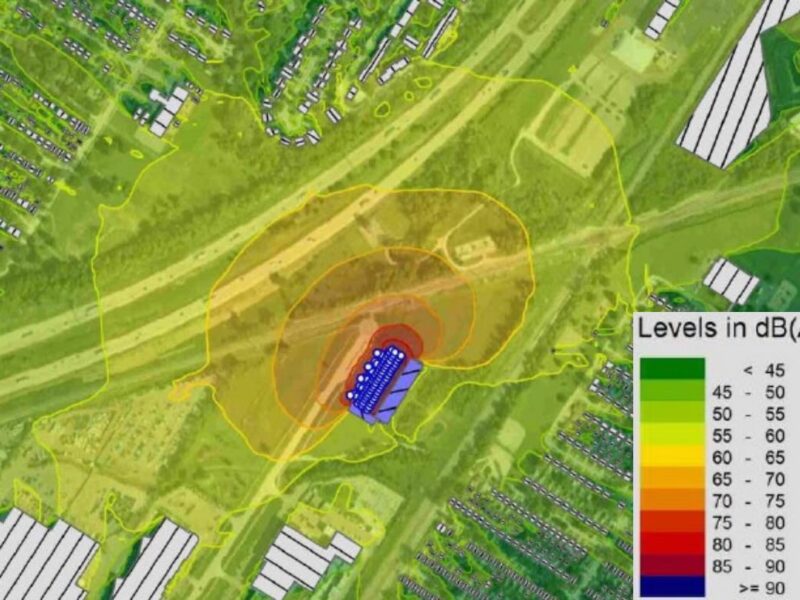
The Allen Park Planning Commission again postponed a decision Thursday on the application for a 26-megawatt data center, planned for a site on Enterprise Drive south of I-94. City Councilperson Dan Lloyd, who introduced the motion to delay the decision, said he’s concerned about updated plans for the data center to connect to municipal water…

Data center moratorium bills reflect public sentiment, says Michigan lawmaker
Three bipartisan bills in Michigan would prevent state and local government from issuing permits for data centers until April 2027, giving lawmakers time to address concerns about energy demands and community impacts.
