


Overview:
- DTE Energy appeals a $100-million federal judgment for Clean Air Act violations at its Zug Island coke oven battery.
- The court ruled DTE made major facility modifications without proper permits, increasing sulfur dioxide pollution.
- DTE asks the court to pause enforcement of the judgment and increased pollution control requirements while it appeals the lawsuit.
This story was produced with support of Internews’ Earth Journalism Network.
DTE Energy appealed a $100-million federal court judgment over sulfur dioxide pollution from its Zug Island facility on Wednesday.
U.S. District Judge Gershwin Drain found DTE responsible for Clean Air Act violations by EES Coke Battery, the utility’s Zug Island subsidiary, in a case filed by the Environmental Protection Agency.
DTE is asking the Sixth Circuit Court of Appeals to review Drain’s Feb. 24 final judgment and other orders and rulings in the lawsuit.
Additionally, the utility filed a motion for a stay Wednesday that asks Drain to pause enforcement of a $100-million judgment, $20-million community fund, and pollution controls he ordered while it appeals the case.
Without a stay, Drain’s order will make EES Coke Battery economically unviable, forcing DTE to shut it down, the motion said.
The utility requested to post a $123.5-million bond that it said covers the civil penalties; the monetary component of the injunctive relief ordered by the court; and roughly one year of post-judgment interest on the civil penalties.
DTE appeal of Zug Island order ‘disappointing’: Sierra Club lawyer
🗳️ Civic Action Toolbox
Why it matters
Who's making public decisions
Civic Actions: What You Can Do
Organizations to Follow
What to watch for next
Did you take action? Let us know.
Civic resources compiled by Planet Detroit
Following a two-week bench trial, Drain ruled on Feb. 24 that DTE and three of its subsidiaries must pay $100 million in fines to the federal government within 90 days, and come into compliance with the Clean Air Act by submitting New Source Review Permit applications within 250 days.
Additionally, the judgment said DTE must form a community committee within 120 days and provide $20 million in funding for air quality improvement programs over seven years.
Before the trial, DTE asked Drain to dismiss key parts of the case outright, arguing that nothing needed to be decided at trial.
Drain rejected that request in August, sending three issues to trial:
• Whether EES Coke Battery made a major modification to its operations, which would trigger stricter federal air quality permits, or merely a minor one, as DTE said its 2014 permit allowed.
• Whether EES Coke Battery failed to file required reports under the federal New Source Review program, which requires companies to disclose when facility changes could significantly increase pollution.
• Whether DTE and its subsidiaries can be held liable for EES Coke Battery’s violations.
Drain ultimately decided against DTE on all three questions.
Nick Leonard, executive director of the Great Lakes Environmental Law Center and attorney representing the Sierra Club in the case, said DTE’s appeal is “disappointing.”
“DTE and EES Coke made changes at the coke oven battery on Zug Island that significantly increased sulfur dioxide and fine particulate matter pollution without installing the pollution controls required by the Clean Air Act,” Leonard said.
“As a result, residents have been forced to live with DTE and EES Coke’s unlawful pollution for several years. We firmly believe the court’s decision was correct and will defend it throughout DTE and EES Coke’s appeal.”
The EPA declined to comment on DTE’s appeal.
DTE: Zug Island facility will shut down without stay on judge’s order
If Drain approves DTE’s motion for a stay, the enforcement of his Feb. 24 judgment would be paused while DTE appeals the case.
Sierra Club lawyer Leonard said Drain will rule on the motion in the months ahead.
The EPA and Sierra Club took no position on DTE’s motion for a stay on the financial components of Drain’s order, but opposed the request to stay the injunctive relief relating to pollution controls.
In the motion, DTE lawyers said EES Coke Battery’s fuel switch is not a major modification.
Michael Hindelang, attorney representing the DTE defendants, said in the motion that EES Coke Batter’s emissions increase “had nothing to do” with the 2014 permit.
“While the 2014 permit might have allowed EES Coke to combust more COG at the underfire, it was U.S. Steel’s drop in demand for COG that was the proximate cause of the emissions increase from the emissions unit,” he said, referring to coke oven gas with the acronym COG.
EGLE did not require sulfur dioxide reporting for this project, and “EES Coke played by the rules as told to them by EGLE,” the motion said.
Residents testified during the trial about the adverse health effects and diminished quality of life they experience due to pollution in their neighborhoods located a few miles from Zug Island.
Drain ruled the injuries were traceable to the facility’s excess emissions due to their proximity to EES Coke Battery, and the injuries are “consistent with the effects of SO2.”
Hindelang said testimony of “eye irritation” and “a bad feeling” in the chest cannot be traced to a modification made at the Zug Island facility.
“The members did not allege, and the court did not find, any facts suggesting that their injuries manifested because the facility began emitting 3,200 tons of SO2 in 2018, as compared to roughly 2,800 tons in 2010,” the attorney wrote.
EES Coke will be “irreparably harmed” by the court’s requirement to submit applications to obtain New Source Review permits within 250 days, Hindelang said.
“Those permits likely would require EES Coke to install expensive pollution-control technology that would render operation of the facility economically unviable. Thus, absent a stay, EES Coke will likely be forced to shut down the facility,” he said.
Pausing operations, which would cool the ovens and refractory bricks, would damage the facility, and submitting permit applications can take up to 18 months, and cost “thousands of dollars just to prepare the permit application,” Hindelang said.
A monthslong stay will not harm the other interested parties during the appeal, and would economically benefit the public and “fuel American steel production,” he said.
Editor’s note: This story has been updated with additional details on DTE Energy’s motion for a stay on a federal court order regarding its Zug Island facility.
More Zug Island Reporting
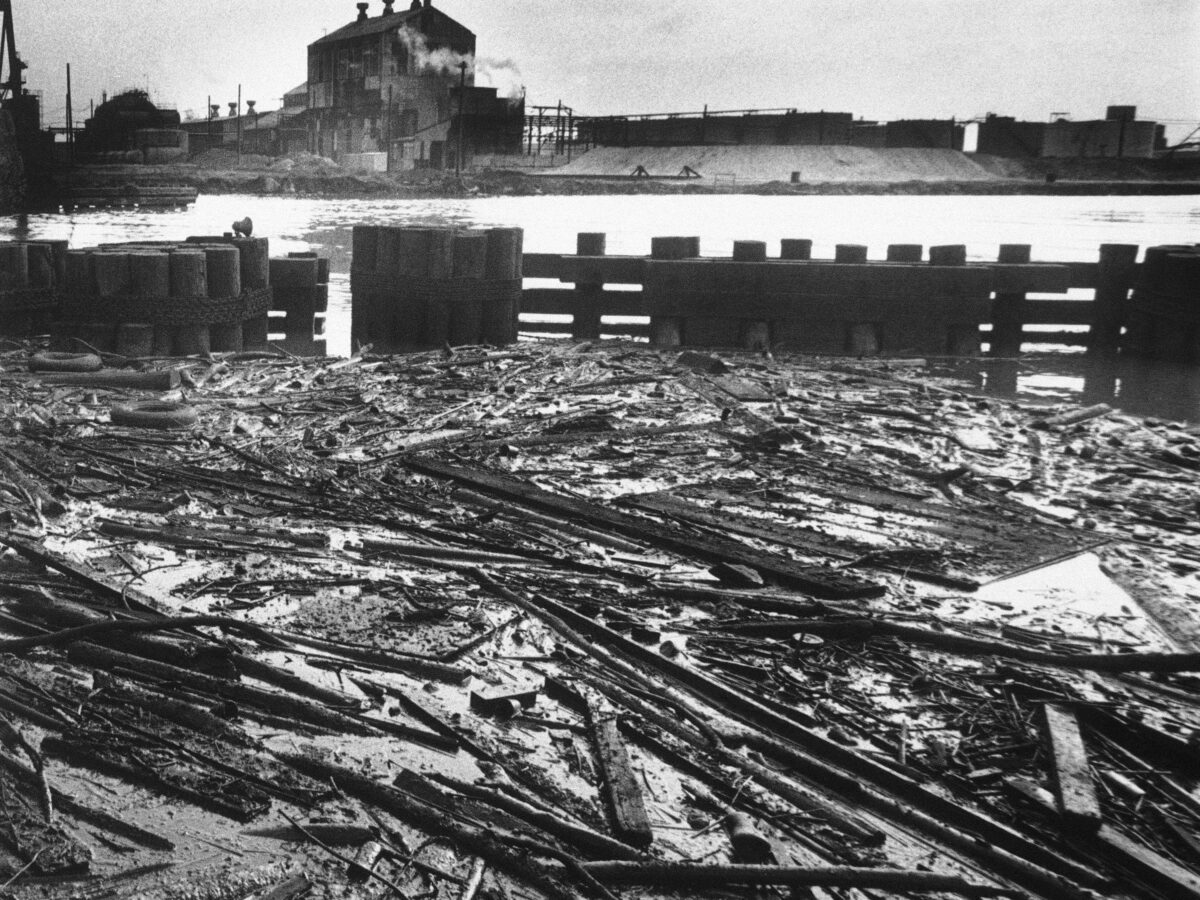
Century of contamination: How Zug Island became Detroit’s industrial epicenter

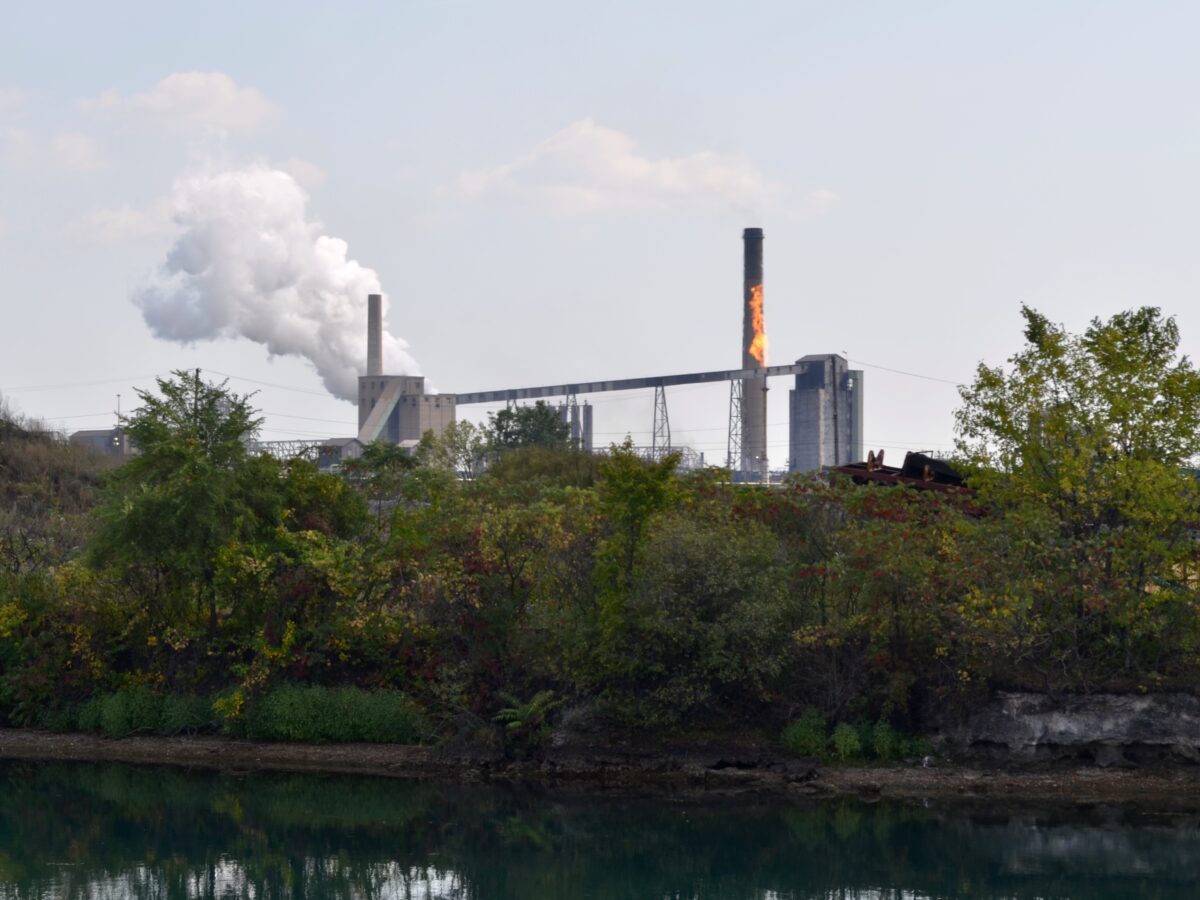
Zug Island pollution causes premature deaths, Harvard epidemiologist says
Trump exempts Zug Island’s EES Coke Battery from new pollution rules for 2 years