

What to know before Michigan’s biggest climate gathering on April 21 in Detroit
If you work in climate, energy, sustainability, environmental justice, or community advocacy in Michigan — or you want to — this is a room you want to be in.
On April 21, more than 800 climate leaders, municipal officials, tribal representatives, researchers, business executives, and community organizers will gather at Huntington Place in Detroit for the fourth annual MI Healthy Climate Conference.
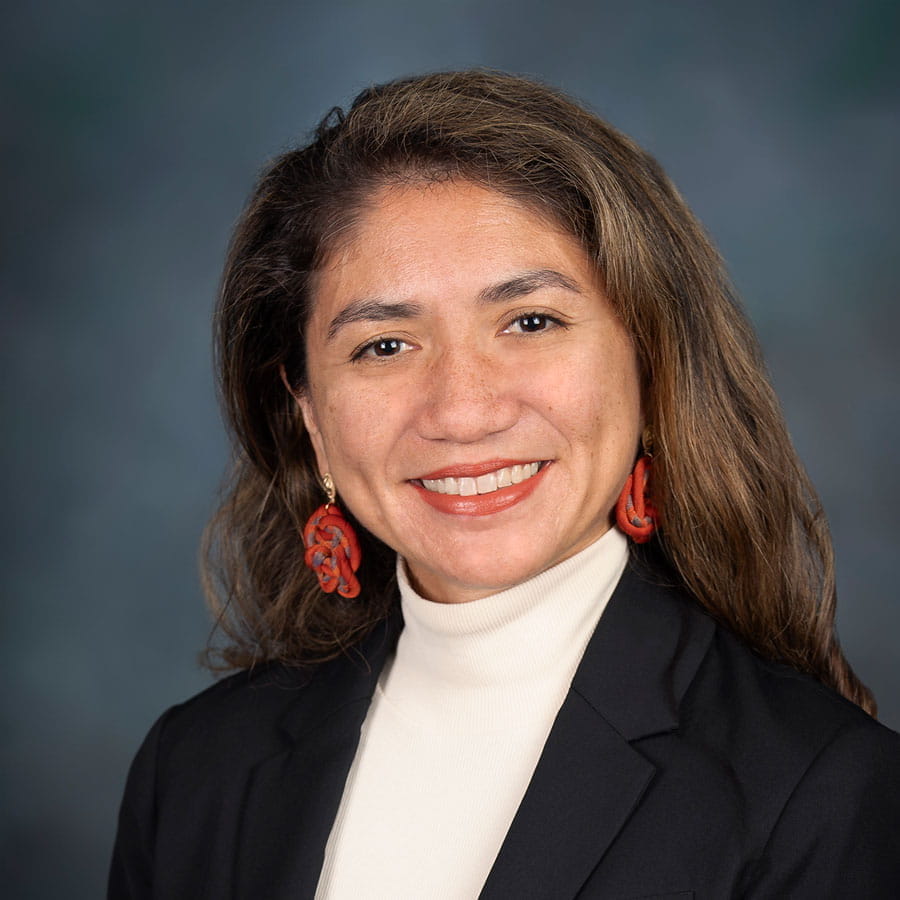
Alessandra Carreon, Michigan’s chief climate officer and head of EGLE’s Office of Climate and Energy, is leading this year’s charge — and the stakes are unusually high. This is the final conference under Governor Whitmer’s leadership, and the theme, “Advancing Climate Action Together,” reflects a pivot from goal-setting to the harder, messier work of actually getting things done.
That question is whether Michigan can move from ambitious plans to real-world results, and it will be the undercurrent running through the whole day. The state passed nation-leading climate laws in 2023, but the road since then has been bumpy.
Environmental advocates have raised concerns about whether data center tax incentives could undermine the state’s renewable energy targets, and the broader tension between economic development and environmental commitments remains unresolved. This conference is where those conversations happen face-to-face.
Who’s in the room
Look at the registration list and you’ll understand why this day matters. The people shaping Michigan’s climate future will actually be sitting next to each other.
Detroit Mayor Mary Sheffield’s office is attending. So are Walker-Miller Energy Services, Ford Motor Company, DTE Energy, the Detroit Wayne County Port Authority, Oakland County’s sustainability team, the Michigan League of Conservation Voters, the Ecology Center, the Natural Resources Defense Council, and the Michigan Energy Innovation Business Council. Also in attendance will be multiple tribal nations, including the Saginaw Chippewa and Pokagon Band of Potawatomi, and more than a dozen city sustainability offices from across the state — Birmingham, Ferndale, Royal Oak, Ann Arbor, Kalamazoo, Lansing, and beyond. University of Michigan, Grand Valley State, Eastern Michigan, Western Michigan, and Northern Michigan University all have people registered.
It starts with what hits closest to home
The morning opens with three sessions designed to ground the day in what matters most to communities across Metro Detroit: health, affordability, and environmental justice. Dr. Natasha Bagdasarian, Michigan’s chief medical executive, will address the connections between climate and public health. Expect substantive conversations about the systems that shape families’ daily lives across this region.
Dr. Jalonne White-Newsome of the University of Michigan School for Environment and Sustainability will speak on environmental justice. And Dr. Tony Reames, who directs U-M’s Detroit Sustainability Clinic, will focus on energy affordability — a conversation that’s only become more urgent as utility costs continue to climb.
Interactive simulations and lightning talks
One of the most distinctive sessions is an interactive financial insecurity simulation built around utility bills. Multiple state departments collaborated on the exercise, which puts participants in the shoes of families navigating energy affordability decisions in real time. It’s the kind of thing that changes how you think about policy, and it’s hard to replicate outside a room like this.
The conference will also feature youth climate activists delivering lightning talks on the main stage, a MI Healthy Climate Fellows showcase, and interactive office hours that offer direct access to state officials and technical experts.
The conversations that matter
The keynote comes from John Kotcher of George Mason University’s Center for Climate Change Communication. His focus is on how to talk about climate action in ways that move people to action. If you’ve ever struggled to make the case for this work to someone who isn’t already convinced, this is the session to catch.
Breakout sessions cover renewable energy, industrial decarbonization, resilient infrastructure, clean transportation, environmental justice, buildings, land-use planning, and finance. One of the conversations we’re watching closely is the Riverside Chat on decarbonizing Michigan’s maritime sector. It promises to be an insightful discussion about the future of Great Lakes shipping and port infrastructure, which has only become more timely as global supply chain instability puts new pressure on domestic freight routes.
A networking reception closes the day. With 800+ attendees from government, business, academia, tribal communities, and nonprofits, it’s one of the strongest rooms in Michigan for conversations that lead to tangible change.
The details
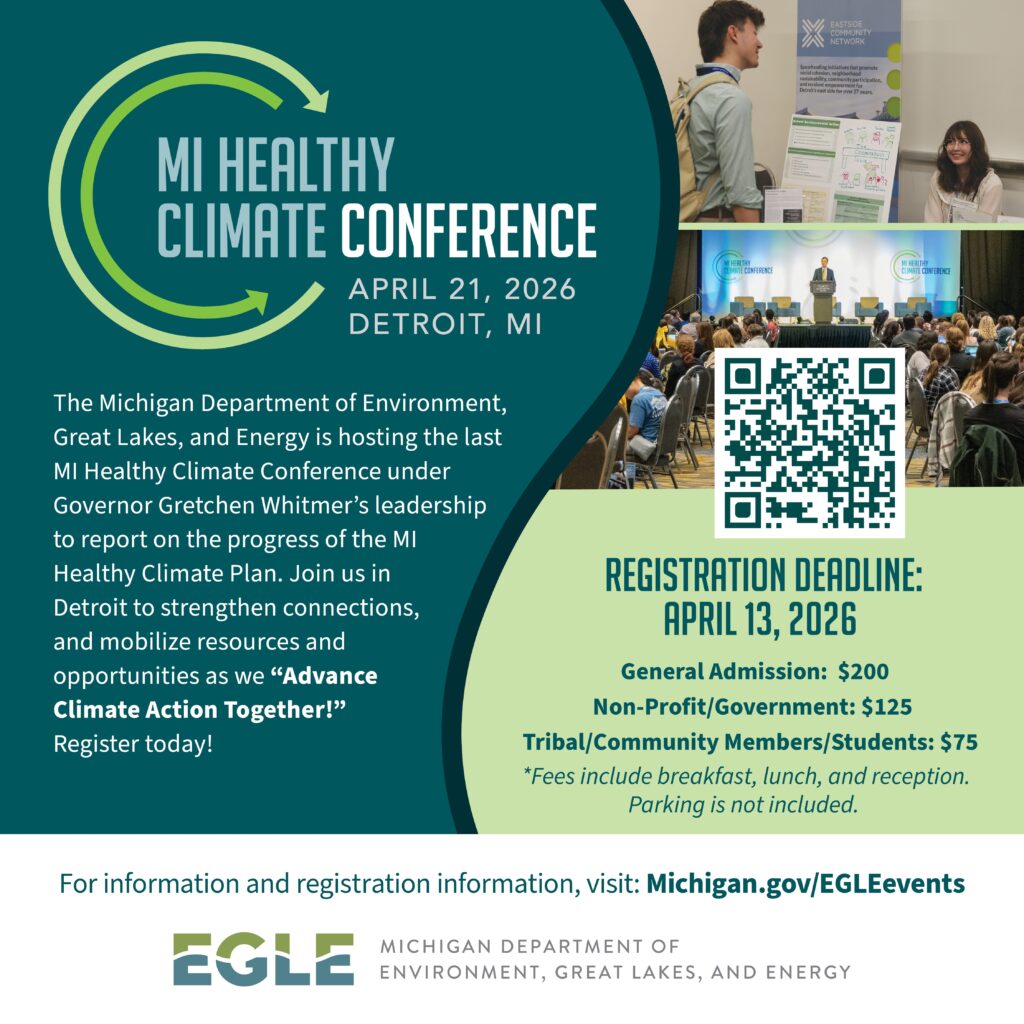
When: April 21, 2026 — full day, with networking reception
Where: Huntington Place, Detroit
Cost: $200 general admission · $125 nonprofit/government · $75 community members, students, and tribal members (includes breakfast, lunch, and reception; parking not included)
Scholarships: Partial scholarships available — apply here
Registration deadline: April 13, 2026
Register: egle.idloom.events/MI-Climate-Conference-2026
Follow along: #MIHealthyClimate