

Overview:
- Residents in Southwest Detroit are exposed to 58 air pollution sources within a 3-mile radius, according to EPA data tracked by Planet Detroit.
- The Protecting Overburdened Communities Act would require Michigan to assess total regional health impacts before issuing new facility permits.
- Southwest Detroit resident Maria Salinas says “it’s a great neighborhood except for the pollution,” adding that her house is always dusty and she hears lots of trucks.
This story was produced with support of Internews’ Earth Journalism Network.
Alexandra Castro, 24, loved her upbringing in Southwest Detroit, close to culture, small businesses, and family and friends in her Springwells neighborhood. As she grew older, she said she noticed her area isn’t the “cleanest” place to live.
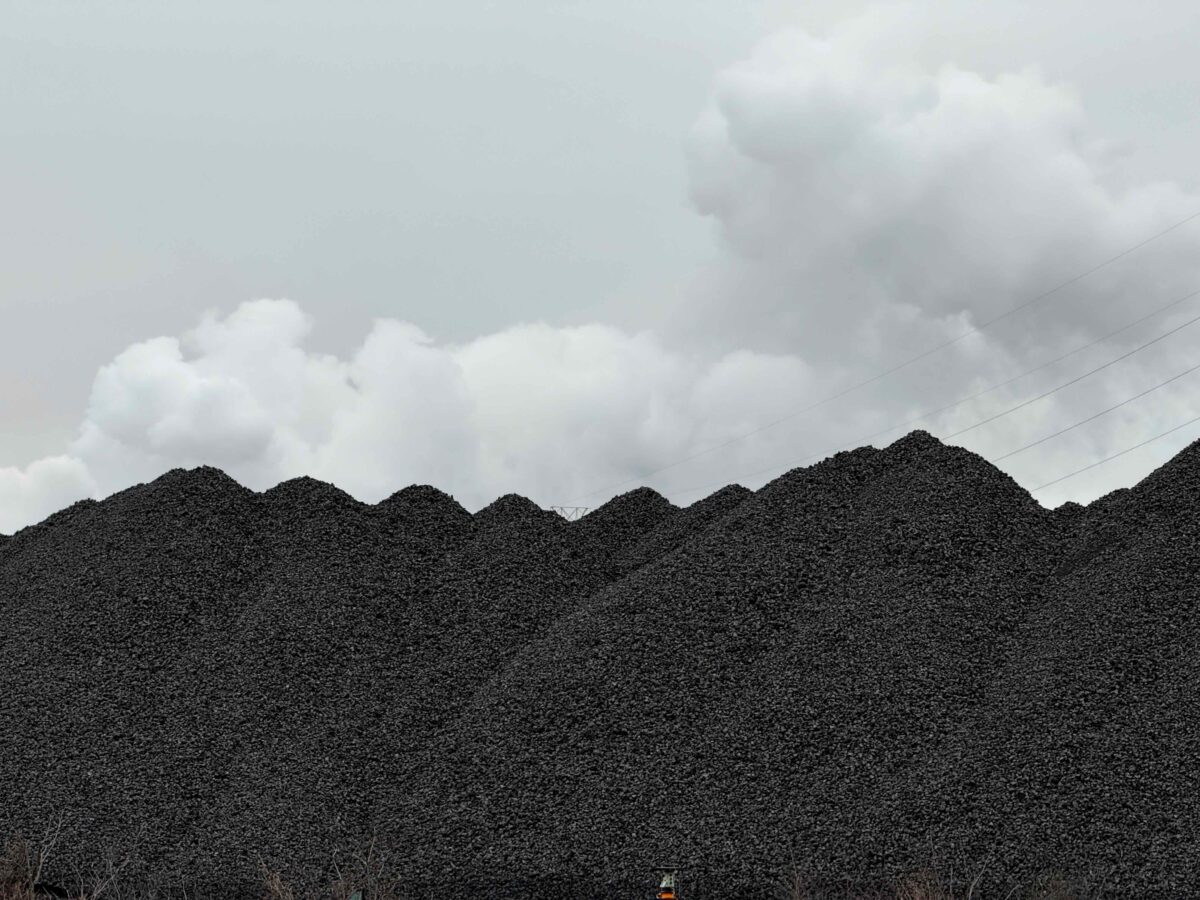
Residents like Castro live in an area of Detroit that has prioritized industry for decades. Their daily life is shaped by the dozens of facilities that pollute the air around their homes, schools, parks, and places of worship.
“This past year I had the worst case of seasonal allergies I have ever experienced. I had severe congestion, eczema, and a runny nose for over a month,” Castro said. “It decreased my quality of life and made me miserable.”
Within a 3-mile radius of the church where the Springdale-Woodmere block club meets, residents are exposed to 58 sources of air pollution, according to Planet Detroit’s air quality tracker, which uses Environmental Protection Agency data.
Four facilities have high priority air quality violations, one has a recent violation, and 53 sources are compliant, according to the EPA database that tracks enforcement and compliance actions for facilities regulated under the Clean Air Act.
This concentrated exposure from multiple sources is what is referred to as cumulative impact.
The EPA defines cumulative impacts as “the totality of exposures to combinations of chemical and nonchemical stressors and their effects on health, well-being, and quality of life outcomes.”
🗳️ Civic Action Toolbox
Why it matters
Southwest Detroit residents are breathing pollution from dozens of industrial facilities simultaneously, causing health problems that state permitting rules can’t always address.
Who's making public decisions
The Michigan Department of Environment, Great Lakes, and Energy (EGLE) makes permitting decisions for industrial facilities, while the Michigan Legislature will decide whether to pass the Protecting Overburdened Communities Act requiring cumulative impact assessments.
Open Comment Periods
Contact Your Representatives
Organizations to Follow
What to watch for next
Whether the Michigan Legislature passes the Protecting Overburdened Communities Act (SB 479 and HB 4742) that would require EGLE to consider total regional health impacts before approving new pollution permits.
Are you taking action? Let us know.
Civic resources compiled by Planet Detroit
A bill introduced in the Michigan Legislature aims to change the way facilities are permitted by requiring the Michigan Department of Environment, Great Lakes, and Energy (EGLE) to consider the total regional health impact of multiple pollution sources, such as industrial facilities and truck traffic.
State Rep. Donavan McKinney and Sen. Stephanie Chang, both Detroit Democrats, introduced the Protecting Overburdened Communities Act in July 2025.
As President Donald Trump rolls back environmental protections and hands out pollution exemptions to facilities like DTE Energy’s EES Coke Battery on Zug Island, some Southwest residents like Donald Spurr, 78 — who survived throat and lung cancer — are asking, “when will it get better?”
How does Michigan regulate cumulative impacts?
A cumulative impact assessment involves analyzing quantitative and qualitative data to characterize the total, combined effects of sustained exposure to pollution stressors, according to the EPA.
In a statement, EGLE spokesperson Josef Stephens said the state can’t use a cumulative impact analysis that considers “all the ways a person may be exposed to pollutants.
“EGLE considers the existing presence of certain pollutants from nearby sources including small and large sources, and outdoor air,” the spokesperson said.
To obtain a permit from the state of Michigan, a facility must simulate its potential quantity of toxic air emissions, which must meet the EPA’s health-based National Ambient Air Quality Standards designed to protect sensitive populations, Stephens said.
“These rules allow us to look at the aggregated impact of certain chemicals … which bioaccumulate in the environment, such as mercury.”
EGLE does not have the statutory authority to consider a cumulative impact analysis, Stephens said.
Zug Island permit OK’ed with air quality violation, federal lawsuit pending
In June 2025, EGLE approved a permit for a secondary coke screener at EES Coke Battery eight days after issuing an air quality violation notice to the facility.
The Zug Island company is the subject of a federal lawsuit brought by the EPA in which a U.S. district judge found DTE responsible for Clean Air Act violations by the facility.
In March, DTE asked the Sixth Circuit Court of Appeals to review a $100-million federal court judgment ordered after a bench trial of the case, which was filed over sulfur dioxide pollution.
Stephens said the air quality violation issued last summer and federal lawsuit are unrelated to the 2025 permit approval. EGLE does not have the legal authority to deny a permit if the proposal complies with National Ambient Air Quality Standards, the spokesperson said.
“The application for the secondary screener complied with all applicable state and federal regulations. Although unrelated specifically to any noncompliance, there were additional controls added to the final permit to further reduce particulates.”
The new screener will emit 1.6 tons of particulate matter, 0.82 tons of PM10 and 0.23 tons of fine particulate matter, or PM2.5, per year, according to an EGLE fact sheet.
If the project emitted 10 tons or more per year of fine particulate matter, it would be subject to additional regulations, according to state regulators.
The secondary screener is not an expansion of the facility, EES Coke Battery Vice President David Smith said in a statement to Planet Detroit at the time of the permit approval.
The screener will be “operated within an enclosed building and using foam suppressant to prevent particulate from becoming airborne,” he said.
“This new equipment is planned to perform in-plant screening of a portion of the product that is currently processed at a different location, thereby reducing emissions from transportation.”
The facility has “complied with all regulations governing the site at the state and federal level that protect public health,” Smith said, adding that EES Coke Battery supplies the steel industry and supports more than 170 jobs.
How Michigan regulators weigh air quality violations in permitting process
In response to public comments submitted to the state during the EES Coke Battery permit approval process last year, EGLE said a company’s compliance record cannot be considered when deciding whether to approve a permit.
“By law, we must base that decision on whether all applicable state and federal air quality rules and regulations will be met, and if so, the permit must be issued,” Grace Knauss, environmental engineer in EGLE’s Air Quality Division, wrote in the document.
Stephens said in the instance of EES Coke Battery’s secondary coke screener permit, regulations do not allow consideration of the company’s compliance history, as the screener application “has nothing to do with” the history of noncompliance.
At the same time, EGLE always considers a company’s compliance history in its decisions, Stephens said.
When asked about the discrepancy between EGLE’s inability to consider EES Coke Battery’s compliance history with last year’s permit and the statement that compliance history is always considered by EGLE, Stephens said the distinction depends on the application at hand.
A “history of noncompliance is considered when it is pertinent to the permit application,” the EGLE spokesperson said. “For instance, a company in violation of an emission limit in an existing permit. Part of their compliance plan may be to update their permit.”
EGLE may consider adding additional testing or record-keeping to any new permit issued, Stephens said.
“In any case, the company must still meet all air quality rules and regulations for a permit to be issued.”
EGLE can take additional action against a facility with significant noncompliance issues, including an administrative or civil enforcement action to address violations, deter future noncompliance, and bring a facility back into compliance, Stephens said.

Get to know the air quality index
Detroit faces significant air pollution. Planet Detroit’s guide to air quality addresses how to interpret the air quality index and includes information on the six criteria air pollutants identified in the Clean Air Act.
The air quality index is a rating system that shows the severity of pollution in the air on a scale from zero to 500, a calculation made by the EPA.
The rating measures five major pollutants: ground-level ozone, particulate matter, carbon monoxide, nitrogen dioxide, and sulfur dioxide.
Ground-level ozone and particulate matter are the most widespread and pose the greatest risk to health, according to the American Lung Association.
“Measurements of the five major pollutants are calculated into the zero to 500 scale to give you one number that reflects how healthy the air is to breathe that day,” the association’s website said.
An AQI value under 50 is considered good air quality, meaning that it’s safe for anyone to spend time outdoors without risking their health. As the AQI number increases and the corresponding color code deepens, so do the risks.
Green: Good
Zero to 50 AQI – No advisory.
Yellow: Moderate
51 to 100 – Sensitive individuals should consider limiting prolonged outdoor activity.
Orange: Unhealthy for sensitive groups
101 to 150 – Children, active adults, and people with respiratory disease, such as asthma, should limit prolonged outdoor exertion.
Red: Unhealthy
151 to 200 – Children, active adults, and people with respiratory disease, such as asthma, should avoid outdoor exertion; everyone else should limit prolonged outdoor exertion.
Purple: Very Unhealthy
201 to 300 – Children, active adults, and people with respiratory disease, such as asthma, should avoid outdoor exertion; everyone else should limit outdoor exertion.
Maroon: Hazardous
301 to 500 – Everyone should avoid all physical activity outdoors.
People who are considered sensitive include children under 18, adults over 65, people with chronic heart or lung disease, and people who are pregnant or have diabetes, according to the lung association.
Adults engaging in prolonged outdoor activities, such as outdoor workers and frequent exercisers, face a potentially higher risk due to extended exposure.
The fight for Michigan cumulative impact law
The Protecting Overburdened Communities Act introduced in the Michigan House and Senate by McKinney and Chang last year would require EGLE to assess pollution levels before issuing new permits in affected neighborhoods.
EGLE looks at individual pollution sources in isolation when granting air quality permits, McKinney said during a 2025 press conference.
“But that’s not how it works in the real world,” the state lawmaker said. “As we all know, we do not breathe one source of pollution at a time, and we experience the health harms of all the combined pollution we breathe.”
Former state Rep. Abraham Aiyash (D-Hamtramck) introduced an earlier version of Chang and McKinney’s cumulative impact legislation in 2024. This bill did not pass out of committee.
Southwest Detroit resident Maria Salinas said “it’s a great neighborhood except for the pollution,” adding that her house is always dusty and she hears lots of trucks.
“It’s bad and going to get worse with having two international bridges,” Salinas said.
Salinas has chronic asthma and uterine cancer, she said, adding that she attributes this to living in Southwest her entire life. She is the founder and executive director of the nonprofit Congress of Communities.
Salinas said she wants to see a cumulative impact health study of Southwest Detroit, and a health clinic that addresses the rise of asthma, cancer, and generational infertility she sees among residents.
MORE ZUG ISLAND REPORTING

DTE appeals $100 million federal judgment over Zug Island air pollution
DTE Energy is challenging a federal court’s $100-million judgment over sulfur dioxide pollution from its Zug Island coke facility. The utility must also fund $20 million in community air quality programs.


Century of contamination: How Zug Island became Detroit’s industrial epicenter
Early ideas for the island included a city garbage dump with a promise of the operations being “smokeless and odorless,” or improving the land into a “healthful resort similar in attractiveness to Belle Isle.”
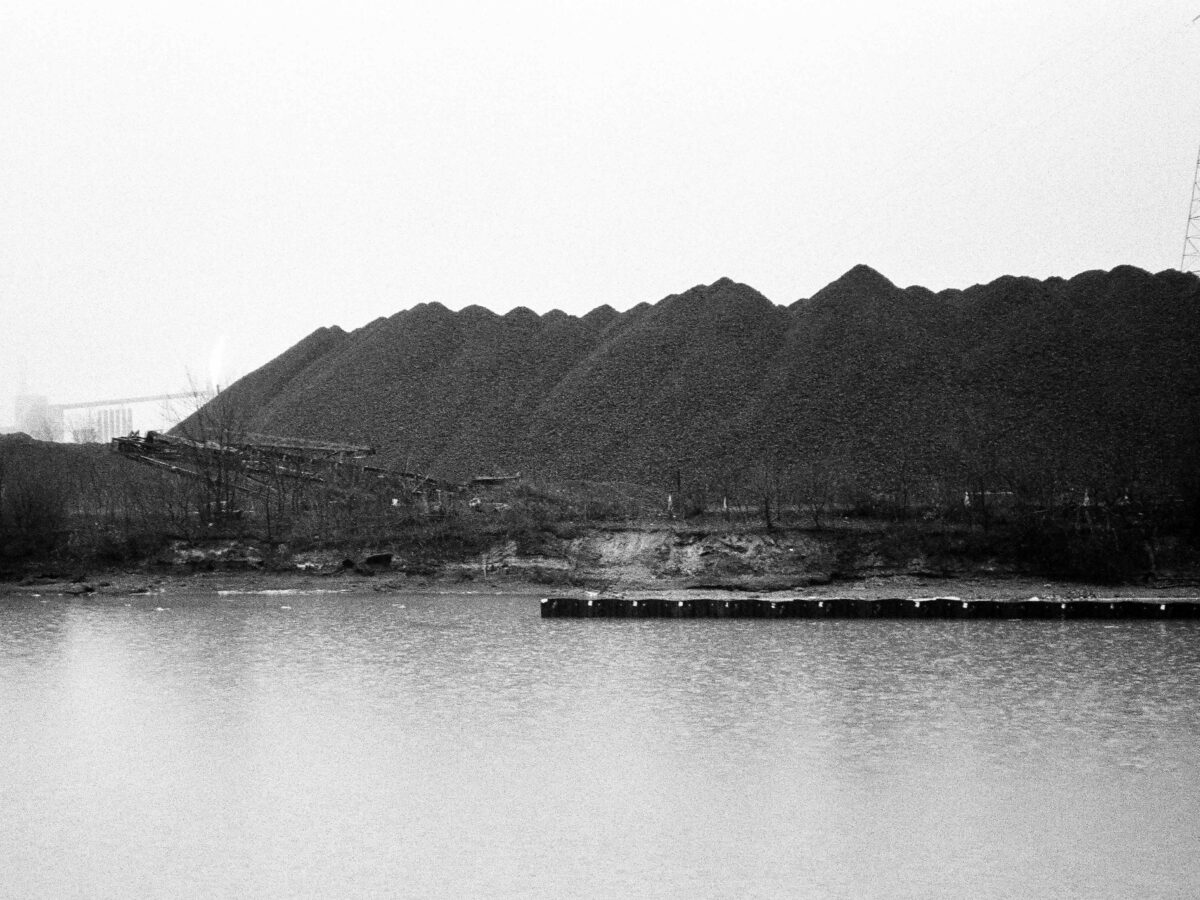
Court finalizes $100 million judgment against DTE Energy for Zug Island air pollution
This story was produced with support of Internews’ Earth Journalism Network.DTE Energy and three of its subsidiaries must pay $100 million for Clean Air Act violations at EES Coke Battery on Zug Island within 90 days, according to a final judgment entered in federal court Tuesday. The facility must come into compliance with the Clean…