

Overview:
- Detroit City Council passed a resolution in March urging a two-year moratorium on data center permits until comprehensive zoning policies are established.
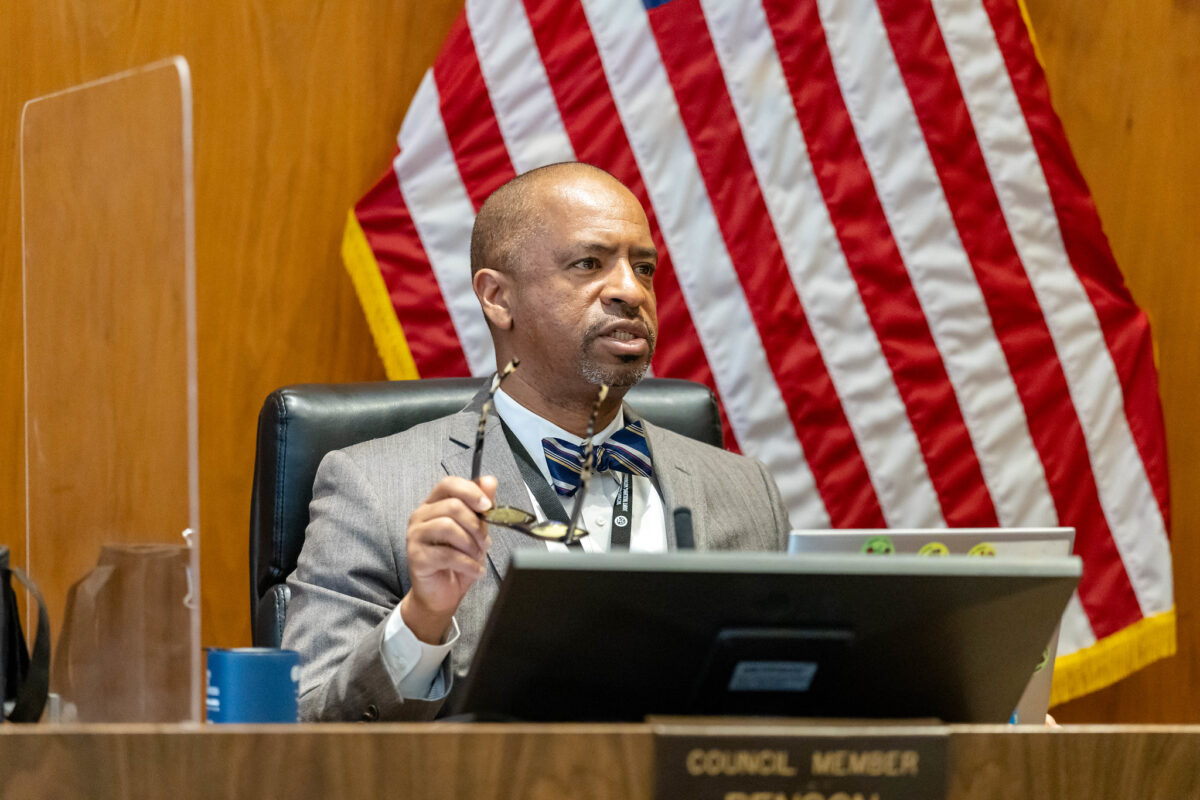
- Councilman Scott Benson's working group includes city departments, DTE Energy, unions, and environmental advocates with a Dec. 31 deadline for policy recommendations.
- Detroit, he told the group, is “at a crossroads” over the surge of interest nationally for data center developers, which, he said, “presents significant capital investment” but also “complex challenges for our infrastructure and our neighborhoods.”
By CHRISTINE FERRETTI
BridgeDetroit
Detroit City Councilman Scott Benson convened a cross-sector workgroup Friday to get discussions going on zoning policy to govern data center developments in Detroit amid an explosion of interest and concern nationally.
Benson’s “data center stakeholder working group” came together after the City Council in March passed a resolution urging Mayor Mary Sheffield to establish a two-year moratorium on data center developments in the city.
The District 3 Councilman said he organized the meeting to gain consensus and support for an aggressive Dec. 31 timeline for Detroit to establish a comprehensive data center-focused zoning policy.
Benson’s hour-long meeting brought together representatives from the city’s Planning Commission, building and safety office, health and water departments, council offices and mayor’s administration and Detroit Economic Development Corporation. A group of DTE Energy representatives, unions and tech officials, and others.
Benson said he wants the workgroup to help assess the potential footprint of data centers in the city, how peer cities are responding to similar development proposals and to advise on recommendations for city zoning policies.
Detroit, he told the group, is “at a crossroads” over the surge of interest nationally for data center developers, which, he said, “presents significant capital investment” but also “complex challenges for our infrastructure and our neighborhoods.”
“A central question that has to be answered is ‘what zoning regulations will best fit Detroit’s unique urban environment?’” said Benson, noting that the city has to evaluate the impacts on the grid, environment and return on investment for the community.
The Friday convening came together ahead of planned weekend rallies in Detroit and elsewhere over data center developments. In some communities, residents have shared fears over potential impacts on energy costs, lost farmland and the risk of air, noise and water pollution as well as the implications for the state with the big-dollar facilities if the rush of interest in artificial intelligence wanes.
Detroit’s moratorium resolution, spearheaded by Benson, asks that the mayor’s office and relevant city departments – the Buildings, Safety Engineering, and Environmental Department and Planning and Development Department – refrain from issuing any new data center permits until the city can obtain a full understanding of the types of data centers, infrastructure and associated environmental concerns prior to their development in the city.
A two-year moratorium, it notes, would allow city officials to address grid stability, water consumption, noise pollution, economic impact and land use.
Sheffield spokesman John Roach previously told BridgeDetroit that the mayor “will fully vet the request and make a decision that is in the best interest of Detroiters and the future of our city.” The administration on Friday did not immediately provide BridgeDetroit with an update from Sheffield on the moratorium request.
Benson’s push aligns with strategies being pursued in multiple Michigan municipalities to set parameters for data centers. The hyperscale data centers have been proposed for at least 11 Michigan counties. Some have secured key approvals; others have faced pushback from residents and legislators.
Benson has said he’s “neither pro nor con” on the centers, but wants to ensure there are protections and established “rules of the road” for data centers.
The council on March 17 voted 6-2 in favor of the resolution, with Council President James Tate Jr. and Pro Tem Coleman A. Young II voting no, objecting to the length of time identified in the request. Council Member Angela Whitfield-Calloway was absent.
Julie Jozwiak, a representative for DTE Energy, reminded the group Friday that there’s intense interest in data center development and that cities, like Southfield, will “gladly take the business” and that “timing is critical.” Although she does understand the value of first ensuring protections are evaluated.
Development-focused representatives also on the Zoom call echoed Jozwiak, saying they hoped the process can be swift based on the competitive nature of the projects.
Erma Leaphart, a conservation organizer for the Sierra Club Michigan Chapter and Co-Chair of the Detroit City Council Green Task Force Water Subcommittee, said “we need development in Detroit,” but it’s important to “take the time and examine the triple bottom line.”
“I don’t think it’s useful to compare and contrast what others are doing,” she said. “We are the largest city in Michigan, one of the major cities in the Great Lakes region and we are competitive – we shouldn’t forget that,” she said.
Leaphart also said that robust community engagement should be a part of the process, which workgroup members supported.
Detroit Planning and Development Director Marcell Todd said he believes that the nine-month window will give the city ample time to put a policy together.
“We hear both sides, but I think that while we see the need for Detroit to be able to compete, we are balancing it against any number of other issues,” he said.
Todd noted that the city is also working through a new zoning ordinance policy and its master plan revision, and those ongoing efforts are critical factors in any discussions for bringing in new industry.
He said it took time and care when it came to casino developments and crafting policies that permit medical and recreational marijuana establishments in Detroit and shouldn’t be doing anything different with data centers.
“I am optimistic that we, as a city, are up for it,” added Benson.
Detroit is among about 20 communities in Michigan that have passed or proposed moratoriums on data center developments. Several communities have rescinded or paused plans, including Howell Township, and some bipartisan lawmakers are pushing for state-level reforms and gubernatorial candidates are also vocal on their views.
Late in 2024, Michigan lawmakers narrowly approved tax breaks to lure the industry to the state.
If developers invest at least $250 million, employ 30 people and meet other requirements, they pay nothing in state sales and use taxes through at least 2050 — a savings that could amount to hundreds of millions of dollars per facility.
Daniel Mahoney, director of regional affairs for DTE, said during Friday’s meeting that there’s been a lot of interest in the state since the Legislature approved the policy.
As it pertains to electricity usage, Mahoney said costs cannot be shifted onto existing customers and large-load customers also operate under additional oversight terms.
“When we are able to grow our customer base, specifically large loads, it makes the investments we’re making more affordable for everybody,” he said.
Mahoney said that DTE has successfully landed two hyper-scale data center projects in Saline and Van Buren Township. The Saline project via Oracle, will drive a $300 million per year affordability benefit for DTE customers, he said.
Jozwiak told the workgroup Friday that proposals for data center development in Detroit so far have not risen to the level of hyper-scale. Most on the call agreed the city doesn’t have adequate space to attract much hyper-scale development.

Detroit Water and Sewerage Department Director Gary Brown said his department will be as involved in the zoning discussions as needed, but stressed that when it comes to water, since the city has infrastructure to serve 2 million people, “capacity isn’t an issue.”
“I can shut down one complete water treatment plant and still be able to serve everyone in the city,” said Brown, who noted he’ll be in Washington D.C. this week to meet with CEOs from across the country, and a main issue on the agenda will be data centers. “We’re learning as we go and will be as involved as you need us to be.”
David Bell, director of the city’s Buildings, Safety Engineering, and Environmental Department, said he will have staff attend the workgroup meetings to provide input on zoning and to ensure residents are environmentally protected.
“That’s very important, knowing how Detroit residents have been negatively impacted by industry throughout the years,” he said.
The group will hold its next meeting on Friday, May 8.
DATA CENTER NEWS
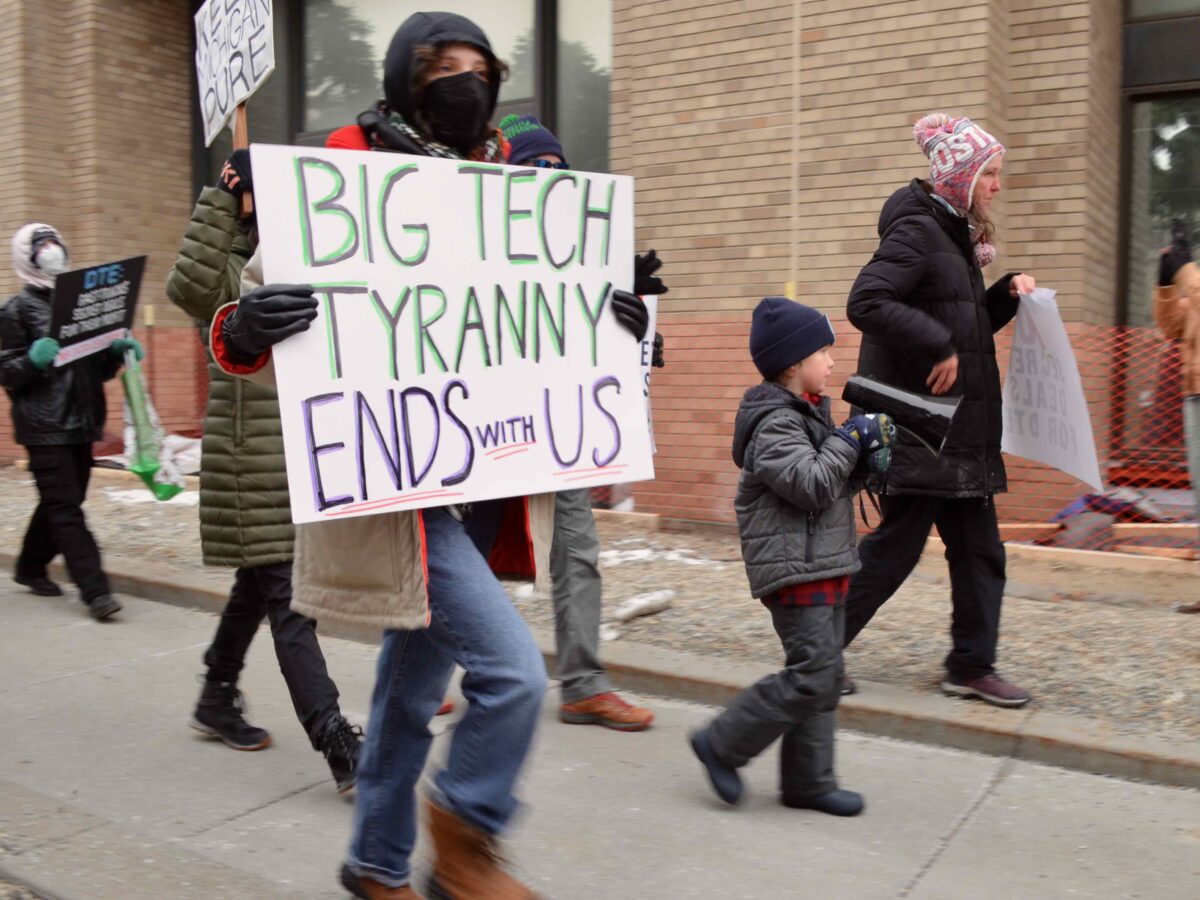
Anti-data center rallies planned in Detroit, Ann Arbor Saturday: ‘People don’t want these at all’
Residents in Detroit, Ann Arbor and four other Michigan cities will rally this weekend against data center projects, connect their opposition to a ballot initiative that would ban utility political donations.


Wixom weighs data center ordinance: ‘We aren’t necessarily prepared’
Wixom’s draft data center ordinance creates a buffer between the facilities and residential areas.

University of Michigan buys possible data center site on Huron River, informs Ypsilanti Township supervisor via text
As a public university, U of M is exempt from local zoning requirements — meaning the project does not require township approval.
