


Overview:
- Data centers can use 150,000 to over 5 million gallons of water per day, straining local and regional water supplies, says Great Lakes policy expert Mike Shriberg.
- The data center boom exposes critical gaps in Michigan water policy, including lack of disclosure requirements, inadequate permitting standards, and disconnected groundwater and surface water management.
- Rural communities and environmental advocates are forming unprecedented coalitions to oppose data center projects, creating momentum for modernizing water protection policies in the Great Lakes region.
A strange thing is happening to many environmental leaders: They are receiving calls of support from conservative rural residents who oppose data centers in their communities because of environmental concerns.
This is unusual because the environmental movement has had a problem aligning with rural, conservative Americans for at least a generation, despite the fact that rural residents on average spend more time outside than urban dwellers, more directly connecting and interacting with natural resources.
While the reasons for this rural/environmental disconnect are complex and deep, the dynamic may be changing due to an unexpected disturbance: the siting of data centers and their potential impact on water. This creates a generational opportunity if approached strategically.
Water is what unites people across the region, regardless of race, gender, age, politics, or other demographics. The water impacts from data centers can be extreme and are poised to grow.
Water usage onsite at data centers — which is generally for cooling servers — varies widely based on the technology used. It can range from 150,000 to over 5 millions gallons per day, with the latter quantity equivalent to the demand from a small city, according to the Environmental and Energy Study Institute.
Data centers draw water from numerous sources, including municipal water supplies, groundwater via wells, and direct connections to surface waters. Each supply choice, and option for water disposal after use, has its own impacts locally and sets off alarm bells in the communities that have data centers or proposals for them.
Unfortunately, using less water onsite through advanced technology typically leads to using far more water for data centers’ enormous power needs offsite if the power comes from fossil fuels or nuclear. This is typically where the most water usage occurs.
Why data centers are threat, opportunity for Great Lakes
Overall, the almost unfathomable scale and growth of data centers is poised to put a strain on local and regional water supplies, and communities — particularly in rural areas — are noticing.
In part due to local impacts, data centers have exposed weaknesses in our water policies in Michigan and the region including:
• Lack of disclosure. We often don’t know how much water data centers are consuming or will consume.
• Lack of standards. Permits are often not required, let alone assurances of water protection in terms of quality and quantity.
• Lack of connectivity. We treat surface water and groundwater separately (which is not true in natural systems) and do not manage holistically.
More philosophically, the data center proposals in the Great Lakes watershed have exposed what many of us in the water community know: sitting in the middle of the world’s largest surface freshwater system has created an illusion of abundance and contributed to an often lax approach to water protection.
While water advocates would undoubtedly prefer to not be dealing with the threat that data centers pose to our water and way of life, there is a teachable moment and opportunity that is revealed by the community pushback.
The possibility exists for a united, powerful front to modernize our water policies and practices, beginning at the local, state, and regional levels.
The key to unlocking this potential is to build enduring partnerships, listen to the real interests and concerns of rural communities, and utilize the natural connections that water creates to guide us forward.
Planet Detroit’s Voices column includes opinion pieces from our community of partners and readers. These pieces express the voices of the authors and not necessarily those of the publication.
MORE STORIES FROM PLANET DETROIT
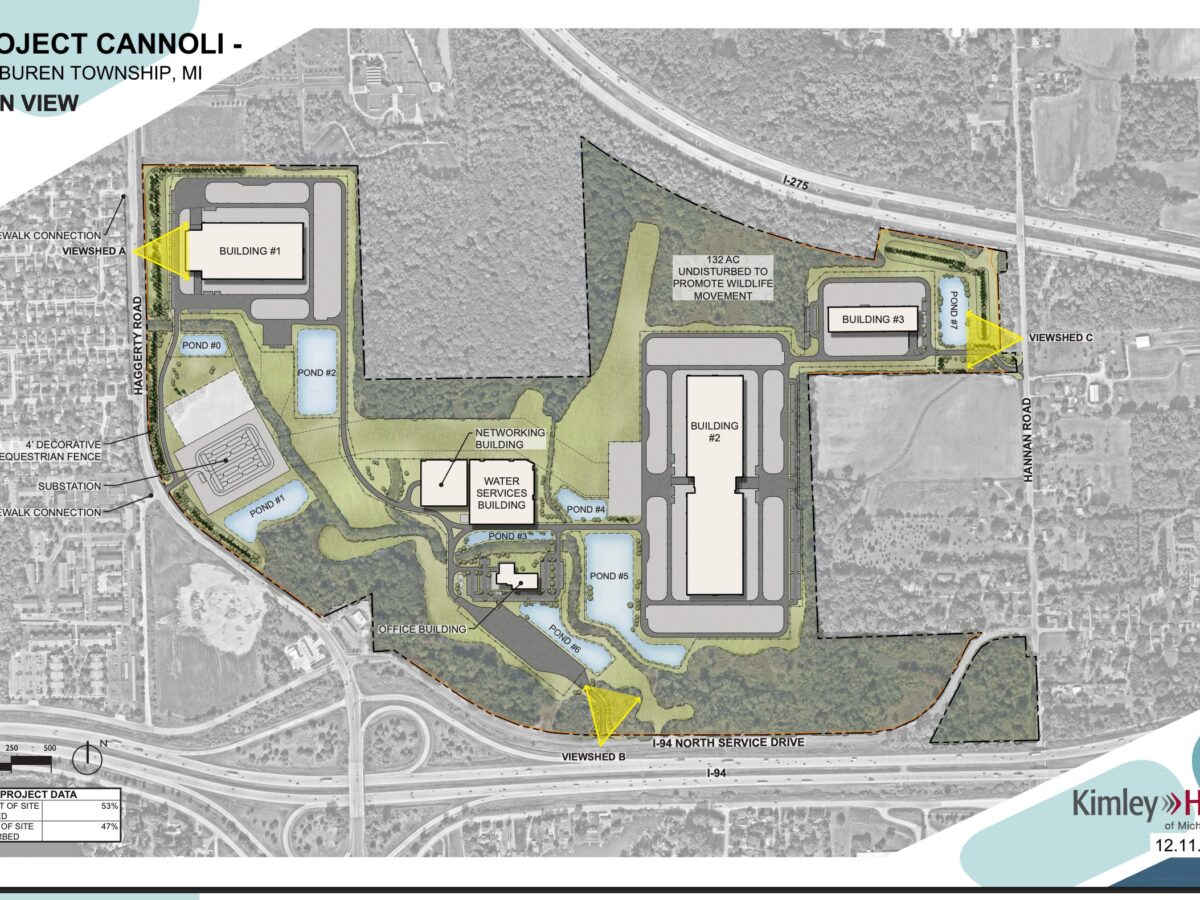
Google, DTE plan 1 gigawatt Michigan data center, eye Van Buren Township site
DTE Energy and Google announced plans on Tuesday to develop a 1-gigawatt data center, possibly as part of the “Project Cannoli” development in Van Buren Township. The company’s planned Michigan operations will be served by 2.7 GW of new grid resources in the form of solar power, energy storage, and demand flexibility, Will Conkling, Google’s…

VOICES: Protecting what we love in the age of AI
A faith-based perspective on why Great Lakes communities are pushing back against data center development.

Great Lakes water levels decline from record highs: What the forecast says
Over the next six months, the Army Corps predicts water levels will stay below long-term averages on all Great Lakes, except possibly Lake Ontario.