

Overview:
- Mad Track Arena provides free fitness access to Detroiters over 65 and under 14, addressing the city's 45% adult obesity rate and 37.4% physical inactivity rate — the highest in the U.S.
- The 64,000-square-foot facility combines an elite cycling velodrome with accessible community fitness space, generating revenue through events like Monday Adult Skate nights that draw 400 attendees
- Architect Dale Humphrey designed the facility to serve multiple community needs simultaneously, from senior morning exercise to youth afternoon skating to evening competitive cycling events
Planet Detroit’s neighborhood reporters are local residents who cover health, environment and climate issues in their neighborhoods. The Lab is made possible with the generous support of the Kresge Foundation.
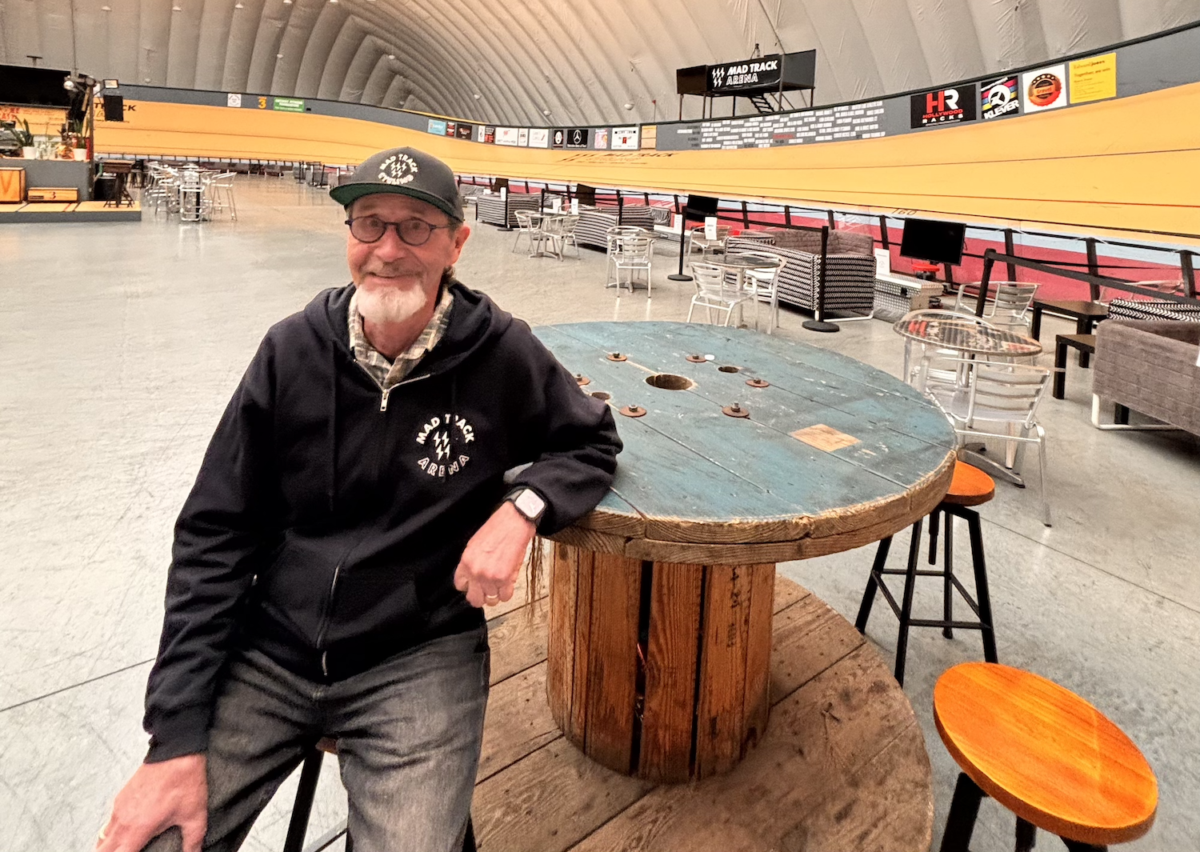
It stands out, a white dome from the future, off I-75 as you exit Mack Avenue. Underneath is a space for movement, intentionally accessible in a world where accessibility has become increasingly scarce.
Mad Track Arena is the name of this space, and a deep dive into its creation with Dale Hughes, the architect who designed and built it, reveals the power of places like this for Detroit’s community. “You know, we are in our 8th year, and we are looking to see what’s going well and what we can be doing better.”
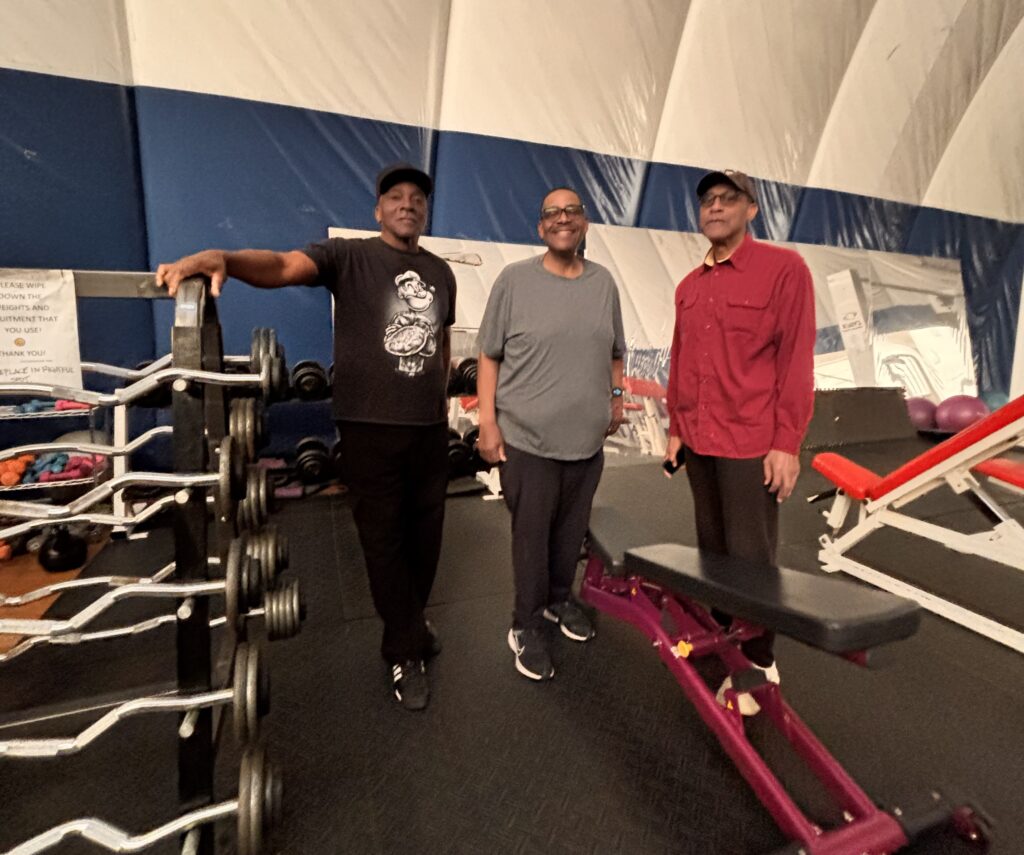
Lorenzo Wright, 68, has been using Mad Track since he retired three years ago and could be eligible for the free senior program. “You know, being free, it fits my budget, and I’ll come all the way up from Warren because this is a space for me and my buddies. We take advantage of it. The typical gyms aren’t for us; here, you don’t feel that pressure. There are four of us who ride bikes in the summer and come here in the winter.”
“It’s a good thing that they’re doing here. I like the environment. They have a lot to offer for an older person like me. It’s more my speed. The people here are kind of like me, seniors who are just coming in to get a workout.”
Roberto Smith, another senior who attends the weekly weightlifting program offered free of charge, gingerly hops on a stationary bike and starts pedaling. “I think everybody should take care of themselves because if you don’t use it, you lose it. And that’s how I feel about the velodrome. It’s like we all gotta use it, so we don’t lose it.”
Mad Track is free for those over 65 and those under 14. There are around 20 gyms operating in Detroit, with varying prices, accessibility, parking availability, and hours. The adult obesity rate in the city was at 45% in 2024. 37.4% of adults are physically inactive, the highest rate in the United States. The senior population is around 15%, and children up to age 14 represent about 20%. All of these factors position Mad Track Arena not just as an option but as a necessity.
Built for Detroiters
That big white hill you see off I-75 has a cycling track, a fitness room, a spectator lounge and bar, an elevated track, and space for a community of disc golfers — the only facility like this in the world. Hughes has made cycling tracks and velodromes all over the world, but the one he built in Detroit was built for Detroiters, and he wants the community to come see what they can do with it.
When asked about the creation of Mad Track, Hughes starts with a story.
“I was surprised the call was in English. Most of my offers were from around the world. After I designed the Atlanta Olympics velodrome, I was going to places like Kazakhstan, China, Korea. This call said he wanted to build a velodrome in Detroit. I said — do you know I’m from the area too?”
There was enough funding to build the velodrome, but not enough to ensure it could cover operating costs. But Hughes thought the answer was obvious.
“We needed to generate revenue, so we made sure there was space for fitness, for track running and skating, and a big enough space for markets or events.”
Though obvious to Hughes, constructing a space that is both an elite training facility and a free space for children and seniors to move may not be everyone’s initial solution. But Dale thinks differently about community and about his passion for cycling.
Mad Track opened its doors in 2018 with initial sponsorship from Lexus, which supported the cycling program’s goals and ambitions. Dale explains that the intent is to develop athletes to compete on an international level.
“We give you a bike, we train you, and our cyclists are successful. We win national trophies, and our athletes get scholarships.”
Mad Track keeps operating costs minimal, but heating the 64,000-square-foot arena costs around $11,000 a month. Revenue streams include the popular Monday Adult Skate night — $10 entry with an average of 400 attendees per event. For those aged 15 to 64, entry to the facility is $5, with cycling classes to prepare you for the elevated platform at $10 each.
Mad Track is a non-profit that partners with Detroit Parks & Recreation to help keep costs to a minimum for all Detroiters. Various community groups have found a home here, and the more visitors, the more groups, the more the community can unlock this space’s potential.
A race born at Madison Square Garden
When asked about the design, Hughes draws on cycling’s past to reveal solutions for the present. Velodromes are indoor cycling tracks, first built in the 1900s during the height of cycling as a national sport and recreational phenomenon. Mad Track is named after the indoor race started in 1898 at Madison Square Garden. This race is a partner relay, with cyclists trading off sprinting and the winner being the team that completes the most laps.
The race was initially a single-rider event, but a New York law restricting riders to under 12 hours of competition changed that. Madison Square Garden had already sold out a race and, at the last minute, decided to make it a partner relay, skirting the law and creating a wildly popular format that still resonates almost 120 years later.
Though velodromes around the world host these events, Mad Track is unique in offering a spectator area with booths and a bar. When watching a race at Mad Track — entry $5 — you can feel the energy from the past.
Morning, afternoon, evening
Seniors stand outside the white hill starting around 9:30, some waiting in their cars, some filing close to the door, greeting friends and eagerly awaiting entrance. A community is present here, heard in the laughter, the greetings, and the subtle teasing as groups walk by the track.
The lower track is wide and an eighth of a mile long, while the upper deck has a slight incline and overlooks the cycling track below. This elevated track is 1/7 of a mile, and seniors can be found walking it, some with dumbbells at their sides in a farmer’s walk.
All the equipment, including two squat racks and a series of barbells and plates, has been donated. Alongside the squat racks are a variety of weightlifting machines and dumbbells.
In the morning, seniors, mostly regulars, use the equipment diligently — including the stationary bikes. As the afternoons begin, the kids start to roll in, some on bikes and others on skates. Parents sometimes ride along or sit and watch, letting their kids tire themselves out going round and round the track.
In the evenings, Mad Track takes on yet another face. In the darkness that white dome seems to radiate, from another time and perhaps world. When you enter at night, pinks and blues light up the dome’s ceiling, and music pulsates throughout. When you come to a race night, be prepared to feel the enthusiasm and energy as the bell keeps pace, and you give up trying to follow the racers with your eyes, instead taking it all in from a comfy booth.
Adult Skate night happens on Monday and is one of its most popular events. Dr. Poppers, a resident DJ and bartender for skate nights, explains: “My friend got me the gig, and while it started a little slow, I’ve seen it grow just by the community sharing their love and enthusiasm for these nights. It’s been great to see something built and be a part of it.”
Getting people here
As a public asset, Mad Track represents Detroit at its potential. A space designed to be used in different ways, at different times, by different people. A multigenerational community where seniors walk the track at 9:30 in the morning and kids roll in on skates by afternoon.
Hughes has an eye for talent and a steady hand in leadership, gained from years of racing. You need a certain steadiness, a willingness to control the uncontrollable. Adult Skate night’s success was exactly the point of the velodrome’s design, he said.
“Cycling is a niche sport, associated with Europe. My goal has always been, if I can get one person interested in the sport I’ve done my job, and that starts with getting people here to see what it’s all about.”
MORE FROM THE NEIGHBORHOOD REPORTING LAB

Shaquille Quamae Hall’s vision for Detroit youth: ‘Many hands make light work’
Detroit photographer and Planet Detroit Neighborhood Reporting Lab participant Shaquille Quamae Hall details his journey from mentee to mentor.


Highland Park resident and filmmaker Jamela Lugo-Thomas inspired by city’s water crisis
The College of Creative Studies grad combines lived experience with film to shine a light on issues of clean water access as part of Planet Detroit’s Neighborhood Reporting Lab.

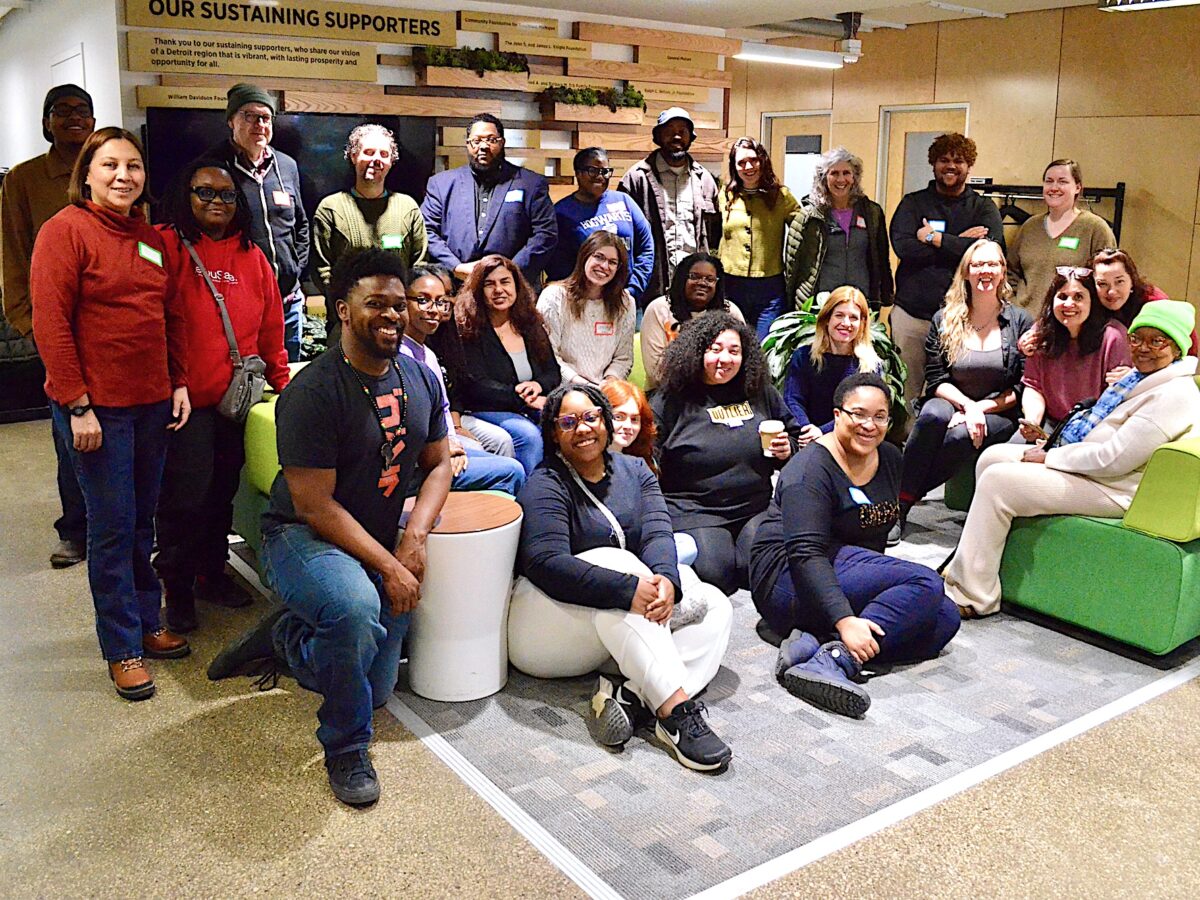
Detroit residents become reporters in Planet Detroit’s 2026 journalism program
Nineteen Detroit-area residents kicked off Planet Detroit’s third annual Neighborhood Reporting Lab, a six-week program that trains community members to tell environmental stories about their neighborhoods.